1) Why dry ice?
Dry ice (solid CO₂) sits at −78.5 °C (−109.3 °F) and sublimes—turns from solid straight to gas—absorbing a lot of heat as it goes (high enthalpy of sublimation ≈ 26 kJ/mol). That’s why it can hold deep‑frozen temps for days when paired with the right shipper.
Safety note: as it sublimates, 1 lb of dry ice produces ~250 L of CO₂ gas, which can quickly displace oxygen in closed spaces—vent every shipper and vehicle.
2) Pick the right containerr
| Container | Best for | Pros | Watch‑outs |
|---|---|---|---|
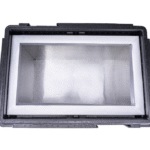
| EPS foam + carton | Economy frozen food, short routes | Low cost; easy to source | Bulky; lower R‑value than VIP; more dry ice needed |
| PUR / PIR foam | Longer routes, tighter temp control | Better insulation than EPS | More expensive; still bulky |
| VIP (vacuum insulated panel) shippers | High‑value biologics / long hauls | ~5× the thermal resistance per thickness vs conventional foams; smaller footprint | Cost; cannot be cut; handle carefully |
Why VIP matters: Typical VIP center‑of‑panel conductivity is around 0.004–0.008 W/(m·K), giving much higher R‑value per inch than EPS or PUR—hence smaller, lighter packs for the same hold time.
3) How much dry ice to use (for food & pharma)
Your needed load depends on duration, ambient temps, insulation type/thickness, load ratio (product+ice vs internal volume), and how often the box is opened. As a practical starting point for a closed parcel shipment:
Short‑haul (≤24 h): ~5–10 lb for a small EPS cooler (add more for hot lanes or larger volume).
48–72 h: scale linearly and prefer thicker EPS, PUR, or VIP to reduce weight.
>72 h or high heat lanes: move to VIP or split shipments to stay compliant and manageable.
Estimator (rule‑of‑thumb):Dry ice (lb) ≈ (Route days) × (container factor) × 6
container factor ≈ 1.0 (VIP), 1.3 (PUR), 1.6–2.0 (EPS); adjust +10–25% for >30 °C lanes.
Validate with a lane test or a small pilot before scaling. (The physics vary; this is a planning aid—not a certification.)
For aircraft safety planning (CO₂ buildup), FAA data pegs 1 lb → 8.8 ft³ of CO₂; operators use sublimation‑rate and air‑exchange calculations to set safe on‑board limits.
4) Step‑by‑step packout (works for food or specimens)
Pre‑chill: Freeze product solid; cool the shipper if possible.
Line & separate: Place a liner or corrugate between product and dry ice to avoid freezer burn.
Load order: Dry ice around and above product for top‑down cold; avoid only-bottom placement.
Fill voids: Minimize headspace with kraft/bubble (not airtight).
Vent: Do not tape the inner foam lid airtight; leave a vent path for CO₂.
Close outer carton firmly; shake test (no rattles).
Mark & label per section 5 (UN 1845, net kg, Class 9).
Helpful decision tools
Check the details before you choose packaging
These quick tools can help you compare route risk, sizing needs, coolant choices, and packaging details before you request a quote.
01Packaging choicePackaging Selector
Compare insulated packaging options by product, route, and temperature need.
Find packaging02Ice pack estimateIce Pack Calculator
Estimate gel ice pack quantity for chilled shipments and practical route planning.
Estimate ice packs03Handling riskInsulation Material Drop Resistance
Review drop resistance and handling factors before choosing insulation materials.
Check resistanceDrop‑off: Bring carrier checklist; declare dry‑ice weight on the air waybill.
These fundamentals refine the methods already present in your drafts while aligning to 2025 carrier guidance.
5) Labels, paperwork & rules (US, Air, Carriers)
Core regulations (quick reference)
49 CFR §173.217 (US DOT – aircraft/vessel):
Packages must permit CO₂ to vent; for aircraft, the net mass (kg) of dry ice must be marked on the outside; the shipper must arrange with the operator; special vessel markings apply.IATA (Air) – Packing Instruction 954 & acceptance checks:
Use the 2025 IATA Dry Ice Acceptance Checklist when a DG declaration isn’t required; PI 954 governs packagings and markings. (Typical carrier and university job aids reflect a 200 kg per‑package maximum for dry ice as refrigerant—always confirm operator variations).USPS (Mail):
Dry ice by air is limited to 5 lb per mailpiece; packaging must vent and conform to 49 CFR 173.217; surface mail may exceed 5 lb. See Packaging Instruction 9A and Section 743 for perishables.
Many labs note that dry ice isn’t regulated as hazmat for US ground (truck) shipments, though safe venting/marking is still essential.
Carrier checklists (what staff actually use)
FedEx: Mark “Dry ice” or “Carbon dioxide, solid,” UN 1845, net weight in kg, plus shipper/consignee addresses; affix Class 9 label; follow size rules for characters (e.g., 12 mm when >30 kg package capacity) and use the Dry Ice Job Aid (Jan 2025) and DG checklists at tender.
UPS: Use their coolants/refrigerants guidance; include amount of dry ice (or a statement that it’s ≤ 2.5 kg / 5.5 lb if allowed); never seal airtight; vent the shipper.
Label anatomy at a glance:
Text: Dry ice / Carbon dioxide, solid
UN: UN 1845
Hazard: Class 9 diamond (miscellaneous)
Quantity: Net dry ice (kg) (outside the Class 9 border)
Names/addresses: Shipper & Consignee on the package
6) Food safety notes (0 °F, refreezing)
Keep frozen food at 0 °F (−18 °C) or below; that’s the standard freezer target.
If a parcel arrives partly frozen or ≤ 40 °F (4 °C), it’s typically safe to refreeze or cook, though quality may drop—use a thermometer, not “feel.”
7) Troubleshooting & pro tips
Airtight box? If a lid “pops” or bulges, you’re trapping CO₂—repack with a vent path. (Remember 1 lb → ~250 L CO₂.)
Condensation soggy box? Add a poly liner or corrugate sleeve; never block vents.
Running warm early? Increase load ratio (more product mass relative to voids) and move dry ice above as well as around goods.
Lane hotter than expected? Switch to PUR/VIP or add a top “sacrificial” layer of dry ice.
CO₂ exposure: Work in ventilated areas; follow NIOSH limits (TWA 5,000 ppm; STEL 30,000 ppm).
8) FAQ
Q1) What’s the best dry ice packs and container for shipping food combo for 24–72 h?
For most frozen foods, EPS works up to a couple of days with enough dry ice; PUR gives you a margin; VIP keeps weight down for 3–5+ day routes. Pick based on lane temps and budget, then validate with a small test.
Q2) Can I ship dry ice internationally?
Yes, but air rules (IATA PI 954) and operator variations apply; expect destination‑country restrictions and carrier differences. Always clear with the carrier before tender.
Q3) How do I mark a box?
Write Dry ice (or Carbon dioxide, solid), UN 1845, net kg, plus shipper/consignee. Attach Class 9 label on the same side as the text when possible.
Q4) USPS vs. UPS/FedEx—what’s different?
USPS air caps dry ice at 5 lb per piece; UPS/FedEx follow IATA and their own job aids; ground rules differ.
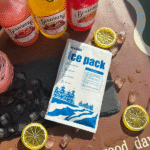
Q5) Is dry ice allowed with gel packs?
Yes—just separate products from direct contact with dry ice (use corrugate/liners) and keep vents clear.
Q6) What’s UN 1845?
The UN number identifying dry ice in transport. You’ll print it on the package along with the net kg.