Cold Chain Milk Chocolate Best Practices for 2025?
Last updated: December 19, 2025
Cold chain milk chocolate best practices keep milk chocolate glossy, snappy, and clean-tasting from packout to doorstep. Your biggest enemies are temperature cycling and moisture shock, not just “full melt.” Milk chocolate can soften as temperatures approach 30–32°C (86–90°F), and customers may complain even without visible melting. Many operators aim for a stable cool band (often around 15–18°C) and lower humidity (often near ≤50% RH) to reduce sweating and bloom risk.
This article will answer for you:
How cold chain milk chocolate best practices prevent bloom, sweating, scuffs, and odor pickup
What a realistic milk chocolate cold chain temperature range looks like by stage
How to build a condensation control workflow your team will actually follow
How to write a milk chocolate shipping SOP that stays consistent in peak weeks
How to set up milk chocolate temperature monitoring without drowning in data
How to design a last-mile milk chocolate delivery SOP for porches and lockers
Why do cold chain milk chocolate best practices matter more than ever?
Cold chain milk chocolate best practices matter because milk chocolate fails in ways customers see immediately. Seafood can be slightly warm and still “look fine.” Milk chocolate can look “ruined” from a short mistake. A haze, dull patch, or sticky wrap triggers refunds fast.
Most returns are process returns, not recipe returns. You can ship the same chocolate and get opposite reviews. The difference is almost always handling discipline during transitions.
The three customer-visible failures you’re trying to prevent
Milk chocolate usually fails in predictable categories. When you name them clearly, your team stops guessing.
| Failure mode | What triggers it | What customers notice | What it means for you |
|---|---|---|---|
| Softening / smear | Heat spike or long warm hold | Warped shape, fused wrappers | “Melted” refunds |
| Bloom (haze/grey) | Repeated warm–cool cycling | “Looks old” appearance | Premium trust drops |
| Sweating / sticky wrap | Cold-to-warm jump in humid air | Damp cartons, sticky film | Complaints even if taste is fine |
| Scuffs / rub marks | Movement and vibration | Dull finish, scratches | Gift quality downgraded |
| Odor pickup | Mixed storage, weak barriers | “Off taste” reviews | Brand damage |
Practical tips and suggestions
Track time exposed to warm air during handling. It drives most defects.
Fix movement first if scuffs are common. Coolant cannot stop friction.
Treat odor control as part of cold chain milk chocolate best practices.
Practical example: One gifting brand discovered most “melt complaints” were scuffs from loose packing on multi-stop routes.
What temperature range supports cold chain milk chocolate best practices?
Cold chain milk chocolate best practices work best with a stable target band, not extreme cold. Many teams handle milk chocolate in a “cool room” range and avoid long holds above a simple action line. Your real goal is fewer peaks, fewer dips, and fewer fast transitions.
If you can’t control everything, control the moments that matter most. Staging, loading, and doorstep time decide outcomes.
A practical milk chocolate cold chain temperature range plan
Use a simple stage plan so every department speaks the same language.
| Stage | Practical target idea | Why it matters | What to watch | What it means for you |
|---|---|---|---|---|
| Storage | Stable cool, low humidity | Preserves finish and aroma | Door-open spikes | Fewer cosmetic defects |
| Packout | Same band as storage | Avoids temperature shock | Warm benches | More consistent arrivals |
| Transit | Slow change, fewer swings | Prevents softening | Heat soak in vehicles | Fewer deformed pieces |
| Delivery | Short exposure window | Biggest uncertainty | Porch time | Fewer refunds |
Why “too cold” can backfire
Cold is not automatically safe. Cold-to-warm in humid air creates condensation. Condensation is a surface event that leaves visible damage behind.
Plain-language rule: If chocolate is colder than the air, water wants to land on it. Cold chain milk chocolate best practices keep it sealed until temperatures equalize.
Practical tips and suggestions
Reduce swings before adding more insulation. Swings create more defects.
Use one action threshold with a clear response. Too many rules fail.
Add a staging timer. “Just five minutes” becomes forty-five fast.
Practical example: A warehouse improved outcomes by shortening warm staging time, not by changing materials.
How do you control humidity and prevent condensation in cold chain milk chocolate best practices?
Humidity control is the “silent win” inside cold chain milk chocolate best practices. Moisture drives sugar bloom and sticky wrappers. Moisture also raises hygiene risk if it lingers. You may not control outdoor humidity, but you can control how much humid air touches cold product.
Condensation happens most during transitions. That is why your workflow matters more than your insulation thickness.
How to prevent condensation on milk chocolate: the Seal–Wait–Open rule
Train one simple rule for staff and customers. It prevents a large share of complaints.
Seal: keep the inner barrier sealed at delivery
Wait: allow a short acclimation window (your SOP sets the time)
Open: open only when the package feels closer to room conditions
Condensation triggers and fixes (fast table)
| Trigger | What it looks like | What to change | Practical win for you |
|---|---|---|---|
| Warm dock delay | Damp cartons, foggy film | Shorten dock time | Fewer surface defects |
| Humid loading | “Sweating” packs | Use a controlled loading zone | Cleaner unboxing |
| Big temp step-up | Fog inside inner bag | Add buffering + sealed warm-up | Less sugar bloom risk |
| Poor barrier | Odor + moisture ingress | Upgrade inner seal | Fewer “box smell” reviews |
Practical tips and suggestions
Put warm-up instructions on top of the contents, not buried.
Keep cold packs off direct contact. Use a spacer layer.
Do not stage cartons in “swing zones” like hallways and open docks.
Practical example: A DTC shop reduced winter complaints by making “keep sealed before opening” unavoidable.
Which packaging model supports cold chain milk chocolate best practices?
The best packaging for cold chain milk chocolate best practices does three jobs: buffer temperature, block moisture/odors, and stop movement. You do not need complex designs. You need a design your team repeats the same way every day.
Think of packout like making a sandwich. If everyone builds it differently, customers feel it.
The “3-layer packaging” model (simple and scalable)
Buffer layer: insulation sized to lane risk
Barrier layer: sealed inner liner for moisture and odor control
Structure layer: inserts, trays, or dividers that prevent scuffs
The most overlooked packaging detail: air space
Empty air warms quickly and creates micro-condensation during swings. A puffy, half-empty shipper is often an expensive risk.
| Packaging choice | Good for | Risk if ignored | Your practical meaning |
|---|---|---|---|
| Tight inner seal | Odor + moisture control | Aroma pickup | Better taste consistency |
| Right-size shipper | Stable temperature | Fast warming | Fewer soft arrivals |
| Movement control | Presentation quality | Scuffs and dull finish | Better reviews for gifts |
| Moisture-resistant outer | Humid lanes | Wet cartons | Fewer “sticky wrapper” tickets |
Practical tips and suggestions
Use one packout diagram per SKU. Photos beat long documents.
Fill voids with structured inserts, not loose materials that shift.
Separate coolant from product with a rigid sheet or spacer.
Practical example: A chocolatier reduced “looks old” returns after switching from loose fill to fixed dividers.
How do you run a packout SOP for cold chain milk chocolate best practices?
Cold chain milk chocolate best practices succeed when packout is a routine, not a craft project. Your team needs one standard layout per lane type. They also need a few “do not improvise” rules.
Most packout failures are human: wrong placement, missed seal, or too much headspace.
Repeatable packout sequence (fast and reliable)
Pre-condition product and materials in the same stable zone
Seal the inner barrier fully (no corner gaps)
Immobilize product with trays or dividers
Place coolant in a consistent pattern (if used)
Close and check closure points (two-point check)
Label for last mile (one short instruction, not a novel)
Packout quality table you can train in 5 minutes
| Packout control | Pass condition | Common miss | Quick fix | What it means for you |
|---|---|---|---|---|
| Inner seal | Continuous seal, no gaps | Partial seal | Visual seal check | Less moisture entry |
| Movement control | No shifting on light shake | Loose voids | Add dividers | Fewer scuffs |
| Coolant placement | Same layout every time | Random placement | Photo standard | Predictable hold time |
| Closure check | Fully closed, flush edges | Half-close | Two-point check | Fewer heat leaks |
Practical tips and suggestions
Enforce a simple “door-open timer.” Pack and close quickly every time.
Create seasonal packouts. Summer and winter need different habits.
Train staff with real defect photos: bloom vs sweating vs scuffs.
Practical example: A team improved compliance after adding one rule: boxes must be sealed within 90 seconds of final placement.
Which cooling strategy fits cold chain milk chocolate best practices?
Cold chain milk chocolate best practices do not always mean “add more coolant.” Too much cooling can raise condensation risk at delivery. Too little cooling can allow softening. Choose cooling based on lane time, ambient risk, and delivery uncertainty.
Cooling should “steady” the environment, not shock it.
Gel packs vs PCM panels (operations-first comparison)
| Cooling option | Strength | Risk to watch | Best fit | Practical meaning for you |
|---|---|---|---|---|
| Gel packs | Familiar and flexible | Early overcooling | Short–medium lanes | Needs spacer discipline |
| PCM panels | Steadier buffering | Wrong PCM point | Medium–long lanes | Better stability when tuned |
| No coolant | Cheapest and fastest | Limited protection | Short, cool lanes | Works only with tight timing |
Practical tips and suggestions
Place cooling at the perimeter to promote even conditions.
Pilot before scaling. Test one lane for two weeks and adjust one variable.
Build a seasonal playbook. This prevents overpack and underpack cycles.
Practical example: A boutique chocolatier improved summer consistency after switching to a steadier buffering layout and reducing door-open time.
Monitoring for cold chain milk chocolate best practices: what should you measure?
Monitoring should answer one question: where did the risk happen? Cold chain milk chocolate best practices do not require sensors in every shipment. Start with lane sampling. Focus on hot weeks, new packouts, and high-value gifting lanes.
Monitoring also stops internal debates. Data replaces opinions.
Monitoring options (simple and scalable)
| Monitoring method | Best use | What it tells you | Weak spot | What it means for you |
|---|---|---|---|---|
| Spot checks | Packout and receiving | “Right now” condition | No history | Good for quick decisions |
| Logger sampling | Lane validation | Full time-temp profile | Needs review process | Best for root cause |
| Exception sampling | Complaints and delays | Why it failed | Reactive | Great learning tool |
| Facility sensors | Storage/staging zones | Chronic drift | No last-mile view | Prevents repeat mistakes |
What to track (the minimum set)
Peak temperature and time above action line
Number of swings (up-down cycles)
Staging time (packout to dispatch)
Door-open time per stop (estimated is fine)
Defect category at arrival (softening, bloom, sweating, scuff, odor)
Helpful decision tools
Check the details before you choose packaging
These quick tools can help you compare route risk, sizing needs, coolant choices, and packaging details before you request a quote.
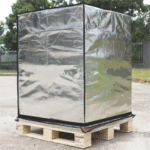
01Sizing supportBox Liner & Pallet Cover Sizing
Check box liner and pallet cover sizing logic for insulated packaging projects.
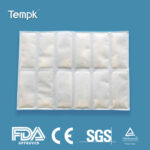
Estimate sizing02Ice pack estimateIce Pack Calculator
Estimate gel ice pack quantity for chilled shipments and practical route planning.
Estimate ice packs03Packaging choicePackaging Selector
Compare insulated packaging options by product, route, and temperature need.
Find packaging
Practical tips and suggestions
Standardize sensor placement away from direct coolant contact.
Review weekly, not yearly. Fast feedback creates fast improvement.
Link complaints to lane context (season, porch time, delays).
Practical example: A brand learned their worst spikes occurred during cross-docking, not transit.
Last-mile rules that make cold chain milk chocolate best practices succeed
Last mile is where cold chain milk chocolate best practices either protect your brand or expose it. A perfect packout can fail on a sunny porch. You can’t control every doorstep, but you can design rules that reduce exposure.
Last mile also includes unboxing behavior. Many “sticky wrapper” tickets start here.
Last-mile milk chocolate delivery SOP checklist
| Last-mile control | What you do | Why it works | Practical meaning for you |
|---|---|---|---|
| Delivery window | Deliver when someone is home | Less unattended exposure | Better arrival condition |
| Customer notice | “Receive now” message | Shortens porch time | Fewer disputes |
| Safe placement | Shade/indoors instruction | Limits heat soak | Better texture |
| Warm-up guidance | Seal–Wait–Open | Reduces condensation | Cleaner appearance |
| Delay rule | Defined trigger + action | Prevents guessing | Faster decisions |
Practical tips and suggestions
Offer “cool-hour delivery” in hot regions. Morning beats late afternoon.
Use signature requirements only for critical lanes. It can increase dwell.
Put the first instruction card on top of the contents.
Practical example: A gifting program reduced negative reviews after adding a simple top-of-box warm-up line.
Interactive tools for cold chain milk chocolate best practices
These tools improve user engagement and make your SOP easier to adopt.
Tool 1: Lane Risk Score (0–10) in 60 seconds
Give yourself 0, 1, or 2 points per line.
Transit time: under 6h (0) / 6–24h (1) / over 24h (2)
Handoffs: one (0) / two–three (1) / four+ (2)
Ambient exposure: rare (0) / sometimes (1) / frequent (2)
Customer dwell risk: low (0) / medium (1) / high (2)
Intervention ability: strong (0) / limited (1) / minimal (2)
Score meaning
0–3 Essentials: standard pack photo + staging limit
4–7 Controlled: seasonal packouts + logger sampling
8–10 Critical: strong buffering + strict exceptions + monitoring
Tool 2: 5-minute Self-Audit Scorecard (15 points)
Temperature discipline (0–6)
Stable target range is defined and trained
Temperature cycling is actively minimized
Product is pre-conditioned before packing
Dock time and staging limits are enforced
Packout time and receiving time are recorded
One clear exception rule exists
Moisture control (0–5)
Moisture barrier is used on risk lanes
Seal–Wait–Open guidance is used
Staff recognize “sweating cartons” quickly
Packaging resists moisture ingress
Chocolate is isolated from wet melt water
Packaging repeatability (0–4)
Standard pack patterns exist per SKU/lane
Shippers are right-sized to reduce headspace
Movement control is built-in (dividers/trays)
Seasonal test shipments are performed
Score
13–15 Strong: optimize cost and sustainability next
9–12 Medium: expect seasonal issues, fix transitions first
0–8 High risk: fix template + SOP before peak weeks
Temperature excursion response for chocolate: what do you do when things go wrong?
Cold chain milk chocolate best practices include an exception playbook, because exceptions happen. Delays, heat waves, and misroutes will occur. Mature teams don’t avoid exceptions. They handle them consistently.
Use a simple triage system so your team responds fast.
A simple exception triage tree
Classify symptom: softening, bloom, sweating, scuff, odor
Check lane context: season, delays, porch exposure, handoffs
Decide action: ship / hold / rework / replace / reject
Log one-sentence root cause
Apply one corrective action in the SOP
| Symptom | Likely cause | Quick check | Recommended action | What it means for you |
|---|---|---|---|---|
| Soft corners | Heat soak | Box warmth at arrival | Replace + tighten last mile | Protects brand trust |
| Dull haze | Cycling | Delay and handoff notes | Improve buffering + reduce opens | Cuts bloom risk |
| Sticky wrap | Condensation | Open timing | Seal–Wait–Open training | Fewer repeats |
| Scuffs | Movement | Divider presence | Update packout | Better gift appearance |
| Odor | Storage mix | Warehouse practices | Upgrade barrier + separation | Prevents bad reviews |
Practical example: A team cut repeat complaints by splitting “melt” into softening, scuffing, and surface moisture marks.
2025 trends in cold chain milk chocolate best practices
In 2025, cold chain milk chocolate best practices are becoming more lane-specific and more operations-driven. Teams are shifting from one universal packout to two or three validated packouts. Monitoring is also becoming more purposeful, with fewer devices and better sampling.
Sustainability is pushing smarter right-sizing and reuse. The best programs reduce waste by reducing rework and reshipments.
Latest progress snapshot (what’s changing now)
Lane scoring: season + route pattern selects packout level
Simpler SOP design: shorter checklists, more photo standards
Transition discipline: sealing and exposure steps built into training
Smarter sampling: monitoring focuses on high-risk lanes and new designs
Customer guidance: one-line unboxing instructions reduce sweating tickets
Market insight: customers don’t just want “not melted.” They want clean surfaces, no haze, stable shape, and consistent taste.
Frequently asked questions
Q1: What is a practical milk chocolate cold chain temperature range for shipping?
Many programs use a stable cool “comfort band” and avoid long holds above a simple action line. Stability beats extreme cold.
Q2: How do cold chain milk chocolate best practices prevent bloom during shipping?
They minimize warm–cool cycling by using buffering packouts and limiting staging and door-open time.
Q3: How to prevent condensation on milk chocolate at delivery?
Use a sealed inner barrier and a short sealed warm-up before opening. This reduces moisture landing on surfaces.
Q4: Should you refrigerate milk chocolate during shipping?
Not automatically. Cold-to-warm jumps can increase condensation risk. Focus on stable cool handling and barriers.
Q5: Gel packs or PCM panels—what fits cold chain milk chocolate best practices?
Gel packs suit short lanes but can overcool early. PCM panels can buffer more steadily on longer lanes when tuned.
Q6: Do you need monitoring for every shipment?
No. Start with sampling on high-risk lanes and peak weeks. Expand only where it drives decisions.
Q7: Why does milk chocolate arrive “melted” even without puddles?
Short heat exposure can soften edges and dull finish. Customers still perceive it as a quality failure.
Q8: What is the fastest improvement you can make this week?
Cut warm staging time and enforce one standard pack photo. Workflow fixes often beat new materials.
Summary and recommendations
Cold chain milk chocolate best practices protect milk chocolate by controlling heat spikes, humidity shocks, and rough handling. Set stable targets, reduce temperature cycling, and treat transitions as your highest-risk moments. Build packaging around buffer, barrier, and structure, then standardize packouts with photos. Add last-mile rules that match real doorstep exposure and include Seal–Wait–Open instructions to prevent sweating. Monitor high-risk lanes by sampling and improve one variable at a time.
Next-step action plan (CTA)
Define one clear temperature band and one action line for exceptions.
Publish one packout photo per lane type (low, medium, high risk).
Enforce staging and lid-open time limits during packout and delivery.
Run a two-week pilot on your top two risk lanes with sampling loggers.
Update SOPs monthly based on the worst 10% of events and top defect types.
About Tempk
At Tempk, we build practical cold chain systems for temperature-sensitive shipments, including milk chocolate. We focus on repeatable lane-based packouts, moisture-aware barriers, and SOPs teams can execute under peak volume. We also help you set up monitoring that leads to decisions, not dashboards. The goal is simple: fewer defects, fewer reships, and more “arrived boutique-perfect” unboxing moments.
Call to Action: Share your route duration, climate (humid or dry), product format (bars, assortments, filled items), and delivery model. We can outline a lane-based SOP aligned with cold chain milk chocolate best practices for your next pilot.