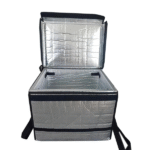
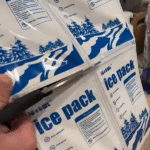
Water injection ice pack export looks simple, but buyers now expect validated performance, clean documentation, and sustainable packaging. Updated: February 11, 2026. In this guide you’ll learn how to specify the right pack. You’ll learn to prove its thermal behavior and ship it legally across borders. You’ll also see how to structure an export-ready product page that earns trust and rankings in 2026.
This article will answer
How to choose a refillable water injection gel ice pack for export without leakage claims
Which water injection ice pack export HS code approaches reduce customs holds
What food-grade PE ice pack export compliance evidence buyers ask for
How to design cold chain packaging validation (ISTA 7E / ASTM D4169 + thermal)
Which EU packaging regulation 2026 PPWR changes impact your export packaging
What is water injection ice pack export and why does it matter in 2026?
Water injection ice pack export in plain terms
Water injection ice pack export means shipping refillable or water-activated ice packs to overseas buyers for cold-chain use. The “water injection” format often ships flat and is filled later. That can reduce storage space and inbound freight. It also adds risk, because ports and seals become your main failure points. Many suppliers describe these packs as PE film pouches with an absorbent core that gels after adding water.
In 2026, water injection ice pack export expectations are higher because buyers optimize cost and compliance together. Air cargo guidance from the International Air Transport Association (IATA) stresses packaging fit, moisture protection, and loss prevention for perishables. It also adds sustainability considerations that influence packaging procurement and design.
Here’s a fast comparison, so you can position water injection ice pack export against common alternatives.
| Passive coolant option | Where it fits | Strength | Export implication |
|---|---|---|---|
| Water injection ice pack export product | Chilled food, meal kits, short-to-mid lanes | Ships flat; easy to local-fill | Port integrity and user instructions decide outcomes |
| Pre-filled gel pack | Chilled lanes requiring simple packout | No filling step for buyer | Heavier inbound freight; still composition-driven customs |
| PCM cold pack (non-zero phase) | Tight ranges (e.g., 2–8°C) | More stable temp control | Often treated as “cold pack” for classification; document composition |
| Dry ice (CO₂ solid) | Frozen or ultra-cold needs | Strong cooling power | Regulated and marked in transport rules; not “just an ice pack” |
What’s unspecified in your brief: target destination markets, export volumes, and company-specific products. Because these are unspecified, this report uses a market-agnostic framework. It also highlights EU and United States differences where primary sources are clear.
How should you define specifications for water injection ice pack export?
The spec fields you must lock before you quote
For water injection ice pack export, treat the ice pack as a component of a packaging system, not a standalone commodity. Your spec sheet should define geometry, fill volume, material stack, sealing method, and leakage controls. If the pack ships empty, publish “as-shipped condition” and “prepared condition” separately. This avoids disputes when the buyer’s water fill or freezer time changes the outcome.
Water injection ice pack export quotes also need clarity on how the buyer prepares coolant. World Health Organization (WHO)-supported vaccine logistics documents show that water packs and ice packs require correct preparation and conditioning to avoid freezing-sensitive payload damage. Even if you ship food, the lesson transfers: user preparation drives results.
Use a spec structure that supports procurement, engineering, and compliance in one place. The table below is a practical template for water injection ice pack export quotes and POs.
| Spec line (export-ready) | What you state | Practical implication in water injection ice pack export |
|---|---|---|
| Pack type | Refillable water injection / pre-filled gel / PCM | Impacts customs description, testing, and user instructions |
| Outer film | PE / PA-PE laminate / other | Drives puncture resistance and seal integrity claims |
| Fill medium | Water-only / water + gel-former | May affect SDS needs and tariff interpretation |
| Nominal fill volume | e.g., 400 ml ± tolerance | Determines freeze time and expansion risk |
| Port design | screw cap / heat-seal port / self-seal | Direct driver of leakage rate |
| Conditioning | freezer temperature + hours | Links performance to user process |
| Reuse cycles | validated cycle count | Supports life-cycle cost and sustainability claims |
Which quality and thermal tests prove performance in water injection ice pack export?
Build a test stack: thermal + mechanical + leakage
Water injection ice pack export works best when you publish a stacked validation plan. Start with thermal performance, because your buyer purchases temperature time, not “cold.” The International Safe Transit Association (ISTA) describes the 7E profiles as a standard for thermal transport testing built from real-world parcel lane data. That is why ISTA 7E language shows up in 2026 RFQs and audits.
Next, cover distribution hazards that trigger leaks. ASTM International’s D4169 is a common framework for performance testing of shipping containers and systems. It groups hazards like drop, vibration, and compression into distribution cycles that mimic logistics scenarios. Mechanical hazards can crack seals, weaken ports, and cause micro-leaks you only find at destination.
Then prove leakage resistance under freeze and thaw stress. Add a “worst-case overfill” scenario, because end users often overfill to “get more cold.” WHO guidance on passive containers warns that incorrect use of ice packs can cause temperature deviations. In water injection ice pack export, incorrect fill and conditioning also cause failures and claims.
Packaging and test specs you can publish for water injection ice pack export
Leak test: 0 visible leaks after freeze–thaw and a defined drop simulation.
Seal integrity: minimum peel or burst requirement, with method and acceptance limits.
Thermal claim: hours in a target range under a defined profile (for example, ISTA 7E).
Mechanical survival: pass a selected ASTM D4169 distribution cycle for your shipper design.
Report format: photos, setup notes, and calibrated logger output in every test report.
Case study (56 words)
A seafood exporter used water injection ice pack export with pre-filled packs to save receiver labor. After a summer route change, cartons arrived damp and several packs leaked at the port. A revised test stack combined a thermal profile with drop testing and a post-freeze leak test, then added secondary bagging. Claims dropped, and reorders resumed within two months.
What export compliance rules affect water injection ice pack export in 2026?
Focus on three compliance layers: customs, chemical, and packaging law
Water injection ice pack export compliance starts with customs classification and product description. The World Customs Organization (WCO) maintains the Harmonized System, and the HS 2022 edition entered into force on January 1, 2022. That matters because most countries build national tariff schedules on the HS structure.
For U.S.-bound trade, water injection ice pack export often hinges on composition. U.S. Customs and Border Protection (CBP) rulings show many gel ice packs classified under heading 3824 (chemical products and preparations), with duty rates applied at specific subheadings. Other cooling packs with textile construction can classify under textile headings, depending on design and materials. Use rulings as guidance, then document your exact bill of materials.
Next is chemical and food-contact compliance, which depends on your marketed use. In the European Union, food contact materials have a framework regulation. Plastics used for food contact have a specific measure in Regulation (EU) No 10/2011. If your water injection ice pack export is marketed for food transport, buyers may request a declaration and supporting evidence.
In the U.S., the U.S. Food and Drug Administration (FDA) explains that the status of a food contact material depends on the status of each migrating substance and its authorization pathway. Many indirect food additive rules are in 21 CFR Parts 174–179, and polyethylene has specific provisions in 21 CFR 177.1520. Your buyer may ask you to map resin grades and additives to these clearances.
Finally, packaging law is becoming an export constraint, not just a sustainability story. The European Commission notes that the Packaging and Packaging Waste Regulation (EU) 2025/40 entered into force on February 11, 2025. It has a general application date of August 12, 2026. Plan for tighter packaging design, data, and responsibility expectations in EU-focused water injection ice pack export.
| Market lens | What buyers commonly request | Practical implication for water injection ice pack export |
|---|---|---|
| EU food logistics | FCM compliance basis + traceability | Prepare declarations and supplier traceability |
| EU chemicals | SVHC communication / notification triggers | Screen additives; prepare substance statements |
| EU packaging 2026+ | PPWR-driven packaging data and design focus | Expect more reporting and labeling demands |
| U.S. import | HS/HTS alignment and ruling logic | Write precise invoices and composition statements |
| Air cargo (global) | Leak-proof + robust packout discipline | Better packouts reduce rejections and claims |
In practice, many EU buyers ask you to reference the European Chemicals Agency (ECHA) Candidate List workflow in your material statements, even when thresholds do not trigger notification.
Export compliance checklist for water injection ice pack export (3–5 items)
Lock a buyer-approved customs description and HS approach based on composition and construction.
Prepare core documents: commercial invoice, packing list, and composition statement.
For food-facing claims, provide EU FCM and/or U.S. authorization mapping as applicable.
Screen for SVHC communication duties when exporting “articles” into the EU supply chain.
Plan EU packaging compliance readiness before August 12, 2026.
How do you package and label to prevent leaks in water injection ice pack export?
Design for moisture, compression, and real handling
Water injection ice pack export has one margin killer: uncontrolled moisture. Condensation softens cartons, weakens adhesives, and triggers mold complaints. IATA guidance on perishable loss reduction warns that inappropriate packaging creates vulnerabilities to moisture and physical hazards. Treat moisture as a primary hazard and validate around it.
Use a two-layer containment logic for water injection ice pack export. The ice pack pouch is layer one. A secondary liner bag is layer two when you ship pre-filled packs. If you ship empty packs, protect the port against crushing and abrasion, because that damage becomes leakage later. Pair that with cartons designed for compression, since compression is a common distribution hazard.
Helpful decision tools
Check the details before you choose packaging
These quick tools can help you compare route risk, sizing needs, coolant choices, and packaging details before you request a quote.
Insulation Material Drop Resistance
Review drop resistance and handling factors before choosing insulation materials.
Check resistanceCoolant & PCM Reference
Compare coolant and PCM options when a route needs added temperature support.
Compare optionsIce Pack Calculator
Estimate gel ice pack quantity for chilled shipments and practical route planning.
Estimate ice packsLabeling matters because many buyers treat your packs as part of a perishable system. IATA also updates its special cargo manuals periodically, so exporters should reference the current edition used by their forwarders. IATA’s perishable material explains that the PCR manual supports packaging and handling of temperature-sensitive products. Their loss-reduction guidance also highlights the role of labeling and correct handling in preventing loss.
| Packaging choice | What you gain | Trade-off you must explain |
|---|---|---|
| Secondary poly liner | Stops damp cartons and cross-contamination | Adds material; may affect recyclability story |
| Absorbent pad + tray | Contains micro-leaks and condensation | Adds cost per shipper unit |
| Port protectors (empty pack) | Prevents crushing and cap failures | Adds assembly step and QA checks |
| Moisture-resistant carton | Better stacking and fewer collapses | Higher carton cost; validate claims |
SAMPLE PACKING CHECKLIST (WATER INJECTION ICE PACK EXPORT)
1) Verify SKU, pack size, and port type match the PO.
2) Confirm pouch seal inspection passed (visual + random leak test).
3) If pre-filled: confirm fill volume, headspace, and cap torque standard.
4) Freeze/condition per work instruction; record freezer temp and time.
5) Bag packs (secondary liner), add absorbent where required.
6) Pack cartons to specified count; add corner/port protection if needed.
7) Apply labels: item ID, lot/batch, handling notes, and carton count.
8) Add documents: packing list, composition statement, and test summary.
9) QC sign-off and photo record before palletization.
How do you manage Incoterms and documents for water injection ice pack export?
Use Incoterms and quality frameworks to reduce disputes
Water injection ice pack export disputes often start with “who owns what risk, and when.” Incoterms® 2020 rules are maintained by the International Chamber of Commerce (ICC) and define obligations, costs, and risk transfer under 11 standard terms. Trade guidance also summarizes that there are seven rules for any mode and four rules for sea and inland waterway transport. Choose, write, and apply the right Incoterms term consistently in your sales documents.
Documentation is your second lever in water injection ice pack export. If you sell into pharma or controlled medical logistics, buyers may borrow expectations from Good Distribution Practice. EU GDP guidance is built around a quality system, with risk assessment and documented control of storage and transport. That shapes what sophisticated buyers ask you to show.
For higher-scrutiny cold-chain programs, International Organization for Standardization (ISO) 21973 describes building a transportation plan with verification, validation, communication, and documentation. Even if you export only ice packs, referencing that language aligns you with the buyer’s quality vocabulary. It also helps you build a more credible “E-E-A-T” narrative on-page.
| Document | When you provide it | Practical impact on water injection ice pack export |
|---|---|---|
| Product specification sheet | quote + PO confirmation | Prevents “not as described” disputes |
| Test summary (thermal + mechanical) | before first order / on change | Prevents unverifiable performance claims |
| Composition statement | export clearance | Reduces misclassification and customs delay risk |
| Food-contact statement | food-use marketing | Reduces buyer legal exposure and recall risk |
| EU packaging readiness note | 2026 planning | Reduces EPR and packaging-data friction |
Which FAQs and SEO actions grow water injection ice pack export traffic in 2026?
Apply 2026 on-page SEO: helpfulness, structure, and trust signals
Search behavior is also shifting toward longer, more specific questions, including follow-ups. Google’s guidance on succeeding in AI search experiences recommends focusing on unique, non-commodity content that satisfies visitors. In practice, this favors pages that include specs, test evidence, and compliance details, not just marketing claims.
Avoid outdated assumptions about FAQ rich results. Google announced that FAQ rich results are primarily shown for well-known, authoritative government and health sites. That means most exporters won’t get expanded FAQ snippets. Still, on-page FAQs can lift conversions and long-tail traffic, even without rich results.
Water injection ice pack export coolant selection: gel packs vs dry ice vs PCM
Water injection ice pack export packaging validation checklist (ISTA 7E explained)
Water injection ice pack export HS code strategy for cold chain consumables
Water injection ice pack export EU PPWR 2026 overview for packaging teams
Water injection ice pack export technical data sheet template and examples
Schema types to consider
Article for the main page (supports broader understanding and eligible rich features).
FAQPage only if your page is a true FAQ with single answers, and you understand eligibility limits.
Interactive element ideas for a water injection ice pack export page
A “pack sizing self-assessment” (payload mass, lane duration, target temperature → suggested starting packout).
A “compliance readiness checker” (destination, food-contact claim, pre-filled vs empty → document list).
A “port leakage risk score” (port type, film gauge, overfill tolerance → recommended tests and AQL).
CTAs that fit water injection ice pack export intent
Download the water injection ice pack export spec template (PDF)
Request a water injection ice pack export sample kit with test summaries
Book a 15-minute water injection ice pack export compliance review
FAQ: buyer questions about water injection ice pack export
Is water injection ice pack export considered hazardous for air shipments?
Most freezer-preconditioned “normal” ice packs are not treated as hazardous materials in passenger guidance. This differs from some instant cold packs that can contain reactive chemicals. In cargo, the bigger risk is leakage and moisture damage. Dry ice rules apply only when you ship dry ice refrigerant, which is regulated in U.S. transport rules.
What HS code should I use for water injection ice pack export?
There is no single global answer because classification depends on construction and composition. U.S. customs rulings show many gel ice packs classified under heading 3824. Textile-covered cooling packs can fall under textile headings. Treat rulings as guidance, then match your invoice description to your bill of materials and destination schedule.
Do I need food-contact compliance documents for water injection ice pack export?
If you market the packs for food logistics, buyers often request evidence that materials used near food meet applicable rules. In the EU this starts with the framework regulation and plastics measures. In the U.S., FDA explains that the regulatory status of each substance in a food-contact material governs the finished article’s overall status.
How do I prevent condensation damage during water injection ice pack export?
Design for moisture as a primary hazard. Pair the primary pouch with secondary containment when pre-filled. Add absorbents where appropriate and use cartons with adequate compression strength. Validate the full packout under a thermal profile and a distribution hazard cycle, because leaks appear after vibration and compression. This approach mirrors perishable loss-reduction guidance about moisture vulnerabilities.
What changed in 2026 that affects water injection ice pack export packaging?
For EU-bound shipments, the Packaging and Packaging Waste Regulation (EU) 2025/40 becomes generally applicable on August 12, 2026. That raises expectations on packaging design, labeling, and producer responsibility workflows. If you sell into the EU, prepare packaging documentation and data workflows before the application date.