A successful cold chain liner bulk order is not a packaging shortcut. It is a system decision that links product sensitivity, route severity, liner material, coolant strategy, pack-out discipline, and supplier capability. In 2026, that system view matters more than ever because the cold-chain packaging market is growing fast, healthcare demand is rising with biologics and advanced therapies, and route variability is pushing buyers to stop treating all liners as interchangeable. (Grand View Research)
What should you define before requesting quotes?
Before you request pricing for a cold chain liner bulk order, lock these variables:
temperature range
- maximum dwell time
- lightest and heaviest payload
- coolant type and location
- outer carton size
- likely summer and winter ambient conditions
- packing-line assembly method
Without that information, quote comparisons are weak. A liner that looks inexpensive may need more coolant or leave too much empty headspace. A liner that costs more may still be the better business decision if it reduces spoilage, packing mistakes, or seasonal failures.
How should you choose liner type?
There is no universal answer. Paper-based systems can be attractive for chilled routes that value flat storage and a fiber-forward material story. Reflective bubble systems remain useful where lightweight radiant control matters, but they depend on air-space geometry to perform. VIP-supported systems offer higher insulation, while PCM can buffer temperature swings in more demanding routes. DOE guidance, WHO qualification principles, and a 2026 PCM review all point to the same conclusion: thermal performance depends on the full system, not one material choice in isolation. (The Department of Energy’s Energy.gov)
Material selection table
How should you qualify a cold chain liner bulk order?
Qualification should be deliberate. WHO shipping-container guidance explicitly uses DQ, OQ, and PQ. That framework is useful even outside pharma because it forces you to test the idea, then the controlled result, then the operational reality. For parcel shipping, ISTA 7E provides a useful thermal-transport test reference. If the shipment is food-related, FDA sanitary transportation guidance also matters because it frames the need to prevent food safety problems during transport. (世界卫生组织)
A practical qualification path looks like this:
- DQ: choose the right liner concept for the route
- OQ: test it under controlled temperature profiles
- PQ: confirm it works with real product, real assembly, and real handling
This is the fastest way to turn a cold chain liner bulk order from a guess into a defendable buying decision.
How do you choose suppliers and reduce sourcing risk?
Supplier choice matters as much as material choice. You want a supplier that can provide:
stable specifications
- realistic samples
- dimensional drawings
- repeat-order lead-time clarity
- change-control discipline
- validation support
That matters more in 2026 because the wider cold-chain environment is under pressure. GCCA describes 2026 as a pivotal year shaped by technology, sustainability, and climate preparedness. In practical sourcing terms, that means capacity, communication, and route realism all matter more than before. (Global Cold Chain Alliance)
What does sustainability mean for a cold chain liner bulk order?
It means optimizing the full system, not only changing the top material. The EU PPWR entered into force in February 2025 and applies from 12 August 2026, which is pushing companies to review packaging design and material use more carefully. In the U.S., paper and paperboard packaging retains a strong recovery profile in EPA and AF&PA data, but mixed systems may still be the right answer in certain high-risk lanes if they prevent spoilage and support the required temperature control. (EUR-Lex)
The better question is not “Which material sounds greener?” It is “Which system protects product, controls waste, and fits my market reality best?”
Helpful decision tools
Check the details before you choose packaging
These quick tools can help you compare route risk, sizing needs, coolant choices, and packaging details before you request a quote.
Box Liner & Pallet Cover Sizing
Check box liner and pallet cover sizing logic for insulated packaging projects.
Estimate sizingCompliance Checklist Generator
Build a practical checklist for packaging review, shipping, and documentation.
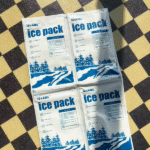
Build checklistIce Pack Calculator
Estimate gel ice pack quantity for chilled shipments and practical route planning.
Estimate ice packs2026 developments to watch
- More paper-forward growth in chilled food
- More hybrid or PCM-supported systems for harder lanes (ScienceDirect)
- More route-specific packaging programs
- More documentation expectations in healthcare packaging (U.S. Food and Drug Administration)
- FAQ
What is the first technical mistake in a cold chain liner bulk order?
Requesting quotes before defining route time, payload mass, and coolant strategy.
Should I run both summer and winter validation?
Yes. Seasonal testing is one of the simplest ways to reduce unpleasant surprises.
Can one liner system serve both food and pharma?
Sometimes, but pharmaceutical use generally demands stronger documentation and qualification discipline.
Is bulk ordering always cheaper?
Only if the liner is correct. Buying the wrong format in bulk is one of the most expensive mistakes in cold-chain packaging.
Summary and recommendation
A smart cold chain liner bulk order is route-specific, qualification-backed, and supplier-aware. Define the shipment first, choose the liner family second, and validate the full packed system before scaling. That is the most reliable buying method in 2026.
Your next step should be to test two liner systems on one live SKU using the same carton, same coolant, and two seasonal profiles. That gives you a real commercial answer quickly.
About Tempk
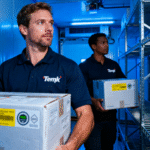
We design passive temperature-control packaging around how products actually move through food, healthcare, and life-science supply chains. Our solutions include liners, inserts, reflective formats, paper-based systems, and integrated shipper development.
If you are preparing a cold chain liner bulk order, start with route severity, payload mass, and temperature target. Those inputs produce a better packaging answer than material preference alone.