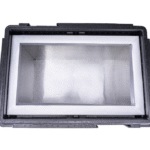
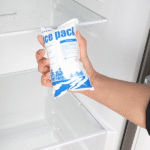
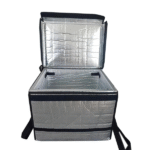
A refrigerated bag promotional product is no longer just a seasonal giveaway. In 2026, it sits inside a bigger story about reusable packaging, practical merchandise, grocery convenience, and cold-chain trust. If you choose the right structure, the bag becomes a daily-use brand asset. If you choose the wrong one, it becomes a short-lived logo carrier that users abandon after one event. That gap matters because cold-food expectations are still strict. FDA guidance still points users toward keeping refrigerated foods at 40°F or below and moving perishables into refrigeration quickly, while WHO guidance for many temperature-sensitive health products still treats 2–8°C as a typical cold-chain range. A bag that claims “cooling” without practical performance can damage brand confidence fast. (U.S. Food and Drug Administration)
What makes this category valuable is simple: people reuse useful insulated bags. They use them for lunch, groceries, school pickup, commuting, road trips, outdoor events, chilled samples, and employee wellness kits. That repeat use turns one branded object into hundreds of impressions.
This article will answer:
- How to choose a refrigerated bag promotional product that users actually keep
- Which outer fabrics, insulation layers, and liners matter most
- What compliance, testing, and audit questions smart buyers ask
- How branding, MOQ, and decoration affect long-term reuse
- Which 2026 trends are shaping reusable cold-bag sourcing
What makes a refrigerated bag promotional item successful?
The best refrigerated bag promotional item is helpful first and branded second. Utility drives retention. Retention drives impressions. If the bag carries comfortably, wipes clean fast, and holds a practical amount of cold goods, your logo keeps traveling.
That is why successful products share a few habits. They avoid awkward shapes. They use closures that actually seal the top. They keep the outside stylish enough for regular use. And they use branding in a disciplined way, so the bag feels like everyday gear instead of event leftovers.
The three buyer questions that matter most
- Will the user reuse it next week?
- Can it hold cold products safely for the intended trip?
Does the bag still look good after folding, wiping, and carrying weight?
If you cannot answer yes to all three, the unit price is probably not your real problem.
How should you evaluate materials and construction?
A refrigerated bag promotional product is a system, not a single material. The outer fabric, insulation core, closure, liner, and handle construction all shape performance. ASTM C518 exists to measure thermal transmission through flat materials in a controlled way, and while a soft cooler bag is not a rigid panel, the lesson still applies: if you do not understand how the wall structure manages heat flow, you are just buying adjectives. ASTM D4169 and ISTA thermal methods add another useful buyer perspective by linking package performance to real distribution stress rather than ideal conditions. (ASTM International | ASTM)
Recommended material logic
The biggest mistake buyers make is focusing only on thickness. Yes, foam thickness matters. But closure design, seam finish, and opening frequency often matter just as much. A zip-top bag with moderate insulation can outperform a thicker bag with a poor opening in everyday use.
- Mini decision tool: which build should you buy?
Budget campaign: light structure, simple print, limited cold-hold expectation
- Mainstream reusable promo: medium structure, zipper, reinforced base, clean liner
- Premium retail or gifting: shaped walls, upgraded fabric, quieter branding, better finish details
What compliance and sourcing questions should you ask?
Ask fewer vague questions and more exact ones. Do not ask only whether a supplier is “compliant.” Ask what documents support the materials, the intended use, and the target market.
For food-related use, start with the liner and contact surfaces. FDA explains that food contact substances used in packaging or storage and acting as food additives must be authorized through applicable pathways. In Europe, food-contact materials are governed by a harmonized framework that requires safety and inertness, including avoiding harmful migration and unacceptable changes in food composition, odor, or taste. (U.S. Food and Drug Administration)
For factory systems, ISO 9001 remains a strong quality-management signal because it focuses on effective processes, trained staff, and continual improvement. ISO 14001 remains important for environmental management, and ISO notes that the current 2015 edition was reviewed and confirmed in 2025 while the next edition is expected soon. For social-risk management, buyers often review amfori BSCI or SMETA signals. For recycled claims, GRS matters because it requires at least 50% recycled content plus chain-of-custody and chemical expectations. Textile buyers also use OEKO-TEX STANDARD 100 as a familiar harmful-substance reference point for certain components and use cases. (国际标准化组织)
Compliance checklist for a refrigerated bag promotional order
- Intended-use statement
- Material stack specification
- Food-contact declaration where relevant
- Quality-system evidence
- Harmful-substance or REACH-related statement where needed
- Recycled-content documentation if claimed
- Sample approval with final print method
How do branding and decoration affect reuse?
The smartest branding strategy is the one that increases carry frequency. Many buyers still assume bigger logos produce more value. In reality, oversized logos often reduce reuse because the bag becomes too campaign-specific.
For a refrigerated bag promotional product, aim for brand recognition without social friction. Neutral body colors, one strong print area, clean typography, and practical pockets or handles usually outperform noisy art. The user should feel comfortable carrying the bag to work, to the grocery store, or to the beach. That comfort is part of your marketing return.
Best decoration choices
- Practical tips for better branding ROI
- Use a smaller logo so the bag feels more wearable in daily life.
- Keep the front panel stable so the print does not crack at fold lines.
- Choose everyday colors like black, sand, navy, olive, or gray to boost repeat use.
Practical example: A grocery chain often gets more repeat visibility from a quiet, durable cooler bag with a subtle front logo than from a loud seasonal graphic that users only carry once.
Helpful decision tools
Check the details before you choose packaging
These quick tools can help you compare route risk, sizing needs, coolant choices, and packaging details before you request a quote.
Insulation Material Reference
Compare insulation material choices for different cold chain packaging needs.
Compare materialsInsulation Material Drop Resistance
Review drop resistance and handling factors before choosing insulation materials.
Check resistanceDry Ice Calculator
Estimate dry ice needs for frozen or ultra-cold shipments before packing.
Estimate dry iceWhy is 2026 changing this category?
The answer is market pressure from several directions at once. U.S. e-commerce sales kept rising in 2025, giving reusable insulated carry products more relevance across click-and-collect, delivery-adjacent retail, and convenience shopping. Promo industry data also shows buyers entering 2026 more selective, which helps practical products outperform novelty products. (Census.gov)
Policy is pushing in the same direction. The EU’s PPWR entered into force in February 2025 and generally applies from 12 August 2026, signaling stronger pressure to reduce packaging waste and primary raw-material use. At the same time, PFAS evaluation in Europe has continued to cover both textiles and food-contact packaging sectors. This is why more buyers now ask about simpler coatings, cleaner chemistry declarations, recycled fabrics, and realistic reuse models. (Environment)
Latest developments at a glance
- Practical reusability now beats novelty in many promo budgets.
- Regulation is making material clarity more valuable.
Reusable cold bags fit grocery, wellness, and premium gifting better than many disposable alternatives.
Documentation matters more, especially for recycled and food-related claims.
- Refrigerated bag promotional buyer scorecard
- Give each supplier 1 to 5 points in each category:
- Thermal logic explained clearly
- Liner and use-case documentation
- Print quality and decoration durability
- Fabric and handle durability
- Quality-system credibility
- Sustainability claim documentation
- Sample accuracy
- Carton efficiency and logistics support
A supplier with a slightly higher unit price but a far better scorecard is often the lower-risk buy.
FAQ
How long should a refrigerated bag promotional product keep items cold?
That depends on starting temperature, ambient heat, ice packs, and opening frequency. Ask for use-case testing, not generic claims.
Is a zipper always necessary?
For most cold-use applications, yes. It usually improves real-world performance by reducing warm-air exchange.
Should I choose recycled fabric?
Choose it when the documentation is real and the bag still meets your durability target. Recycled content without proof is not a strategy. (Textile Exchange)
Why are buyers asking about PFAS?
Because PFAS scrutiny continues in textile and food-contact sectors, making coatings and chemistry declarations more important. (欧洲化学品管理局)
What is the biggest mistake in this category?
Buying for unit price and logo size instead of reuse, closure quality, liner suitability, and real carrying comfort.
Summary and recommendation
A high-performing refrigerated bag promotional product combines practical insulation, disciplined branding, and clear sourcing documentation. Start with how the bag will be used, then choose the material stack, closure, and print method that support that use. Ask exact compliance questions. Request realistic samples. Score suppliers on performance and documentation, not just quote speed. That is how you build a reusable branded bag that works in 2026.
About Tempk
At Tempk, we develop insulated bag solutions around real carrying behavior, not just appearance. We help brands compare materials, closure systems, food-related considerations, and customization pathways so the final product delivers both cold-chain confidence and everyday usability.