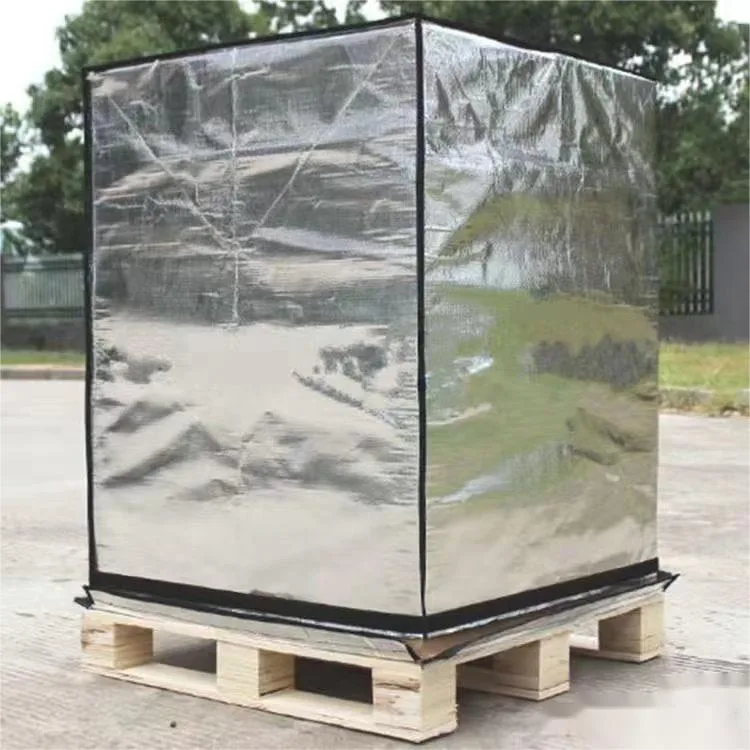
Alu foil insulated pallet covers: Practical Selection and Use Guide
Alu foil insulated pallet covers make sense when the buyer can define the exposure problem clearly. They are designed to slow heat transfer around palletized freight during shipping or staging, but they must be matched to the product, route, temperature target, pallet build, and handling process. The best purchasing decision starts with the lane, not the catalog. This optimized guide shows how to choose, test, and use covers without overclaiming what they can do.
This matters for packaging engineers, cold-chain buyers, procurement teams, and exporters comparing cover structures because the same cover can be a strong fit in one lane and a poor fit in another. The decision depends on buyers comparing foil-faced covers with foam-based covers for heat reflection, durability, handling, reuse, and cost control, product sensitivity, evidence requirements, and the people who apply the cover. A good article or supplier page should help you make that distinction instead of promising protection in every situation.
Define the exposure window before choosing the cover
Start by writing down the exact point where the pallet becomes vulnerable: assuming shiny foil alone equals insulation, choosing a structure without route testing, ignoring seam durability, or selecting foam thickness without considering handling space. This step sounds basic, but it prevents most overbuying and underbuying. If the vulnerable window is short and predictable, a cover may be enough to reduce risk. If the vulnerable window is long, uncontrolled, or tied to a narrow product range, the route may require active equipment, qualified passive packaging, coolant, or a different logistics plan.
A good exposure map includes location, expected time, worst credible delay, season, sunlight, air movement, humidity, and who controls the pallet at that point. It should also show the first protected point after the exposure. The cover should be used to bridge that gap. If no one can identify the gap, the team is not ready to select a cover structure yet.
Match structure to product, route, and handling
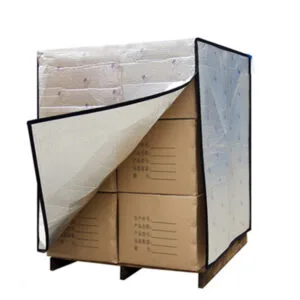
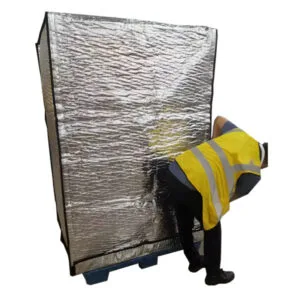
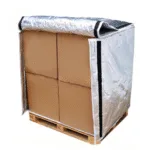
The cover structure should match the way heat reaches the pallet. Aluminum foil or metallized film, foam core, bubble layer, woven fabric, vapor barrier, seams, and edge closures may all matter, but not equally. Direct sunlight and hot surfaces point toward radiant protection and top coverage. Wind or cold dock exposure points toward closure discipline and lower skirt fit. Rough reuse points toward reinforced seams and cleaning resistance. A buyer should ask which feature solves the main route problem.
Product requirements come first. Foil-faced structures can reduce radiant heat gain when installed with appropriate orientation and air space, but conductive and convective heat transfer still matter. Do not choose a cover by a generic temperature label unless your quality or operations team has confirmed that the label matches the shipment. A cover used for a broad-tolerance product may not be acceptable for a high-risk pharmaceutical load or a frozen-food pallet facing long ambient dwell.
| Decision point | What to verify | Why it matters |
|---|---|---|
| Product and range | Confirm the product sensitivity and the required temperature target. Foil-faced structures can reduce radiant heat gain when installed with appropriate orientation and air space, but conductive and convective heat transfer still matter. | Prevents using the cover for a range it was never meant to support. |
| Route exposure | Map assuming shiny foil alone equals insulation, choosing a structure without route testing, ignoring seam durability, or selecting foam thickness without considering handling space before choosing the structure. | Shows whether the cover protects the real weak point or only looks good in a sample review. |
| Pallet build | Measure loaded width, depth, height, corners, top profile, stretch wrap, and bottom skirt needs. | Avoids gaps, tight corners, and covers that cannot be applied quickly. |
| Handling method | Check forklift contact, staging time, label visibility, opening method, and who removes the cover at receiving. | Makes the cover usable in daily operations instead of only in a purchasing file. |
| Evidence | Ask what payload, ambient profile, probe map, and acceptance criteria support any performance statement. | Keeps marketing claims separate from usable risk-control evidence. |
Use the table as a purchasing filter rather than a formality. If you cannot answer one of the items, the missing answer is a risk. That risk may be small, but it should be understood before the cover is ordered in bulk or written into a standard work instruction.
Sizing and application are part of performance
Even a strong material structure can perform poorly when it does not fit the actual load. Measure the loaded pallet, including overhanging cartons, corner boards, stretch wrap, top irregularity, and seasonal SKU changes. Decide whether the cover should sit tight, allow room for fast placement, or drop lower to cover edge cartons. If the team uses several pallet patterns, review each one before standardizing on a single cover size.
Application timing also matters. A cover should usually be applied before exposure begins, not after the pallet has already waited on the dock or ramp. Staff should know where the covers are stored, how they are identified, which side faces out, how closures should be secured, and when covers should be removed. If the process is not written down, the result may change from shift to shift.
Qualification and monitoring keep claims honest
Qualification is not about proving that one cover is good in every possible setting. It is about showing whether a specific cover, on a specific load, under defined conditions, supports a defined requirement. The test should use realistic payloads, representative pallet builds, meaningful probe locations, and acceptance criteria that are agreed before the run. For healthcare, food, or customer-controlled freight, quality review may be needed before the result is used.
Monitoring should be treated separately from insulation. A data logger records what happened; it does not protect the pallet. A cover slows heat transfer; it does not record proof. Many reliable cold-chain procedures use both, but they solve different problems. If a shipment fails receiving review, the logger record helps investigation while the cover condition and route events help explain cause.
Supplier and operations questions before bulk use
A procurement review should go beyond price per cover. Buyers should confirm layer stack, actual insulation core, seam reinforcement, fold recovery, cleaning method, sample consistency, and whether performance data matches your route exposure. The reason is simple: pallet covers are operational items. They are handled by warehouse teams, carriers, and receivers, not just reviewed by purchasing staff. A cover that looks ideal in a photo may fail if it takes too long to install, hides labels, tears at corners, or cannot be returned cleanly for reuse.
| Supplier topic | Question to ask | Why it matters |
|---|---|---|
| Layer structure | What layers are used in the aluminum foil or metallized film, foam core, bubble layer, woven fabric, vapor barrier, seams, and edge closures? | The material name alone does not explain heat-transfer behavior or durability. |
| Size basis | Are dimensions based on pallet footprint, loaded pallet, or custom measurement? | Wrong size is one of the fastest ways to lose protection at edges and base. |
| Test basis | Which payload, ambient profile, exposure direction, and probe locations were used? | A test from a different lane may be useful background, not direct qualification. |
| Reuse control | How should covers be cleaned, dried, folded, inspected, and retired? | Reusable value depends on process discipline, not only material toughness. |
| Production consistency | Will production units match the approved sample in layer stack, seam design, and closure? | Sample-to-bulk consistency matters when covers are used across many pallets. |
This table is not meant to make the buying process slower. It helps you avoid the common mistake of approving a sample based on material appearance alone. The supplier should be able to explain what the cover is designed to do, what it is not designed to do, and what information a buyer must provide before a reliable recommendation can be made.
Helpful decision tools
Check the details before you choose packaging
These quick tools can help you compare route risk, sizing needs, coolant choices, and packaging details before you request a quote.
Dry Ice Calculator
Estimate dry ice needs for frozen or ultra-cold shipments before packing.
Estimate dry iceInsulation Material Reference
Compare insulation material choices for different cold chain packaging needs.
Compare materialsBox Liner & Pallet Cover Sizing
Check box liner and pallet cover sizing logic for insulated packaging projects.
Estimate sizingPractical example
For example, a procurement team is deciding whether a lighter foil-faced cover is enough for summer dock dwell, or whether a more padded foam structure is justified for rough return loops. A reasonable buyer would not ask whether a cover can solve every temperature problem on the route. The better question is whether the cover reduces the known exposure enough to support the operating procedure. That requires measuring the pallet, understanding how long the pallet waits, and confirming who applies and removes the cover.
The same situation can lead to different decisions. A low-risk product with a wide tolerance may need a simple reusable cover and a receiving check. A higher-risk product may need cover testing, data loggers, active transport, or quality approval. The cover choice should match the product and lane, not a general statement about cold-chain shipping.
When to choose a different solution
Choose a different or additional solution when when the lane requires high compressive durability, defined conductive resistance, or a qualified thermal system that has not been demonstrated by the cover. This does not mean the cover has no value. It means the cover should not carry responsibility for a risk it cannot control. Refrigerated vehicles, reefer containers, active air cargo units, qualified passive shippers, coolant systems, and product-level monitoring all have roles. The right design may combine several tools rather than force one product to solve the whole lane.
A cautious decision protects the buyer as well as the cargo. Overstating cover performance can lead to rejected shipments, damaged customer trust, and difficult deviation investigations. Understating it can cause unnecessary spending on active solutions for short, manageable exposures. The goal is balanced judgment based on route evidence.
FAQ
Is aluminum foil insulation better than foam for pallet covers?
It depends on the exposure. Foil-faced structures are useful against radiant heat when the reflective surface works as intended. Foam structures may add more padding and conductive resistance but can be bulkier. Buyers should compare tested performance, handling durability, foldability, and route conditions instead of choosing by material name alone.
Can a thermal pallet cover replace refrigerated transport?
Not by itself. A cover is a passive layer that slows heat transfer; refrigerated trucks, reefers, and active containers control the surrounding environment. A cover may support a short loading or staging window, or add a buffer when active equipment doors are opened, but it should not be used as a direct substitute when product quality depends on active temperature management.
Where should a buyer place data loggers when testing a pallet cover?
Logger placement should reflect the risk you are trying to understand. Many teams look at edge positions, top exposure, center product temperature, and any side facing the strongest heat, cold, or sun. The correct map depends on the product, cover design, pallet build, and acceptance criteria. Do not rely only on the most protected location.
Do reusable covers need an inspection process?
Yes. Reuse only works when covers are checked for tears, worn closures, crushed insulation, contamination, and missing labels before each use. A damaged cover may look acceptable from a distance but leave gaps or create weak points during handling. For regulated or quality-managed products, the inspection and cleaning approach should match the site procedure.
What information should be requested from a supplier?
Ask for material structure, internal dimensions, closure design, recommended use conditions, cleaning guidance, sample availability, and the test condition behind any performance claim. If a supplier states a hold time or temperature result, ask what payload, ambient profile, probe locations, and acceptance criteria were used.
Conclusion
The best decision on alu foil insulated pallet covers comes from matching the cover to the route risk, not from assuming that any insulated cover will protect every pallet. Start with the product requirement, map the exposure window, measure the real pallet build, and check whether the cover can be applied correctly by the people who handle the freight. Then review evidence carefully and avoid treating a passive barrier as active temperature control.
If the route is short and the weak point is clear, a cover can be a practical and repeatable control. If the product is highly sensitive, the lane is long, or the acceptance range is narrow, the cover may still have a role but should be combined with qualified packaging, active equipment, monitoring, or quality review as needed. A careful buyer treats the cover as one part of a disciplined cold-chain process.
Additional field notes for buyers
For alu foil insulated pallet covers, field discipline is often the difference between a useful cover and a disappointing purchase. Write down who applies the cover, where unused covers are stored, when a cover should be removed, and how receiving teams report damage or wetness. These details sound small, but they determine whether the cover is used consistently when the route is busy, the dock is crowded, or a carrier arrives earlier than expected.
Buyers should also compare the approved sample with production units. Check the layer stack, seam width, closure placement, label area, corner reinforcement, and fit over the tallest expected load. If the route involves multiple warehouses or 3PL partners, share the same application photos and work instructions with every site. The goal is not to make the procedure complicated; it is to prevent each location from inventing a different way to use the same cover.
About Tempk
Tempk works with buyers who need practical cold-chain packaging and pallet-level insulation options for real shipping and staging conditions. For thermal pallet cover projects, the useful conversation is not only about material names. It is about pallet size, load height, route exposure, reuse expectations, and how the cover will be applied by warehouse or logistics teams. We can help you compare cover structures, discuss custom sizing, and prepare the right questions before you move from sample review to bulk use.