foldable EPP foam box supplier: A Practical Selection Guide for B2B Buyers
A practical decision on foldable EPP foam box supplier should begin with the job the box must perform. It may need to cushion, insulate, stack, return, present the product neatly, or support a documented handling process for space-saving reusable transport. EPP is useful because it is light, resilient, and moldable, but buyers should not treat the material as a shortcut around route planning, cleaning, temperature verification, or supplier review. This guide focuses on the questions that reduce wrong purchases before they become operational problems.
Decision in one paragraph
foldable EPP foam box supplier is a good candidate when the application needs reusable protection, practical insulation, and a molded container that can be handled repeatedly. It is not a universal answer. Buyers should verify the box role, the product requirements, route exposure, supplier documentation, cleaning process, and any monitoring or qualification needs before moving from sample to volume order.
Where EPP helps and where it needs support
The most useful way to evaluate a foldable EPP foam box is to describe the operating job in plain language. Will the box protect fragile items, slow heat gain, carry a heavy load, organize multiple small packs, return for reuse, or present the product cleanly at handover? Each job changes the design priorities. A lid that is fine for dry storage may not be enough for a temperature-sensitive route. A large internal volume may look efficient until staff discover that a loaded box is difficult to lift or that the payload shifts during transport.
EPP helps because the molded foam structure can absorb shocks, recover from many handling impacts, and remain lighter than many rigid plastic or metal alternatives. Its closed-cell nature also supports thermal resistance, which is why it is often used in insulated containers. For space-saving reusable transport, this can reduce damage at handover points and give the buyer more control over packaging shape. The trade-off is that EPP is still passive. It does not cool, heat, monitor, certify, or document a shipment by itself.
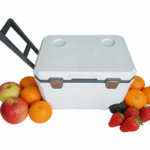
EPP foam is commonly molded into rigid shapes. A foldable EPP solution may use hinged sections, collapsible panels, a hybrid outer structure, or EPP inserts in a foldable carrier. Buyers should confirm the exact construction before comparing suppliers.
Finished-box details matter more than broad material adjectives. Corner geometry, lid compression, molded ribs, drainage behavior, surface texture, label areas, and insert fit all influence how the box behaves after staff use it on a busy route. Buyers should ask for samples that reflect expected production, then test the actual loading method instead of reviewing the empty box on a conference table.
Buyer Checklist Before Moving to Samples
The table below turns the selection of foldable EPP foam box supplier into practical checks. It avoids unsupported numbers because the correct answer depends on product type, route exposure, box design, and the evidence supplied by the manufacturer or distributor.
| What to verify | How to check it | Why it matters |
|---|---|---|
| Packaging role | Confirm whether the box is protective storage, passive insulation, a shipping outer, or part of a qualified system. | Prevents the team from treating one EPP container as suitable for every use. |
| Payload and usable volume | Check the real usable space after inserts, coolant, liners, dividers, or trays are included. | Avoids overfilling, shifting payloads, and unrealistic capacity assumptions. |
| Temperature requirement | Use the product instruction, food safety plan, lab SOP, or quality requirement instead of assuming a standard range. | Keeps the packaging decision tied to the product rather than the material. |
| Lid and closure design | Review the seal line, opening habit, locking method, and how the lid behaves after repeated use. | Many route failures begin with heat exchange or contamination at the closure. |
| Cleaning and reuse | Define cleaning, drying, inspection, return, and retirement rules before volume ordering. | Reuse only works when the operation can keep boxes clean and fit for purpose. |
| Supplier evidence | Ask for material information, samples, production consistency controls, and any test data relevant to your application. | Good documentation protects catalog claims, quality review, and repeat orders. |
This table is useful because it separates what EPP can generally support from what must be verified for the actual box. Buyers can use it in supplier calls, sample evaluations, and internal approval meetings. When a supplier gives a fixed performance claim, ask what payload, ambient exposure, coolant configuration, and acceptance criteria were used to produce that claim.
Sample review: the step that prevents expensive corrections
A sample review should be hands-on. Load the box with the real or representative contents used for reducing empty return volume for delivery networks, temporary storage programs, retail pickup points, and recurring routes where boxes return after use. Close the lid, move it the way staff will move it, stack it if stacking is expected, wipe it after a simulated spill, and check whether labels remain visible. This type of review often reveals issues that are not visible in a product photo: tight corners that trap residue, lids that are hard to align, handles that are uncomfortable, or internal dimensions that do not match the payload after liners or dividers are added.
Internal dimensions and external dimensions should be reviewed together. The internal size controls payload fit. The external size affects shelf space, van loading, pallet patterns, and return storage. If the product needs coolant, trays, absorbent material, inserts, or protective sleeves, the usable volume may be smaller than the gross internal volume. Buyers should ask suppliers to define which measurement they are quoting.
Closure design is another practical detail. A well-matched lid can reduce heat exchange and protect contents from dust or splash, while a weak closure can undo the benefit of good insulation. For high-volume operations, the question is not only whether the lid closes once. It is whether busy staff can close it correctly every time, whether the box gives a clear visual signal when closed, and whether damage at the rim is easy to detect.
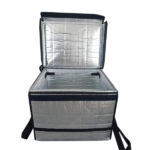
A grocery pickup program may want a foldable insulated box because empty returns occupy too much van space. The design can make sense, but only if the hinge areas, lid seal, panel joints, and cleaning process survive repeated handling. The procurement team should test assembly speed and user error, not only ask for folded dimensions.
What to verify before scaling from sample to order
The first mistake is using the phrase foldable EPP foam box supplier as if it describes a complete solution. It describes the material and the general form, not the route, packout, monitoring method, or acceptance criteria. This matters for space-saving reusable transport because the box may be used by staff who are under time pressure and may not understand the limits of passive packaging.
Where temperature-sensitive goods are involved, buyers should verify thermal performance for the assembled configuration, not assume that a folded or panelized format performs like a one-piece insulated box.
The second mistake is ignoring the handover points. Damage and temperature exposure often occur when a box is moved from storage to vehicle, from vehicle to dock, from dock to receiving staff, or from the return pile to cleaning. Ask where the box will sit, who opens it, how long the lid may remain open, and whether the contents are checked at arrival. A small operational gap can be more important than a broad material advantage.
The safest approach is to turn each risk into a supplier question. For this topic, the main risks include weak hinge areas, air gaps at panel joints, slow assembly, hidden cleaning pockets, and mismatch between sample and production. None of these risks makes EPP a poor choice. They simply show why a buyer should specify the application before asking for price.
Helpful decision tools
Check the details before you choose packaging
These quick tools can help you compare route risk, sizing needs, coolant choices, and packaging details before you request a quote.
Compliance Checklist Generator
Build a practical checklist for packaging review, shipping, and documentation.
Build checklistInsulation Material Reference
Compare insulation material choices for different cold chain packaging needs.
Compare materialsDry Ice Calculator
Estimate dry ice needs for frozen or ultra-cold shipments before packing.
Estimate dry iceFinally, plan for the end of use. If the box is meant to be reused, decide how many teams will handle it, where it will be cleaned, how damage will be recorded, and when it will be removed from service. If recyclability is part of the selling message, verify whether the buyer, distributor, or local waste partner can actually collect and process the material. A claim is only useful when it can be carried through the operation.
How to shortlist a supplier for the real application
Supplier selection should be more specific than asking who can make foldable EPP foam box supplier. Several suppliers may offer a similar-looking molded box, but the useful differences appear in sample quality, communication, documentation, customization control, and how honestly the supplier describes application limits.
Start with these questions: Is the design one-piece molded EPP, panelized EPP, or EPP inserts inside another foldable shell? What happens to the seal line after repeated folding? Can staff assemble the box correctly without special training? Are replacement parts or sample evaluations available before bulk ordering? The point is not to make the purchase slower. The point is to avoid a volume order based on assumptions that are discovered only after boxes enter the route.
Ask how samples are approved and how production units are compared with the approved sample. This is especially important when the box has a molded lid, insert, hinge, stacking feature, color requirement, or customer branding. A small dimensional difference can create a lid gap, tray interference, barcode problem, or payload movement. For medical, laboratory, food, or aerospace applications, the cost of a vague specification is often higher than the cost of a careful sample review.
Discuss claim language before product pages, catalogs, or customer quotations are finalized. It is safe to describe EPP as a lightweight, resilient, insulated material when those statements match the product. It is not safe to promise universal compliance, fixed hold time, certified medical suitability, or guaranteed food safety unless the supplier provides evidence for the exact box and use case. If evidence is missing, write the claim as a buyer verification point instead of a fact.
Price should be reviewed after the application has been defined. A lower unit price can become expensive if the box is hard to clean, gets removed from service early, causes mis-picks in a warehouse, or forces the buyer to add extra packaging later. The better comparison is total operational fit: purchase price, reuse process, damage rate, storage efficiency, staff handling, documentation, and end-of-life route.
Fit limits: what the box should not be asked to do
Use this type of EPP container when the route benefits from reusable molded protection, manageable weight, and passive insulation. It is a good fit when the payload is known, the handling process is repeatable, staff can close and clean the box correctly, and the buyer can define what evidence is needed before launch.
The box is not enough when joint gaps compromise insulation, when the lid is not intuitive for staff, when panels trap water during cleaning, or when a return program has no process for damaged parts. Foldable design reduces storage pressure only when operations can keep it assembled correctly.
Sustainability claims also need operational proof. Recyclable material is helpful, but the environmental result depends on how long the box remains in use, how it is cleaned, whether returns are efficient, and whether end-of-life collection is available. A reusable box that is lost after a few trips may not deliver the intended benefit. A well-managed return program can make the material advantage more meaningful.
Before placing a large order, run a small controlled review. Use real contents, normal staff, expected vehicles, and the actual handover process. Record what is easy, what is confusing, what gets dirty, what slows staff down, and what information the receiving team needs. These observations will tell you more than a generic claim about foldable EPP foam box performance.
Buyer handover and receiving notes
Handover is where many packaging assumptions are tested. For space-saving reusable transport, decide who seals the box, who opens it, where it waits, and what the receiving team checks before accepting the contents. If the box is reusable, receiving staff should know whether to return it immediately, send it for cleaning, or quarantine it because of damage or contamination. These small rules prevent a good container from becoming a weak link in the route.
Labeling should also be planned. A reusable EPP box may need a product label, route label, return label, clean or dirty status label, or warning note about lid discipline. Labels should not block stacking features, hide damage, or fall off during cleaning. If the box carries medical, laboratory, food, or aerospace goods, the label process should match the buyer's internal quality requirements.
FAQ
What is the main advantage of foldable EPP foam box supplier?
The main advantage is the combination of molded protection, low weight, passive insulation, and reuse potential. For space-saving reusable transport, that can reduce handling problems and improve packaging consistency when the box is matched to the route.
What is the safest way to compare suppliers?
Give each supplier the same brief: payload, internal size needs, route, temperature requirement, cleaning process, reuse model, customization needs, and claim boundaries. Compare samples and evidence, not only price or product photos.
Can Tempk define the required temperature range for my product?
The required range should come from your product instructions, quality team, food safety plan, lab protocol, or regulatory pathway. Tempk can help discuss packaging options around that requirement, but the product requirement must be confirmed by the buyer.
What should be decided before a bulk order?
Before a bulk order, confirm approved sample, dimensions, lid fit, payload arrangement, cleaning method, claim language, packaging role, test evidence if needed, and the process for future design changes or replacements.
Conclusion
Selecting foldable EPP foam box supplier is not just a packaging purchase. It is a decision about product protection, workflow, temperature risk, reuse discipline, supplier evidence, and claim control. Start with the product and route, confirm the packaging role, test samples under realistic conditions, and only then move toward volume ordering. That approach gives EPP a fair chance to perform where it is strong and avoids asking it to solve problems that require a different system.