


Estimate dry ice mass
Use payload weight, box size, route time, seasonal ambient temperature, and carrier limits before the first lane test.
Frozen ready meals often combine trays, film seals, sauces, rice, pasta, vegetables, and sleeves in one pack. The route must keep meals frozen while protecting tray seals, sleeve labels, sauce texture, and stacked tray corners.
The dry ice amounts below are starting ranges for planning. Final packout should be validated with the exact payload, box size, carrier lane, season, and dry ice limit.
| Route condition | Temperature intent | Tempk packaging setup | Coolant planning range | Coolant position |
|---|---|---|---|---|
| Local meal delivery, 8-18 h | Frozen arrival | EPP or insulated carton, tray stack support, sleeve moisture barrier, separated frozen coolant or dry ice. | 1.0-2.0 kg dry ice for 1-5 kg payload, or validated frozen PCM/frozen gel for short lanes. | Side/top coolant with divider; avoid pressure on film seals. |
| Overnight frozen parcel, 18-36 h | -18 C route intent | Thicker insulation, dry ice pouch, tray corner support, reduced void space. | 2.0-4.5 kg dry ice for 1-5 kg payload. | Top dry ice separated by board; keep logger in product air space. |
| Hot lane or 36-48 h | Validated frozen lane | Higher insulation, stronger tray bracing, route risk check, carrier limit review. | 4.0-7.0 kg dry ice for 1-5 kg payload. | If tray seals lift, reduce pressure and improve bracing before changing dry ice mass. |
For a tighter estimate, start with the Dry Ice Calculator and review insulation choices in the Insulation Material Reference.
Frozen food returns often come from a small layout failure: direct dry ice contact, too much headspace, a wet carton, or a product stack that shifts during handling.
Seal failure creates a return even if the temperature curve looks acceptable.
Use a divider or dry ice chamber so sleeves do not wrinkle and tray film is not stressed by direct contact.
Sauce-heavy meals, rice bowls, and pasta trays show thaw-refreeze differently; check the real product.
Record temperature, seal integrity, tray cracks, sleeve moisture, sauce separation, and dry ice remaining.
Use these receiving checks when adjusting dry ice mass, insulation thickness, or internal separation.
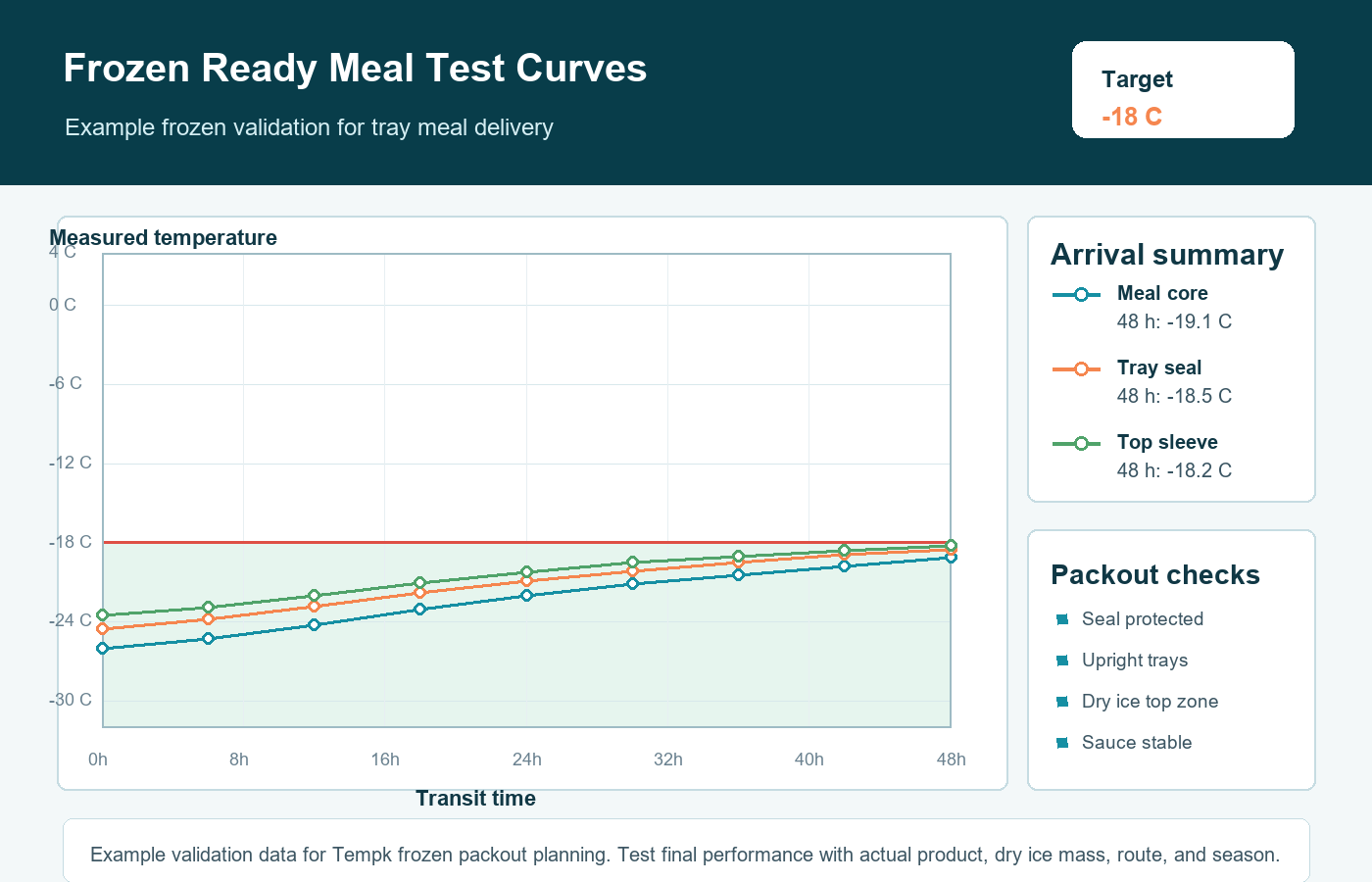
Use the product page for the handling logic, then size the first trial with tools and validate the real route.
Use payload weight, box size, route time, seasonal ambient temperature, and carrier limits before the first lane test.
Compare dry ice, frozen gel packs, and frozen PCM when choosing the first frozen packout.
Review pickup dwell, last-mile delay, receiving window, and summer routing before launch.
Share the frozen product type, payload weight, box size, route duration, ambient profile, carrier limits, and receiving checks. Tempk can help choose insulation, dry ice or frozen coolant placement, and validation steps.
Custom packout support
For fixed carton sizes, payload limits, branding requirements, seasonal lanes, or validation targets, Tempk can adapt this solution into a custom cold-chain packout.