Custom cold chain packaging works best when the supplier understands the shipment before recommending a box, liner, gel pack, PCM pack, dry ice system, or reusable shipper. A quote request that only says “I need an ice pack” or “I need a cold box” usually leads to repeated sampling, unclear pricing, and a higher risk of temperature failure in real distribution.
For B2B buyers, the right RFQ should describe the product risk, required temperature range, hold-time target, route profile, payload size, box size, coolant preference, regulatory needs, branding requirements, and expected monthly volume. This article gives a practical, source-backed checklist for food, pharmaceutical, frozen, grocery, meal kit, seafood, cosmetic, and laboratory sample shippers that need custom cold chain packaging.
Why a cold chain RFQ should start with the shipment, not the product
Cold chain packaging is a system. The insulation, coolant, product chamber, absorbent layer, carton strength, labeling, packing instruction, and route handling all affect the result. A gel pack that performs well in a small insulated pouch may not be enough for a larger parcel with warm last-mile dwell. A foam shipper that works for chilled food may not protect a 2-8°C medicine if the coolant touches the payload directly. A dry ice packout may keep frozen products hard, but it also requires venting and transport documentation.
When a buyer gives the supplier the correct inputs at the beginning, the supplier can narrow the design faster, estimate sample quantity, select realistic material options, and recommend a packout test path. For enterprise customers, this also creates a repeatable specification that procurement, quality, warehouse, and operations teams can approve together.
Source-backed parameters to include in your RFQ
| Parameter | Reference value or rule | Why it matters in custom packaging |
|---|---|---|
| Refrigerated food safety target | Cold food should be kept at 40°F / 4°C or below according to FDA food safety guidance. | Helps define chilled meal, dairy, meat, produce, and prepared-food packouts. |
| Frozen storage reference | FDA safe food handling guidance uses freezer storage at 0°F / -18°C or below. | Helps separate “chilled” packouts from true frozen-food packouts. |
| Gel coolant application range | FedEx describes gel coolants for products that should stay between 34°F / 1°C and 50°F / 10°C. | Helps determine when gel packs are suitable and when dry ice or a frozen PCM approach may be needed. |
| Dry ice temperature | USGS states that dry ice sublimates at -78.5°C / -109.3°F. | Explains why dry ice can freeze products and why it needs separation from sensitive payloads. |
| Vaccine refrigerated range | CDC vaccine storage guidance gives 2°C to 8°C / 36°F to 46°F for refrigerator storage. | Useful for pharma and medical cold chain RFQs, but always follow the product label. |
| Thermal test profiles | ISTA 7E provides thermal transport profiles based on real-world heat and cold exposures. | Useful when a buyer needs evidence beyond a simple sample shipment. |
| Foam shipper wall reference | FedEx recommends an insulated foam container with minimum 1.5 in / 4 cm walls for perishable shipments. | Provides a practical reference when comparing foam, liner, and reusable shipper designs. |
| Dry ice air-shipment marking | PHMSA states dry ice packages must permit gas release and show “Dry ice,” UN1845, and net mass when applicable. | Needed before quoting dry ice packouts for air or express lanes. |
RFQ checklist for custom cold chain packaging
Use the following table when preparing a request for custom gel packs, PCM packs, dry ice packs, insulated bags, insulated box liners, EPP cooler boxes, VIP medical boxes, or pallet covers.
| RFQ item | What to provide | Example of a useful answer |
|---|---|---|
| Product type | Food, pharma, seafood, frozen dessert, cosmetic, grocery, lab sample, biologic, or palletized goods. | “Prepared chilled meals in sealed trays, 1.8 kg payload per box.” |
| Required temperature range | State the temperature range and whether brief excursions are allowed. | “Maintain product below 4°C; avoid freezing the sauce cups.” |
| Product starting temperature | Chilled, frozen, room temperature, or pre-conditioned. | “Product is packed at 2-4°C after overnight refrigeration.” |
| Hold-time target | Door-to-door time plus safety margin. | “36 hours transit, design target 48 hours.” |
| Ambient risk | Summer heat, winter cold, airport dwell, weekend delay, cross-border hold, last-mile dwell. | “US summer last-mile route with potential 4-hour doorstep dwell.” |
| Payload details | Weight, dimensions, number of units, product geometry, fragile items. | “Six meal trays plus sauce cups, total 2.2 kg.” |
| Existing carton size | Inner and outer carton dimensions, if the carton is already fixed. | “Outer carton 430 x 330 x 220 mm, single-wall corrugated.” |
| Preferred insulation | Foam box, foil liner, paper liner, EPP box, VIP box, insulated bag, or no preference. | “Need flat-shipped liner to reduce warehouse space.” |
| Coolant preference | Gel pack, water injection pack, PCM pack, ice brick, dry ice, or supplier recommendation. | “Prefer gel packs, but open to PCM if freeze risk is high.” |
| Branding and OEM needs | Logo, film printing, carton printing, color coding, private-label instructions. | “Custom logo on gel pack and carton, English instruction card.” |
| Quality documentation | SDS, material declaration, temperature curve, packout instruction, arrival checklist. | “Need SDS and pilot test temperature logger curve.” |
| Volume and launch date | Sample quantity, pilot volume, monthly forecast, seasonality. | “100 samples, pilot 2,000 boxes/month, peak summer 8,000/month.” |
Temperature range should drive the packaging family
Do not choose packaging only by price or box size. The required temperature range usually decides the packaging family first.
For chilled food and grocery delivery, gel packs and insulated liners may be appropriate when the product needs to remain cold but not frozen. For frozen seafood, frozen meals, or ice cream, the design may need stronger insulation, frozen coolant mass, eutectic PCM, or dry ice depending on route length and product sensitivity. For 2-8°C medicines, the design should focus on no-freeze protection, coolant separation, logger placement, and documented packing instructions. For palletized air cargo, temperature exposure during airport dwell can be more important than the carton itself.
The route is part of the packout
Many failed cold chain shipments are not caused by a single bad product. They fail because the packout was designed for an ideal route rather than the real route. Sorting hubs, orientation changes, compression, late pickup, weekend delay, cross-border clearance, unconditioned vans, and doorstep dwell can change the thermal load.
A good RFQ should state the route type, not only the destination. For example, “48-hour parcel shipping to mixed US residential addresses in summer” is more useful than “shipping across the United States.” If the lane includes air cargo or dry ice, the RFQ should also flag the carrier rules and required markings.
Helpful decision tools
Check the details before you choose packaging
These quick tools can help you compare route risk, sizing needs, coolant choices, and packaging details before you request a quote.
Insulation Material Drop Resistance
Review drop resistance and handling factors before choosing insulation materials.
Check resistanceRoute Risk Checker
Review lane conditions before selecting packaging for real operating requirements.
Check route riskPackaging Selector
Compare insulated packaging options by product, route, and temperature need.
Find packagingWhat custom options can be specified
| Packaging component | Common custom options | Notes for enterprise buyers |
|---|---|---|
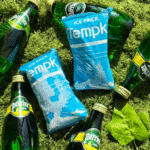
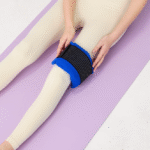
| Gel ice pack | Size, fill weight, film thickness, gel formula, logo printing, freezing instruction, carton packing. | Best for chilled and refrigerated packouts; test quantity by route and insulation. |
| PCM pack | Phase-change temperature, container style, fill weight, conditioning method. | Useful when the payload must stay near a narrower temperature band. |
| Water injection pack | Unfilled shipping format, hydration instruction, size, seal, carton packing. | Helps reduce inbound freight and warehouse cold-storage burden before filling. |
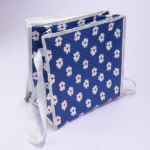
| Insulated box liner | Carton fit, fold style, insulation thickness, closure method, recyclable material preference. | Useful when the buyer wants to keep its existing corrugated carton. |
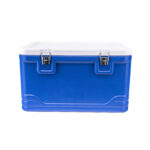
| EPS or EPP cooler box | Inner size, wall thickness, lid style, handle, drainage, branding, return/reuse plan. | Better when rigidity, repeated use, or higher protection is needed. |
| Thermal pallet cover | Pallet size, height, side closure, top cover, reflective layer, route exposure, reusability. | Used for air freight, warehouse dwell, and pallet-level temperature protection. |
RFQ mistakes that slow down custom projects
The first common mistake is asking for “a 48-hour solution” without stating the product mass, starting temperature, ambient profile, and acceptable arrival temperature. A second mistake is asking for the smallest possible coolant mass without acknowledging route delay. A third mistake is treating branding as a separate request after the packout has already been tested. Printed films, carton labels, and customer instructions can change how the warehouse packs and how the receiver handles the parcel.
Another mistake is requesting a quote before deciding whether the packaging is a one-way system or a reusable loop. This matters for insulation choice, durability, cleaning, warehouse storage, and return logistics. For example, a meal kit brand may prefer flat-shipped liners, while a medical logistics program may prefer reusable EPP or VIP boxes with controlled packout instructions.
FAQ
Can I request a quote without a tested packout?
Yes, but the quote will be more accurate if you provide the temperature range, payload, carton size, route duration, and expected ambient risk. For high-value pharma, frozen food, or cross-border shipments, a quote should usually be followed by sample testing.
Is a gel pack enough for 48-hour shipping?
It depends on the payload, insulation, starting temperature, ambient exposure, and acceptable arrival condition. FedEx describes gel coolants for chilled ranges, while frozen shipments may require dry ice or another frozen packout design.
What is the most important information for a 2-8°C shipment?
Provide the product label requirement, payload size, route duration, no-freeze requirement, logger requirement, and whether the coolant may touch the product. Direct contact with frozen coolant can create freeze risk.
Can custom packaging include logo printing?
Yes. Custom gel packs, insulated bags, carton labels, instruction cards, and private-label cartons can often be specified. Branding should be included before sample approval so the final packing workflow is realistic.
Do I need ISTA testing for every project?
Not every project needs full ISTA thermal testing. However, ISTA 7E and related thermal standards are useful when a customer needs a structured, evidence-based profile instead of only a trial shipment.
Final takeaway
A strong custom cold chain packaging RFQ is not a list of product names. It is a shipment profile. Before asking for samples or prices, prepare the temperature requirement, product mass, route duration, ambient risk, box size, coolant preference, insulation preference, branding needs, and documentation needs. This makes the supplier’s recommendation faster, more realistic, and easier for procurement and quality teams to approve.