Cold chain buyers often compare insulated box liners, EPS boxes, and EPP cooler boxes when designing food, pharma, grocery, seafood, meal kit, and ecommerce shipments. Each format can work, but each solves a different business problem. The best choice depends on required hold time, temperature range, payload, carton size, warehouse storage, reusability, brand experience, and validation requirements.
This article compares the three options from a practical B2B cold chain perspective. It uses official or industry reference data where available and explains how to connect packaging choice with gel packs, PCM packs, dry ice, and route testing.
Quick comparison
| Format | Best-fit use | Main advantage | Main limitation |
|---|---|---|---|
| Insulated box liner | Ecommerce cartons, meal kits, grocery, cosmetics, short to medium routes. | Flat storage, easy carton integration, flexible sizing. | Usually less rigid than molded boxes; performance depends heavily on liner material and closure. |
| EPS foam box | Food, seafood, frozen shipments, medical parcels needing economical insulation. | Strong insulation-to-cost ratio and rigid protection. | Bulky storage, disposal concerns, less suited to premium reusable programs. |
| EPP cooler box | Reusable loops, medical logistics, grocery delivery, closed-loop programs. | Durable, impact-resistant, washable, reusable. | Higher unit cost and requires return logistics. |
| VIP or high-performance shipper | High-value pharma or long-duration routes. | Higher insulation performance in thinner panels. | Higher cost and sensitivity to puncture or damage. |
What EPS contributes to cold chain packaging
Expanded polystyrene is widely used in cold chain packaging because it is lightweight, rigid, and insulating. The British Plastics Federation describes EPS as water resistant, tough, impact resistant, chemically inert, and suitable for food, fish, and medical transport applications. The same source lists EPS thermal conductivity values ranging from 0.038 to 0.030 W/mK depending on grade.
FedEx perishable shipping guidance also recommends an insulated foam container with minimum 1.5 inch / 4 cm walls for perishable shipments. This is not a universal design rule for every packout, but it is a useful practical reference when buyers compare thin liners with foam shippers.
Why box liners are attractive for ecommerce
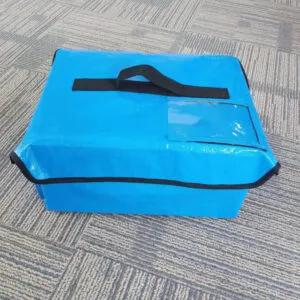
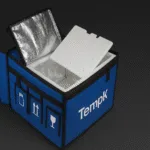
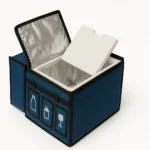
Insulated box liners help brands keep their existing corrugated cartons. They can be stored flat, packed quickly, and customized to carton dimensions. This matters for food ecommerce and meal kit brands that need to save warehouse space and avoid storing large molded boxes.
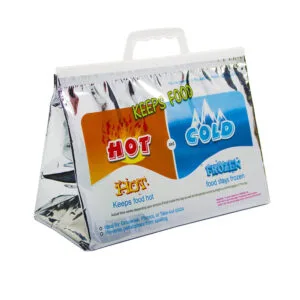
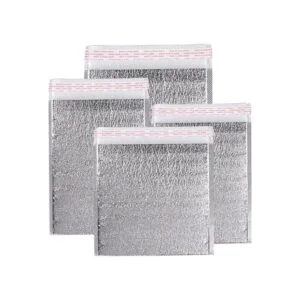
Liners can be made from reflective bubble materials, foam laminate, paper-based insulation, fiber insulation, or other structures. The right liner depends on route duration and product sensitivity. A liner that works for a 12-hour local chilled delivery may not work for 48-hour frozen parcel shipping.
Why EPP cooler boxes fit reusable programs
EPP cooler boxes are often selected when the shipper needs reuse, impact resistance, cleanability, and a stronger box structure. They are common in local grocery, medical courier, pharmacy logistics, and closed-loop delivery systems. The higher upfront cost can be justified when the container is returned and reused many times.
The challenge is operational. A reusable EPP program needs reverse logistics, cleaning, inspection, storage, loss control, and customer or courier compliance. It should not be selected only because it looks more durable.
Selection matrix
| Buyer requirement | Better starting option | Reason |
|---|---|---|
| Keep existing carton and reduce warehouse storage | Insulated box liner | Flat storage and custom fit to carton dimensions. |
| Low-cost rigid insulation for fish or frozen food | EPS box | Lightweight, molded, insulating, and widely used. |
| Reusable local delivery loop | EPP cooler box | Durable and better suited to repeated handling. |
| High-value 2-8°C medical shipment | EPP, VIP, or validated medical shipper | Stronger control, reusable options, and documentation potential. |
| Premium retail unboxing | Liner or custom branded reusable box | Can integrate branding and cleaner customer experience. |
| Heavy wet seafood | EPS or EPP with absorbent and liner | Rigid support and moisture management are important. |
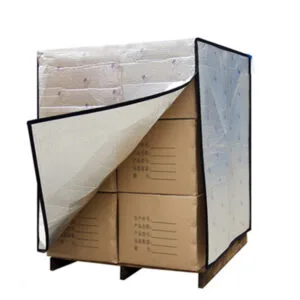
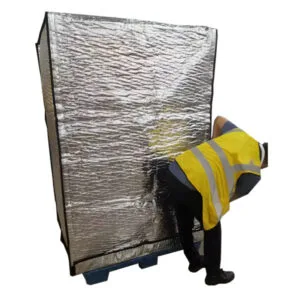
| Pallet or air cargo protection | Thermal pallet cover or pallet liner | Parcel-style boxes may not solve pallet-level exposure. |
Thermal performance depends on the full packout
Material choice alone does not determine performance. A strong insulation material can still fail if the coolant is under-sized, the box has too much headspace, the product starts warm, or the route is longer than expected. A lighter liner can outperform a bulky box on a short route if the payload is dense and the gel packs are properly placed.
Helpful decision tools
Check the details before you choose packaging
These quick tools can help you compare route risk, sizing needs, coolant choices, and packaging details before you request a quote.
Coolant & PCM Reference
Compare coolant and PCM options when a route needs added temperature support.
Compare optionsDry Ice Calculator
Estimate dry ice needs for frozen or ultra-cold shipments before packing.
Estimate dry iceIce Pack Calculator
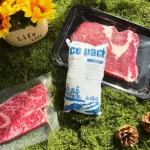
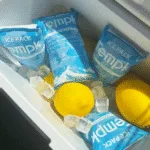
Estimate gel ice pack quantity for chilled shipments and practical route planning.
Estimate ice packsThe complete packout should define the outer carton, insulation format, product layout, coolant type, coolant quantity, pack order, closure method, label location, and receiving instruction. Any change in carton dimensions, liner thickness, coolant pack size, or closure tape should trigger a review.
Cold chain design table by product category
| Product category | Common packaging direction | Key design issue |
|---|---|---|
| Meal kits and chilled food | Box liner or EPS box with gel packs. | Food safety, condensation, clean unboxing, doorstep dwell. |
| Frozen seafood | EPS box, EPP box, or frozen packout with dry ice/PCM. | True frozen arrival, leak control, odor and moisture management. |
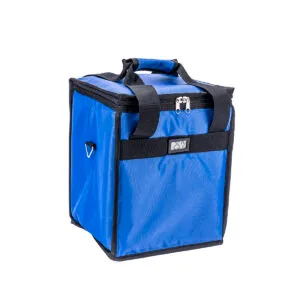
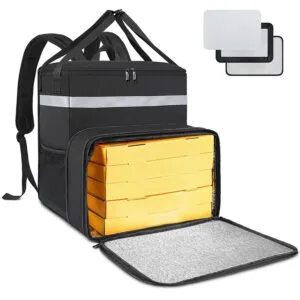
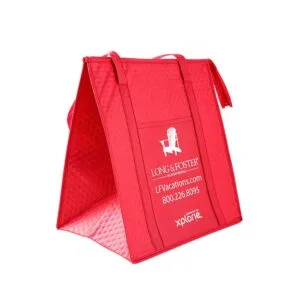
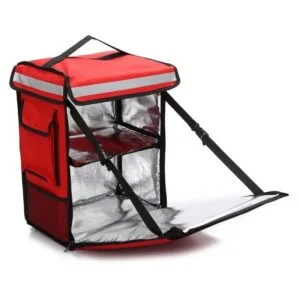
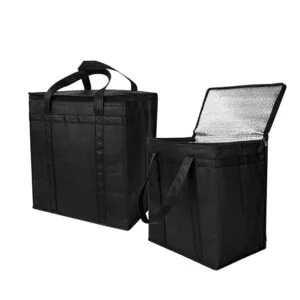
| Grocery delivery | Insulated bags, liners, or reusable EPP. | Route timing, mixed product sensitivity, customer convenience. |
| Pharmaceutical 2-8°C | Validated EPP, VIP, EPS, or liner system with PCM or conditioned coolant. | No-freeze protection and documentation. |
| Cosmetics and skincare | Liner or small insulated shipper with gel packs or PCM. | Heat protection, premium presentation, avoiding condensation damage. |
| Lab samples | Validated shipper matched to sample protocol. | Integrity, chain-of-custody, route risk. |
Sustainability and disposal considerations
A sustainable packaging decision should consider more than material reputation. Compare total product loss, freight weight, warehouse space, reuse rate, return logistics, customer disposal behavior, and thermal failure risk. A lighter liner may reduce shipping volume, but it is not sustainable if it causes product spoilage. A reusable EPP box may reduce single-use packaging, but it requires an effective return loop.
For enterprise buyers, sustainability claims should be supported by actual operational data: damage rate, reuse count, recovery rate, disposal instruction, and product loss reduction.
FAQ
Are insulated liners as good as EPS boxes?
Not always. Liners are flexible and space-efficient, but EPS boxes provide rigid insulation and structure. The right choice depends on hold time, product, route, and testing.
Are EPP cooler boxes better than EPS boxes?
EPP is better for reusable and durable programs. EPS is often more economical for one-way shipments. “Better” depends on route, reuse plan, and total cost.
Can I replace EPS with a paper or foil liner?
Only after testing. Replacing a molded foam box with a thinner liner changes the thermal system and may reduce hold time.
Which option is best for pharma?
Use the option that supports the product’s required temperature range, no-freeze requirement, documentation, and validation. Many pharma packouts require more than a simple insulation comparison.
Final takeaway
Insulated liners, EPS boxes, and EPP cooler boxes each have a role in cold chain shipping. Liners are flexible and space-efficient, EPS boxes are economical and rigid, and EPP cooler boxes are durable and reusable. Choose the packaging format by temperature target, route duration, product risk, warehouse process, and validation evidence rather than by material name alone.