Food delivery brands often ask whether reusable cold chain packaging is “better” than disposable packaging. The correct answer depends on the route model. A closed-loop grocery route, a subscription meal kit program, a local restaurant delivery operation, and a nationwide frozen parcel program do not have the same packaging economics or operational risks. The best packaging format is the one that protects food temperature, fits the distribution model, controls total cost, and can be managed by real workers and real customers.
This guide compares reusable and disposable cold chain packaging from a B2B cold chain perspective. It focuses on chilled food delivery, meal prep, grocery, dairy, desserts, seafood, and ready-to-eat meal programs that need insulation, gel packs, box liners, insulated bags, EPS/EPP boxes, or thermal liners.
Start With the Temperature Requirement
Packaging sustainability does not matter if the food arrives unsafe or unacceptable. In the United States, food safety references commonly use 40°F or below for refrigerated storage, while the FDA Food Code model uses 41°F or below for cold holding of time/temperature control for safety foods in retail and food service contexts. USDA also describes the 40°F to 140°F range as the “Danger Zone” for bacterial growth. These targets do not automatically define your exact delivery specification, but they provide a useful safety framework for chilled food programs.
Table 1. Temperature references used in food delivery packaging decisions.
| Reference Parameter | Common Value | How to Use It in Packaging Design |
|---|---|---|
| Refrigerated food storage | 40°F / 4°C or below | Use as a general consumer food safety reference for chilled storage and delivery planning. |
| FDA Food Code cold holding | 41°F / 5°C or below | Use when designing restaurant, food service, and local delivery workflows based on food code-style cold holding. |
| Hot holding benchmark | 135°F / 57°C or above | Relevant if the same bag program includes hot food delivery, but hot and chilled routes should not share the same loaded compartment. |
| Food danger zone | 40°F to 140°F | Use to explain why route time, prechilling, cold source, and dwell control are critical. |
Reusable Packaging Works Best in Closed-Loop Routes
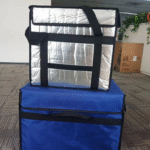
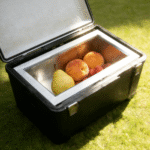
Reusable cold chain packaging makes the most sense when the brand can recover, inspect, clean, and redeploy the asset. Examples include grocery delivery with driver return, commissary-to-store routes, pharmacy courier routes, restaurant chain distribution, corporate meal delivery, and local subscription meal prep with scheduled pickups. Reusable packaging can include insulated delivery bags, EPP cooler boxes, reusable ice bricks, rigid totes, pallet covers, and returnable liners.
The Reusable Packaging Association defines reusable transport packaging as durable packaging designed for multiple uses through rigorous operations and logistics systems. This definition matters because “reusable” is not just a material claim. It requires a system: tracking, reverse logistics, cleaning, loss control, repair, and end-of-life recovery.
Disposable Packaging Works Best in Open-Loop or National Parcel Routes
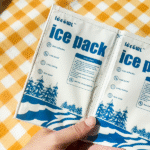
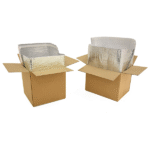
Disposable or single-use cold chain packaging is often more practical when the brand cannot recover the package. Examples include direct-to-consumer meal kits, frozen food parcels, seafood shipping, sample kits sent to patients, and e-commerce orders where the buyer is far from the shipper. Disposable packaging can include corrugated cartons with insulated liners, EPS foam shippers, recyclable fiber liners, gel packs, dry ice-compatible shipper systems, and absorbent materials.
Disposable packaging still needs good design. A thin liner may reduce material use but fail on a 48-hour summer route. An oversized EPS shipper may protect temperature but increase freight cost and customer waste. A poor gel pack disposal message may create customer complaints. In open-loop routes, the best design often balances thermal performance, right-sized materials, disposal clarity, and transport cost.
Decision Matrix: Reusable vs Disposable
Table 2. B2B decision matrix for reusable and disposable cold chain packaging.
| Decision Factor | Reusable Packaging Usually Wins When… | Disposable Packaging Usually Wins When… |
|---|---|---|
| Route control | You own or control the delivery route and can collect packaging. | The order ships nationwide or to unknown end customers. |
| Asset return | Drivers, stores, pharmacies, or customers can return bags/boxes reliably. | Return shipping would cost more than the package value. |
| Cleaning | You have a sanitation process, inspection checklist, and drying space. | You cannot inspect or clean returned assets consistently. |
| Brand experience | Premium reusable bag/box supports subscription loyalty and repeat use. | The customer expects convenient disposal after delivery. |
| Thermal duration | Routes are short, repeated, and predictable. | Routes involve parcel hubs, weekend delay risk, or long ambient exposure. |
| Sustainability | High reuse cycles and low loss rate can reduce waste. | Right-sized recyclable or low-material packaging may be better when return logistics are unrealistic. |
Sustainability: Use the Waste Hierarchy, Not Marketing Claims
The EPA waste management hierarchy prioritizes source reduction and reuse before recycling, energy recovery, treatment, and disposal. This is useful for packaging strategy: reduce unnecessary packaging first, reuse where the route supports it, recycle where recovery is realistic, and avoid landfill when practical. However, a reusable package that is lost after one trip or shipped long distances empty may not be the best solution. Sustainability claims should be supported by actual route behavior, return rate, cleaning energy, packaging life, and waste disposal realities.
Helpful decision tools
Check the details before you choose packaging
These quick tools can help you compare route risk, sizing needs, coolant choices, and packaging details before you request a quote.
Compliance Checklist Generator
Build a practical checklist for packaging review, shipping, and documentation.
Build checklistRoute Risk Checker
Review lane conditions before selecting packaging for real operating requirements.
Check route riskDry Ice Calculator
Estimate dry ice needs for frozen or ultra-cold shipments before packing.
Estimate dry iceFor food delivery brands, practical sustainability usually comes from a combination of right-sizing, reusable assets for local loops, recyclable liners where recovery is likely, refillable or water-injection packs when storage efficiency matters, and customer instructions that reduce confusion.
Cost Model: What Buyers Often Forget
The unit price of the bag, liner, or gel pack is only one part of cost. Reusable packaging requires asset inventory, cleaning, tracking, replacement, return handling, and storage. Disposable packaging requires recurring material purchase, waste management, freight volume, and customer disposal support. A fair comparison should calculate cost per successful delivery, not cost per packaging unit.
Table 3. Cost factors beyond the packaging unit price.
| Cost Variable | Reusable System | Disposable System |
|---|---|---|
| Packaging unit cost | Higher initial asset cost. | Lower per-order cost, repeated every shipment. |
| Freight cost | May be lower if packaging nests or stacks efficiently; may rise if returned empty. | Depends on dimensional weight, insulation thickness, and coolant mass. |
| Labor | Cleaning, inspection, sorting, asset recovery. | Assembly, kitting, disposal support, and replenishment. |
| Loss rate | Lost bags, unreturned boxes, damaged ice bricks. | Lost assets are expected because packaging is consumed. |
| Customer experience | Premium feel but requires return behavior. | Convenient but may create waste complaints. |
| Temperature risk | Predictable when assets are controlled. | Can be strong if packout is validated, but parcel delays must be designed for. |
Recommended Packaging Paths by Food Delivery Model
Table 4. Packaging strategy by food delivery business model.
| Business Model | Recommended Packaging Direction | Why |
|---|---|---|
| Local restaurant delivery | Reusable insulated delivery bags plus operational temperature checks. | Routes are short and drivers can reuse bags. |
| Grocery delivery | Reusable insulated bags or totes; gel packs for longer chilled routes. | Customer orders often include mixed chilled and ambient products. |
| Meal prep subscription, local loop | Reusable bags or EPP boxes with reusable ice bricks. | Return routes and scheduled deliveries can support asset recovery. |
| Meal kit national parcel | Disposable insulated liner or foam shipper with gel packs. | Open-loop parcel routes make asset return difficult. |
| Frozen food DTC | Validated shipper with dry ice or frozen coolant strategy. | Frozen products usually need stronger cold source and delay margin. |
| Seafood delivery | Leak-resistant packaging, absorbent material, sealed bags, and coolant matched to route. | Moisture, odor, leakage, and temperature are all customer-experience risks. |
How to Choose the Right System
- Map the delivery model: local loop, courier route, parcel, store replenishment, or export.
- Define the food safety target temperature and maximum route time.
- Decide whether packaging recovery is realistic and measurable.
- Select insulation format: bag, liner, EPS/EPP shipper, or pallet cover.
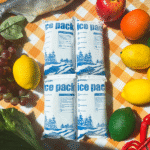
- Select cold source: gel pack, reusable ice brick, PCM pack, water-injection pack, or dry ice where appropriate.
- Test the packout in summer and winter exposure profiles, not only in room-temperature conditions.
- Write customer instructions for reuse, return, disposal, or recycling.
FAQ
Is reusable cold chain packaging always more sustainable?
No. Reusable packaging can reduce waste when it completes many cycles in a managed return system. If return rates are low, cleaning is poorly managed, or reverse logistics are inefficient, a right-sized disposable package may be more practical.
Is disposable packaging bad for food delivery?
Not necessarily. Disposable packaging is often the best fit for open-loop parcel routes. The goal is to use enough material to protect temperature without oversizing the package.
Can reusable insulated bags keep food safe without ice packs?
Only for short and controlled routes, and only if the food starts at the correct temperature. For longer chilled delivery, gel packs or ice bricks may be required.
How should a meal prep brand compare reusable and disposable systems?
Compare cost per successful delivery, not unit price. Include return rate, cleaning labor, lost assets, freight, packaging waste, customer complaints, and temperature performance.
What is the best packaging for national meal kit shipping?
Most national meal kit programs use an open-loop parcel model, so insulated liners, gel packs, and carton-based packouts are usually more practical than returnable insulated bags.