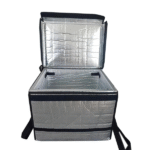
How to Choose a 25 Liter Ice Chest Manufacturer
A reliable decision starts with a controlled use case, not a catalog capacity. A search for a 25 liter ice chest manufacturer usually combines several questions: Will the complete load fit, can the configuration protect it on the route, can production reproduce the tested construction, and can staff use the system consistently? The nominal 25-liter category should be separated from gross cavity volume and the usable geometry available after accessories and coolant are loaded.
For final review of a compact 25-liter commercial chest, the following framework turns those questions into decision gates. It keeps technical evidence, procurement terms, and field execution connected without treating the box as the only source of temperature control.
Gate One: Freeze the Product and Lane Brief
Name the contents, presentation, quantity, shipping origin and destination, seasonal exposure, custody changes, planned openings, credible delays, and receiving process. The operating brief should define the intended contents, starting temperature, target condition, trip time, opening frequency, hygiene needs, load weight, and storage environment. A general “keeps cold” statement cannot replace measurable acceptance points.
At release of a compact 25-liter commercial chest, convert the brief into acceptance criteria that can be inspected or tested. Examples include internal geometry, packed weight, closure, label area, cleaning compatibility, temperature evidence, documentation, and change notice. Assign an owner to each criterion. Procurement can own commercial terms, but quality or technical staff should own requirements that affect product protection.
For final review of a compact 25-liter commercial chest, if the lane is new, mark assumptions openly. A stated maximum journey time is different from an observed distribution profile. Planning for uncertainty is useful; hiding it inside an unexplained “safety margin” makes future review difficult.
Gate Two: Turn the Capacity Label Into a Packout
At release of a compact 25-liter commercial chest, start with a dimensional drawing of the actual payload. Add every coolant unit, divider, barrier, monitor, spacer, and protective component. Show narrow points, wall taper, rounded corners, handle intrusions, and lid recess. Calculate gross cavity and net payload separately, then weigh the assembled load.
Before controlled scale-up of a compact 25-liter commercial chest, an efficient arrangement is not simply the one with the least empty space. Operators need room to load components in the correct order and retrieve contents without damaging cartons. The logger needs a defined position, and coolant should not shift during handling. Review whether the packed container remains practical for one or two people according to the buyer’s safety rules.
Before controlled scale-up of a compact 25-liter commercial chest, create a configuration code for the packout. If payload count, coolant, or season changes, give the alternative a separate identity until evidence supports combining it with an existing configuration.
A Single Decision Record
| Review gate | Evidence placed in the record | Decision owner |
|---|---|---|
| Product and lane | Approved limits, payload, route map, delay assumptions | Quality and logistics |
| Capacity and handling | Internal drawing, load map, packed weight, dry run | Packaging and operations |
| Performance | Protocol, thermal data, physical checks, deviations | Technical or quality |
| Production | Released specification, inspection plan, revision status | Supplier quality and procurement |
| Deployment | Pack, monitor, receive, clean, and exception instructions | Operations and quality |
| Economics | Landed cost, labor, return, loss, repair, and retirement assumptions | Procurement and program owner |
For final review of a compact 25-liter commercial chest, one record does not mean one person makes every decision. It provides a common index so a quotation, sample, test, specification, and work instruction cannot drift into separate versions.
Make the Supplier Shortlist Comparable
In cross-functional review of a compact 25-liter commercial chest, issue the same requirement pack to each candidate and ask each one to identify assumptions and exclusions. Compare internal geometry, proposed materials, packout concept, test scope, production controls, lead-time basis, minimum order quantity, tooling, spare parts, documentation, and change notice in aligned fields. If one quotation includes qualification support and another covers only molded hardware, normalize the scope before comparing price.
Before controlled scale-up of a compact 25-liter commercial chest, use questions that produce evidence. Instead of asking whether a box is durable, request the relevant construction definition and test method. Instead of asking whether the factory has good quality, ask how critical dimensions, hidden insulation, closure fit, and nonconforming units are controlled. A conditional answer with clear limits is more useful than a broad promise.
Before controlled scale-up of a compact 25-liter commercial chest, score unresolved items separately from confirmed weaknesses. A missing report may be obtainable, while a geometry that cannot fit the packout is a design problem. This distinction prevents early uncertainty from being treated as proof and prevents attractive pricing from hiding work that still belongs to the buyer.
Gate Three: Prototype the Operating Sequence
Before controlled scale-up of a compact 25-liter commercial chest, use representative components and have the intended operators perform the packout. Time coolant preparation, loading, logger activation, closure, labeling, transfer, opening, and unloading. Observe ambiguity: a component that can be installed two ways will eventually be installed both ways unless the design or instruction prevents it.
Specify whether contents start chilled, how coolant is prepared, where dividers sit, and how often users access the load. Monitoring may be appropriate for higher-risk food or contractual routes, but the method should match the decision at delivery.
For final review of a compact 25-liter commercial chest, photograph the approved sequence and define allowable substitutions. A smaller payload, alternate carton, or different coolant size can alter thermal mass and temperature distribution. Do not rely on “equivalent” unless the equivalence has a documented technical basis.
Gate Four: Build Evidence in Layers
For final review of a compact 25-liter commercial chest, development testing helps select geometry and coolant. Formal qualification challenges the final configuration against a preapproved protocol. Physical testing examines shocks, vibration, compression, closure, and package integrity. Field verification checks assumptions during real movement. Ongoing monitoring helps detect variation after launch.
Use controlled comparative testing when deciding between designs. Hold payload, coolant, starting conditions, ambient exposure, sensor locations, and opening pattern constant. The result can guide selection but should not be expanded into a promise for every field condition.
At release of a compact 25-liter commercial chest, read reports beyond the headline duration. Confirm box revision, payload, coolant and conditioning, starting temperatures, ambient profile, sensor map, equipment status, sample count, deviations, raw data, and pass criteria. Results apply to the stated conditions. If the report cannot be reproduced from its description, it is weak support for a controlled work instruction.
Gate Five: Make Production Match the Evidence
At release of a compact 25-liter commercial chest, release a specification that identifies shell, insulation, hardware, gasket, critical dimensions, assembled weight, finish, labels, and packaging. Link it to the tested bill of materials and model revision. Agree how incoming materials, molding or assembly, hidden insulation features, closure fit, and final function are inspected.
Helpful decision tools
Check the details before you choose packaging
These quick tools can help you compare route risk, sizing needs, coolant choices, and packaging details before you request a quote.
Packaging Selector
Compare insulated packaging options by product, route, and temperature need.
Find packagingIce Pack Calculator
Estimate gel ice pack quantity for chilled shipments and practical route planning.
Estimate ice packsCompliance Checklist Generator
Build a practical checklist for packaging review, shipping, and documentation.
Build checklistAt release of a compact 25-liter commercial chest, approve pilot production rather than assuming the engineering sample represents steady output. Check units from relevant tooling cavities, observe assembly, and compare critical measurements. Define how nonconforming product is segregated and how corrective action is communicated.
At release of a compact 25-liter commercial chest, change control protects this chain. A new resin source, foam formulation, latch, gasket, mold, or subcontractor can be legitimate, but it requires notification and risk review. The same applies when the buyer changes payload, coolant, logger position, route, or work instruction.
Gate Six: Release the Destination, Not Just the Box
Prepare the receiver with shipment identification, storage or unloading space, a monitor-reading method where used, and a named escalation contact. Define checks for damage, seals, closure, delay, and records. At receipt, check cleanliness, closure, visible damage, remaining coolant, and any required content temperature. Define rejection, segregation, rapid-use, or return actions before staff encounter an exception.
At release of a compact 25-liter commercial chest, the destination also starts the next cycle. Inspect shell, lid, gasket, hardware, insulation boundaries, odor, labels, and water entry. Assign a status such as awaiting inspection, clean, released, quarantined, or retired. Keep damaged or dirty containers away from released stock.
In cross-functional review of a compact 25-liter commercial chest, route feedback should distinguish design, packing, handling, delay, and receiving causes. Repeated problems at one hub may need a scheduling or staging fix rather than more insulation.
Challenge Exceptions Before Approval
For final review of a compact 25-liter commercial chest, routine success does not show how the system behaves when operations deviate. During design review, walk through a late pickup, missed connection, winter exposure, lid opening, partially loaded box, damaged latch, logger failure, absent receiver, or unavailable controlled storage. Select scenarios that are credible for the route rather than inventing dramatic events that the program will never face.
For final review of a compact 25-liter commercial chest, for each exception, define detection, immediate containment, communication, authority, documentation, and recovery. Some risks are best reduced by packaging margin; others need carrier instructions, backup storage, appointment control, spare monitors, or a quarantine process. This exercise prevents the thermal box from becoming the default answer to operational problems it cannot control.
At release of a compact 25-liter commercial chest, exceptions also reveal which information must travel with the shipment. A destination may need product identity, pack time, monitor instructions, an escalation contact, storage conditions, and a decision on whether the lid may be opened. Keep the visible instruction short, with detailed procedures maintained in the controlled system.
Gate Seven: Compare Lifecycle Value
Before controlled scale-up of a compact 25-liter commercial chest, combine unit price with inbound freight, outbound freight, coolant preparation, packing labor, monitoring, cleaning, storage, return, repair, loss, documentation, and retirement. Use route-specific assumptions and show several recovery rates for a reusable program. Do not turn an optimistic scenario into a universal savings claim.
For final review of a compact 25-liter commercial chest, a closed loop may justify a rugged repairable box, while an open network may prioritize availability, empty-box cube, and local end-of-life options. Sustainability analysis follows the same logic. Completed trips, recovery distance, wash process, damage, and disposal route are measurable; the word “reusable” alone is not an environmental result.
Maintain Control After Launch
For final review of a compact 25-liter commercial chest, establish a review rhythm for shipment data, route time, damage, packing errors, receiving delays, returns, cleaning rejects, and supplier deviations. Trend information by configuration and lane so an issue in one season or hub does not produce an unnecessary global change. Define thresholds that trigger investigation, retraining, supplier action, protocol review, or requalification.
Before controlled scale-up of a compact 25-liter commercial chest, traceability should be proportional to risk and usable in practice. Model revision, production lot or date, coolant identity, logger identifier, packer, shipment reference, and receiver may all be relevant. Choose the fields needed to reconstruct an event and make them easy to capture. A complicated record with frequent blanks is weaker than a focused record that teams complete reliably.
For final review of a compact 25-liter commercial chest, schedule a cross-functional post-launch review. Confirm that the selected box is available, the packout is repeatable, records are retrievable, exceptions are handled, and lifecycle assumptions remain credible. A released design is a controlled starting point, not the end of stewardship.
Practical example: closing the gates
Frequently Asked Questions
What information should be sent to the manufacturer first?
Provide actual content dimensions and weight, starting temperature, trip time, opening frequency, route environment, cleaning method, accessories, customization, order quantity, and target packaging. Explain whether the box is sold to consumers, used by staff, or returned in a closed loop. These details direct design and test questions toward the real program.
Why must gross and usable volume be separated?
The empty cavity may support a nominal 25-liter label, but cold packs, rounded walls, lid intrusion, dividers, and irregular contents reduce the working space. Request internal dimensions and create a load drawing. Net payload, packed weight, and access are more useful for operations than a liter label by itself.
Should the lightest box always be preferred?
No. Lower weight may reduce freight and improve handling, but construction still has to meet durability, insulation, closure, and service-life needs. Compare complete products under the same conditions. A heavier design is not automatically stronger or colder either; geometry, materials, processing, and hardware determine the finished result.
How should production changes be managed?
Agree which changes require advance notice, including resin formulation, insulation, hardware, mold cavity, color system, subcontractor, and packaging. Review each change according to risk. Some need documents and samples; others justify thermal or physical retesting. Keep the approved specification and master sample synchronized with the current revision.
Conclusion
Before controlled scale-up of a compact 25-liter commercial chest, select the system in a controlled order: define the product and lane, prove usable fit, prototype the process, build appropriate evidence, control production, prepare receiving, and compare lifecycle value. Keep the nominal category, gross volume, and usable payload distinct. Most importantly, link every performance statement to the exact configuration and conditions that support it.
About Tempk
At release of a compact 25-liter commercial chest, Tempk, associated with Shanghai Tempk, supplies medical cooler boxes, EPP boxes, VIP insulated boxes, plastic cold-chain boxes, and matching coolant options. A review can begin with payload geometry, required conditions, route, packout, handling, and order plan. Buyers remain responsible for assessing and qualifying the final configuration for their specific product, operating procedures, and distribution environment.
Next step: Send Tempk your load drawing, operating limits, lane assumptions, and expected quantity to compare practical box and coolant configurations. Apply this request for final review of a compact 25-liter commercial chest.