Gel Refrigeration Block China Distributor: A Practical Sample-to-Supply Framework
When a cold-chain parcel fails, the gel pack is an easy suspect. In practice, failures frequently arise at interfaces: warm loading, incomplete conditioning, empty space, long handovers, damaged seals, or unclear receiving rules. For a buyer searching for a gel refrigeration block China distributor, the central decision is whether the distributor can control the factory, documentation, tooling, change notifications, and export execution. A defensible sourcing decision combines product boundaries, material evidence, packout testing, supplier controls, and a realistic plan for daily use.
The final decision belongs to importers, cooler brands, food-service suppliers, and industrial procurement teams, often across applications such as hard-sided coolers, returnable food crates, laboratory transport boxes, and retail cold-storage accessories. An integrated review links the user's need, the finished product, supplier control, packout evidence, and daily execution. It keeps assumptions visible so the same item is not approved for a broader use than the evidence supports.
Build the Decision File Before Choosing the Pack
The approval map for a gel refrigeration block China distributor should contain five linked decisions: what the finished item is, where it will be used, which risks matter, what evidence closes those risks, and how production will remain equivalent to the approved sample. This sequence prevents the team from beginning with an attractive catalog item and inventing a use for it later. It also gives suppliers a clear way to disclose limitations without being penalized for refusing an unrealistic guarantee.
Write the intended-use statement in operational language. Name the payload, required condition, container, route, contact arrangement, conditioning method, and decision at receiving. Then identify which of the possible uses, including hard-sided coolers, returnable food crates, laboratory transport boxes, and retail cold-storage accessories, are inside the first approval and which remain outside it. Scope control is especially important when one commercial name could refer to food distribution, healthcare, personal care, or industrial handling.
Keep the product boundary explicit: A distributor can simplify sourcing, but it may not own the molding or filling process. Buyers need a transparent chain from resin and coolant formulation to final inspection and export packing. The statement should appear in the technical brief and training, not only in a legal note. Operators and sales teams need to understand that a gel component, an insulated container, a qualified packout, and a monitored route perform different functions. Have the responsible team in China export supply confirm the market-specific interpretation.
Assign every decision to an owner. The product team defines acceptable conditions; packaging defines fit and heat-transfer assumptions; quality reviews evidence and changes; operations confirms preparation capacity; procurement controls the commercial specification; receiving records outcomes. When ownership is unclear, gaps are often filled with supplier marketing language rather than a documented buyer decision. Use the result when investigating volume stated without usable-space context in this program.
Translate the Finished Pack into Controlled Attributes
The specification should describe rigid gel refrigeration blocks sourced through a China-based distributor as a finished article. Include unconditioned and conditioned dimensions, fill or mass, appearance, film or shell construction, seam or closure, print, label, individual packing, carton, storage, and inspection method. State tolerances and defect categories. If a property is important only after freezing, swelling, heating, flexing, or cleaning, define the preparation before it is measured.
Formulation information should be sufficient for the actual hazard and exposure review. A trade name for a thickener or polymer does not describe water quality, additives, preservatives, colorants, residuals, or compatibility with the container. An SDS can support hazard communication, yet separate evidence may be needed for food contact, skin contact, medical claims, disposal, or thermal performance. Ask the precise question before requesting the document. Apply this check to returnable food crates and assign its owner before sample approval.
Foreseeable failure conditions must be represented. In this program they include wall or cap cracking after impact, hidden factory substitution, volume stated without usable-space context, and print or carton mismatch at mass production. The evaluation should show how the failure is prevented, detected, contained, investigated, and linked back to a lot. This turns broad requirements such as 'leakproof' or 'safe' into testable controls and response rules. Tie the evidence to the approved item code and supplier lot for rigid gel refrigeration blocks sourced through a China-based distributor.
For the release record, define the exposure boundary in the same words used by operations. If the block may contact food, confirm the finished article and conditions of use. A generic resin statement does not cover colorants, closures, inks, or the gel filling. The approved conclusion should cover foreseeable leakage, cleaning, and user handling as well as normal separation. Have the responsible team in China export supply confirm the market-specific interpretation.
| Approval gate | Decision evidence | Release condition |
|---|---|---|
| Use definition | Payload, route, insulation, contact, and acceptance statement | All critical assumptions are owned and recorded |
| Representative sample | Final materials, formula, process, artwork, and packing | Differences from production are closed or formally assessed |
| Functional evidence | Containment, conditioning, handling, and thermal data relevant to the use | Methods, samples, and limitations are visible |
| Supplier control | Site roles, lot records, inspection plan, and change process | Accountability reaches the actual production operation |
| Operational readiness | Work instruction, training, receiving, and deviation workflow | The buyer can reproduce and monitor the approved state |
These gates create a sequence rather than a document pile. A program should not advance because one certificate looks strong while the sample, route, or operating instruction remains provisional. The release decision becomes easier to defend when every gate refers to the same product code and configuration. Include the decision in the operator instruction for laboratory transport boxes.
Qualification Connects Test Conditions to the Route
A performance statement is useful only when its conditions are known. Record the insulated container, payload, coolant quantity and position, starting temperatures, conditioning process, ambient profile, duration, sensor location, pass criterion, and any door openings or handling events. The report should identify the exact tested pack. Without those fields, an hour value cannot be compared fairly or transferred safely to another route. Apply this check to retail cold-storage accessories and assign its owner before sample approval.
Laboratory work and lane monitoring answer different questions. Controlled profiles help compare designs and establish a qualified configuration. Route data shows how carriers, handovers, staging, weather, and operating variation interact with that design. Use deviations to refine the risk model, not to assume that more coolant is always the answer. Extra coolant can consume payload, add freight, and create colder surfaces. Tie the evidence to the approved item code and supplier lot for rigid gel refrigeration blocks sourced through a China-based distributor.
The operating plan must be tested at the site that will use it. Rigid blocks need a freeze-clearance and stacking plan. Operators should know how to inspect caps, corners, welds, and swollen or distorted units before loading them into a cooler. A representative shift should confirm preparation capacity, staging discipline, inspection, and escalation before volume is committed. Have the responsible team in China export supply confirm the market-specific interpretation.
Define requalification triggers at approval. A new payload, carrier, season, insulation, pack size, formulation, production site, or conditioning method can invalidate an assumption even when the purchase description is unchanged. Trend data from receiving and complaints should be reviewed for smaller shifts that may justify targeted testing before a visible failure occurs. Use the result when investigating volume stated without usable-space context in this program.
Select the Supplier Behind the Quotation
For a gel refrigeration block China distributor, identify whether each bidder is the legal seller, factory, converter, filler, distributor, importer, or private-label owner. Map who buys critical materials, approves formula changes, sets seal parameters, releases lots, stores records, and handles complaints. A distributor can be an effective partner when it has documented control over the factory; a factory can still be weak if responsibilities are fragmented.
Helpful decision tools
Check the details before you choose packaging
These quick tools can help you compare route risk, sizing needs, coolant choices, and packaging details before you request a quote.
Dry Ice Calculator
Estimate dry ice needs for frozen or ultra-cold shipments before packing.
Estimate dry icePackaging Selector
Compare insulated packaging options by product, route, and temperature need.
Find packagingRoute Risk Checker
Review lane conditions before selecting packaging for real operating requirements.
Check route riskUse staged samples. Early samples explore dimensions and handling. Engineering samples confirm the intended construction. Production-representative samples verify the proposed line, tooling, materials, formula, artwork, and packing. Label every sample with its status and lot. The final approval should not rely on a unit prepared by a special laboratory method that the normal line cannot reproduce. Apply this check to returnable food crates and assign its owner before sample approval.
Commercial terms should preserve technical control. Tie the order to the specification revision and artwork, define packaging and inspection, state document and record expectations, and require notice for critical changes. Discuss order pattern, peaks, raw-material exposure, capacity constraints, contingency, complaint timing, and disposition of nonconforming stock. A low unit price is not complete if it moves inspection, repacking, or failure cost to the buyer. Tie the evidence to the approved item code and supplier lot for rigid gel refrigeration blocks sourced through a China-based distributor.
Regional planning for China export supply adds importer roles, language, claims, disposal instructions, and local distribution. Import requirements belong to the destination market, not merely the supplier's location. Ask the distributor to map which documents come from the factory, laboratory, freight provider, and legal seller. Confirm that the model identity remains consistent across reports, SDS documents, invoices, labels, and cartons, with a controlled cross-reference where private-label and factory codes differ.
A Practical Test of the Framework
Use this scenario to challenge the approval logic. An importer approves a blue sample, then receives production with a slightly different cap and wall feel. Without a signed golden sample, controlled bill of materials, and change-notification clause, the distributor may view the substitutions as cosmetic while the buyer sees a leak risk. It is a hypothetical procurement situation, not a claimed customer outcome, and its purpose is to expose variables that need an owner. Include the decision in the operator instruction for laboratory transport boxes.
The team should freeze the current assumptions before modifying the design. Capture payload geometry and starting condition, insulation, coolant preparation, placement, ambient exposure, handovers, sensor plan, and acceptance rule. Then choose the smallest change that addresses the observed risk. Changing coolant mass, insulation, placement, and loading time together may produce a pass but teaches little about which control matters. Record the conclusion in the controlled release record for the gel refrigeration block China distributor.
The bidder receives the same fact pattern and returns a proposed configuration with explicit limitations. The buyer compares not only price, but also how clearly the proposal links the pack to the route, how representative the sample is, which data are available, and how changes will be controlled. Once the configuration passes the buyer's review, the work instruction and receiving criteria are released with the same revision. Apply this check to retail cold-storage accessories and assign its owner before sample approval.
Reduce Waste by Improving the System
At scale, the environmental question must remain tied to operations. A long-life block can reduce disposable-pack use on closed routes, but the return rate, cleaning burden, replacement caps, and reverse freight should be included in the comparison. Document the assumptions behind the comparison so that a change in route, return rate, cleaning, or disposal does not leave an old claim attached to a different system. Have the responsible team in China export supply confirm the market-specific interpretation.
Evaluate material, freezing energy, parcel weight, insulation, product loss, cleaning, recovery, reverse transport, and disposal within one boundary. Reuse is attractive on a stable closed route with high return and controlled inspection. It may be ineffective in an open network. Similarly, a disposal claim is useful only when users receive accurate instructions and the local infrastructure can perform the stated outcome. Use the result when investigating volume stated without usable-space context in this program.
The best reduction project may be a smaller seasonal packout, better pre-chilling, shorter staging, improved void control, or route segmentation. These changes can lower coolant and freight while increasing reliability. Environmental marketing should describe the proven improvement narrowly and avoid implying that one material property makes the entire shipment sustainable. Include the decision in the operator instruction for hard-sided coolers.
Final Questions Before Release
Which sample should the quality team approve?
Approve a production-representative sample tied to the final specification, materials, formula, tooling, print, label, and carton. A hand-filled prototype can support early design work but should not release mass production. Keep the signed sample as a visual reference while using objective inspection limits for dimensions, fill, seal, appearance, and functional checks. Tie the evidence to the approved item code and supplier lot for rigid gel refrigeration blocks sourced through a China-based distributor.
When is thermal testing necessary?
Testing is necessary when the buyer relies on the packout to maintain a product condition through a defined route. The study should identify starting conditions, ambient profile, payload, insulation, coolant configuration, sensor locations, and acceptance rule. Risk, product sensitivity, lane variability, and regulatory expectations determine whether additional qualification and ongoing monitoring are needed. Use the result when investigating wall or cap cracking after impact in this program.
Can one gel pack specification cover several products?
Possibly, but only after the common design space is established. The products may differ in sensitivity, geometry, starting condition, contact pathway, and acceptance criteria. For uses such as hard-sided coolers, returnable food crates, laboratory transport boxes, and retail cold-storage accessories, document which combinations were assessed and which require a separate packout. A common purchase code should not hide application-specific instructions.
What must trigger re-evaluation after launch?
Re-evaluate when a critical material, formula, manufacturing site, tool, seal process, pack size, insulation, payload, route, conditioning method, carrier, or acceptance criterion changes. Complaint trends and unexplained seasonal drift can also trigger review. The quality agreement should state who notifies whom and what evidence is needed before the revised configuration is released. Tie the evidence to the approved item code and supplier lot for rigid gel refrigeration blocks sourced through a China-based distributor.
Release the System, Then Watch It
A strong gel refrigeration block China distributor decision ends with one controlled product, one defined use, evidence with visible limitations, a supplier change process, and work instructions that the buyer can reproduce. It also begins an operating feedback loop. Review lot defects, conditioning exceptions, route data, complaints, and changes so that the approved design does not drift away from the conditions that justified it.
About Tempk
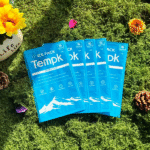
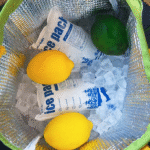
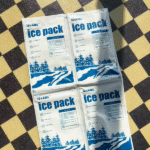
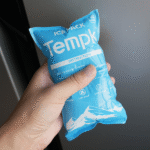
Tempk supplies flexible gel ice packs, rigid ice bricks, water-injection packs, and insulated cold-chain packaging components. For rigid gel refrigeration blocks sourced through a China-based distributor, we can review the requested format, dimensions, customization, packing, and commercial supply inputs with your team. The final choice should be evaluated in the buyer's complete packout and market context, so the most useful inquiry includes the payload, required condition, route, insulation, contact pathway, and expected order pattern.
Send Tempk the controlled brief for your gel refrigeration block China distributor project when you are ready to compare a production-representative sample with your route and approval requirements.