Wholesale Dry Ice Pack for Pharmaceutical Shipping: A Requirements-Led Sourcing Framework
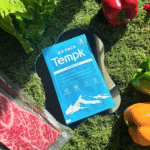
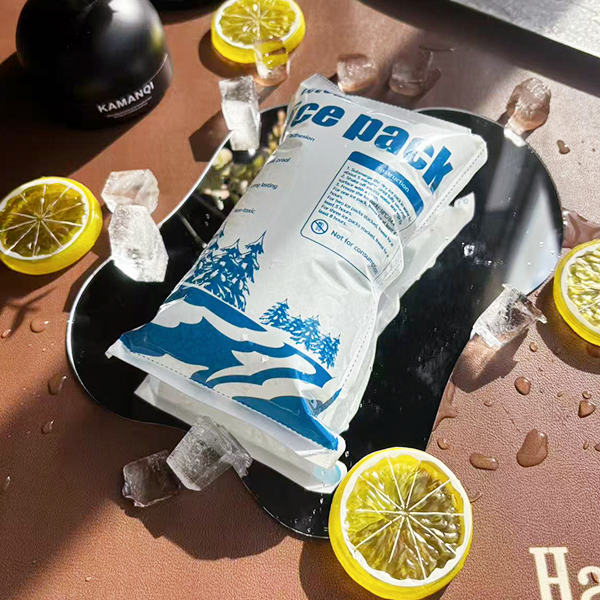
Buying a wholesale dry ice pack for pharmaceutical shipping is defensible only after the item is named correctly and its role is limited correctly. Tempk's hydration dry ice pack is a water-activated sheet that is frozen and used as a coolant. It is not solid carbon dioxide, is not UN1845 dry ice, and cannot inherit the temperature capability of that ultra-cold refrigerant. It also is not a complete shipping system. A strong sourcing program links the exact sheet to a medicine's approved conditions, a tested insulated packout, a reproducible preparation process, and controlled supply.
The first deliverable is a decision statement
Before samples arrive, the cross-functional team should be able to complete this sentence:
We are evaluating this hydration coolant sheet as one component of a passive packout for a defined payload, distribution route, and temperature acceptance requirement.
Every phrase matters. "One component" prevents the sheet from being treated as an already qualified shipper. "Defined payload" forces the team to address mass, dimensions, presentation, and freeze sensitivity. "Distribution route" brings staging, handovers, delay, and seasonal exposure into scope. "Acceptance requirement" ties the study back to authorized product information and quality-approved criteria.
If the team instead starts with "We need packs that stay cold for three days," the requirement is incomplete. Cold can mean several different conditions; three days may exclude packing and receiving dwell; and no ambient challenge, insulation, or payload has been named. A vendor cannot responsibly turn that sentence into a guaranteed sheet count.
The decision statement also makes it easier to stop an unsuitable evaluation. A water-based frozen sheet may be a candidate for some chilled or cool applications when engineered into the right packout. It should not be presented as a substitute for solid carbon dioxide where the payload requires an ultra-cold or deeply frozen environment. For a product that must not freeze, frozen-sheet contact and initial conditioning deserve particular attention. Those boundaries can save more time than another round of quotations.
Create three records before approving volume
A scalable program can be organized around three living records rather than a pile of disconnected datasheets.
Record 1: the shipment requirement
This record belongs to the pharmaceutical shipper. It states the product's authorized transport limits, relevant stability or excursion pathway, payload configurations, route modes, seasons, total process time, delay assumptions, monitoring expectations, and receiving method. Quality should approve the acceptance criteria; packaging and logistics should translate them into testable operating conditions.
Use realistic boundaries. Include the smallest and largest routine payloads if both will use the packout. Describe whether product starts at a controlled condition, whether a parcel can wait before pickup, and when receiving staff are available. Identify cold exposure as well as heat exposure. A winter delivery van or aircraft apron can challenge a packout differently from summer heat.
Record 2: the component dossier
This record identifies the exact hydration sheet. It can include the supplier and model, revision, cell layout, dry dimensions, product-specific activation method, construction information appropriate to the application, packaging state, lot coding, intended reuse status, inspection guidance, and relevant supporting documents.
The dossier should distinguish characteristics from claims. "Water-activated cell sheet" is a component description. "Maintains medicines for a stated duration" is a system performance claim that needs a complete test context. "Not solid carbon dioxide" is a material distinction. "No transport requirements apply" would be too broad because other contents and routes may be regulated.
The dossier should also define change notification. Dimensions, outer layer, absorbent material, seam design, manufacturing method, and labeling can influence preparation or use. A change is not automatically harmful, but it should not arrive unnoticed after the sheet is embedded in an approved packout.
Record 3: the qualified operating configuration
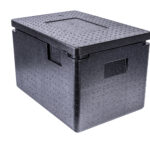
This record connects the requirement to the component. It fixes the insulated shipper, sheet quantity and position, conditioning, barriers and dunnage, payload arrangement, monitor placement, closure, labeling, and test profile. It contains the thermal study and the warehouse-ready packing instruction. Approved alternates should be named; everything else is a change.
Relevant references may help structure the evidence. WHO guidance for time- and temperature-sensitive pharmaceutical products addresses shipping-container qualification, route profiling, and transport monitoring. EU GDP guidance expects required product conditions to be maintained during transportation. ISTA 7E provides thermal profiles for parcel-delivery package testing, and ASTM D3103 provides a method for evaluating thermal insulation performance. None of these references turns a generic sheet into a universally compliant product. The configuration and its intended use remain specific.
What the supplier proves and what the shipper proves
Confusion over responsibility is a major source of weak claims. The supplier is best placed to control component identity and manufacture. The shipper is best placed to define the pharmaceutical product, route, packout, and quality decision. Some evidence requires collaboration.
| Question | Supplier contribution | Pharmaceutical shipper contribution | Joint output |
|---|---|---|---|
| Is this the approved sheet? | Model, revision, specification, lot identity | Receiving and release controls | Traceable component identity |
| Can staff prepare it consistently? | Exact activation and handling instructions | Site equipment, work method, training, checks | Reproducible prepared condition |
| Does it fit the package? | Dry and prepared format information | Insulation, payload, barriers, closure | Defined physical packout |
| Does the system protect the product? | Samples and relevant component data | Acceptance criteria, protocol, testing, quality approval | Qualified configuration |
| Can supply scale without drift? | Production controls and change notification | Supplier oversight and incoming inspection | Controlled wholesale supply |
| Is reuse or disposal appropriate? | Model-specific intended use and material information | Hygiene, return loop, local waste rules | Approved lifecycle instruction |
The right-hand column cannot be outsourced through a purchase order. Likewise, the shipper should not try to infer supplier material or process controls from appearance. A good commercial relationship makes the boundary explicit and shares the information needed at the interface.
Evaluate the sheet in the order operators will touch it
Laboratory qualification can fail in routine use if development ignores preparation. Walk through the component from receiving to disposal.
Receive it dry. Verify the model, lot, quantity, packaging condition, and protection from unwanted moisture. Compare critical visible or dimensional attributes with the approved specification. Place unexplained substitutions or damaged cartons on hold.
Hydrate it deliberately. Follow the exact model's instructions. Define the activation container, water exposure, handling, fully hydrated appearance, exterior-water handling, and inspection for incomplete cells or leakage. During development, prepared mass may be recorded to understand consistency, but acceptance criteria should be technically justified rather than copied from another sheet.
Freeze it as a load, not as an individual sample. Demonstrate the actual rack, tote, spacing, batch size, and freezer recovery conditions. A large stack can hide incomplete conditioning. Identify prepared inventory by status, and prevent sheets from freezing together in a way that invites damaging handling.
Stage it within a controlled window. The thermal process does not wait for the courier clock. Set rules for removal, assembly, quality checks, dispatch, and what happens when collection is late. If a frozen sheet is returned to the freezer after staging, define whether and how it may be released again.
Place it exactly. Flexible cells can cover surfaces efficiently, but that freedom can create variation. Illustrations should show orientation, folds, barriers, payload gaps, and monitor location. A frozen coolant surface directly against a freeze-sensitive secondary package can create a local risk even when a central air sensor looks acceptable.
Inspect at receipt. The consignee should know the delivery window, required checks, data retrieval process, and quarantine route. Remaining ice is a useful observation but not proof of product acceptability. Disposition should follow the approved temperature and stability process.
Design the test to challenge a decision
A chamber run is useful when it answers a preapproved question. "See how long it stays cold" is not specific enough. A stronger protocol asks whether the proposed configuration maintains defined criteria for stated payload extremes under a justified ambient profile, including an appropriate delay allowance.
Document at least the following:
exact sheet model and production lot;
activation and conditioning procedure;
prepared sheet arrangement and count;
insulated package model and closure;
representative payload or approved simulant;
minimum or maximum payload case being challenged;
all starting conditions;
Helpful decision tools
Check the details before you choose packaging
These quick tools can help you compare route risk, sizing needs, coolant choices, and packaging details before you request a quote.
Route Risk Checker
Review lane conditions before selecting packaging for real operating requirements.
Check route riskInsulation Material Reference
Compare insulation material choices for different cold chain packaging needs.
Compare materialsCompliance Checklist Generator
Build a practical checklist for packaging review, shipping, and documentation.
Build checklistambient profile and its route rationale;
sensor type, calibration status, interval, and map;
predefined acceptance criteria;
deviations from the protocol;
raw data, analysis, and conclusion.
The study should look for both warm and cold extremes. Sensors near coolant-facing surfaces, likely thermal bridges, corners, and the payload center answer different questions. If the product is freeze sensitive, merely showing an average internal temperature can conceal local damage risk.
Standard profiles can improve comparability. Lane data can improve relevance. Field shipments can verify execution. These evidence types complement one another; none should be described as a guarantee against every future event. The quality team should decide how much evidence is proportionate to product risk, route variability, and the organization's governing requirements.
Practical example: the quotation that cannot be compared
Imagine procurement receives three wholesale offers. Supplier A quotes a low price per dry sheet. Supplier B offers a thicker prepared sheet and states a long cooling duration. Supplier C provides a clear model specification and activation method but makes no general duration claim.
At first, Supplier B appears strongest. The team asks for the test basis and learns that the duration came from a different insulated box with an unspecified payload and a constant ambient condition. Supplier A cannot confirm whether the production film and cell pattern will match the sample. Supplier C provides lots for evaluation, component documents, and a change-notification proposal, but the shipper must perform its own packout study.
The team does not select solely on marketing language. It creates the same test configuration for technically suitable samples and compares preparation consistency, seam integrity, fit, local cold risk, and thermal results. It also estimates hydration labor, freezer capacity, receiving inspection, and potential custom-version controls.
This hypothetical exercise may still lead to any of the three suppliers after missing evidence is resolved. The important result is that procurement converts unlike claims into comparable evidence and total process cost. A cautious supplier is not necessarily less capable; sometimes it is simply stating the correct component boundary.
Scale-up is a controlled transfer
Moving from sample cartons to wholesale supply changes the operating environment. More sheets are hydrated at once. Freezer loads become dense. Multiple lots are stored together. More operators pack under time pressure. A second site may use different equipment. The approval plan should challenge these scale effects rather than assume that the laboratory method expands linearly.
Conduct a production-representative pilot. Observe preparation throughput, water handling, sheet separation, freezer loading, staging, assembly time, error modes, and waste. Confirm that routine staff can execute the instruction without verbal coaching from the development engineer. Verify that labels and status controls remain legible when materials are cold or wet.
Then connect supply controls to the qualified state:
Purchase by exact approved item and revision.
Require lot-level identity and agreed documents.
Inspect incoming material using risk-based attributes.
Segregate old and new revisions during transitions.
Assess supplier, packout, payload, route, or site changes before use.
Trend component complaints and temperature deviations for signals.
Review the system periodically and after significant operational events.
This lifecycle does not need to be bureaucratic. Its purpose is to prevent quiet drift between the configuration that passed and the one being packed months later.
Make sustainability a design question
The hydration format provides a specific logistical feature: sheets can be held dry and flat before activation. Whether that reduces environmental impact depends on the reference system and the rest of the lifecycle. Activation requires water and freezing. More coolant can increase shipping weight or outer size. Reuse may require return transport, inspection, cleaning, and loss replacement. Product loss from thermal failure can dominate small packaging differences.
Define a comparison per successful, accepted delivery. Include the coolant, insulation, outer packaging, inbound freight, preparation, freezer energy, outbound dimensions and weight, recovery loop, damage, and end of life. Use product-specific material information and destination waste rules. Do not label the entire system recyclable because one layer might be recyclable, and do not label it reusable unless the exact sheet and operating loop support repeated controlled use.
Sustainability and quality are not opposing goals. Reducing avoidable overpacking, selecting an efficient configuration, preventing product loss, and managing a viable return loop can serve both. The evidence should remain as disciplined as the thermal claim.
FAQs
What wording should appear on the purchase specification?
Use "water-activated frozen coolant sheet" along with the exact Tempk product model, revision, cell layout, and other approved attributes. Avoid relying on "dry ice pack" alone because it can be confused with solid carbon dioxide. Include preparation-document references, packaging and lot-identification needs, and change-notification expectations as appropriate.
Can a hydration sheet be used for products labeled for refrigerated transport?
It can be evaluated as a coolant component, but suitability is not established by the label "refrigerated" or by the sheet alone. The complete insulated packout must be designed and tested for the product's exact authorized limits, freeze sensitivity, payload, duration, ambient profile, and operating process.
Does the sheet need dangerous-goods dry ice labeling?
The hydration sheet is not solid carbon dioxide or UN1845 dry ice, so those particular dry-ice requirements do not describe the sheet. The classification and transport requirements of the complete consignment still need review because the pharmaceutical or biological contents, mode, and destination may introduce other obligations.
Which supplier document proves pharmaceutical compliance?
No single component document proves that a finished shipment complies with every pharmaceutical distribution requirement. Supplier specifications, material information, lot records, and change controls support component assurance. Qualification of the complete packout, operating procedures, monitoring, records, and quality oversight support the intended pharmaceutical use.
How should a stated hold time be assessed?
Request the insulated package, coolant count and conditioning, payload, starting conditions, ambient profile, sensor locations, acceptance range, and test report. The duration is meaningful only within that context. If your route or configuration differs, use the information as background rather than as a transferable guarantee.
Conclusion: approve a chain of evidence
The strongest wholesale decision is not approval of a sheet in isolation. It is approval of a chain: correct product requirement, exact coolant identity, reproducible conditioning, defined packout, justified thermal evidence, trained execution, traceable supply, and managed change.
Tempk's hydration dry ice pack can contribute flexible frozen-water cooling within that chain. Its name should never blur the distinction from carbon-dioxide dry ice or imply universal pharmaceutical performance. When each party proves the part it controls and the joint packout is tested as used, wholesale purchasing can support both efficiency and quality.
About Tempk
Tempk supplies water-activated hydration coolant sheets for integration into insulated cold-chain packouts. We help buyers identify the exact sheet format, understand product-specific activation, and obtain component information for engineering and procurement review. We do not treat a loose coolant sheet as a qualified pharmaceutical shipping system or equate it with solid carbon-dioxide dry ice. Your product limits, payload, route, insulation, and operating controls remain essential inputs to selection and testing.
Send Tempk your proposed packout requirements and request matching samples before approving volume. We can discuss component fit and documentation while your packaging and quality teams establish system performance.