Cool Brick Medical Control Starts With a Better Request
“We need a medical cold box” is not a usable packaging requirement. It does not identify the payload, its temperature limits, the route, or the decision a receiver must make. A cool brick medical project becomes defensible only after that vague request is converted into a controlled use case. The rigid brick is then one coolant component beside insulation, payload, separators, air space, monitoring, and procedures. It cannot independently qualify a shipper, protect every healthcare item, or confer GDP, USP, WHO, or other compliance. Medicines, diagnostics, laboratory samples, devices, and biological materials must remain distinct because they do not share one temperature class, one integrity test, or one receiving rule.
Open a Use-Case Record Before Opening the Freezer
Create one record for each materially different payload and route. Give it an owner and a clear intended-use statement. For a medicine, cite the approved storage or transport conditions and known sensitivities. For a diagnostic kit, identify the manufacturer’s instructions for every relevant component. For a laboratory sample, use the validated collection and analysis procedure. For a device, review labeled environmental and handling limits. For biological material, apply its specific institutional and regulatory framework.
Do not fill a missing field with 2°C to 8°C merely because the request says “medical.” That range is common for many refrigerated medicinal products and vaccines, but other conditions apply across healthcare. Missing product information is a design stop, not permission to choose a familiar coolant.
The record should also state what the thermal pack-out does not control. Mechanical shock, sterile-barrier integrity, light, humidity, orientation, identity, tamper evidence, containment, and time to analysis may need separate solutions. This article makes no infectious-substance transport claim. Classification, packaging, marking, labeling, documentation, and training for regulated materials require current, specialist review; a coolant plate cannot supply those functions.
Add the intended decision at destination. Who checks the package and data? What constitutes missing evidence? Where is a questionable payload held? Who can release a medicine, accept a diagnostic kit, process a sample, or clear a device? Starting with receipt exposes requirements that a supplier quotation rarely captures.
Allocate Every Risk to an Owner and Evidence Source
Thermal packaging projects cross departments, so gaps often hide between roles. A compact responsibility map keeps a component claim from being used as a system decision.
| Control question | Primary owner | Evidence that closes the question |
|---|---|---|
| What conditions apply? | Product, laboratory, or device owner | Approved label, manufacturer instruction, validated procedure |
| What lane challenge is credible? | Logistics with quality oversight | Route map, seasonal exposure, dwell and delay rationale |
| How will the system be assembled? | Packaging engineering | Controlled pack-out drawing and bill of materials |
| Does it meet requirements? | Quality and packaging engineering | Approved qualification protocol, report, deviations |
| Was this shipment executed correctly? | Dispatch operations | Conditioning, assembly, monitor, and shipment records |
| Can the payload be accepted? | Authorized receiving or quality role | Physical inspection, exposure data, product-specific assessment |
| Can the brick return to service? | Reuse-process owner | Identity, custody, cleaning, inspection, status, conditioning |
Supplier evidence supports several rows but owns none of the buyer’s internal decisions. A drawing can establish component dimensions. Formula-specific data can describe a PCM. A thermal report can demonstrate a named configuration under stated conditions. None can approve a different payload, route, or procedure without an assessment.
Design the Thermal Stack as an Interaction
Heat moves through a passive shipper by conduction, convection, and radiation. Insulation reduces the rate of exchange with the environment. A brick stores and transfers energy as its fill changes temperature and, for PCM, phase. The payload contributes thermal mass and changes internal airflow. Separators and geometry determine which surfaces interact.
A rigid plate’s fixed shape can make assembly more repeatable, especially on recurring routes. It can also create a large contact area and occupy valuable payload volume. A deeply frozen water brick can help absorb incoming heat but may overcool a nearby freeze-sensitive medicine or reagent. A PCM chosen for a different transition region may be considered, provided its actual formula, phase behavior, quantity, conditioning, and compatibility are documented. Neither solution is inherently “medical grade.”
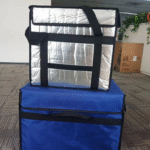
Insulation data require similar care. A material conductivity value supports modeling, but finished performance depends on thickness, density, seams, corners, lid, compression, aging, and manufacture. Test the assembled shipper. Include minimum and maximum payloads or other justified load cases because thermal mass, void space, circulation, and coolant distance change with load.
Sensor placement should be driven by risk. Central air can respond differently from a small vial near a plate or a simulated product core. Development mapping can identify likely warm and cold positions. Record what each sensor represents; otherwise, a precise reading may answer the wrong question.
Condition the material state, not just the clock
An approved conditioning method defines the brick’s starting state. Specify equipment set point, loading, spacing, orientation, dwell, verification, and maximum transfer time to packing. PCM may need deliberate phase conditioning. Water-based bricks stacked tightly in a crowded freezer may not match evenly spaced components used during testing.
Capacity planning belongs in the design. Count how many bricks the site can condition while maintaining airflow during peak demand. Separate components by item and status so a visually similar plate with another fill is not substituted. Define what happens after a power interruption, door left open, or overdue transfer. A process that cannot recognize an uncertain state should quarantine it.
Qualify Against a Route, Not a Marketing Duration
The use-case record becomes the input to qualification. It defines payload limits, load cases, nominal and credible maximum duration, seasonal risk, shipper, brick arrangement, conditioning, monitor strategy, and acceptance criteria. Development tests refine the design. Formal testing challenges the selected configuration. Field verification can examine real handling and lane assumptions.
ISTA 7E provides standardized thermal profiles for parcel-delivery testing, and ISTA Standard 20 offers a process for designing and qualifying insulated shipping containers. These can be useful references, but they do not certify a brick for every hospital, laboratory, medicine, or device route. Compare the profile with actual pickup, staging, hubs, vehicles, weekend risk, customs or security delays, and receiver hours. Use measured lane data where the risk assessment calls for it.
Review the test report as a chain of conditions. It should identify shipper construction and revision, exact brick and fill, conditioning, quantity and location, separation, payload or simulant, initial conditions, sensors, calibration, chamber profile, duration, limits, deviations, raw data, and conclusion scope. A hold-time headline stripped of those facts is not transferable evidence.
Both hot and cold challenges matter. Adding coolant to extend a hot-season margin may increase freeze risk in winter. Increasing separation may solve a local cold spot while shortening protection against external heat. Iterate against the full requirement rather than tuning one curve.
Hypothetical Approval Board Review
Imagine an internal board reviewing a proposed rigid PCM plate for two use cases: a refrigerated injectable medicine and a diagnostic instrument cartridge. In this hypothetical example, the medicine has approved 2°C to 8°C transport conditions and freeze sensitivity. The cartridge follows different manufacturer instructions. No real product, duration, test result, or Tempk capability is implied.
Helpful decision tools
Check the details before you choose packaging
These quick tools can help you compare route risk, sizing needs, coolant choices, and packaging details before you request a quote.
Route Risk Checker
Review lane conditions before selecting packaging for real operating requirements.
Check route riskDry Ice Calculator
Estimate dry ice needs for frozen or ultra-cold shipments before packing.
Estimate dry iceIce Pack Calculator
Estimate gel ice pack quantity for chilled shipments and practical route planning.
Estimate ice packsThe original request proposes one shipper to simplify purchasing. The board’s use-case records reveal different minimum loads, receiving owners, and excursion decisions. Packaging engineering creates two pack-out concepts using the same brick form only as a design hypothesis. The medicine concept includes a defined separator and sensors near credible cold and warm positions. The cartridge concept accounts for its packaging geometry and condensation risk.
Testing shows whether either configuration meets its own criteria; the shared hardware goal is not an acceptance criterion. A limited route pilot then checks conditioning, packer selection, handoffs, data retrieval, and receiver action. The board approves only the configurations supported by evidence and records exclusions. If the common plate works for one use but not the other, procurement keeps two systems rather than weakening requirements.
This review model prevents a successful component from being overextended. It also creates a reusable decision record for future payloads: a new use can compare its requirements with the approved design space instead of starting from a marketing description.
Turn Qualification Into a Dispatch-and-Receipt Routine
At dispatch, the operator should confirm the current use-case and work-instruction revision, brick identity, physical condition, conditioning status, payload configuration, separators, monitor, closure, and labels. Capture identifiers that allow reconstruction. Visual instructions should show layers and orientation, while training should include common errors and the response to an uncertain component.
The monitor’s accuracy, interval, alarm setup, calibration, activation, placement, and download method must support the receiving decision. It records exposure; it does not cool the payload or qualify the box. Secure it so it cannot migrate against the coolant.
At destination, inspect damage, seals, leakage, component displacement, primary packaging where authorized, and data availability. Follow the applicable procedure for quarantine and assessment. A brick that feels cold is not evidence that every payload point stayed within limits. A fully thawed brick is not automatic proof that the payload failed. Use recorded exposure and product- or method-specific evidence.
For medicine distribution, EU GDP principles and USP considerations may inform the quality system. WHO good storage and distribution guidance broadly emphasizes responsibilities, documentation, monitoring, qualification, and controlled transport of medical products. Diagnostics, samples, devices, and biological materials may follow other rules. Cite the correct framework in internal procedures rather than applying pharmaceutical language to the entire medical sector.
Give Reuse Its Own Release Decision
A returned brick should not move directly from the delivery tote to conditioning. Treat it as incoming material with uncertain status. Confirm identity and custody, then inspect cap, seams, leakage, deformation, swelling, surface damage, label, and contamination against approved criteria. Quarantine anything doubtful.
Cleaning must suit the actual soil risk and component materials. Confirm compatibility of agents and methods with shell, closure, label, and fill containment. Dry the brick and segregate clean-unconditioned, conditioned-ready, dirty, damaged, and retired stock. Do not claim sterility, disinfection, or a fixed reuse cycle without supporting evidence.
Return logistics determine whether reuse is practical. Track issue, recovery, loss, rejection reasons, turnaround, cleaning effort, conditioning capacity, and retirement. These data also support a fair sustainability analysis. Compare complete systems delivering equivalent protection, with boundaries that include production, transport, returns, washing, conditioning, replacements, and end of life. HDPE shell identification alone does not prove local recyclability of a filled component.
Control Change Before It Breaks the Evidence Link
The use-case record should list review triggers. Supplier changes can include resin, colorant, mold, dimensions, cap, seal, fill formula, fill amount, label, and carton packing. Internal changes include payload, labeled conditions, kit contents, laboratory method, device configuration, shipper, separator, brick count, conditioner, monitor, carrier, hub, receiving schedule, cleaning process, and reuse route.
Change control decides whether existing rationale remains valid, targeted verification is enough, or requalification is needed. Periodic review adds operational evidence: temperature trends, near-limit events, pack deviations, missing data, route delays, receiver response, component rejects, and return loss. Review hot and cold behavior separately. Stable average data should not hide a recurring local risk.
Practical Approval FAQs
Can one qualified configuration cover several medical payloads?
Only when the approved design space and evidence support them. Compare temperature limits, sensitivities, load, geometry, starting condition, route, and receiving criteria. A bracketing or configuration-family strategy may be justified, but “medical use” is not a technical bracket. Document inclusions and exclusions explicitly.
When should a cool brick be excluded from a design?
Exclude or reconsider it when cooling is not required, direct cold or condensation creates risk, usable space becomes inadequate, conditioning cannot be controlled, recovery is impractical, or qualification does not meet the payload criteria. Another passive coolant, a different shipper, or an active system may be more appropriate.
What is the shortest useful supplier request?
Provide payload category and limits, load cases, shipper dimensions, route and delay, conditioning resources, monitoring plan, and intended reuse. Ask for the exact brick drawing, shell and fill information, tolerances, conditioning guidance, inspection criteria, system-relevant evidence, and change-notification terms. Avoid asking for universal “medical compliance.”
Conclusion: Preserve the Link From Requirement to Release
A strong medical thermal program begins with a precise use-case record and ends with two controlled decisions: whether the payload can be accepted and whether a returned brick can be reused. Between them sit heat-transfer design, component evidence, conditioning, qualification, route fit, monitoring, packing, and receipt. Keeping medicines, diagnostics, samples, devices, and biological materials distinct prevents false standardization. A rigid coolant plate is worth adopting when it makes a supported configuration easier to reproduce, identify, inspect, and govern.
About Tempk
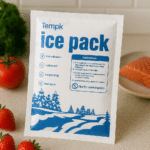
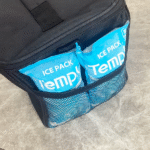
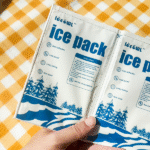
Tempk provides reusable ice bricks and PCM ice plates for cooler bags, medical boxes, insulated cartons, and repeatable pack-outs. Its public offering includes HDPE ice bricks. For a defined project, we can discuss customization of volume, mold shape, cap, shell color, PCM formula, label, and carton packing. That flexibility can help align component geometry and identity with a controlled use case. It does not replace payload-specific requirements, qualification of the complete thermal system, route review, monitoring, receiving authority, or reuse controls.
Use one approved use-case record as your next-step brief, then invite Tempk to discuss a brick configuration for engineering and quality review.