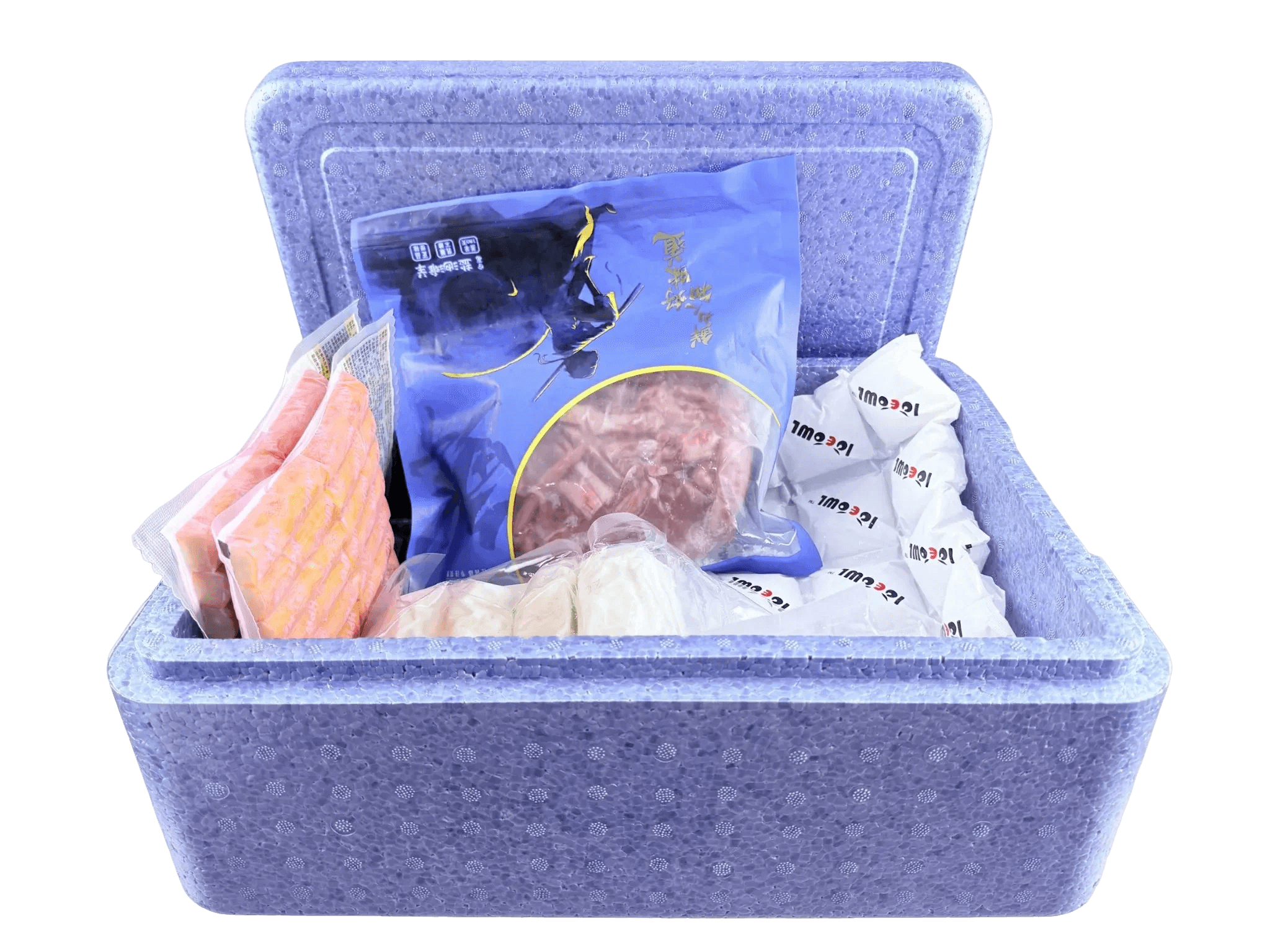
How to Design a Heat-Insulating Customizable Expanded Polypropylene Box
A heat-insulating customizable expanded polypropylene box performs reliably only when its thermal role, payload range, coolant, route, geometry, operating procedure, and evidence are defined together. EPP can reduce heat flow and absorb handling energy, but it is passive insulation rather than active temperature control. The buyer should begin with the product’s required range and route hazards, design a repeatable packout around usable dimensions and lid integrity, test production-representative systems under justified ambient profiles, and control cleaning, damage, and production changes throughout reuse.
Define the job before choosing the insulation
Start with the product requirement. The product owner should confirm the acceptable temperature range, excursion rules, packing temperature, and any orientation or contact limits. The logistics team should define route duration, handovers, vehicle conditions, loading docks, customs or hub risks, last-mile exposure, and receiving. The quality team should define the evidence and decision process.
Do not use a generic chilled, frozen, or ambient label as the full specification. Different products within the same category can have different requirements. The box design should use the approved range and operating assumptions without claiming universal suitability.
Next, classify the architecture:
- Insulated handling tote: slows exchange during internal or refrigerated movement.
- Passive temperature-controlled packout: combines insulation with coolant and a controlled packing instruction.
- Hybrid system: uses the box inside a refrigerated or actively controlled environment.
- Protective outer container: shields another thermal system from handling hazards.
- Qualified shipper: a defined configuration supported by tests for a stated product and use.
The label matters because it determines what evidence is needed. A material data sheet may be enough for preliminary selection, while a qualified shipper needs complete system documentation.
Build a payload and thermal-media envelope
Measure the payload as shipped, not as an unwrapped product. Include primary cartons, bottles, pouches, trays, dividers, absorbent material, labels, probes, loggers, coolant, and loading clearance. Define minimum and maximum normal loads. Partial loads can be thermally more vulnerable and may allow components to move.
Create zones in the cavity:
- product zone with its allowable contact surfaces;
- coolant zones with controlled orientation;
- separation zones that prevent local overcooling or heating;
- sensor zones chosen to represent likely extremes;
- closure clearance so the lid seats fully;
- handling clearance for gloved loading and unloading.
Usable volume is the space left after all of those zones. Gross internal volume is not an operational capacity. Drafted walls, rounded corners, ribs, lid overlap, stack features, and handles can reduce the space further.
A custom molded insert or pocket can make the packout mistake-resistant. It should also tolerate the actual coolant dimensions and conditioning state. Flexible packs can change shape; rigid PCM panels may require insertion clearance. Component identification should prevent different thermal media or revisions from being mixed.
Manage heat transfer at every path
Heat reaches or leaves the payload through several paths. Conduction crosses walls and lid. Convection occurs at surfaces. Radiation contributes at external boundaries. Air exchange passes through lid gaps, vents, drains, sensor channels, or repeated openings. Rigid components and thin molded features create thermal bridges.
Wall thickness is therefore only one design lever. A very thick body with a poorly fitting lid may underperform a more balanced system. A through-handle can become an air path. A strap can improve closure. A corrugated overpack can protect the lid and modify convection. Every feature should be reviewed as part of the thermal network.
| Thermal path | Design response | Verification method |
|---|---|---|
| Wall conduction | Select grade, density strategy, and section thickness | Material data plus box-level comparison |
| Lid joint leakage | Control overlap, flatness, closure, and wear | Repeated-fit and thermal test |
| Openings and channels | Remove unnecessary paths or define plugs | Configuration inspection and sensitivity test |
| Coolant contact | Use pockets, spacers, or separators | Product-interface temperature mapping |
| Internal headspace | Right-size payload and control partial loads | Minimum and maximum payload trials |
| External boundary | Represent sunlight, floor contact, air velocity, and chamber profile | Justified ambient test or lane data |
| Repeated opening | Design quick access or secondary lids where needed | Operational opening sequence in trial |
The table connects a suspected heat path to a design and evidence. It also shows why material conductivity alone cannot support a route-duration claim.
Select and condition coolant deliberately
Thermal media should be selected around the product and required range. Frozen water-based packs, conditioned gel packs, engineered phase change materials, or dry ice have different temperature behavior, safety requirements, and handling. Dry ice is not interchangeable with a cold pack, and a PCM selected for one range should not be substituted without review.
Conditioning controls the starting state. The procedure should define equipment, arrangement, endpoint or time, allowable variation, and the period between removal and packing. A pack with a very cold surface can create local product exposure even when the average shipment temperature later appears acceptable.
Placement controls gradients. Coolant at the top may counter warm air entering during openings, while side panels may create more uniform surface area. Base coolant can be influenced by floor heat. There is no universal pattern. Use thermal modeling to compare concepts if helpful, then map temperatures in a physical packout.
The coolant quantity should be supported by the energy balance and tests. Adding more is not automatically safer. It reduces payload capacity, increases freight mass, and can overcool sensitive products. Use a defined bill of materials and prevent substitutions.
Design the EPP part for mechanical and thermal durability
Expanded polypropylene can recover after many moderate impacts, but finished performance depends on grade, molding density, fusion, geometry, and use. Mechanical damage can become thermal damage when the rim deforms, the lid loosens, or a coolant pocket no longer locates a pack.
Review the load paths. Handles should transfer packed weight into sidewalls and base. Stack load should pass around the payload through reinforced walls or posts. Corners need enough section and radius for impacts. Long panels may require ribs, but ribs should not create payload pressure points or cleaning traps.
Evaluate different time scales. Drops and shocks are brief. Vibration applies many cycles. Stacking creates sustained compression and creep. Cleaning applies repeated heat, chemical, and mechanical exposure. A single strength test cannot cover all of them.
Thermal inspection criteria should include:
- full perimeter lid seating;
- rim and corner geometry;
- stack registration and base stability;
- handle and wall fusion;
- coolant pockets and separators;
- drainage or plug configuration;
- label and packout-version readability;
- contamination, odor, and retained moisture.
The unit can remain cosmetically worn if these functions are maintained. It should be retired when damage changes the packout or closure.
Test evidence in layers
Use each evidence type for the question it can answer. Material data supports grade selection and modeling. Box-level heat-leak tests compare geometry or lids. Complete packout tests support the tested payload, coolant, and profile. Lane qualification addresses actual route conditions. Shipment monitoring checks ongoing exposure.
A complete thermal protocol should record:
- box and lid revision;
- payload or thermal simulator and load range;
- coolant identity, conditioning, quantity, and placement;
- separators, inserts, labels, and closure;
- initial temperatures;
- ambient profile, chamber control, and air movement;
- sensor type, calibration, locations, and logging interval;
- planned openings or handling events;
- acceptance range and analysis method;
- deviations and repeat runs.
ISTA 7E offers standardized ambient profiles for insulated shipping container tests. Standardized profiles support comparison and consistency; lane-specific data may still be needed. Mechanical tests can use appropriate ISTA procedures or ASTM D4169 to represent distribution hazards. These procedures evaluate defined packaged products, not EPP material as a universal object.
Helpful decision tools
Check the details before you choose packaging
These quick tools can help you compare route risk, sizing needs, coolant choices, and packaging details before you request a quote.
Compliance Checklist Generator
Build a practical checklist for packaging review, shipping, and documentation.
Build checklistInsulation Material Drop Resistance
Review drop resistance and handling factors before choosing insulation materials.
Check resistanceIce Pack Calculator
Estimate gel ice pack quantity for chilled shipments and practical route planning.
Estimate ice packsRun boundary cases justified by risk. Minimum payload, maximum payload, warm and cold seasons, conditioning variation, and opening events may reveal sensitivity. Do not add arbitrary worst cases that do not reflect the route, but do not test only the easiest condition.
Qualification does not end at a successful chamber run
A test can pass while routine operations remain fragile. Packers may use the wrong coolant, condition it differently, leave the lid partly open, omit a separator, or ship a smaller payload. Qualification should therefore include a clear bill of materials, illustrated packing instruction, training, line checks, and deviation rules.
A route pilot uses normal operators and handovers. It confirms whether the packout can be assembled within the available time, whether components are distinguishable, whether the box fits equipment, and whether receiving can retrieve and interpret data. Record opening events and exceptions.
A common scenario is a box designed around a full payload and tested without openings. The route later includes repeated store deliveries and half-load conditions. Temperature gradients increase as the load shrinks. The corrective action may require a different coolant arrangement, filler module, secondary access lid, or route-specific packout. The original test remains valid only for its stated setup.
Ongoing monitoring can detect drift. Trend damage, packing deviations, temperature excursions, box turnaround, and cleaning rejections. Periodic review can identify when the operating envelope has changed enough to require reassessment.
Cleaning, food contact, and quality boundaries
Reusable thermal boxes need a defined cleaning process. Specify detergent or sanitizer, concentration, temperature, contact time, mechanical action, rinse, and drying. Confirm compatibility with the exact EPP grade and every secondary component. Inspect labels, adhesives, seals, straps, and rigid inserts after repeated exposure.
The closed-cell structure does not eliminate hygiene risk. Water and soil can remain in scratches, vents, handles, deep recesses, lid interfaces, and damaged areas. Design for drainage and visual access. Keep dirty returns separate from clean stock and define retirement criteria.
Direct food-contact status must be supported for the finished formulation and intended use. European requirements include general food-contact safety and inertness, good manufacturing practice, and specific controls for plastics. United States food-contact use also requires an appropriate regulatory basis. Request documentation for pigments, additives, recycled content, labels, and other components where relevant.
Pharmaceutical good distribution practice is not a material certificate. It involves the controlled distribution system. A complete thermal packout may need qualification, monitoring, procedures, training, documentation, deviation handling, and change control. Describe the box accurately and avoid universal compliance claims.
Make customization resilient to product and route changes
Hard tooling can become obsolete. Keep likely changes in modular elements such as product inserts, coolant spacers, label plates, sensor holders, or filler modules. Preserve a stable outer platform where pallet, rack, and vehicle interfaces are long-lived.
Modularity creates its own risks. Parts can be lost, mixed, installed backward, or cleaned separately. Use positive identification and geometry that prevents incorrect pairing. Control the bill of materials by box revision and packout.
When a product, payload range, coolant, route, ambient profile, lid, insert, material, molding density, production site, cleaning method, or packaging process changes, assess impact. ISTA guidance recognizes that product, package, and process changes can justify retesting. The quality team should define risk-based triggers rather than assuming prior evidence remains valid forever.
Control the manufacturing state
The approved design should identify EPP grade, density range or strategy, color and additives, body and lid revisions, secondary components, and critical dimensions. Tool review should address bead filling, steam access, vents, cooling, draft, ejection, trimming, and warpage.
First molded parts need conditioning before measurement. Check minimum opening, usable cavity, lid engagement, base, stack features, handles, and coolant pockets across representative samples and cavities. Pair bodies and lids in different combinations to expose tolerance problems.
A control plan should connect manufacturing variables to functional risks. Part weight may indicate material charge or density consistency but cannot prove uniform fusion or thermal performance. Dimensional and functional checks remain necessary. Nonconforming lots should be contained with documented disposition.
Change control should cover material supplier and grade, density target, colorant, additives, recycled content, mold repairs, venting, key process settings, site, lids, labels, straps, seals, and inserts where function or compliance can change. Significant changes should receive comparison data, sample approval, and retesting as appropriate.
Procurement checklist for a credible proposal
Before selecting a supplier, confirm that the proposal answers the following:
- The product range, payload range, route, and required temperature condition are explicit.
- The box role is accurately named as insulated tote, passive packout component, hybrid, or qualified system.
- Minimum usable dimensions fit product, coolant, separators, and sensor plan.
- Lid, handle, stack, and opening features have defined thermal and mechanical functions.
- Any duration statement includes the complete test configuration and ambient profile.
- Direct food-contact, pharmaceutical, or other compliance claims have the correct scope.
- Cleaning, drying, return, inspection, and retirement are part of the design.
- Tooling and production controls can reproduce the approved sample.
- Change notification and retest triggers are agreed.
- The reuse and end-of-life program has named owners and realistic logistics.
A proposal that makes limitations visible is easier to qualify and operate than one built around an unexplained “high insulation” claim.
Frequently asked questions
What should be customized first in a thermal EPP box?
Prioritize the interfaces that create variation: usable cavity, coolant placement, product separation, lid closure, handle and stack geometry, sensor location, and equipment fit. Decorative color or texture should come later. A standard body with custom inserts may solve the thermal-control problem without a completely new mold.
How do buyers compare two suppliers’ hold-time claims?
Normalize the test conditions. Compare payload and minimum load, coolant identity and conditioning, quantity and placement, box dimensions and usable volume, ambient profile, initial temperatures, sensors, openings, acceptance range, sample count, and report quality. Claims are not comparable when those variables differ or are undisclosed.
Can a reusable box use the same packout after visible wear?
Only if inspection confirms that wear has not changed lid fit, rim condition, coolant placement, usable dimensions, stack stability, or hygiene. Cosmetic scuffs may be acceptable, while a small crushed rim may increase leakage. Use functional rejection criteria and periodically confirm the reused fleet against the approved configuration.
What makes a thermal test production-representative?
The test should use the intended EPP grade, molding density, production process, body and lid, inserts, coolant, payload, packing method, closure, and labels. Prototype substitutions or hand-finished parts must be documented. The ambient profile and operations should also match the question the test is intended to answer.
Conclusion
A custom heat-insulating EPP box becomes reliable through controlled interfaces and evidence. Begin with the product and route. Build a payload and thermal-media envelope. Manage every heat path, especially the lid and openings. Design mechanical durability to protect thermal repeatability. Test the complete production configuration, then sustain it with packing controls, cleaning, inspection, manufacturing discipline, and change management. Insulation is a useful material function; temperature control is a system outcome.
About Tempk
Tempk supplies insulated packaging, cooling media, temperature monitoring, and related cold-chain solutions. We can help buyers frame a custom EPP thermal project around the variables that need to be defined and tested: payload, usable dimensions, temperature requirement, duration, coolant, route, openings, handling, cleaning, and reuse. Any performance statement should remain tied to the exact production packout and documented evaluation.
Share the required product range, payload options, ambient route, and current packaging problem to develop a clearer specification before sampling.