Temperature-controlled packaging should be selected as a complete operating system, not as an insulated box with a temperature label. A usable specification connects the product limits, payload, route exposure, thermal media, insulation, packing method, monitoring plan and acceptance criteria. The right solution is the simplest system that can protect the defined payload for the defined route and that operators can assemble consistently.
For pharmaceutical distribution, the WHO shipping-container qualification guidance treats the container, coolant, payload, packout and monitoring arrangement as one qualified system. The same discipline is useful for food, diagnostics and other temperature-sensitive goods, although the governing product requirements and regulations differ by sector and market.
Define the shipment requirement
Start with the conditions the shipment must survive. Choosing EPS, EPP, VIP, a gel pack or a PCM before defining the route often produces a quotation that cannot be tested or compared.
| Requirement | What to define | Why it changes the packout |
|---|---|---|
| Product condition | Approved or required temperature limits and any freeze, heat, light or moisture sensitivity | Establishes the acceptance criteria and excludes incompatible coolants |
| Payload | Product dimensions, mass, packaging, thermal mass, and minimum and maximum load | Changes usable space, heat capacity and the locations most likely to warm or cool first |
| Route | Origin, destination, transit window, staging, carrier hubs, customs and receiving delay | Determines the exposure profile and the reserve time needed |
| Ambient risk | Hot and cold seasons, vehicles, docks, aircraft transfer and uncontrolled storage | Shows whether one universal configuration is realistic or seasonal packouts are needed |
| Operations | Conditioning equipment, packing labor, training, return logistics and receiving process | Determines whether a design can be repeated outside a laboratory |
| Evidence | Qualification protocol, monitoring method, deviation handling and change control | Makes the performance claim auditable and maintainable |
If the product owner has not approved the transport limits, the packaging supplier should not invent them. The product label, stability data, quality agreement and applicable market requirements should control the specification.
Choose the control architecture
Passive systems use a finite amount of preconditioned thermal media inside insulation. They can work well when the exposure window is bounded, the payload fits a repeatable arrangement and the warehouse can control conditioning. Active systems use powered refrigeration or heating and can suit large payloads, long or uncertain journeys, or operations where passive coolant mass becomes impractical.
A pallet cover, insulated liner or cooler bag can reduce exposure during a defined handling interval, but it is not automatically a complete temperature-control system. A data logger records conditions at its sensor; it does not add thermal protection. These components can be valuable when their role is explicit.
| Architecture | Useful when | Evidence to request |
|---|---|---|
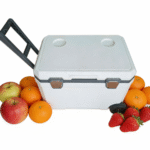
| Passive parcel shipper | Payload and duration can be standardized and conditioning is controlled | Complete packout report, hot and cold profiles, payload limits and packing instruction |
| Reusable rigid container | Return, cleaning, inspection and asset tracking are practical | Thermal evidence plus damage limits, inspection criteria and requalification plan |
| Active container or vehicle | Exposure or payload makes a passive system operationally inefficient | Temperature mapping, maintenance, calibration, alarm and contingency records |
| Supplemental cover or liner | A known staging or transfer interval needs buffering | Test evidence for that exposure window and a clear statement of what the component does not control |
Match insulation and thermal media to the failure risk
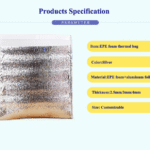
Insulation slows heat transfer through walls, corners, seams, lids and closures. A material property does not establish the performance of the assembled shipper. EPS, EPP, insulated cartons, flexible liners and VIP-enhanced boxes create different balances among thermal resistance, payload space, weight, durability, cost and recovery at destination.
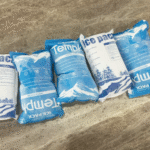
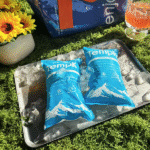
Thermal media supply or absorb heat. Water-based packs and gel packs can be effective, but their temperature, fill mass, location and conditioning matter. PCMs are selected for thermal behavior in a defined region, yet a nominal phase-change point does not guarantee the temperature of every product location. Direct contact with a very cold pack can create a local cold spot even when the average air temperature appears acceptable.
Helpful decision tools
Check the details before you choose packaging
These quick tools can help you compare route risk, sizing needs, coolant choices, and packaging details before you request a quote.
Packaging Selector
Compare insulated packaging options by product, route, and temperature need.
Find packagingIce Pack Calculator
Estimate gel ice pack quantity for chilled shipments and practical route planning.
Estimate ice packsDry Ice Calculator
Estimate dry ice needs for frozen or ultra-cold shipments before packing.
Estimate dry iceFor medicinal products in the EU and EEA, European Commission GDP guidance states that cool packs in insulated boxes should be arranged so the product does not contact them directly and that staff should be trained on seasonal configurations. This is a regional GDP requirement, but the engineering concern is broader: local hot and cold points must be considered, not just a central reading.
Qualify the complete packaging system
| Qualification stage | Question it answers | Typical evidence |
|---|---|---|
| Design qualification | Does the proposed design address the approved user requirements | Design description, component specifications, risk assessment and traceability to the requirement |
| Operational qualification | Can the defined packout operate within acceptance criteria under controlled challenges | Hot and cold chamber profiles, sensor map, payload cases, deviations and approved report |
| Performance qualification | Can trained operators reproduce the system under representative distribution conditions | Representative shipments, packing records, temperature data, handling observations and final approval |
A chamber test should answer a defined question. It should identify the shipper, payload or representative surrogate, coolant type and conditioning, packing sequence, ambient profile, sensor locations, acceptance range and duration. A test result only supports the conditions represented by that protocol.
WHO describes design, operational and performance qualification as sequential forms of evidence. Its shipping-container qualification supplement also recommends assessing the route before testing, documenting the full assembly and testing representative minimum and maximum payloads. The user requirement specification should define the allowable product temperature range, payload, duration and ambient profiles.
- Run both hot and cold challenges when both are plausible for the route.
- Place sensors to answer specific questions, including likely warm and cold product locations.
- Keep coolant conditioning and payload preconditioning within documented limits.
- Record deviations and compare every run with preapproved acceptance criteria.
- Repeat or review qualification when components, routes, duration, loading pattern or operating conditions change.
A declared hold time without these conditions is not a transferable performance claim. It may be a useful starting point for screening suppliers, but it is not enough to approve a route.
Turn qualification into operating control
Daily performance depends on the people and materials that reproduce the tested packout. The packing instruction should state coolant quantity and conditioning, product preconditioning, loading sequence, divider placement, void fill, logger location, closure method, label placement and maximum time allowed outside controlled storage.
Change control should identify the features that can alter performance. These may include insulation density or thickness, VIP layout, coolant formulation and fill mass, film construction, divider thickness, carton geometry, payload arrangement and closure fit. A visually similar substitution is not necessarily thermally equivalent.
Compare supplier evidence
A useful evidence review gives every supplier the same operating requirement and asks for comparable documentation. Record the following fields before comparing systems:
- Product temperature and handling limits approved by the product owner.
- Minimum and maximum payload dimensions, mass and presentation.
- Target route duration plus a justified delay allowance.
- Hot and cold ambient profiles or available lane data.
- Single-use or reusable workflow, cleaning and return requirements.
- Monitoring, labeling, receiving and excursion-review requirements.
- Required qualification documents, sample quantities and change-notification terms.
Compare the total loaded operation rather than the empty box price. Coolant weight, dimensional freight, assembly time, storage space, reverse logistics, cleaning and investigation workload can change the real cost.