Pharmaceutical cold chain solutions are complete operating systems, not single products. A usable solution connects the approved condition for the medicine or biologic with the route, the thermal packaging, the packing method, the monitoring plan and the evidence required by the quality team. If any of those inputs changes, the original conclusion may no longer apply.
This matters because regulations and guidance define quality responsibilities without prescribing one universal shipper. In the United States, 21 CFR 211.142 requires finished drug products to be stored under appropriate conditions of temperature, humidity and light so that product quality is not affected. EU Good Distribution Practice requires medicinal products to be transported within defined conditions and applies a risk-based approach to transportation. The approved product information, applicable market rules and the responsible quality unit must therefore define the shipment requirement before packaging is selected.
Start with the product requirement, not a standard temperature label
Terms such as refrigerated, controlled room temperature, frozen and ultra-low are useful starting points, but they are not complete design specifications. The shipment brief should record the exact upper and lower limits, any permitted exposure or excursion rules, freeze sensitivity, starting condition, primary-packaging constraints and the decision process for a deviation.
A product described as refrigerated may still require protection from direct contact with frozen coolant. A controlled-room-temperature product may need protection from both summer heat and winter cold. Two products with the same labelled range may need different packouts because their payload mass, package geometry, route duration or tolerance for local hot and cold spots differs.
Build the solution in five connected layers
| Layer | Decision to make | Evidence or control needed |
|---|---|---|
| Product requirement | What condition must be protected, and what exposures are unacceptable? | Approved product information, stability knowledge, quality-approved acceptance criteria |
| Distribution lane | Where can heat, cold, delay, handling or opening occur? | Route map, seasonal profile, handoffs, dwell time, delay allowance |
| Thermal system | Which insulated container and cooling medium fit the payload and exposure? | Defined shipper, coolant, quantity, conditioning, separators and payload arrangement |
| Operating process | Can workers repeat the packout correctly? | Packing instruction, conditioning window, closure method, labels, training and receiving steps |
| Evidence and review | What will demonstrate control and support a release or deviation decision? | Test protocol, sensor layout, results, logger process, change control and deviation procedure |
The layers should be reviewed together. Adding more coolant can extend protection against heat but may increase the risk of overcooling a freeze-sensitive payload. Higher-performance insulation may reduce heat transfer, yet it also changes usable space, packing sequence, cost and return logistics. A solution is credible only when those trade-offs are visible.
Choose passive packaging, controlled transport or a combined approach
Passive systems
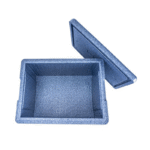
Passive packaging uses an insulated enclosure and a finite amount of conditioned coolant, such as gel packs, phase change materials or dry ice where appropriate. It can suit parcel, courier, clinical-supply and selected pallet applications when the packout has a defined operating envelope. It has no powered temperature-control unit, so duration and performance depend on the complete configuration and exposure.
Temperature-controlled vehicles or active containers
Powered or thermostatically controlled equipment may be more appropriate for long routes, bulk payloads, frequent access or shipments whose risk cannot be controlled reliably with a finite passive packout. The equipment, operating environment, contingency plan and handoffs still need to be qualified and monitored. A powered system does not remove the need for loading discipline or receiving controls.
Protective packaging inside controlled transport
Some programs use insulated secondary packaging inside a temperature-controlled vehicle or active air container. The outer transport controls the larger environment while the inner packaging adds protection against short handling exposures, local gradients or contingency events. The responsibilities of each layer must be explicit; overlapping equipment should not lead to untested assumptions.
Map the route before selecting the packout
Route review should cover more than scheduled transit time. Record the period from final package closure until the receiver opens or transfers the payload into approved storage. Include collection delays, staging, airport or depot exposure, customs, weekend holds, last-mile delivery, failed delivery attempts and the receiver's operating hours.
WHO model guidance for time- and temperature-sensitive pharmaceutical products treats local legislation as controlling and provides a framework for safe storage and distribution. Its route-profiling supplement explains why ambient exposure, critical control points and actual distribution lanes matter when designing and testing packaging. A generic duration claim cannot replace that lane analysis.
For a new or variable route, the quality and logistics teams should decide which seasonal and delay conditions the qualification must represent. The objective is not to invent an impossible worst case, but to use a documented and defensible profile that covers the intended operating range and identified contingencies.
Helpful decision tools
Check the details before you choose packaging
These quick tools can help you compare route risk, sizing needs, coolant choices, and packaging details before you request a quote.
Insulation Material Reference
Compare insulation material choices for different cold chain packaging needs.
Compare materialsInsulation Material Drop Resistance
Review drop resistance and handling factors before choosing insulation materials.
Check resistancePackaging Selector
Compare insulated packaging options by product, route, and temperature need.
Find packagingTurn a concept into a controlled shipment process
- Approve the user requirement. Define product limits, payload range, route, intended duration, monitoring, acceptance criteria and required documentation.
- Screen suitable architectures. Compare passive shippers, controlled transport and protective secondary packaging against the route and operating constraints.
- Freeze the test configuration. Record every component, coolant condition, payload simulator, loading sequence, closure, sensor position and external profile.
- Test the edges of intended use. Consider minimum and maximum payloads, hot and cold profiles, delay allowance and any configuration that could create the highest product risk.
- Write the operating method. Convert the tested setup into conditioning, packing, labelling, monitoring, receiving and deviation instructions.
- Control change. Review changes to the shipper, coolant, quantity, payload, separator, route, season, logger position or work instruction before routine use.
Read test evidence within its boundary
A chamber test or transport trial supports only the configuration and conditions represented. Ask for the full test setup, not only a pass statement or a temperature chart. The review should identify the ambient profile, duration, load, starting temperatures, coolant conditioning, sensor positions, acceptance range, deviations and exact bill of materials.
ISTA Standard 20 and Test Standard 7E provide an industry framework for the design and qualification of insulated shipping containers and thermal parcel profiles. Whether those standards are appropriate depends on the shipment and the quality plan. They do not make every package universally suitable, and a supplier's component specification does not prove complete-system performance.
Assign responsibilities before launch
Procurement can control the commercial specification, approved supplier and change-notification terms. Packaging engineering can define the configuration and translate test results into operating limits. Logistics can document the lane, handoffs and contingency points. Quality can approve requirements, evidence, deviations and change decisions. The packer and receiver must have instructions they can execute under real working conditions.
This division prevents a common failure: the supplier is asked to "guarantee" a temperature range without receiving the product requirement, payload, route or approval criteria. Suppliers can propose and document a packout, but the product owner and responsible quality organization must decide whether the evidence is suitable for the intended use.
Prepare a useful RFQ
Send the following information before requesting samples or pricing:
• Approved temperature limits and any freeze or heat sensitivity. • Payload dimensions, quantity, mass and starting temperature. • Primary and secondary package constraints, including orientation and cushioning. • Route, transport modes, seasons, handoffs, dwell points and delay allowance. • Minimum and maximum shipment loads. • Monitoring, labelling, receiving and deviation requirements. • Desired reuse model, return logistics and cleaning expectations, if relevant. • Required test protocol, reports, traceability and change-notification terms. • Expected order volume and any dimensional or branding constraints.
Begin with a controlled shipment brief
A useful pharmaceutical cold chain solution begins with product limits and route evidence, then selects packaging and operating controls that can be tested and repeated. A controlled brief should state the product condition, payload, lane, duration, seasonal exposure, monitoring plan and documentation needs. A material name, box model or unsupported hold-time claim is not a complete shipment specification.
Frequently asked questions
What does a pharmaceutical cold chain solution include?
It includes the approved product requirement, the route and exposure profile, the thermal packaging or controlled transport, the packing and receiving procedures, the monitoring plan, qualification evidence and change control. A box or coolant alone is only one component.
Is a temperature label such as 2-8 C enough to specify a solution?
No. The design also needs payload mass and geometry, starting condition, freeze sensitivity, route duration, seasonal exposure, handling constraints, acceptance criteria and the quality process for deviations.
When should a cold chain solution be reviewed or requalified?
Review is appropriate when a relevant input changes, such as the shipper, coolant, payload, packout sequence, route, season, carrier process, sensor location or work instruction. The responsible quality team should decide whether assessment, verification or requalification is required.
References and further reading
• 21 CFR 211.142 Warehousing procedures • 21 CFR 211.150 Distribution procedures • EU Guidelines on Good Distribution Practice • WHO model guidance for storage and transport of time and temperature sensitive pharmaceutical products • WHO transport route profiling guidance • ISTA Standard 20 and Standard 7E information