Article Body
\nA Purchasing Plan for a 30 Liter Cold Chain Ice Box Manufacturer
\nA suitable 30 liter cold chain ice box manufacturer should help turn a capacity request into an identifiable, repeatable shipping configuration. Define the usable payload and journey first, compare complete assemblies rather than isolated materials, and require evidence that matches the proposed use. Then connect the approved sample to production controls and an operating process your staff can reproduce. This purchasing plan brings technical and commercial decisions together without treating a nominal volume, a familiar test standard, or a factory certificate as proof that every shipment will remain within its required conditions.
\nWrite the Requirement So Different Factories Quote the Same Job
\nA useful manufacturing brief describes what must arrive, in what condition, and through which operating process. Begin with the product’s transport specification and the dimensions of its actual packaging. Include normal order variations and restrictions on orientation, stacking, and contact with refrigerants.
\nExplain the meaning of the requested capacity. If thirty liters is a target empty cavity, say so. If the requirement is thirty liters of usable payload after coolant and protective components are installed, that is a different design task. Ask manufacturers to show the proposed payload envelope rather than assume their capacity labels use the same convention.
\nDimensions should be functional. The opening, base footprint, corner geometry, and lid clearance can each constrain loading. A proposed chest that has enough calculated volume may still fail to accept the intended cartons. Establish fit through a drawing and a physical trial with representative packaging.
\nDescribe exposure as a sequence. Include preparation, dispatch staging, transit, transfers, opening where relevant, and receiving. Identify the point at which the goods return to appropriate storage. A carrier’s estimated transit period may cover only part of this sequence.
\nSeparate known requirements from development questions. The product’s allowed conditions may be established, while a new destination’s handling time remains uncertain. Ask the project team to resolve that uncertainty rather than expecting the manufacturer to invent a universal margin. A clear unresolved issue is more manageable than an unsupported performance promise.
\nFinally, state the purchasing scope. An empty enclosure, a container with coolant, and a complete configured shipper are not interchangeable offers. Require each quotation to identify included components, development work, supporting documents, and any responsibilities that remain with the buyer.
\nShortlist Designs by the Constraints They Resolve
\nStart with the constraints most likely to eliminate a design. Payload fit, permitted product exposure, carrier handling, and preparation capability should come before decorative customization. This prevents substantial commercial effort being spent on a container that cannot perform the basic job.
\nA standard model deserves consideration when it meets the functional requirement with a practical arrangement. Custom development becomes useful when it resolves an identified gap, such as an unsuitable payload geometry or a handling interface that available products cannot accommodate. Customization should have a reason beyond matching a nominal capacity request.
\nMaterial selection follows the same logic. Compare the proposed assembly’s insulation, protection, dimensions, maintenance, and cost. Do not choose a material simply because its isolated thermal property sounds favorable. The actual lid, joints, protective layers, and coolant arrangement remain part of the design.
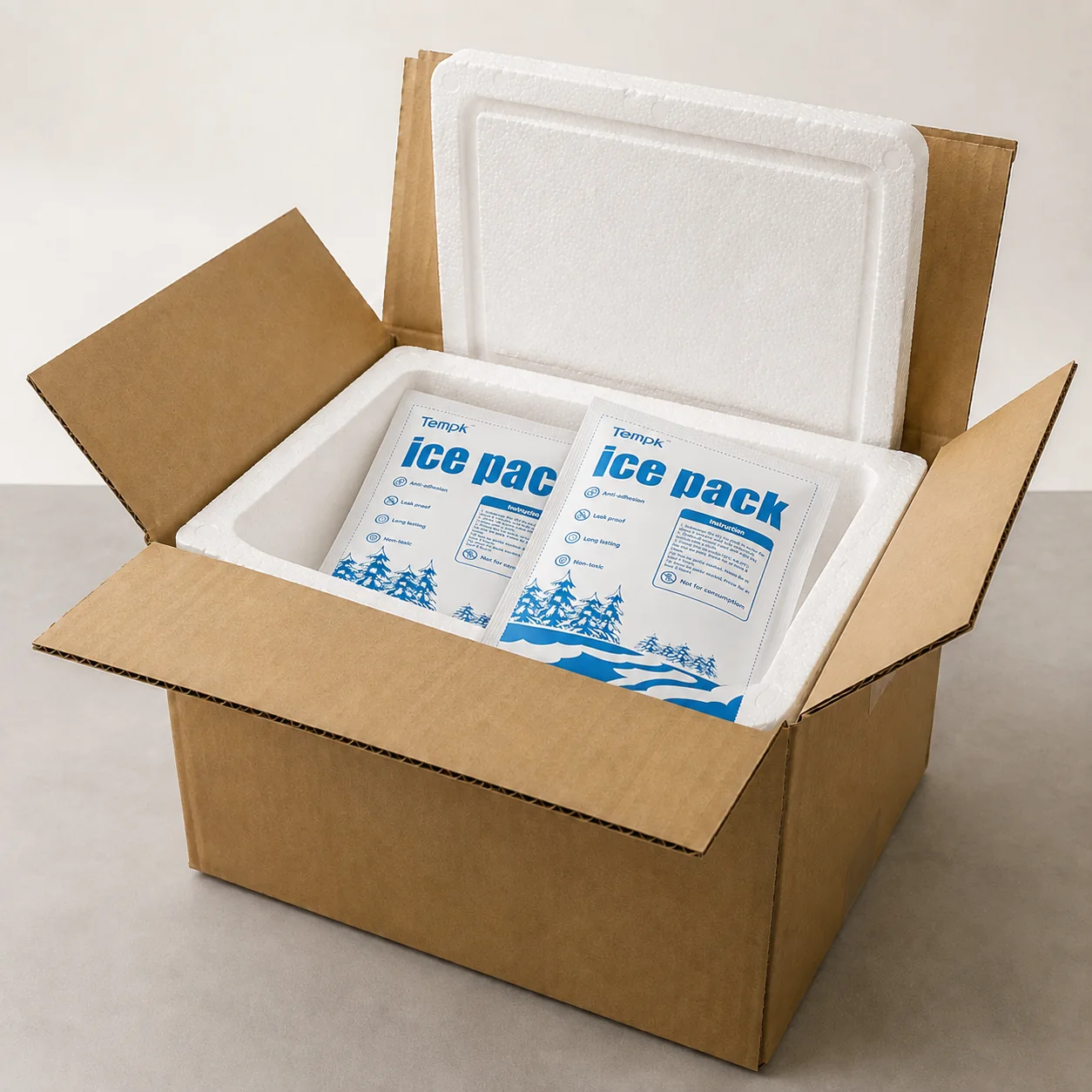
\nConsider the full outbound package. A container may need an outer carton or other protective components for the selected service. These affect external dimensions, handling, storage, and delivered cost. Ask whether the quoted configuration is ready for the intended transport method or only a component within it.
\nUse a hypothetical order to challenge the shortlist. Suppose the load consists of rigid cartons that cannot be rotated. One design may fit only if a required coolant layer is removed, while another accommodates the approved arrangement. The first is not a cheaper equivalent; it is a different and unresolved configuration.
\nKeep options limited enough to evaluate properly. A shortlist should contain plausible solutions with defined differences, not every catalog entry near the requested size. The buyer’s task is to compare evidence and trade-offs, not to choose from the largest assortment of product photographs.
\nNormalize the shortlist before comparing prices. Ask each manufacturer to identify the same purchase boundary and separate optional development from included components. An offer that includes refrigerants and outer protection should not be penalized for appearing more expensive than a shell-only quotation until the missing items are accounted for.
\nMark every important technical answer as established, proposed, or unresolved. Established means that relevant evidence has been reviewed; proposed identifies a development option; unresolved shows where the supplier has not yet answered the requirement. This simple distinction prevents a confident sales description from being treated as equivalent to a supported configuration.
\nUse the status to plan the next action. A geometry question may need a sample, a material question may need documentation, and a route uncertainty may belong with the logistics team rather than the factory. Do not order the same test from every supplier merely because their quotations contain different kinds of uncertainty.
\nThe comparison should end with a small number of defensible options, each with a clear route to release. A manufacturer that describes its limits accurately may be easier to work with than one that answers every requirement affirmatively without evidence. The purchasing goal is not the longest list of claimed capabilities, but a configuration whose relevant claims can be examined and controlled.
\nMatch Each Claim to the Evidence That Can Support It
\nA manufacturing claim, a thermal claim, and an operational claim require different evidence. A factory can demonstrate control of molded dimensions without demonstrating a shipment’s temperature behavior. A thermal report can show performance under defined conditions without proving that your warehouse can prepare the packout reliably.
\nAsk for the exact identity of the evaluated configuration. The record should connect the container revision, refrigerants, preparation, payload, ambient exposure, and sensor locations. Where the proposed purchase differs, require an explanation of whether the existing evidence remains applicable.
\nRead the acceptance decision as carefully as the graph. Determine which locations were evaluated and how product limits were applied. A favorable average should not conceal an unacceptable location. Missing measurements, deviations, and restrictions should remain visible in the report.
\nA named test method is useful context, not a universal guarantee. Establish what was performed and how it relates to the intended route. If the manufacturer proposes additional evaluation, agree the purpose and acceptance criteria before testing begins.
Helpful decision tools
Check the details before you choose packaging
These quick tools can help you compare route risk, sizing needs, coolant choices, and packaging details before you request a quote.
Insulation Material Drop Resistance
Review drop resistance and handling factors before choosing insulation materials.
Check resistanceIce Pack Calculator
Estimate gel ice pack quantity for chilled shipments and practical route planning.
Estimate ice packsInsulation Material Reference
Compare insulation material choices for different cold chain packaging needs.
Compare materials| Decision to make | Evidence that advances it | Reason to pause |
| Accept the proposed geometry | Complete loading drawing and representative fit trial | Capacity meaning or component clearance is unclear |
| Accept thermal suitability | Configuration-specific evaluation against product limits | Report conditions differ without justification |
| Accept operational feasibility | Preparation and packing trial with intended staff | Correct inputs cannot be reproduced |
| Accept repeat supply | Controlled specification and relevant factory checks | Changes or substitutions are not managed |
| Accept wider deployment | Review of route and site differences | Existing evidence is stretched beyond its limits |
These decisions can progress together, but none should disappear behind another. A low price cannot resolve missing thermal evidence, and a successful temperature trial cannot repair an unworkable packing process. The release record should show which questions have been closed and which restrictions remain.
\nProve the Warehouse Can Reproduce the Approved Arrangement
\nThe operating trial begins with inputs. Confirm how refrigerants reach their required condition, how the product is staged, and how prepared materials are distinguished from those not ready for use. A passive package intended to maintain a prepared load should not silently become a substitute for a separate chilling process.
\nObserve ordinary operators assembling representative orders. Record where components are confused, where the load binds, and where closure requires force. The instructions should make the correct arrangement easy to identify. A process that works only when a development engineer stands beside the bench needs further work.
\nConsider the lower and upper ends of the intended order range. If different loads require different layouts, give each an identifiable instruction. Avoid a vague direction to “add suitable coolant” that transfers the engineering decision to a busy packer.
\nTest handling with the complete load and the intended outbound packaging. Confirm that it fits storage locations, vehicles, and workstations. Assess lifting and access through your workplace process rather than assuming a thirty-liter box is manageable because its empty shell feels light.
\nFor reusable configurations, follow the unit through recovery and release. Determine how it is identified, cleaned, dried, inspected, and returned to available stock. A returned box without its correct lid or with unresolved damage should not be counted as ready for dispatch.
\nCost the process you observed. Include preparation, packing materials, labor, freight, recovery where relevant, and replacement. Distinguish measured costs from assumptions and one-time development from repeat use. This produces a more useful comparison than choosing the lowest empty-container price and discovering the other costs later.
\nLock the Interfaces Before Placing the Production Order
\nThe manufacturing specification should preserve the features that made the approved arrangement work. Identify the model and revision, materials at the relevant level, included components, functional dimensions, and closure requirements. Link the order to the loading and preparation instructions without burying them inside informal correspondence.
\nClarify who controls sourced components. A manufacturer may use external suppliers for refrigerants, fittings, or protective parts. The important point is that the final configuration remains defined and that relevant changes are assessed. Replacing a component with a visually similar alternative should not automatically be considered equivalent.
\nAgree a notification process for changes. The review should consider thermal, mechanical, hygiene, and operational effects. Its outcome might be acceptance based on existing evidence, a targeted check, or broader reevaluation. The purpose is a justified decision rather than either blocking all improvement or accepting all substitutions.
\nSpecify incoming acceptance in observable terms. Identification, condition, key dimensions, and representative assembly checks may be relevant. Define how nonconforming supply is reported, segregated, and resolved. Clear acceptance criteria protect both the buyer and manufacturer from inconsistent judgments.
\nKeep commercial development terms explicit. For custom work, confirm tooling ownership where applicable, sampling stages, revision responsibilities, and quoted order conditions. Do not assume a catalog product’s commercial terms apply to a modified or newly developed design.
\nBefore launch, agree who can authorize a substitute if a component is unavailable. A controlled alternative may be possible, but it needs the appropriate review. The absence of a planned response should not force the warehouse to improvise a shipping system during a shortage.
\nTreat Expansion as a New Decision, Not an Automatic Entitlement
\nOnce the package is operating, new customers and routes can create pressure to use it beyond the original scope. Compare the new requirement with the approved configuration before release. A different product carton, receiving process, or opening pattern can matter even when the nominal container size is unchanged.
\nGroup similar journeys only when the relevant conditions justify the grouping. A useful route family supports manageable standardization, while an overly broad family hides differences. The assessment should explain what makes the routes comparable and where separate instructions remain necessary.
\nReview sustainability claims with the same discipline. Reuse depends on actual recovery and maintenance, while recycling depends on the specific materials and available routes. Ask for supportable information rather than assuming a reusable designation establishes the environmental outcome of your network.
\nMaintain a concise technical history. Record significant changes, the evidence reviewed, and the reason for approval. This helps future teams distinguish a controlled evolution of the system from a series of undocumented substitutions. The manufacturer relationship is more valuable when both sides can trace what is being supplied and why it remains suitable.
\nCan an existing report support a modified thirty-liter design?
\nPossibly, but the differences must be identified and assessed. A change to payload space, closure, insulation, refrigerants, or preparation may affect the report’s relevance. Ask for the technical rationale and any additional evaluation required. The continued use of the same product family name does not establish that the modified assembly is covered.
\nWhich department should lead the supplier decision?
\nPurchasing can coordinate the process, but technical, quality, and operating responsibilities should be explicit. The product owner defines the required conditions, the relevant team evaluates evidence, and warehouse staff confirm practical execution. The manufacturer contributes product and production information. A joint release decision is stronger than asking one department to approve questions outside its expertise.
\nWhen should the buyer reject a technically attractive option?
\nPause when the operation cannot reliably prepare it, the evidence does not match the intended use, the payload fit remains unresolved, or repeat production cannot be controlled. An option can remain promising for development without being ready for routine purchase. Distinguish that status clearly rather than treating every sample as a near-finished commercial solution.
\nWhat is the most useful result of the project?
\nAn approved, identifiable configuration that the manufacturer can repeat and the operation can use within understood limits. That includes the product fit, preparation instructions, supporting evidence, production specification, and exception responsibilities. The container itself is essential, but the documented relationship between these elements makes the purchasing decision defensible over repeated shipments.
\nAbout Tempk
\nAt Tempk, we offer insulated packaging and refrigerant formats with custom manufacturing and packout review available according to project needs. We can discuss both the physical container and its role in the complete loading arrangement. For buyers comparing a 30 liter cold chain ice box manufacturer, this supports a focused review of payload fit and configuration options. Exact capacity availability, development work, and evaluation evidence should be confirmed for the proposed purchase.
\nSend Tempk the product brief and route conditions to discuss a practical path from sample selection to repeat supply.