Bulk Dry Ice Pack for Biologic Delivery: How to Choose Before Scaling
A bulk dry ice pack for biologic delivery order should be treated as a controlled packout decision, not only a cold-pack purchase. For biologics, specimens, diagnostic kits, and temperature-sensitive life-science materials, the wrong coolant can be as damaging as too little cooling. The buyer has to confirm what the pack is, what temperature effect it creates, how it sits inside the insulated package, and whether the shipment process can repeat the same result after the sample stage. This article gives a practical decision path for procurement, operations, and quality teams preparing to scale.
First Decide Whether Dry Ice Is the Right Cooling Level
The phrase dry ice pack is ambiguous. It may refer to solid carbon dioxide, a hydrated PCM sheet, a gel pack, or a dry ice alternative. That difference matters because the shipment risk changes immediately. Solid carbon dioxide may fit frozen or ultra-cold lanes when the product label, route, and dangerous-goods process support it; hydrated pcm-style packs may fit chilled or controlled frozen packouts after verification. A dry ice pack is not automatically suitable for every biologic. product inserts, stability data, lane duration, and quality approval decide the packout.
A buyer should ask the supplier to write the coolant identity in clear terms. Is it solid carbon dioxide? Is it a water-absorbing PCM sheet? Is it a gel pack that must be frozen before use? Is it intended to touch the product carton or sit behind a barrier? If the answer is unclear, the order is not ready for approval.
The correct decision begins with verified product-specific temperature protection. That condition should be defined by the product owner, customer specification, label, or food safety requirement. A supplier can recommend a cold source, but the supplier should not guess the acceptable product temperature.
Build the Order Around Route, Payload, and Handling
Once the temperature need is clear, the next step is the route. Define the acceptable temperature range, payload mass, inner carton geometry, data-logger placement, and handover documentation before placing a bulk order. The route should be written down in enough detail to show where heat enters and where handling can disturb the pack. A route with one direct delivery has a different risk profile from a multi-stop distributor route or an air shipment with cross-dock transfer.
Payload also changes the packout. Product mass can act as thermal mass, but only if it is pre-conditioned correctly. Empty space can allow warm air movement and pack shifting. Inner cartons, trays, bottles, vials, pouches, and gift boxes all change how cold moves from the pack to the product. A bulk order that covers several carton formats should not rely on one untested configuration.
A lab may ship frozen research specimens on dry ice, while a biologic drug sample may need refrigerated conditions with no freezing. Both are cold-chain shipments, but the packout logic is different. This type of comparison is what separates a practical packout from a generic recommendation. The same cold pack may be appropriate in one lane and unsuitable in another.
What a Strong Supplier Review Looks Like
A supplier review for a bulk order should cover more than catalog availability. The buyer should ask about pack construction, pre-conditioning, intended use, compatibility with insulation, sample consistency, production batch control, and change notification. A supplier that explains limits is more useful than a supplier that says every route is suitable.
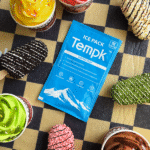
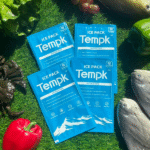
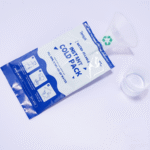
For Tempk-style hydration dry ice packs, useful questions include how the sheet absorbs water, how it should be frozen, whether it can be cut or folded, how it should be separated from sensitive products, and whether the outer material matches the buyer’s handling and disposal expectations. For solid dry ice, the buyer should instead focus on venting, worker safety, labeling, net mass, and carrier acceptance.
| Buyer check | What to ask before ordering | Practical reason |
|---|---|---|
| Product sensitivity | Can biologics, specimens, diagnostic kits, and temperature-sensitive life-science materials tolerate direct freezing or only chilled protection? | The wrong cooling level can damage product quality before delivery. |
| Pack format | Is the item solid dry ice, a hydrated PCM sheet, gel pack, or another cold source? | Names vary across catalogs, and handling rules change by product type. |
| Insulation fit | Which box, liner, bag, or shipper was used in the supplier’s recommendation? | Hold time claims are meaningless without the surrounding package. |
| Route fit | What route duration, ambient exposure, and handover points were assumed? | A warehouse-to-warehouse lane differs from direct-to-door delivery. |
| Scale control | Will production units match the sample in size, cell layout, membrane, and fill behavior? | A wholesale or distributor order needs repeatability, not a one-off sample. |
This review turns supplier selection into a documented decision. It also gives operations a clear starting point for sample testing, because the team knows which assumptions need to be checked rather than relying on a general performance claim.
Sample Testing Should Imitate the Real Shipment
A sample trial is not meaningful if it uses the wrong product mass, an empty carton, a different insulation material, or a route that is easier than production. Use the real product or a realistic substitute, the planned outer package, the expected coolant placement, and the same loading process. If the product is high value or regulated, involve the quality team before the trial begins.
For biologics, specimens, diagnostic kits, and temperature-sensitive life-science materials, the inspection should include temperature record, chain-of-custody notes, and absence of unauthorized excursions. Temperature alone may not tell the whole story. A chilled item may be technically cold but damaged by freezing. A frozen item may look acceptable while packaging has been stressed. A gift item may be safe but unacceptable to the customer because condensation affected presentation.
- Define acceptance criteria before the trial, including product condition at receipt.
- Use the planned quantity and position of packs, not an approximate arrangement.
- Record pre-conditioning time, packing time, route exposure, and receiving time.
- Inspect product, labels, inner packaging, and condensation after delivery.
- Repeat the trial when season, carrier, payload, or carton design changes.
Do Not Confuse Transport Marking With Product Protection
When solid carbon dioxide is used in air or vessel transport, U.S. rules require venting and marking; IATA maintains dry ice acceptance checklists for dangerous-goods acceptance. Product-specific requirements still come from the sponsor, label, or quality unit. These references are important, but they should not be misunderstood. Dry ice transport rules help carriers handle carbon dioxide safely. They do not prove that the packout maintains the product within its required condition. A medical, food, or specialty product still needs its own product-specific review.
The same boundary applies to supplier documents. A material statement, safety sheet, or product brochure may explain what the pack is, but it does not automatically qualify the buyer’s route. When the shipment is sensitive, the buyer should ask whether the stated performance was tested with the same payload, insulation, ambient profile, and pass criteria that the buyer plans to use.
When Not to Use This Cooling Approach
A dry ice pack approach should be reconsidered when the product cannot tolerate the cold source, when the receiver cannot handle the refrigerant safely, when the carrier will not accept the shipment, or when the order lacks a repeatable packout instruction. Refrigerant selection alone is not a qualification; the whole system and route must be reviewed.
Helpful decision tools
Check the details before you choose packaging
These quick tools can help you compare route risk, sizing needs, coolant choices, and packaging details before you request a quote.
Insulation Material Reference
Compare insulation material choices for different cold chain packaging needs.
Compare materialsBox Liner & Pallet Cover Sizing
Check box liner and pallet cover sizing logic for insulated packaging projects.
Estimate sizingInsulation Material Drop Resistance
Review drop resistance and handling factors before choosing insulation materials.
Check resistanceA buyer should also pause when the supplier cannot define the product type or when the sales claim is only a hold-time number without conditions. Hold time depends on insulation, ambient profile, product mass, pack quantity, and acceptance criteria. Without those conditions, the number can mislead the purchasing team.
FAQ
Is solid dry ice suitable for every biologic shipment?
No. Some biologics require refrigerated conditions, some frozen conditions, and some ultra-cold handling. The product label or quality unit should define the required range. Solid dry ice may fit certain frozen or ultra-cold lanes, but it can damage materials that must not freeze.
What documentation should a buyer request?
Request product specifications, coolant description, packout instructions, test or qualification evidence when available, and any handling or labeling requirements. For high-risk shipments, the buyer should also define data logger placement and how excursions will be handled after delivery.
Does a dry ice label prove pharmaceutical compliance?
No. A dry ice label supports transport identification for solid carbon dioxide. Pharmaceutical or medical logistics suitability depends on the product range, packout, route conditions, monitoring, and quality review. Buyers should not treat transport marking as proof of product protection.
How should a bulk buyer compare suppliers?
Compare suppliers by sample consistency, pack format, insulation compatibility, ability to answer technical questions, and willingness to discuss limitations. A useful supplier should explain when a dry ice pack is not the right fit, not only when it is available.
Operational Approval Notes
Before approving bulk dry ice pack for biologic delivery, the buyer should check whether the receiving side can handle the package as designed. A shipment may pass the packing-room checklist and still fail because the receiver leaves the carton unopened, removes the cold pack too early, stores the product in the wrong location, or misses the dry ice warning. For biologics, specimens, diagnostic kits, and temperature-sensitive life-science materials, the receiving instruction should be short enough to follow immediately but specific enough to prevent avoidable damage.
Ownership should also be clear. Procurement can manage price, order quantity, and supplier communication. Operations can validate pack placement, labor steps, and carton closure. Quality, food safety, or pharmacy teams can define acceptance criteria and deviation handling. Customer service can track complaints by route and weather period. When these roles are not assigned, a packaging issue becomes a general logistics argument instead of a controlled improvement project.
The buyer should keep a simple revision record for the approved packout. Record the pack type, number of packs, pre-conditioning method, insulation used, product arrangement, barrier material, carton closure, label language, and receiving check. If the supplier later changes pack material, sheet layout, carton count, or preparation instructions, the record helps the buyer decide whether the change is minor or whether another sample trial is needed.
Receiving inspection deserves the same attention as packing. The receiver should know whether the package may contain solid dry ice, whether gloves are needed, where the product temperature should be checked, and what evidence should be recorded if the product appears warm, frozen, wet, crushed, or otherwise abnormal. Clear instructions reduce arguments between supplier, carrier, shipper, and customer after a difficult delivery.
How to Keep the Program Stable Over Time
Cold-chain packaging programs drift when teams treat the first successful trial as permanent. Routes change, carriers change, order sizes change, and seasonal exposure changes. A practical review schedule helps the buyer catch these shifts before they create returns or product complaints. The review can be simple for lower-risk food shipments and more formal for high-value or regulated products.
For biologics, specimens, diagnostic kits, and temperature-sensitive life-science materials, the most useful review questions are direct: Is the product still being packed at the same starting condition? Is the same insulation still used? Are warehouse staff following the same pre-conditioning step? Has the route gained a new handover point? Are receivers still checking the product promptly? These questions keep the dry ice pack program tied to the real shipment rather than to an old sample result.
The purchase order should also protect the approved configuration. It can state that substitutions in pack material, sheet format, membrane, carton count, or preparation instructions require notice and sample approval. This language does not need to be complex, but it helps prevent silent changes that alter cold-chain behavior after the buyer has already trained warehouse staff.
Finally, the buyer should keep complaint data connected to the packout. A complaint about thawing, freezing, melting, condensation, frost, label damage, or delayed receipt should be tagged by lane and shipment date. Over time, this small habit shows whether the issue is supplier quality, route exposure, warehouse execution, or customer handling.
Conclusion
The best bulk dry ice pack for biologic delivery decision is specific. Identify the coolant type, define the product temperature need, map the route, test the complete packout, and document what must remain consistent when the order scales. If the product is sensitive, regulated, or presentation-driven, a cautious packout review is not extra work. It is the difference between buying cold material and protecting the shipment.
About Tempk
Tempk helps B2B buyers review dry ice pack and insulated packaging options for biologics, specimens, diagnostic kits, and temperature-sensitive life-science materials. The practical starting point is your product, route, payload, and temperature-risk tolerance. Because Tempk’s hydration dry ice packs are PCM-based sheet products rather than loose solid carbon dioxide, buyers should treat them as part of a packout design and verify performance against the specific lane before production use.
For a better recommendation, share your product category, route, payload, carton size, and temperature requirement with Tempk before committing to a bulk order. Tempk can help you compare whether a hydration dry ice pack, another PCM option, solid dry ice, or a different insulated system should be reviewed first.