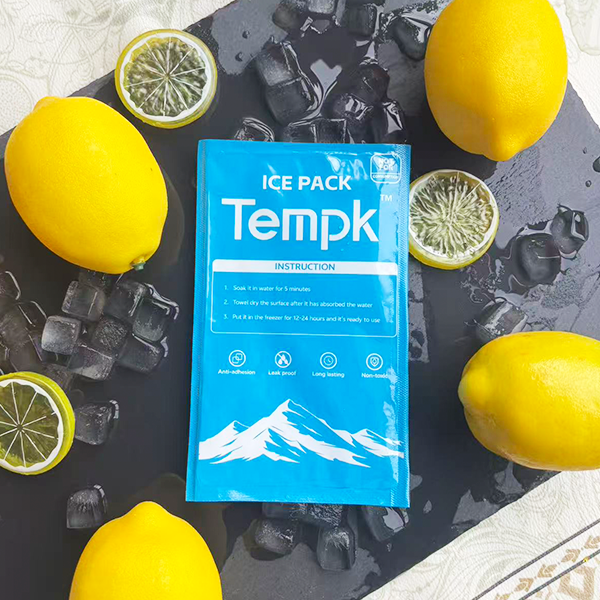
A Freeze-Risk-Aware Specification for Bulk Dry Ice Pack for Insulin Delivery
The phrase bulk dry ice pack for insulin delivery contains a hidden contradiction. If “dry ice” means solid carbon dioxide, its temperature is entirely unsuitable for direct contact with insulin that must not freeze. If it means a reusable frozen sheet or gel pack, the material may be useful, but its commercial name proves neither temperature control nor pharmaceutical suitability. A dependable procurement project resolves that ambiguity first. It then traces one line of evidence from the exact insulin label, through thermal design and qualification, to every lot of coolant and every packed parcel. The result is not a colder box. It is a reproducible system with a known freeze margin and a defined response when conditions are uncertain.
Product and Design Gates
Gate One: Define the Product and the Decision Owner
No packaging team should work from “insulin” alone. Capture the exact proprietary or nonproprietary product, strength, market, vial or pen presentation, pack quantity, unopened or in-use status, label revision, and approved storage statement. Many unopened insulin products are labeled for refrigeration around 2 degrees Celsius to 8 degrees Celsius and state that they must not be frozen, but in-use allowances and discard periods vary. The exact label remains authoritative.
Assign decision ownership before shipping begins. The pharmaceutical manufacturer, pharmacy, distributor quality unit, or other authorized healthcare function should define:
- Transport acceptance range and any justified excursion process.
- Required monitoring and data retention.
- Release, quarantine, and disposition responsibility.
- Permitted product and payload configurations.
- Approved routes and contingency conditions.
- Change-control and requalification triggers.
The coolant supplier can provide material and test information. It cannot declare exposed insulin safe, invent a room-temperature allowance, or approve a universal transport condition. Keeping that responsibility clear prevents commercial urgency from overriding product-specific evidence.
The requirement should also distinguish safety and quality from service goals. A carrier commitment is not thermal qualification. A desire to deliver within one day does not eliminate a weekend-delay risk. Write the requirement for the maximum evaluated journey and define what the organization will do outside it.
Gate Two: Classify the Proposed Coolant
Require the quotation to state what is inside the pack. The following names are not interchangeable:
- Solid carbon dioxide: actual dry ice, which sublimates near minus 78.5 degrees Celsius, releases gas, and may be regulated as dangerous goods.
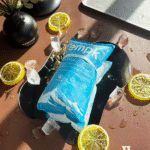
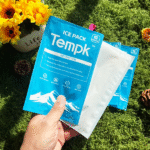
- Hydrate sheet: a dry cellular material activated with water and then frozen.
- Gel pack: a sealed water-based or formulated coolant pouch or brick.
- Phase-change pack: a controlled formulation selected for a defined transition region.
Actual dry ice should not be positioned next to insulin. A specially engineered, multilayer system using it at a remote thermal boundary would still need product-owner justification, freeze-risk analysis, ventilation, handling controls, transport classification, and qualification. That is an exceptional engineering project, not a routine bulk purchase.
Reusable frozen packs avoid the carbon-dioxide gas hazard, but they can still be too cold. A water pack removed from a low-temperature freezer has a surface below the freezing point of water. If it touches a vial carton, a local freeze can occur before the average shipper temperature shows a problem. A PCM designed nearer the refrigerated range can reduce this gradient when properly conditioned, but grade identity and starting state must be controlled.
Obtain composition, phase data where relevant, safety information, activation instructions, conditioning method, frozen dimensions, mass tolerance, seal construction, and transport classification. Confirm the latter through the responsible dangerous-goods or compliance function rather than through a trade name.
Gate Three: Design a Thermal Buffer, Not a Cold Pile
The design objective is to keep the warm boundary and cold boundary away from the product requirement. Insulation resists external heat. Coolants store thermal energy. Dividers add resistance between medicine and cold surfaces. Payload mass and air space influence response. The lid, corners, joints, and contact faces create nonuniform conditions.
Build from a defined component stack. Specify outer carton, insulation panels, coolant grade and count, divider material, payload carton, void control, logger, closure, and labels. Mark each part with an identifier. If operators can substitute “equivalent” corrugated or a similar blue PCM, the tested stack is not controlled.
Conditioning requires the same precision. State equipment range, pack loading, minimum conditioning period, tempering if required, ready-status verification, transfer method, and maximum staging time. For hydration sheets, include activation water, soak process, drainage, inspection, and expanded dimensions. Map or qualify the conditioning equipment as appropriate; a full freezer with blocked airflow may not reproduce development conditions.
| Packout risk | How it appears | Design control | Verification |
|---|---|---|---|
| Product freezes at pack face | Local conduction through thin carton | Controlled PCM state, separator, fixed spacing | Cold-location probes and representative product |
| Product warms near lid | Heat leak or missing coverage | Continuous insulation and defined top layer | Hot-location probe and closure check |
| Low payload shifts | Extra void and vibration | Qualified low-fill insert or separate configuration | Handling test plus low-load thermal run |
| Wrong PCM grade used | Similar appearance or label | Segregation, code, scan, and line clearance | Batch record and pack check |
| Coolant underconditioned | Reduced thermal capacity | Controlled freezer load and ready-state check | Conditioning record and thermal run |
The table turns abstract risks into process controls. It also shows why adding more packs is not a general corrective action. Extra coolant may improve one hot location and worsen a freeze location.
Gate Four: Qualify the System and the Workflow
Qualification should demonstrate performance of the defined system under selected external challenges and routine variation. Establish a protocol before testing. Include product requirement, configuration, payloads, component lots, conditioning, ambient profile, sensors, acceptance criteria, repeat strategy, deviation handling, and report approval.
Use representative insulin cartons or a justified thermal surrogate with matching mass, geometry, and contact behavior. Test minimum and maximum payload if both will be commercial. Challenge hot and cold seasons because freeze-sensitive product can fail in a cold lane even when the coolant design was created for summer.
Place sensors through thermal-risk analysis. Include suspected warm positions and cold contact positions. State whether probes measure air, surface, or product surrogate. Use devices with suitable accuracy, range, calibration, and interval. Review full traces. An acceptable center average cannot override a below-limit wall reading.
WHO technical guidance for time- and temperature-sensitive pharmaceuticals provides a useful qualification framework for shipping containers. ISTA thermal profiles can support standardized parcel testing. GDP principles may expect suitable equipment, documented control, and temperature evidence. Apply the standards and guidance relevant to the organization, product, route, and market; do not market a component as globally compliant because it appeared in one successful test.
Performance qualification or a controlled shipping pilot should demonstrate that trained operators can reproduce the packout with normal production materials and time pressures. Include carrier handoff and receiving where appropriate. The final report needs an approved bill of materials, packout drawing, photographs, conditioning procedure, and boundaries of use.
Gate Five: Translate Evidence Into a Bulk Purchase Specification
Supplier quality has to preserve the characteristics that the qualification used. Define critical material attributes and acceptable tolerances. Depending on the coolant, these may include formulation identity, transition behavior, fill mass, expanded dimensions, film structure, seal integrity, valve performance, and print durability.
Helpful decision tools
Check the details before you choose packaging
These quick tools can help you compare route risk, sizing needs, coolant choices, and packaging details before you request a quote.
Route Risk Checker
Review lane conditions before selecting packaging for real operating requirements.
Check route riskInsulation Material Reference
Compare insulation material choices for different cold chain packaging needs.
Compare materialsInsulation Material Drop Resistance
Review drop resistance and handling factors before choosing insulation materials.
Check resistanceThe quality agreement or purchasing terms should address:
- Lot coding and traceability.
- Production inspection and release.
- Documents supplied with each lot.
- Control of nonconforming product.
- Complaint investigation and corrective action.
- Advance notification of formula, film, process, tooling, site, or sub-supplier changes.
- Retention samples where justified.
- Audit or technical-review rights appropriate to risk.
- Storage, transport, and shelf-status conditions.
- Business continuity and approved alternatives.
Evaluate normal-production samples, not only prototypes. Measure packs after hydration and conditioning if those states affect fit. Run incoming inspections based on functional risk. A beautiful print does not compensate for a narrow seal; a small dimensional drift can matter if it removes the qualified air gap around insulin.
Commercial planning should include freezer space, inventory rotation, activation labor, pack staging, and seasonal volume. Bulk pricing can be misleading when a pack requires an operational step the facility cannot control. Compare total delivered and conditioned cost inside the qualified process.
Gate Six: Make Every Shipment Traceable and Reviewable
Routine execution should create a concise record of what was packed. Include product and lot, coolant lot or status where required, packout configuration, operator or line, pack completion time, logger identity if used, carrier handoff, and receipt. The depth of record depends on the quality system and distribution model.
Use visual work instructions and component kits. Clearly separate conditioned, tempering, ready, returned, quarantined, and rejected coolant. Verify count and position before closure. Avoid last-minute additions after a delay unless an approved procedure defines the response; an extra frozen pack can create an unassessed freeze risk.
Monitoring must have a purpose and a response. Confirm logger activation and location. At receipt, link the record to the shipment, review status according to procedure, and store insulin promptly under the label condition. If data are missing or out of range, quarantine the product and escalate. Do not rely on remaining ice, a cool carton, or a carrier’s assurance.
For direct-to-patient shipments, simplify the recipient action. The patient should know how to identify package damage or an alert, where to store the insulin, and whom to call. Avoid asking the patient to interpret a complex trace or assess stability. Ensure coolant instructions accurately distinguish a reusable pack from actual dry ice.
Gate Seven: Control Change and Improve the Lane
Qualification evidence remains valid only while its assumptions remain reasonable. Define review triggers for coolant formulation, film, dimensions, supplier site, insulation, carton, payload, label condition, route, carrier, season, conditioning equipment, logger, and pack procedure. A change can require document review, engineering analysis, confirmatory testing, or full requalification according to risk.
Collect operational data without confusing observation with approval. Trends in logger readings can reveal shrinking margins. Complaints can expose pack movement or unclear patient instructions. Freezer records can show conditioning bottlenecks. Supplier deviations can identify seam or fill drift.
When investigating a warm or cold event, reconstruct the timeline. Examine product starting condition, coolant ready status, component identity, packout photos, assembly time, closure, carrier scans, route weather, logger position, and receiving delay. Identify root cause before changing the system.
Sustainability improvements should enter through this same change process. Right-size insulation or coolant using evidence. Reusable components may fit closed pharmacy or clinic lanes, while recovery from homes may be inefficient. Compare equivalent successful deliveries, including conditioning energy, returns, cleaning, loss, material, freight, and medicine waste. A lower-material proposal that reduces thermal margin is not equivalent.
FAQ
What should a buyer reject immediately in a coolant quotation?
Reject ambiguity about composition, a universal hold-time claim without test context, or a statement that the pack is compliant for all pharmaceuticals. Also challenge an instruction to place frozen coolant directly against insulin without product-specific qualification. A credible quotation identifies the material, conditioning, dimensions, documentation, and limits of available evidence.
Can I use the insulin carton as the only cold barrier?
Do not assume so. A paperboard carton may offer some resistance, but its thickness, moisture condition, contact area, and product geometry vary. The qualified packout should establish whether a separate divider or controlled space is needed. Test cold-contact positions with representative packaging. Qualification should verify the actual barrier stack.
How many qualification repeats are required?
There is no single number that applies to every program. The protocol should justify repeat count based on risk, variability, standard or internal requirements, payload range, and intended use. One pass usually provides limited evidence of reproducibility. Follow the organization’s quality system and relevant guidance.
Can remaining frozen coolant prove the insulin stayed acceptable?
No. A partly frozen pack shows something about the pack’s state at receipt, not the complete product temperature history. Insulin may have warmed in another location or frozen at a contact point. Use approved monitoring and excursion procedures, along with package inspection and handling records.
When is a reusable pack no longer suitable?
Retire it according to defined condition criteria such as leakage, swelling, delamination, contamination, loss of label, permanent deformation, or evidence of changed thermal behavior. Do not rely only on an unverified maximum cycle count. Track and inspect reusable assets within the approved process. Document why every unit is retired.
Conclusion
A freeze-risk-aware bulk specification is a chain of gates. Define the exact insulin and decision owner, classify the coolant, create a buffered packout, qualify both design and workflow, preserve critical attributes through supplier controls, document routine shipments, and reassess meaningful changes. Actual dry ice should not be treated as a direct insulin refrigerant. Reusable cooling packs become appropriate only when their material behavior and conditioning are controlled inside a system supported by evidence for both sides of the labeled range.
About Tempk
Tempk supplies passive cold-chain components that include hydrate cooling sheets, gel packs, PCM options, and insulated shipping products. For a bulk insulin project, Tempk can help buyers compare component construction, conditioning, dimensions, and sample availability against a draft packout. Product-specific requirements, qualification protocols, monitoring strategy, and medicine disposition remain the responsibility of the authorized pharmaceutical or healthcare quality function.
Provide Tempk with your controlled bill of materials, payload range, labeled condition, and route challenge to discuss production samples for a freeze-risk evaluation.