Chemical-Resistant EPP Foam Box: Buyer Guide
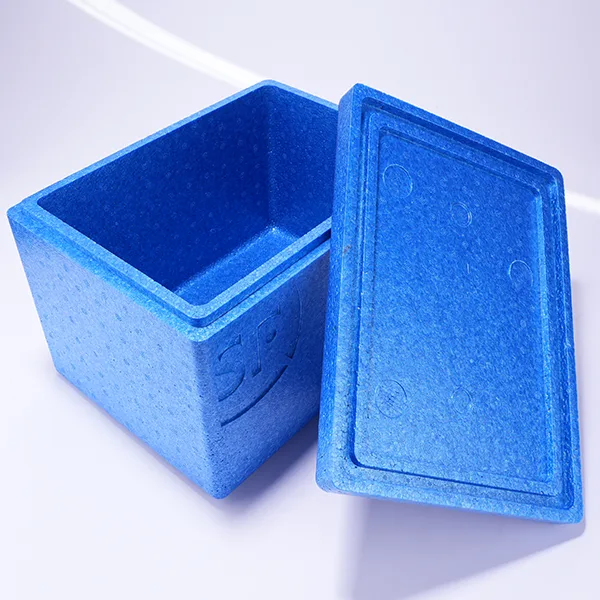
The best way to evaluate chemical-resistant EPP foam box is to start with the job the box must perform. The right EPP box decision starts with the payload, not the catalog image. Size, insulation, durability, price, and supplier support only make sense after you define how the box will be packed, moved, opened, returned, and inspected. For laboratory, industrial, maintenance, and specialty logistics buyers reviewing protective foam containers, that means checking the container boundary, the payload, the thermal or protective requirement, and the supplier evidence before focusing on price, appearance, or catalog claims.
Practical answer: An EPP box is worth considering when its molded design, usable volume, lid, cleaning method, and operating evidence match the job. Do not buy it only because the material sounds durable or sustainable. Buy it because the sample proves it fits your payload, your route, your staff, and your documentation needs.
Start With the Payload and Route
A practical review of chemical-resistant EPP foam box begins with the payload. What is the product size, weight, fragility, temperature sensitivity, packaging format, and acceptable movement inside the box? A container that is technically strong can still be wrong if the product rattles, if the lid presses against delicate surfaces, or if the usable space disappears after inserts and coolant are added.
Next, define the route or use environment. Outdoor use, food delivery, laboratory transfer, electronics shipment, fresh produce transport, and pharmaceutical shipping all ask different questions. The same EPP wall may be useful in all of them, but the evidence changes. A consumer camping product may need comfort and cleaning tests. A pharma packout may need qualification evidence, monitoring, and quality approval. A produce route may need moisture and ventilation control.
The core buying lesson is simple: chemical resistance must be checked against the actual substance and exposure conditions, not treated as a blanket guarantee. When the route is unclear, the safest first step is a sample review with real packing materials and a written list of assumptions.
Match the Box to the System, Not the Slogan
EPP boxes are often promoted with words such as insulated, durable, recyclable, thermal, or chemical-resistant. These words can be useful, but each one has a boundary. Insulated means the box slows heat transfer. It does not mean it maintains every temperature range. Durable means it may resist impact better than a weaker material. It does not mean every design survives every drop or stack. Recyclable means the material can have an end-of-life route where collection and local recycling exist. It does not mean the purchasing program is automatically sustainable.
If temperature control matters, define the packout. That includes coolant type, preconditioning process, payload starting temperature, location of gel packs or PCM packs, void fill, lid sealing, data logger position, ambient profile, and acceptance criteria. If impact protection matters, define the restraint system. That includes molded cavities, inserts, lid pressure, separators, and drop or vibration expectations. If hygiene matters, define cleaning and inspection.
Supplier Questions That Prevent Costly Rework
Ask the supplier what problem the standard box was originally designed to solve. Some models are built for food delivery, some for outdoor carrying, some for medical logistics, and some for protective packaging. A standard model can be adapted, but adaptation should be discussed openly. Otherwise the buyer may discover too late that a stock box lacks a label area, a secure lid, the right internal dimensions, or compatibility with the intended cold source.
The best questions are concrete. What are the internal and external dimensions? What is the practical usable volume after accessories? Can the supplier provide drawings? What changes between sample and bulk production? Which cleaning agents are suitable? Is there test evidence for thermal or impact claims? What is the expected packaging for export shipment? How will custom colors, logos, inserts, or handles affect cost and lead time? If the supplier cannot answer immediately, the response should be a plan to confirm, not a vague promise.
Decision Framework for Sample Approval
| Buyer question | Why it matters | How to verify it |
|---|---|---|
| What is the actual payload and usable volume? | Gross internal volume may not equal practical loading space after inserts, gel packs, samples, or produce trays are added. | Pack a sample with the real payload or a realistic dummy payload and review closure, movement, and loading speed. |
| Is the box protective, insulated, or part of a qualified thermal system? | These are different claims. A durable insulated container is not automatically a validated shipper for regulated goods. | Ask for the intended use, test method, packout assumptions, and quality documentation that supports the claim. |
| How will the lid behave during handling? | A loose lid can create heat leakage, product movement, or contamination risk even when the walls are strong. | Check lid fit after loading, stacking, vehicle movement, and repeated opening. |
| Can the supplier support sample-to-production consistency? | A good sample is not enough if the bulk order changes dimensions, wall structure, surface finish, or accessories. | Confirm drawings, tolerances, material description, mold ownership, and change-control communication. |
| What cleaning, return, or disposal route is realistic? | Reusable and recyclable claims only matter if the buyer has an operational path to use them. | Define the cleaning agent, inspection point, return owner, and end-of-life process before scale-up. |
The table is not a replacement for supplier communication. It is a way to keep the discussion concrete, especially when several suppliers use similar product names but different assumptions.
A disciplined review also protects the buyer from over-ordering accessories or underestimating the cost of customization. Once the real payload and handling pattern are visible, the specification becomes easier to defend internally.
Evidence Boundaries Buyers Should Keep in Mind
Industry references describe expanded polypropylene as a closed-cell bead foam used where low weight, energy absorption, thermal insulation, water resistance, and repeated handling are useful. This supports EPP as a material candidate, but it does not prove that a particular box design meets a specific route, payload, or quality requirement.
Specifications That Deserve a Written Answer
- Substance compatibility: ask how this factor is built into the box design or order process, and what evidence or sample review can confirm it.
- Duration and concentration of exposure: ask how this factor is built into the box design or order process, and what evidence or sample review can confirm it.
- Secondary containment: ask how this factor is built into the box design or order process, and what evidence or sample review can confirm it.
- Cleaning method: ask how this factor is built into the box design or order process, and what evidence or sample review can confirm it.
- Surface condition after repeated use: ask how this factor is built into the box design or order process, and what evidence or sample review can confirm it.
These written answers protect both sides. The buyer avoids assuming performance that was never promised, while the supplier can recommend a more suitable model, insert, coolant combination, or customization path. For handling tools, samples, kits, or materials where moderate chemical exposure, spills, and cleaning need consideration, this step is especially useful because the same product name may hide very different practical requirements.
Helpful decision tools
Check the details before you choose packaging
These quick tools can help you compare route risk, sizing needs, coolant choices, and packaging details before you request a quote.
Coolant & PCM Reference
Compare coolant and PCM options when a route needs added temperature support.
Compare optionsIce Pack Calculator
Estimate gel ice pack quantity for chilled shipments and practical route planning.
Estimate ice packsInsulation Material Reference
Compare insulation material choices for different cold chain packaging needs.
Compare materialsPractical Example: Test the Workflow, Not Only the Box
A common industrial buyer situation involves a kit that may contact cleaning agents or minor spills during handling. Instead of assuming chemical resistance in general, the buyer lists the specific substance, concentration, contact time, and cleaning method. The EPP foam box may resist certain exposure well, but secondary containment and spill procedures are still necessary when the contents could leak. This approach keeps material suitability separate from safety management.
The value of this example is not the exact product type. It shows the review method. Put the real workflow into the sample stage: loading, closing, carrying, storing, opening, cleaning, returning, inspecting, and documenting. When the sample test includes these steps, the buyer finds problems early enough to adjust dimensions, accessories, or instructions before a larger order.
Mistakes That Make a Good Material Perform Poorly
Most failures around chemical-resistant EPP foam box come from mismatched assumptions rather than from one simple material flaw. The buyer sees the word EPP and expects insulation, impact resistance, reusability, and sustainability to appear automatically. In practice, each benefit needs a design detail and an operating process.
- Assuming resistance to every chemical: turn this into a test or supplier question before placing a bulk order.
- Ignoring cleaning agent compatibility: turn this into a test or supplier question before placing a bulk order.
- Not using secondary containment: turn this into a test or supplier question before placing a bulk order.
- Choosing insulation without spill management: turn this into a test or supplier question before placing a bulk order.
Another common mistake is ignoring people. A box that looks technically strong may be too awkward for drivers, warehouse staff, field users, or customers. If staff leave the lid open, overload the box, skip preconditioning, or forget to return it, the performance seen in a controlled review will not appear in routine use. Good packaging is not only material engineering; it is also workflow design.
Operational Notes for Different Buying Teams
Procurement teams should translate chemical-resistant EPP foam box into a specification that finance, operations, and quality can all understand. Finance will ask about unit price and replacement cost. Operations will ask whether the box slows loading or improves handling. Quality will ask whether the claim is documented, especially when temperature-sensitive, food, laboratory, or pharmaceutical goods are involved. These teams may use different language, but they are reviewing the same risk: whether the container will behave predictably after purchase.
Packaging engineers should pay close attention to the difference between drawing dimensions and practical loading dimensions. The real loading space may shrink after inserts, dividers, coolants, absorbent materials, primary packages, or retail cartons are added. Engineers should also check whether the molded walls create pressure points, whether the lid rubs against the payload, and whether labels or tamper indicators can be applied without blocking the closure.
Warehouse and delivery teams should review the human workflow. A box that is technically correct but difficult to open, close, stack, clean, or identify will create inconsistent use. If the team must follow a packout instruction, the instruction should be short enough to use during routine work and clear enough that a new operator can follow it without guessing.
FAQ
Is chemical-resistant EPP foam box suitable for all cold-chain shipments?
No. An EPP box can be a useful insulated or protective container, but suitability depends on the product temperature requirement, route duration, payload, coolant configuration, handling process, and documentation needs. For pharmaceutical, laboratory, or high-value shipments, buyers should verify packout evidence and quality requirements before treating the box as a shipment solution.
What should I ask a supplier before ordering samples?
Ask for internal and external dimensions, material description, intended use, compatible accessories, lid design, cleaning guidance, sample-to-production control, and any test evidence that supports thermal or impact claims. If the shipment is temperature-sensitive, also ask what coolant, payload, ambient profile, and monitoring assumptions were used in testing.
Does EPP automatically make a package environmentally friendly?
Not automatically. EPP can be reusable and recyclable where a suitable route exists, but sustainability depends on return rates, cleaning, damage control, replacement frequency, and end-of-life handling. A recyclable material without collection or a reusable box without return discipline may not deliver the expected environmental benefit.
Can one EPP box be used for food, pharma, lab samples, and outdoor products?
The same material family can appear in many applications, but the specification should change by use case. Food delivery may need sanitation and condensation control. Pharma may need packout documentation. Lab samples may need secondary containment and labeling. Outdoor products may need carry comfort and consumer cleaning. Use the application to define the box.
How do I know whether a sample is ready for bulk ordering?
A sample is ready only after the real payload has been packed, handled, closed, labeled, cleaned, and reviewed under conditions close to the intended workflow. If the buyer still lacks information about dimensions, accessories, testing, or production consistency, the sample stage should continue before a bulk order.
Conclusion
Choosing chemical-resistant EPP foam box should not be reduced to a simple catalog comparison. The better decision connects material, molded design, usable volume, lid behavior, route conditions, accessories, documentation, and total operating cost.
Use samples to test the workflow, not just appearance. Ask specific questions, avoid unsupported assumptions, and involve quality, logistics, or operations teams early when the shipment is temperature-sensitive or regulated.