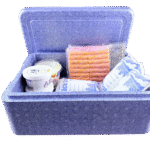
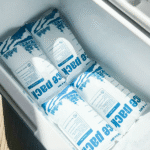
Choosing the Right Gel Cold Accumulators for Meal Kit Delivery
If you are evaluating gel cold accumulators for meal kit delivery, the right starting point is to define the shipping problem before you define the pack. In most buying situations, the goal is keeping proteins, dairy, sauces, and produce in a safe chilled range through packout, parcel movement, and home delivery without making the box too heavy or messy. A good refrigerant format should deliver that protection without unnecessary weight, avoidable mess, or hidden operational complexity.
Meal kits do not fail only because they get warm. They also fail when boxes arrive soaked, when proteins shift inside the carton, or when the coolant layout cools one component well but leaves another exposed. A good cold accumulator works as part of a balanced food packout. The most reliable buying decisions come from treating the gel pack as one part of a complete system and then checking whether the supplier can keep that part consistent at scale.
That means looking at temperature target, pack geometry, conditioning method, pack placement, route exposure, and supplier change control together. Once those pieces are clear, it becomes much easier to decide whether a standard gel pouch, a rigid brick, or a PCM-based format is the better fit.
Start with the right definition
A gel cold accumulator for meal kit shipping is a coolant component designed to slow temperature rise or support a defined shipping window inside a larger packout. In practice, it may be a standard gel pouch, a slim insert, a rigid brick, or a phase change format chosen for a more specific target temperature.
It is not the same thing as a fully qualified insulated shipper. The pack helps, but the final result still depends on insulation, product load, ambient exposure, conditioning, and pack placement. Good buying decisions keep that system view in focus from the start.
Thermal behavior and compliance boundaries
Before approving any supplier, make sure the refrigerant strategy actually matches the target shipping window. For this category, that usually means supporting chilled food transport with attention to doorstep exposure and mixed ingredient sensitivity with a pack that can be conditioned repeatably and loaded the same way by operators on every shift.
It is also important to separate thermal capability from regulatory or quality conclusions. A well-made pack can still be wrong for the route, and a technically suitable pack can still require further packout qualification, monitoring, or documentation before it is used in a sensitive program.
Food transport programs should evaluate temperature control, sanitation, loading, and handling as a system, not treat coolant as a standalone safety solution.
The required temperature window varies by ingredient. Seafood, raw proteins, dairy, and produce do not always respond the same way to the same packout.
Formats, materials, and temperature strategy
Formats and materials should be judged together because a well-sized pack with the wrong film can still fail, while a durable pack with the wrong geometry can waste space and cold mass.
Meal kit cold accumulators are commonly water-based gel packs in flexible pouches, but some operators evaluate PCM or specialty formats when products are freeze sensitive.
Film strength matters because cartons may contain hard corners, frozen proteins, and significant compression during parcel handling.
Some food programs prefer packs that minimize surface sweat to reduce mess at delivery.
In most sourcing projects, the best sample is the one that balances thermal duty, pack-line ease, and damage resistance at the same time. A pack that excels in only one of those areas often becomes expensive later.
Best-fit applications and operating contexts
The best application fit comes from matching the coolant to the shipment pattern, not from assuming that one successful test can cover every lane. These are the most common use cases buyers evaluate first.
Many companies eventually discover that dual-SKU or seasonal strategies outperform a one-size-fits-all approach, especially when route conditions are variable.
Weekly subscription meal kit boxes with mixed ingredients. The packout needs to cool the full payload, not only the heaviest item, while still working on a fast fulfillment line.
Protein-forward kits that need stronger bottom cooling. The packout needs to cool the full payload, not only the heaviest item, while still working on a fast fulfillment line.
Regional next-day food delivery and insulated doorstep service. The packout needs to cool the full payload, not only the heaviest item, while still working on a fast fulfillment line.
Specialty chilled products such as sauces, dairy, and prepared meals. The packout needs to cool the full payload, not only the heaviest item, while still working on a fast fulfillment line.
Practical scenarios and route decisions
Real purchasing decisions improve when the pack is judged in context. The following scenarios capture the questions buyers usually need to resolve.
A protein-heavy box may need more bottom cooling because thawing risk is highest at the base, while a produce-forward box may do better with side or top buffering to avoid pressure damage.
Some operators run a lighter spring packout and a heavier summer packout rather than forcing one setup across the entire year.
When brands add premium printed inserts, they often switch to lower-condensation packs to protect presentation.
A practical supplier checklist for bulk orders
If the purchase is for manufacturer, supplier, or wholesale use, the most useful shortlist comes from asking operational questions early. That saves time, reduces sample churn, and avoids late-stage surprises.
At minimum, your supplier review should cover internal and external dimensions, usable cold mass, material construction, conditioning method, stackability or storage efficiency, hygiene or cleanability where relevant, labeling and traceability support, and the consistency of sample-to-production output. If the supplier cannot answer those points clearly, the risk of expensive trial-and-error rises quickly.
Ask the supplier whether they can recommend pack shapes for top, side, or bottom placement based on meal kit geometry. It is a practical filter for separating capable suppliers from look-alike offers.
Helpful decision tools
Check the details before you choose packaging
These quick tools can help you compare route risk, sizing needs, coolant choices, and packaging details before you request a quote.
Compliance Checklist Generator
Build a practical checklist for packaging review, shipping, and documentation.
Build checklistPackaging Selector
Compare insulated packaging options by product, route, and temperature need.
Find packagingCoolant & PCM Reference
Compare coolant and PCM options when a route needs added temperature support.
Compare optionsReview leak resistance and seam quality carefully because food boxes are especially sensitive to coolant failures. It is a practical filter for separating capable suppliers from look-alike offers.
Check no-sweat or condensation-management options if branded paper inserts or recipe cards are included. It is a practical filter for separating capable suppliers from look-alike offers.
Confirm storage, freezing, and line-side conditioning instructions so fulfillment workers can load boxes consistently. It is a practical filter for separating capable suppliers from look-alike offers.
Request seasonal test support that reflects actual product mix, not only water bottles or gel dummies. It is a practical filter for separating capable suppliers from look-alike offers.
Ask about pallet efficiency, case count, and replenishment lead time because meal kit volume swings can be sharp. It is a practical filter for separating capable suppliers from look-alike offers.
Mistakes that create cost, damage, and excursions
The easiest way to waste money in cold-chain packaging is to correct the wrong problem. Many shipments are overpacked, under-tested, or matched to the wrong refrigerant family. These are the mistakes that matter most.
In practice, better outcomes usually come from tighter specification and simpler operating instructions, not from endlessly adding more cold mass.
A higher coolant weight does not automatically mean a better meal kit packout if product spacing and liner choice are wrong. Good pack design and clear supplier communication should reduce this risk before launch, not after complaints appear.
Doorstep dwell and warm final-mile vehicles can dominate pack performance even when line-haul conditions are reasonable. Good pack design and clear supplier communication should reduce this risk before launch, not after complaints appear.
Flexible food loads require a pack design that considers proteins, produce, and sauces separately, not as one average payload. Good pack design and clear supplier communication should reduce this risk before launch, not after complaints appear.
Efficiency, sustainability, and total operating cost
Sustainability discussion around gel cold accumulator for meal kit shipping is becoming more practical. Buyers are asking not only what the pack is made from, but also whether the format reduces box size, avoids reshipment, fits return loops, and cuts unnecessary cold mass.
Meal kit operators increasingly measure cold pack decisions by total shipped weight, delivered damage rate, and customer disposal burden.
Right-sized packs and better carton fit can reduce waste more effectively than simply switching materials without redesigning the packout.
Meal kit logistics continues to favor better-fit packs, lower mess, and operational simplicity over generic cold packs that only look strong on paper.
FAQ
These short answers cover the questions that most often slow down a sourcing decision.
What is a cold accumulator in a meal kit packout?
It is the refrigerant component that stores cold energy and releases it during shipment, usually inside an insulated meal kit box.
Are all meal kits suited to the same gel pack?
No. Protein-heavy, produce-heavy, and prepared-meal kits often need different placement, weights, or pack formats.
What is the most useful supplier test for meal kit buyers?
A test using real product mix, true packout geometry, and realistic summer exposure is usually more valuable than a generic lab setup.
Final takeaways
The most effective way to source gel cold accumulators for meal kit delivery is to define the shipment first, then the refrigerant. Once you know the real temperature target, route exposure, packout geometry, and handling method, supplier comparison becomes much more precise.
For meal kits, strong results usually come from packs that are easy to condition, consistent in size and fill, durable enough for the route, and honest about what they can and cannot do. That combination is usually more valuable than the most aggressive cold claim in the market.
Why sample testing should mirror real operations
Sample review should always move beyond a simple freeze-and-feel test. For meal kits, the more useful approach is to test the pack in the actual shipper with real product or realistic payload substitutes, using the same conditioning window and loading pattern planned for live operations.
That kind of trial quickly shows whether the format is too bulky, too fragile, too cold at the start, or too inconsistent on the line. It also reveals practical details such as whether the pack interferes with closure, shifts in transit, or creates avoidable condensation at delivery.
When suppliers support this process well, they usually provide clearer conditioning instructions, more stable dimensions, and better alignment between sample material and production material. Those details reduce costly surprises later.
Operational fit matters as much as thermal fit
Operational simplicity is easy to underrate when reviewing cold packs on a conference table, but it becomes critical once the program scales. A pack that requires special tempering steps, awkward staging space, or constant operator judgment may deliver good lab results and still fail commercially.
The best packs are usually easy to store, simple to identify, and straightforward to load in the correct position. They also tolerate reasonable variation in shift pace and warehouse conditions. In high-volume programs, that kind of repeatability often creates more value than chasing marginal gains in cold life.
For this reason, buyers should ask not only whether the pack works, but whether it works cleanly inside their labor model, freezer capacity, and packaging footprint. That question often reshapes the shortlist.
About Tempk
At Tempk, we focus on temperature-controlled packaging and cold-chain shipping materials. Founded in 2011, we offer products such as ice packs, ice bricks, dry ice packs, PCM materials, insulated bags, box liners, cooler boxes, and pallet covers for food and pharmaceutical logistics. We work with customers that need packaging matched to the actual temperature range, transit duration, and handling conditions of the shipment, with customization available when standard formats are not the best fit.
Next step
If you are comparing options for gel cold accumulator for meal kit shipping, ask us about your target temperature, transit duration, packout format, and bulk supply needs. We can help you narrow a practical packaging approach before you commit to a large order.