Cold Chain Meat Safety: How to Get It Right in 2025
Cold chain meat safety is how you keep meat safe, fresh, and sellable from plant to customer. The fastest way to fail is letting meat sit in the “Danger Zone” (40°F–140°F), where bacteria can multiply quickly. Another common failure is time drift at handoffs, because “just 10 minutes” becomes an hour. In 2025, cold chain meat safety is less about promises and more about proof: clean trailers, stable temperatures, and clear records.
This article will help you answer:
How do you set temperature limits for cold chain meat safety on chilled vs frozen lanes?
Where do handoffs break cold chain meat safety most often (dock, cross-dock, last mile)?
What does a simple trailer hygiene checklist look like for meat?
Which monitoring level fits your risk and budget (labels, loggers, real-time sensors)?
What should you do during a temperature excursion (without guessing)?
How do traceability records reduce recalls, disputes, and waste?
What temperature rules define cold chain meat safety?
Core answer: cold chain meat safety depends on keeping meat out of the “Danger Zone” and limiting warm time at every handoff. The Danger Zone is commonly described as 40°F–140°F, and perishable food should not sit out more than 2 hours (or 1 hour if above 90°F).
Cold chain meat safety works best when you use simple pass/fail targets, not vague averages. Your teams need rules they can repeat under pressure. Think of temperature like a bank account: every warm minute is a withdrawal, and you can’t “deposit” safety later.
Chilled vs frozen: which targets should you use?
Use written targets tied to your product category and customer spec. Then verify with real checks.
| Meat category | Practical goal you can enforce | What to watch | What it means for you |
|---|---|---|---|
| Chilled meat | Keep consistently cold (often ≤4°C / ≤40°F) | Dock dwell time + product temp samples | Longer shelf life, fewer odor complaints |
| Frozen meat | Keep frozen and avoid partial thaw | Thaw/refreeze signs + hottest pallet spots | Fewer “texture damage” disputes |
| Mixed loads | Separate zones or separate cartons | Warm spots + wrong handling decisions | Fewer “one pallet failed” events |
Practical tips you can apply today
Make one rule visible: “If it warms up, the clock starts.”
Measure product, not just air: trailer air can be cold while product warms.
Track door-open time: minutes are easier to manage than “feelings.”
Real-world scenario: Your reefer is set correctly, but the dock is backed up. The load warms silently during staging. That’s where cold chain meat safety usually breaks.
Where does cold chain meat safety fail most often in real operations?
Core answer: cold chain meat safety fails at handoffs—when nobody “owns” the minutes. Loading, cross-docking, receiving, and delivery retries create the biggest spikes.
You can run the perfect trailer and still lose the load if staging is uncontrolled. The hidden risk is small temperature rises repeated over and over. Those swings shorten shelf life and raise complaint rates.
Handoff risk map for cold chain meat safety
| Handoff point | What goes wrong | Early warning sign | What to do next |
|---|---|---|---|
| Shipping dock | Pallets wait in ambient air | Doors open >10 minutes | Pre-stage in cold; load fast |
| Cross-dock | Long dwell + rehandling | Variability lane-to-lane | Shorten dwell; prioritize meat lanes |
| Receiving | No temp checks | “Looks fine” acceptance | Sample product temps; log results |
| Last mile | Porch time + retries | “Attempted delivery” codes | Tight time windows; better insulation |
Practical tips for handoff control
Assign handoff ownership: one person signs off staging time per shift.
Paperwork after pallet placement: move product first, paperwork second.
Separate chilled and frozen physically: mixed handling causes bad decisions.
Case-style example: A distributor reduced recurring excursions after setting a hard staging limit and posting timers at each bay.
How do receiving and storage protect cold chain meat safety in a warehouse?
Core answer: receiving is your “gate,” not a hallway. Cold chain meat safety improves when you reject or hold risky product early, before it becomes your liability.
If you accept warm product because it “looks okay,” you buy hidden risk. A fast receiving system does not need complicated steps. It needs sampling, speed, and discipline.
A fast receiving checklist you can run without slowing the dock
Trailer condition (clean, dry, no odor)
Trailer air temp (context, not proof)
Product temp samples (surface + core on a simple plan)
Carton condition (wet cartons can signal thaw/condensation)
Put-away time (minutes from dock to cold room)
What “good” looks like
| Receiving control | Simple pass/fail idea | What it prevents | What it means for you |
|---|---|---|---|
| Put-away time | Set a max minutes limit | “Dock drift” warming | Fewer holds and write-offs |
| Product temp sampling | Within your spec | Hidden warm loads | Better claims defense |
| Airflow-safe stacking | Don’t block vents | Warm pockets in storage | More consistent quality |
Practical tips for warehouse teams
Create a warm product decision tree before the incident.
Keep raw meat separate from ready-to-eat items when applicable.
Treat wet cartons as a signal to pause and investigate.
How does sanitary transportation support cold chain meat safety?
Core answer: cold chain meat safety is not only temperature—it is also preventing contamination. The FDA’s Sanitary Transportation rule focuses on preventing risky practices like failing to refrigerate properly, inadequate cleaning between loads, and poor protection during transport. U.S. Food and Drug Administration
Even perfect temperatures can’t save you if the trailer is dirty or loads are poorly protected. Hygiene needs to be repeatable, not heroic.
“Clean, sanitize, verify” in plain language
Clean: remove visible soil and residue
Sanitize: reduce microbes using approved methods
Verify: prove it happened (a checklist + quick inspection)
Trailer hygiene checklist for meat loads
No visible residue, standing water, or strong odors
Walls and floor are dry (moisture increases contamination risk)
Pallets intact; no exposed product packaging damage
Separation plan for mixed operations (raw vs other foods)
Regulatory reality: loaders may need to verify the refrigerated compartment is properly prepared (including pre-cooling when needed) and sanitary before transport. 电子联邦法规
Practical tips you can apply immediately
Do a 90-second pre-load check every time.
Avoid “last load unknown” trailers when possible.
Keep a simple cleaning record: date, method, operator, verification step.
How do packaging choices strengthen cold chain meat safety?
Core answer: packaging is a frontline defense in cold chain meat safety. It slows temperature change, prevents leaks, and protects meat during delays.
Packaging should be designed for real life: traffic, dock waits, porch time, and equipment cycling. Think of packaging like a seatbelt. It doesn’t drive for you, but it protects you when conditions are imperfect.
Packaging “systems” comparison (near-product comparison)
| Packaging system | Best for | Biggest risk it reduces | What it means for you |
|---|---|---|---|
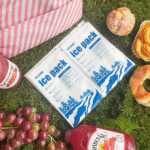
| Basic insulation + gel packs | Short chilled lanes | Small warm spikes | Lower cost, basic protection |
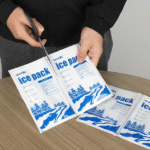
| Tuned PCM + stronger insulation | Chilled lanes with long last mile | Temperature swings + porch time | More stable delivery outcomes |
| Export-grade insulation + frozen coolant | Longer transit windows | Partial thaw events | Fewer rejections and refunds |
| Leak-resistant liner + absorbent | High-drip cuts | Cross-contamination + soggy cartons | Cleaner deliveries, fewer complaints |
Practical pack-out rules that teams can follow
Match pack-out to lane time, not “best case.”
Standardize coolant placement. Random placement creates random results.
Protect labels and lot codes. If you can’t read it, you can’t trace it.
Scenario: If customers receive meat at the doorstep, insulation buys you time. Clear “unpack now” instructions reduce warm minutes.
What monitoring level do you need for cold chain meat safety?
Core answer: monitoring turns cold chain meat safety into a measurable process. It gives you evidence, faster root-cause fixes, and fewer disputes.
Start simple, then scale. You don’t need maximum tech everywhere. You need the right tool on the lanes that cost you the most.
Monitoring options compared
| Monitoring type | Cost | Data depth | Best use case |
|---|---|---|---|
| Time–temperature indicators | Low | Basic | Short, local deliveries |
| Reusable data loggers | Medium | Detailed | Regional lanes, recurring claims |
| Real-time sensors | Higher | Continuous | Export, high-value, high-risk lanes |
Interactive decision tool: pick your monitoring level in 60 seconds
Do you ship meat beyond 24 hours transit?
Yes → go to Q2
Helpful decision tools
Check the details before you choose packaging
These quick tools can help you compare route risk, sizing needs, coolant choices, and packaging details before you request a quote.
01Ice pack estimateIce Pack Calculator
Estimate gel ice pack quantity for chilled shipments and practical route planning.
Estimate ice packs02Sizing supportBox Liner & Pallet Cover Sizing
Check box liner and pallet cover sizing logic for insulated packaging projects.
Estimate sizing03Checklist supportCompliance Checklist Generator
Build a practical checklist for packaging review, shipping, and documentation.
Build checklistNo → go to Q3
Do you have >1% temperature-related claims/holds?
Yes → monitor every shipment on top 3 lanes + validate pack-out
No → spot-check monitoring + seasonal validation on worst lane
Do deliveries sit outside (porch/locker) regularly?
Yes → add exception monitoring + tighten delivery windows
No → basic monitoring may be enough
Do you ship mixed chilled and frozen in one carton?
Yes → higher monitoring + stronger SOPs
No → standard monitoring + periodic validation
What should you do when cold chain meat safety is compromised?
Core answer: respond fast, document everything, and follow a written rule set. When perishable food sits too long in risky temperatures, safety risk increases, so time and temperature evidence matters. 疾病控制与预防中心
The worst move is guessing. The best move is holding product and using time/temperature evidence to decide.
Temperature excursion playbook (simple and repeatable)
Stop and isolate: place the lot on hold.
Gather facts: max temperature, time out of control, product type, lane, season.
Decide using rules: your SOP + customer spec + regulatory expectations.
Document actions: what happened, what you did, how you prevent repeats.
| Situation | Key question | Safer action | What it means for you |
|---|---|---|---|
| Unknown warm time | “How long was it warm?” | Hold + investigate | Avoid unsafe release decisions |
| Short warm event | “Under your limit?” | Document + release if allowed | Less unnecessary disposal |
| Long warm event | “Beyond limits?” | Dispose/recall per policy | Protect customers and brand |
| Repeat lane failures | “Why recurring?” | Re-validate + change process | Lower long-term cost |
Practical tips for faster decisions
Don’t rely on air temp alone. Product warms differently than air.
Name one decision owner. Too many voices slows action.
Fix the root cause fast. The same lane will fail again.
How does traceability improve cold chain meat safety in 2025?
Core answer: traceability makes every pallet accountable and every decision explainable. It reduces recall size, speeds investigations, and strengthens customer trust.
In the U.S., FDA information indicates a proposed extension of the Food Traceability Rule compliance date to July 20, 2028, and notes Congressional direction not to enforce before that date. U.S. Food and Drug Administration Even if timelines evolve, buyers still expect better records now.
What to record for practical cold chain meat safety
Keep it simple and consistent:
Lot/batch ID
Shipping date and time
Carrier + trailer ID
Temperature evidence (logger summary or recorder data)
Trailer hygiene verification record
Exception log + disposition decision
| Record | Why it matters | What it means for you |
|---|---|---|
| Lot ID | Limits recall scope | Less waste, fewer disputes |
| Time stamps | Proves dwell control | Faster investigations |
| Temp evidence | Shows control | Stronger customer confidence |
| Cleaning proof | Prevents contamination claims | Better audit outcomes |
Interactive self-audit: score your cold chain meat safety risk in 3 minutes
Score each item: 0 (no), 1 (sometimes), 2 (yes)
We verify trailer cleanliness before every meat load.
We keep meat within documented temperature limits end-to-end.
We track door-open time at loading and receiving docks.
We use a written corrective action plan for excursions.
We can isolate affected lots within minutes using shipment records.
Your score (0–10):
0–4: High risk — fix fundamentals first
5–7: Medium risk — improve consistency and documentation
8–10: Strong — focus on monitoring, verification, and optimization
2025 cold chain meat safety trends you should act on
Cold chain meat safety matters because unsafe food remains a massive global burden. WHO estimates 600 million foodborne illnesses and 420,000 deaths each year. In 2025, the pressure is higher from three directions: public health expectations, customer reviews at the doorstep, and waste-cost visibility.
Latest developments snapshot
More proof, less guesswork: temperature evidence reduces disputes and speeds investigations.
More hygiene discipline in transport: cleaning and protection expectations remain central.
More traceability planning: many teams are building lot-level readiness ahead of deadlines. U.S. Food and Drug Administration
More lane-specific “recipes”: pack-outs and SOPs tailored by season and transit time.
Market insight you can use
Customers don’t separate “quality” from “safety.” If the box arrives warm, trust drops fast. That’s why cold chain meat safety investments often pay back through fewer refunds, fewer service tickets, and higher repeat purchase rates.
Frequently Asked Questions
Q1: What is the safe refrigerator temperature for meat?
A common safety target is keeping refrigeration at 40°F (4°C) or below, verified with a thermometer.
Q2: What is the meat danger zone temperature?
The Danger Zone is commonly described as 40°F–140°F, where bacteria can multiply quickly.
Q3: How long can meat sit out during receiving or packing?
A widely used public-health rule is no more than 2 hours, or 1 hour if above 90°F. Treat staging as a timed event. 疾病控制与预防中心
Q4: Is trailer air temperature enough to prove cold chain meat safety?
No. Air can be cold while product warms. Use product checks and shipment evidence.
Q5: Do you need real-time sensors on every shipment?
Not always. Start with your highest-claim lanes, validate pack-outs, then expand monitoring based on results.
Q6: What’s the fastest “quick win” for cold chain meat safety?
Set one visible rule: temperature target + staging time limit + daily thermometer checks. 疾病控制与预防中心
Summary and recommendations
Cold chain meat safety is not one big project. It’s a set of small controls that stop warm minutes from stacking up. Keep meat out of the Danger Zone and limit time at handoffs. Protect loads with repeatable hygiene and transport discipline. U.S. Food and Drug Administration Use monitoring to find patterns, not to blame people. Then build traceability records so issues are isolated fast.
Your next steps (CTA)
Write one temperature spec per product type (chilled vs frozen).
Set a hard staging time limit at docks and pack stations.
Implement a pre-load trailer hygiene check every shipment.
Validate your worst lane (hottest season + realistic delay).
Monitor top-risk lanes for 30 days, then standardize the “lane recipe.”
About Tempk
At Tempk, we help you make cold chain meat safety easier to execute every day. We support lane-matched thermal packaging, temperature-stabilizing coolants, and monitoring-friendly workflows that fit real docks and real delivery windows. Our focus is practical: fewer temperature excursions, cleaner handoffs, and pack-out recipes your team can repeat without guesswork.
Next step: Share your top 3 meat lanes (transit time, destination climate, chilled vs frozen). We’ll help you outline a lane-specific control plan you can validate quickly.