Cooler Box Company Cost: Selection, Cost, and Qualification Framework
Start with the shipment or service condition, not the box photograph. A cooler box company cost should be selected only after the buyer has defined what goes inside, what temperatures or handling conditions matter, how long exposure may last, and what evidence is needed at receipt.
The final framework combines product education, engineering checks, commercial analysis, qualification awareness, and supplier governance into one procurement method. The goal is not to promise universal performance, but to show what should be defined, tested, documented, and verified before scale-up.
A Clear Scope Prevents Most Purchasing Errors
Thermal protection comes from a configuration, not from the product name alone. For this topic, the useful definition is a cooler box offer viewed as a combination of product, engineering, quality control, commercial terms, packaging, logistics, and supplier support. Performance therefore depends on the required condition of the payload, the initial temperature of every component, the amount and placement of cooling media, the lid seal, internal air movement, ambient exposure, and the time between packing and receipt. A supplier may sell the same outer box into several markets, yet each market can require a different packout and different evidence. Buyers should keep product construction, thermal configuration, operating procedure, and qualification status as separate fields in the specification. In the final approval record, connect the requirement, supplier response, sample observation, test evidence, commercial scope, and responsible decision in one traceable line.
The intended job is choosing a company for stock purchases, private label, custom development, or repeat distribution orders. That statement should be made more precise during the RFQ: identify product type, payload dimensions, acceptable condition, route, handovers, planned duration, seasonal extremes, monitoring, cleaning, and receiving decision. If a parameter is unknown, mark it as an open verification item. Do not let a catalog label such as 'medical,' 'food grade,' 'heavy duty,' or 'cold chain' replace evidence. A strong supplier will help clarify the boundary and will distinguish a stock container, an assembled packout, and a qualified shipping system. Treat an unresolved assumption as a managed risk with an owner and due date, not as a silent acceptance that becomes visible only after scale-up.
Use Total Landed and Lifecycle Cost, Not Unit Price Alone
For this purchase, cost is shaped by product construction, customization, quality controls, documentation, order size, packaging, Incoterms, freight, duties, inspection, warranty, and disruption exposure. A quotation should state which of these items are included, the currency, tax treatment, Incoterm where relevant, sample and tooling status, payment basis, and validity period. Unit prices cannot be compared when one supplier includes reinforced export cartons, inspection, accessories, or testing and another excludes them. Build a comparison sheet that uses the same drawings, bill of materials, quality level, packaging method, order quantity, and delivery point. Unknown items should remain visible as allowances rather than being treated as zero. If the material, dimension, source, packout, test basis, route, or operating instruction changes, assess the effect before assuming the previous approval still applies.
Total cost also includes the consequences of failure. Repacking, emergency freight, delayed launch, temperature excursion review, damaged payload, returns, warranty claims, extra warehouse labor, and obsolete inventory can outweigh a small unit-price difference. This does not mean choosing the highest quote. It means identifying which controls reduce material risk and which features add expense without a clear benefit. A cost-down discussion is most productive after the critical requirements are protected: simplify decoration, standardize components, improve carton density, or use a stock platform before weakening insulation, closure, handling strength, or quality evidence. In the final approval record, connect the requirement, supplier response, sample observation, test evidence, commercial scope, and responsible decision in one traceable line.
Technical Choices That Deserve Written Acceptance Criteria
Heat enters through the walls, lid, joints, openings, and any conductive bridge created by hardware. The rate is influenced by temperature difference, exposed surface area, insulation properties, thickness, geometry, air leakage, and time. Thicker insulation can help, but it also reduces usable volume or increases external size. A tighter lid can reduce air exchange, but it still has to remain operable after repeated handling. Reflective films may change radiative heat transfer in a specific assembly, yet they are not substitutes for sufficient insulation or controlled closure. The correct comparison is therefore an assembled design tested under relevant conditions, not a single material name. Treat an unresolved assumption as a managed risk with an owner and due date, not as a silent acceptance that becomes visible only after scale-up.
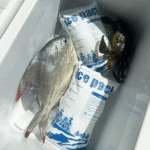
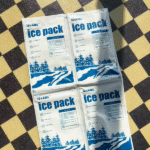
Cooling media and payload placement determine what the insulation is protecting. Conditioned gel packs or phase-change materials may be used for some refrigerated applications; frozen goods or dry-ice systems follow different rules. Direct contact can expose sensitive products to local cold spots, so barriers, baskets, spacers, or controlled conditioning may matter. Empty air space also changes performance and can allow components to shift. The buyer should request a packout drawing that identifies every component, orientation, quantity, and preparation step. That drawing becomes a training tool, a test record reference, and an inspection baseline rather than an informal suggestion. The integrated decision should protect the intended use while keeping product construction, customization, quality controls, documentation, order size, packaging, Incoterms, freight, duties, inspection, warranty, and disruption exposure visible in the total-cost model.
Turn Every Important Claim Into Evidence
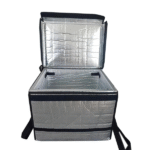
Commercial cooler boxes can be rotationally molded, injection molded, blow molded, fabricated, or built from foamed assemblies and liners. Each construction route has different implications for tooling, wall consistency, appearance, weight, repair, order quantity, and customization. No method is automatically best. The specification should focus on outcomes that matter in the intended service: inside dimensions, closure fit, resistance to expected handling, insulation continuity, cleanability, component retention, and visual standards where the product is consumer-facing. The integrated decision should protect the intended use while keeping product construction, customization, quality controls, documentation, order size, packaging, Incoterms, freight, duties, inspection, warranty, and disruption exposure visible in the total-cost model.
Thermal claims require context. Ask what payload was used, how components were conditioned, where sensors were placed, what ambient profile applied, how the lid was handled, and what acceptance criterion defined success. A long duration under a mild test cannot be treated as performance on a severe route. ISTA 7E offers standardized heat and cold profiles for thermal transport packaging in parcel delivery, while lane-specific qualification may still be needed. Evidence should match the planned use rather than decorate a quotation. If the material, dimension, source, packout, test basis, route, or operating instruction changes, assess the effect before assuming the previous approval still applies.
Qualification, Monitoring, and Change Control Work Together
A practical qualification plan begins with the target product condition and the worst credible operating scenarios. It should define representative payload, packaging components, conditioning, packing sequence, sensor locations, ambient profile, duration, opening events if relevant, acceptance criteria, and contingency margin. ISTA thermal profiles can support standardized comparison for appropriate parcel applications, but they do not replace knowledge of a specific lane. For other channels, the shipper may use mapped lane data, seasonal profiles, distribution testing, and risk assessment. The chosen method should be agreed by the responsible quality and logistics functions. Treat an unresolved assumption as a managed risk with an owner and due date, not as a silent acceptance that becomes visible only after scale-up.
Monitoring does not create temperature protection; it provides evidence about exposure. Select logger accuracy, calibration status, recording interval, start procedure, placement, alarm logic, data access, and trip report format according to product risk. The operational sequence is request for quotation, specification alignment, sample comparison, supplier verification, commercial negotiation, pilot order, receiving inspection, and review. Deviations need a defined review path rather than an automatic assumption that the payload is acceptable or unusable. After approval, any change to insulation, resin, coolant, dimensions, supplier, closure, packing instructions, test profile, route, or payload can require documented assessment and possibly requalification. The integrated decision should protect the intended use while keeping product construction, customization, quality controls, documentation, order size, packaging, Incoterms, freight, duties, inspection, warranty, and disruption exposure visible in the total-cost model.
Shortlist Suppliers With Evidence and Governance
The central supplier question is what the quoted price includes, what it excludes, and what failure or change costs may appear after purchase order placement. Evaluate quotation transparency, technical competence, sample control, production visibility, response discipline, delivery planning, and evidence for important claims. Ask who owns each process, which operations are subcontracted, how critical dimensions and materials are inspected, how rejected product is controlled, and how the approved sample is tied to production. If the supplier offers testing, identify the laboratory, method, payload, sensor layout, ambient profile, sample size, and report ownership. A polished report is useful only when it describes the configuration you intend to buy. In the final approval record, connect the requirement, supplier response, sample observation, test evidence, commercial scope, and responsible decision in one traceable line.
- Which drawing and bill-of-material revision will govern production?
- What does the quoted capacity mean after the operating packout is installed?
- Which claims are supported by a test report, material declaration, or inspection record?
- How are samples identified and linked to later production lots?
- What changes require written customer approval before implementation?
- Who investigates a nonconformity and how quickly is containment started?
Good answers are specific and auditable. A supplier that explains limitations is often more useful than one that labels every model suitable for every market. During due diligence, compare documents with the physical sample. Measure critical dimensions, inspect the lid and closure, review surfaces and insulation continuity where visible, pack a representative payload, and photograph the approved configuration. The result should be a controlled reference that procurement, quality, warehouse, and supplier teams can all recognize. Treat an unresolved assumption as a managed risk with an owner and due date, not as a silent acceptance that becomes visible only after scale-up.
Helpful decision tools
Check the details before you choose packaging
These quick tools can help you compare route risk, sizing needs, coolant choices, and packaging details before you request a quote.
Insulation Material Reference
Compare insulation material choices for different cold chain packaging needs.
Compare materialsCompliance Checklist Generator
Build a practical checklist for packaging review, shipping, and documentation.
Build checklistDry Ice Calculator
Estimate dry ice needs for frozen or ultra-cold shipments before packing.
Estimate dry ice| Approval gate | What must be fixed | Release record |
|---|---|---|
| Product and route | Prevents a generic box from being treated as a universal solution | Written use case, payload and route profile |
| Usable space | Cooling media and dividers reduce practical payload volume | Dimensioned packout drawing and packing trial |
| Thermal evidence | Duration claims depend on payload, conditioning and ambient profile | Complete test method and report for the proposed configuration |
| Construction | Materials, joints, lid and hardware affect heat flow and handling | Drawing, bill of materials and sample inspection |
| Operations | A good design can fail when staff pack it differently | Controlled work instruction and training plan |
| Production control | The approved sample must represent bulk units | Golden sample, inspection plan and change-control agreement |
| Commercial scope | A low quote may exclude major cost items | Normalized quotation and landed-cost model |
| End of use | Reuse or disposal must fit the actual network | Cleaning, inspection, return and recovery plan |
The table is a decision aid, not a substitute for qualification. It keeps unknowns visible and links each important claim to a document, sample, test, or operating control that the buyer can review before release.
Use a Scenario Review Before Releasing the Order
Consider this typical scenario: a buyer receives a lower quote from a trading company and a higher quote from a manufacturer, but neither quotation uses the same materials, tests, or delivery terms. The team should map every period when the packed product is outside controlled storage, including staging before pickup, loading, hubs, customs or security checks, missed delivery, waiting at receipt, and return handling. For each step, identify expected duration, ambient exposure, who owns the shipment, whether the box may be opened, and what data is available. This exposes whether the main requirement is insulation, a different coolant arrangement, a stronger closure, clearer labeling, faster carrier service, a contingency pack, or improved receiving discipline. The integrated decision should protect the intended use while keeping product construction, customization, quality controls, documentation, order size, packaging, Incoterms, freight, duties, inspection, warranty, and disruption exposure visible in the total-cost model.
The same review should ask what happens when conditions are not ideal. Relevant risks include ambiguous specifications, low-price substitutions, overlooked molds, weak cartons, freight surprises, inconsistent batches, claims without test context, and slow corrective action. Rank them by severity, likelihood, and detectability, then assign prevention and response. Some controls belong in the product, such as a barrier or stronger handle. Others belong in the procedure, such as conditioning time, packing order, pre-cooling, staff training, carrier instruction, or a receiving checklist. The supplier can contribute design evidence, but route ownership stays with the shipper and its logistics partners. If the material, dimension, source, packout, test basis, route, or operating instruction changes, assess the effect before assuming the previous approval still applies.
A Stage-Gate Plan Keeps Scale-Up Reversible
An effective RFQ separates mandatory requirements from preferences and open questions. Attach a dimensioned payload sketch, expected order volume, delivery market, target timeline, packaging and labeling needs, and the operating scenario. Ask suppliers to state compliance, exception, or proposed alternative against every line. This avoids a common problem: a supplier quietly quotes its nearest standard product while the buyer assumes a custom requirement has been accepted. Commercial comparisons should begin only after technical exceptions are visible and responsibility for tests, samples, molds, freight, and documents is assigned. In the final approval record, connect the requirement, supplier response, sample observation, test evidence, commercial scope, and responsible decision in one traceable line.
Use stage gates so that spending follows evidence. A concept gate approves the requirement; an engineering gate approves drawings and materials; a sample gate checks fit and function; a pilot gate checks production controls and packaging; and a release gate authorizes volume. At each gate, record open issues, owners, due dates, and the exact revision reviewed. This makes it easier to pause or correct the project before a problem is multiplied across a full order. It also creates a useful history for later cost reduction, supplier transfer, or design change. Treat an unresolved assumption as a managed risk with an owner and due date, not as a silent acceptance that becomes visible only after scale-up.
Make Environmental Claims With Operational Evidence
The environmental priority is to protect the payload with the least practical combination of material, energy, refrigerant, labor, and transport. A package that uses less material but causes product loss is not automatically the better outcome. The relevant approach here is looking beyond purchase price to product life, transport efficiency, damage prevention, repair options, packaging waste, and end-of-use handling. Compare single-use and reusable options over the actual network: outbound distance, return distance, cleaning, drying, inspection, loss rate, repair, storage, and end-of-use path. Avoid broad claims such as 'zero waste' or 'carbon neutral' unless a defined study and scope support them. If the material, dimension, source, packout, test basis, route, or operating instruction changes, assess the effect before assuming the previous approval still applies.
Design can still remove obvious inefficiency. Right-size external dimensions, improve payload density, standardize high-wear components, avoid decorative layers that complicate recovery, and select cartons that protect the product without shipping excess air. For reusable fleets, give each asset an owner and inspection status. Retire boxes with damaged insulation, distorted lids, contaminated surfaces, or unreliable closures. Sustainability is strongest when it is connected to measurable operational outcomes: fewer damaged shipments, longer safe service, better cube utilization, controlled cleaning, and a credible recovery route. In the final approval record, connect the requirement, supplier response, sample observation, test evidence, commercial scope, and responsible decision in one traceable line.
Practical Procurement FAQ
Is every a cooler box offer viewed as a combination of product, engineering, quality control, commercial terms, packaging, logistics, and supplier support suitable for a cold-chain shipment?
No. Suitability depends on the product condition, route, duration, payload, cooling media, packing method, ambient exposure, handling, and evidence. An insulated container may be a useful component without being a qualified shipping system. Ask for test details tied to the proposed configuration and have the responsible quality or logistics team review the final use.
How should buyers compare supplier performance claims?
Compare the complete test conditions, not only the headline duration or temperature. Review payload, coolant, conditioning, sensor placement, ambient profile, openings, sample construction, acceptance limits, and whether the tested unit matches production. If these details are missing, treat the claim as a topic for verification rather than a purchasing fact.
What is the most common mistake in a bulk order?
A frequent mistake is approving appearance while leaving functional details undefined. Inside dimensions, usable space, lid fit, insulation, hardware, packout, carton, inspection, and permitted changes should be written before production. A signed sample is helpful, but drawings, acceptance criteria, and change control make the approval repeatable.
Should the lowest quotation win?
Only after every quotation has been normalized to the same specification and delivery scope. Include tooling, accessories, testing, inspection, cartons, freight, duties, warehouse labor, warranty exposure, and failure risk. A lower price can be the right decision when evidence and controls are equivalent; it is risky when the low price comes from an unknown scope.
When is a reusable box the better option?
Reuse can be attractive on controlled, repeated routes with ownership, return transport, cleaning, drying, inspection, repair, and loss management. It is less convincing when boxes disappear, return empty over long distances, or cannot be cleaned safely. Evaluate the actual loop rather than assuming that a reusable label guarantees a better environmental result.
Conclusion
The final selection should connect four decisions: product and route fit, technical evidence, total cost, and supplier governance. When those decisions are recorded, buyers can scale with fewer surprises and a clearer basis for quality review.
About Tempk
Tempk supports buyers developing passive cold-chain packouts with cooler boxes, insulation, gel packs, PCM bricks, thermal bags, and medical shipping formats. A cooler box company cost request can be reviewed more effectively when the buyer supplies route, payload, required condition, handling, target quantity, and testing expectations. Tempk can help identify options for evaluation, while the shipper and its quality team retain responsibility for approving the application and route.
Discuss the technical brief, sample plan, and bulk acceptance criteria with Tempk before locking the commercial order.