Distributor Dry Ice Pack for Seafood Delivery: How to Choose the Right Packout Before You Buy
Before you order a distributor dry ice pack for seafood delivery, define the product temperature requirement and the real route risk. The pack is only one part of the cold-chain system. For seafood, the right choice must balance cooling strength, insulation, product sensitivity, handling safety, documentation, and supplier consistency. A good bulk decision starts with verified fit, not with the lowest quoted unit price or the most aggressive refrigerant name.
Start With the Product Temperature, Not the Pack Name
The phrase dry ice pack can point to different realities. It may mean solid carbon dioxide placed in packaging, or it may mean a hydrated, reusable, freezer-conditioned cold pack used as a dry ice-style cooling component. The naming matters because the handling requirements, cold intensity, and carrier expectations are not the same. A buyer should define the coolant identity before discussing price, volume, or custom printing.
For seafood, the first written requirement should be the product’s required condition. Fresh seafood generally needs to stay very cold without cross-contamination, while frozen seafood requires a true frozen route and different packout logic. The packout should be designed around that requirement. If the product must remain chilled, the risk of freezing has to be controlled. If it must remain frozen or ultra-cold, the buyer needs enough cooling reserve and a shipper that can manage the route.
The second requirement is evidence. A small internal delivery may need only a simple record. A regulated, export, medical, or high-value commercial shipment may need data loggers, written SOPs, and quality review. The dry ice pack does not create that evidence by itself; it must be part of a process.
When a distributor dry ice pack for seafood delivery Makes Sense
A dry ice pack can make sense when the route needs more cooling reserve than basic insulation can provide and the product can tolerate the resulting thermal profile. Dry ice-style packs can support chilled or frozen seafood parcels depending on packout, and true dry ice may be considered for frozen seafood with proper venting and labels. It may also make sense when the buyer needs flexible pack placement, low mess compared with loose ice, or a repeatable pack format for warehouse staff.
The pack is most useful when the rest of the shipper is controlled. That means the product starts at the correct condition, the pack is fully conditioned, the insulation is appropriate, void space is managed, and the receiver knows what to do. If any of those elements is missing, adding a stronger pack may hide the root problem rather than solve it.
For bulk procurement, the buyer should also consider freezer capacity. Hydration packs and gel or PCM packs must be conditioned before use. A large order that cannot be frozen, staged, and rotated properly will not deliver the expected performance. Storage space and workflow should be part of the purchase decision.
Where It Is Not Enough
A dry ice pack is not enough when the product range is unknown, the shipper is not insulated, the carrier route is uncontrolled, or the receiver does not act promptly. Dry ice is not appropriate for live seafood and should not replace ice slurry, refrigerated transport, or validated frozen packaging where those are required. It is also not enough when the buyer needs regulatory documentation but has not defined acceptance criteria or monitoring responsibilities.
It may be the wrong tool when the product is only mildly heat-sensitive. In those cases, a controlled PCM, gel pack, insulated liner, thermal bag, or refrigerated vehicle may be more suitable. Overcooling can damage product, create moisture, increase freight weight, and complicate handling. The safest cold-chain design is not always the coldest design.
It is also not enough to approve a pack based on a successful shipment without understanding why it worked. If the route was mild, the payload was small, or the receiver opened the box immediately, the same method may fail on a hotter or longer route. A good decision separates luck from repeatable performance.
Distributor Checks That Protect Downstream Customers
| Buyer check | Why it matters | What to ask before ordering |
|---|---|---|
| Product temperature requirement | Seafood may be damaged by both warming and overcooling. | What exact storage or transport range should the packout protect? |
| Coolant identity | Hydrated dry ice-style packs, PCM packs, gel packs, and solid CO2 behave differently. | Does the pack contain solid carbon dioxide, or is it a freezer-conditioned pack? |
| Pack conditioning | A pack that is not fully conditioned has less useful cooling reserve. | How should packs be soaked, frozen, staged, and loaded? |
| Payload and void space | Empty space changes airflow and can create warm or cold zones. | What payload size was used in any test or recommendation? |
| Route evidence | Laboratory performance may not match a hot dock, weekend hold, or last-mile delay. | Can the supplier support a trial with loggers on your actual lane? |
| Change control | A small material or size change can alter performance. | Will production changes be communicated before bulk shipment? |
Use these questions to compare suppliers on the same basis. A quote that includes material details, conditioning instruction, and packout advice is not the same as a quote for a generic sheet. The goal is not to create unnecessary paperwork; the goal is to prevent a purchase that cannot be used consistently.
For seafood delivery, the buyer should add any product-specific question that affects release or sale. That may include freezing sensitivity, moisture protection, odor transfer, pallet or parcel handling, or the need for temperature evidence at receipt. A supplier who understands these constraints can recommend a safer configuration.
From Sample to Routine Shipment
The sample stage should copy the real shipment as closely as possible. Use the same product carton, same shipper, same pack count, same cushioning, same carrier service, and same receiving instruction. If the final payload is unavailable, use a thermal dummy with similar mass and placement, and clearly note the limitation. Do not test a perfect small sample and then assume a larger, mixed payload will behave the same.
During the sample, inspect more than temperature. Check whether the pack remains intact, whether labels stay readable, whether cartons become wet, whether product corners touch cold surfaces, whether the package is easy to close, and whether warehouse staff can repeat the method without special coaching. These observations often explain future complaints better than temperature data alone.
After the first trial, decide what can be standardized. The final instruction should identify pack quantity, pack orientation, buffer material, payload placement, carton closure, shipment timing, and receiver action. If multiple seasons or routes are involved, create more than one approved version rather than letting staff improvise.
Helpful decision tools
Check the details before you choose packaging
These quick tools can help you compare route risk, sizing needs, coolant choices, and packaging details before you request a quote.
Route Risk Checker
Review lane conditions before selecting packaging for real operating requirements.
Check route riskIce Pack Calculator
Estimate gel ice pack quantity for chilled shipments and practical route planning.
Estimate ice packsCompliance Checklist Generator
Build a practical checklist for packaging review, shipping, and documentation.
Build checklistReceiving Inspection and Continuous Improvement
Receiving is where cold-chain evidence becomes a business decision. The receiver should inspect package condition, coolant state, product condition, and any temperature record before the goods move into routine storage. For seafood, the receiving criteria should be written in a way that fits the product. A seafood receiver may inspect thaw and odor. A pharmaceutical receiver may review a logger file and quarantine rules. A flower receiver may check hydration and petal condition.
The buyer should collect early shipment feedback in a structured way. If complaints cluster by region, carrier, season, product format, or receiver behavior, the packout may need adjustment. If one warehouse has more failures than another, conditioning or loading practice may be inconsistent. If only edge units show damage, the pack position or buffer layer may need redesign.
Continuous improvement should not become uncontrolled change. If a team reduces pack count, changes the insulation, switches outer cartons, or substitutes a coolant, the change should be reviewed. Cold-chain packaging works as a system. Changing one component may save cost, but it may also remove the margin that made the packout work.
FAQ
Is a distributor dry ice pack for seafood delivery the same as real dry ice?
Not always. Some buyers use the phrase for solid carbon dioxide, while others use it for hydrated or reusable packs marketed for dry ice-style cooling. The difference is important because solid dry ice releases carbon dioxide gas and is extremely cold, while a hydrated pack is usually conditioned in a freezer and behaves more like a coolant component. Ask the supplier to identify the refrigerant clearly before you decide on labeling, handling, or product contact.
Can I use this type of pack directly against seafood?
Direct contact is rarely the safest default. Seafood may be sensitive to cold spots, moisture, pressure, or temperature shock. Use a buffer, divider, sleeve, or tested loading pattern unless the supplier and your quality team have confirmed direct contact is acceptable. The goal is not to make the coldest area colder; it is to keep the payload within the required condition through the route.
What should I request from a supplier before a bulk order?
Ask for pack format, materials, conditioning instructions, recommended packout, compatibility with your insulated shipper, sample availability, and any test information tied to a defined payload and ambient profile. For distributor orders, also confirm carton packing, lot consistency, change notification, lead time, and whether the supplier can support a route trial before production volume.
Do I still need a temperature logger?
For low-risk local deliveries, the buyer may rely on procedural checks. For high-value, regulated, export, medical, or repeated rejection-risk routes, a logger is often the most practical way to understand what happened during transport. A logger does not protect the product by itself, but it gives evidence that helps you improve packout and make receiving decisions.
How do I know whether the packout is overbuilt?
An overbuilt packout may arrive very cold but still be wrong if it freezes the product, creates condensation, adds unnecessary freight weight, or triggers handling requirements you do not need. Review arrival temperature, product condition, packaging condition, coolant state, and receiver feedback across several shipments. Then reduce or adjust coolant only through a controlled trial.
Conclusion
A distributor dry ice pack for seafood delivery is worth considering when it fits the product, route, and evidence requirement. Start with the product’s required condition, distinguish hydrated dry ice-style packs from solid carbon dioxide, and test the pack inside the actual shipper. For seafood delivery, the right decision protects the payload without creating freezing, moisture, labeling, or receiving problems.
A buyer should move from product search to route qualification: define the requirement, request samples, test the packout, review receiving results, and then scale the purchase. That sequence is slower than ordering by price alone, but it creates a method that can be repeated.
About Tempk
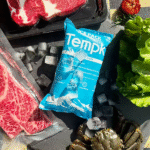
Tempk focuses on cold-chain packaging components such as dry ice-style packs, gel ice packs, ice bricks, insulated bags, liners, EPP cooler boxes, and related packaging options for food, pharmaceutical, and perishable shipments. For seafood delivery, our role is to help buyers think through product sensitivity, route exposure, insulation, coolant placement, and practical packout consistency before they scale an order. We keep the discussion centered on what the shipment needs rather than on a single pack name.
Share your seafood delivery route, payload, and required temperature condition with Tempk before ordering. We can help you compare practical pack formats and decide what should be tested before scale-up.
Additional Buyer Notes
When a team evaluates a distributor dry ice pack for seafood delivery, it should avoid treating the quotation as a final technical answer. A quotation is a starting point. It tells you the pack format, price basis, and commercial availability. It does not automatically tell you whether the pack will protect seafood in your route. That answer depends on conditioning, insulation, payload mass, pack placement, season, dwell time, and receiving behavior.
The simplest useful document is a one-page packout sheet. It should show the shipper, the number of packs, where each pack sits, whether a buffer is required, how the payload is arranged, how the carton is closed, and what the receiver should do at arrival. For seafood delivery, this sheet can prevent repeated questions from warehouse staff and can make supplier comparisons much easier.
A buyer should also ask how exceptions are handled. If a pack is not fully frozen, can it be used? If the payload is warmer than expected, should the shipment be delayed? If the carrier misses the pickup, should the box be opened and repacked? If the receiver reports a problem, who reviews the decision? These questions feel operational, but they define whether the packout is reliable under pressure.
Finally, remember that supplier selection is not only a product comparison. It is a communication test. The right partner should be able to explain what the pack can do, where it may be unsuitable, and what information is still needed before a recommendation is safe. For distributor buyers, that honesty is often more valuable than a broad claim that one pack works for every temperature-sensitive shipment.