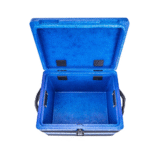
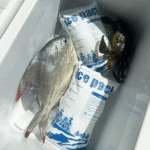
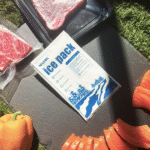
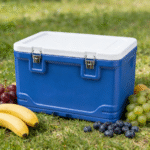
How to Use a Dry Ice Pack Cooler for 72‑Hour Trips
Need rock‑solid frozen temps on multi‑day routes? A dry ice pack cooler delivers –78 °C power without drips or heavy wet ice. In the next five minutes you’ll get load math, packing layers, and 2025 gear upgrades—so your cargo arrives ice‑cold and compliant.
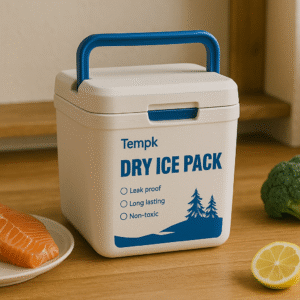
How many kilos of dry ice keep a cooler frozen for 24, 48, and 72 hours
Which cooler features slash sublimation and freight costs
The safety and hazmat rules you must follow in 2025
How dry ice coolers compare with gel‑pack coolers for different payloads
Pro packing tricks that prevent freeze‑burn and customer complaints
Why Choose a Dry Ice Pack Cooler Over Gel Packs?
Dry ice maintains –78 °C, making it unbeatable for ice cream, seafood, or biologics that must stay frozen—while gel packs top out near 0 °C. Dry ice also sublimates to CO₂ gas, leaving no puddles that soak labels or packaging.
Unlike loose pellets, flat dry‑ice packs stack neatly, spread cold evenly, and help you stay under airline hazmat limits—critical for cost‑sensitive e‑commerce lanes.
Key Advantages at a Glance
| Feature | Gel‑Pack Cooler | Dry Ice Pack Cooler | Practical Impact |
|---|---|---|---|
| Temp Range | 0–8 °C | –78 °C | Frozen integrity |
| Mess Factor | Melt water | No liquid | Clean unboxing |
| Load Weight/Day | 0.3 kg/kg food | 0.5 kg/kg food | Heavier but colder |
| Hazmat Paperwork | None | Class 9 > 2.5 kg | Plan labels & training |
| Reusability | High | Single‑use ice | Balance waste vs savings |
How Much Dry Ice Does Your Cooler Need?
Quick rule: pack dry ice equal to half your frozen payload for overnight, match payload weight for 48 hours, and 1.5× for 72 hours. Always place packs on top—cold sinks downward.
| Payload (kg) | Dry Ice 24 h (kg) | Dry Ice 48 h (kg) | Dry Ice 72 h (kg) |
|---|---|---|---|
| 2 | 1 | 2 | 3 |
| 5 | 2.5 | 5 | 7.5 |
| 10 | 5 | 10 | 15 |
Trail tactic: Pre‑chill the empty cooler at –10 °C for four hours to extend hold time ~12 %.
Packing Your Dry Ice Pack Cooler Like a Pro
Reflective liner against the cooler walls (R‑value ≥ 4 m² K/W).
Place frozen product on the bottom.
Add a corrugated spacer to avoid freeze‑burn.
Layer dry‑ice packs on top, wrapped in waxed paper.
Fill voids with recyclable paper pads; crack the drain plug slightly to vent CO₂.
Cooler Features to Look for in 2025
| Spec | Basic Cooler | AeroFlex™ Pro | Why It Matters |
|---|---|---|---|
| Insulation (R‑value) | 3.0 | 5.0 | Extra 10 h freeze |
| Vent Design | Manual hole | Smart‑Vent dial | Safe CO₂ release |
| Wall Thickness | 25 mm | 15 mm | Cuts DIM weight |
| Fold‑Flat Liner | No | Yes | Saves return freight |
Safety & Compliance Checklist
Label “UN 1845 DRY ICE” + weight on two sides.
Keep total dry ice ≤ 2.5 kg per box to avoid full Class 9 docs when flying.
Wear insulated gloves; frostbite can occur in seconds.
Helpful decision tools
Check the details before you choose packaging
These quick tools can help you compare route risk, sizing needs, coolant choices, and packaging details before you request a quote.
01Packaging choicePackaging Selector
Compare insulated packaging options by product, route, and temperature need.
Find packaging02Handling riskInsulation Material Drop Resistance
Review drop resistance and handling factors before choosing insulation materials.
Check resistance03Checklist supportCompliance Checklist Generator
Build a practical checklist for packaging review, shipping, and documentation.
Build checklistStore the cooler outside sleeping quarters; CO₂ is heavier than air.
Let leftover dry ice sublimate in open air; recycle liners where accepted.
Following these steps meets 49 CFR and IATA PI 954 requirements.
2025 Tech Trends in Dry Ice Pack Coolers
Carbon‑negative dry ice made from brewery CO₂ cuts footprint 30 %.
NFC temp loggers embedded in cooler lids provide real‑time readouts.
Plant‑based aerogel liners compost in six months without losing R‑value.
Bi‑directional vent patches auto‑adjust flow at altitude, preventing pressure spikes.
Analysts project a 9 % CAGR for smart dry‑ice coolers through 2028 as meal‑kit and vaccine markets expand.
FAQ
How do I stop veggies from freezing in a dry‑ice cooler?
Buffer them with a gel‑pack layer under the dry‑ice shelf.
Can I reuse the cooler after the ice sublimates?
Yes—if vents and seams are intact, most high‑R coolers last 5–7 cycles.
Is a dry‑ice cooler allowed on passenger flights?
Up to 2.5 kg dry ice with vented packaging only needs a UN 1845 label.
Summary & Recommendations
A dry ice pack cooler guarantees –78 °C stability for up to 72 hours when you load 0.5–1.5× payload weight in ice, vent CO₂, and use high‑R insulation. Follow the chart, layer ice above product, and watch spoilage dip below 2 %.
Next steps:
Try our Cooler‑Sizer quiz to calculate volume and ice load.
Order a Dry‑Ice Starter Kit with smart‑vent liner.
Run a lane test—share data for a 10 % reorder voucher.
About Tempk
We craft recyclable thermal solutions that protect frozen cargo without bulky foam. Our AeroFlex™ dry‑ice coolers hold –30 °C for 60 h and fold flat for return shipping. Engineers are on call 24/7 to fine‑tune your cold chain.
Need help? Book a free consult.