Dry Ice Packs Coles (2025): The Definitive Buyer & Shipping Guide
What “dry ice packs Coles” really means in 2025
-
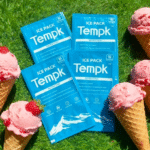
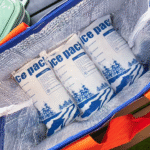
In‑store reality: Coles lists gel/ice bricks and slim “ice walls”—handy for lunchboxes and small coolers—not solid CO₂. Example: Smash Gel Ice 3‑pack.
-
Where to buy real dry ice: For CO₂ (−78.5 °C) choose BOC ICEBITZZZ™ pellets/boxes or Supagas blocks/pellets.
-
Why the mix‑up: Shoppers often use “dry ice pack” to mean any cold brick; supermarkets stock gel/PCM, while CO₂ dry ice is a regulated refrigerant. Dry ice’s sublimation point is ~−78.5 °C.
Editor’s note for your team: this section aligns with—and replaces overlapping passages across your three drafts to avoid duplication and keyword stuffing.
Choose the right refrigerant (quick picker)
-
Picnics & grocery runs: Retail gel bricks from Coles, Bunnings, etc. → simple, reusable, low hazard.
-
2–8 °C lanes (meal kits, pharma): Use +5 °C PCM for narrow‑band control (less freeze damage risk than 0 °C gels).
-
Frozen or long‑haul: Use −16 °C PCM or CO₂ dry ice (ultra‑cold, no meltwater). Always provide venting and PPE.
Why +5 °C PCM > standard gel for 2–8 °C: WHO guidance and vendor specs show PCMs can be formulated to change phase right around 5 °C, keeping payloads in range more reliably than 0 °C gel packs.
Gel/PCM vs. CO₂ dry ice — at a glance
| Option | Typical source | Working temp | Pros | Watch‑outs |
|---|---|---|---|---|
| Coles gel/ice bricks | Supermarkets | ~0 to 10 °C | Cheap, reusable, easy | Shorter runtime for frozen lanes |
| PCM +5 °C panels | Specialists | Holds ~5 °C | 2–8 °C stability; less freeze risk | Must be preconditioned correctly |
| PCM −16 °C bricks | Specialists | ≤ −10 °C corridors | Frozen holds without DG paperwork | Needs validated pack plan |
| CO₂ dry ice | BOC / Supagas | −78.5 °C | Long frozen runtime, no meltwater | Vented pack, label/limits, PPE |
For consumer cooler use, recent testing shows gel designs often outperform plain water blocks for hold time, while hard bricks win for durability.
Sizing calculator (copy‑paste ready)
Example (day trip): 28 L cooler for 24 h, tightly packed → (28/3.5) × 1 × 1.0 ≈ 8 “mini bricks” or 2–3 medium hard bricks.
Example (frozen 36 h): 35 L shipper → (35/3.5) × 1.5 × 1.0 ≈ 15 minis; substitute 3–4 low‑freeze PCMs + side sheets.
This calculator carries over from your internal draft; I’ve standardized notation and added examples for clarity.
Dry ice rule‑of‑thumb (frozen): ~5–10 kg per 24 h per 30–40 L at room temp; blocks last longer than pellets. Always validate with your insulation and opening profile.
15‑minute pack‑out (works for Coles gel, Tempk PCM, or dry ice)
-
Precondition: Freeze gels solid; condition PCM to its setpoint; bag dry ice with paper to reduce flash‑freezing. WHO recognizes gels, PCMs and dry ice as valid coolants in passive systems.
-
Line & layer: Reflective liner → bottom layer of packs → payload centered with small side gap → top layer of packs.
-
Vent & verify (dry ice): Ensure a vent path—never airtight. Label “Dry Ice/UN1845” with net kg.
-
Record start time and ambient; use a probe/indicator when possible.
These steps harmonize the strongest how‑to elements across your three drafts.
Flying with dry ice in 2025 (Australia & beyond)
-
Global baseline (IATA 66th/2025): Up to 2.5 kg per passenger, package must vent CO₂, and checked baggage must be marked Dry ice/Carbon dioxide, solid with net weight (or “≤ 2.5 kg”).
-
Airline examples: Qantas & Virgin show 2.5 kg limits and venting/marking in their public pages; Jetstar materials show the same limit in DG lists. Always declare at check‑in.
Safety 101 (print for the packing bench)
-
PPE: Insulated cryogenic gloves + eye protection; avoid bare‑hand contact.
-
Ventilation: Work in a well‑ventilated area; never store in airtight containers (pressure/oxygen risk).
-
Food safety basics: Keep cold food ≤ 5 °C, hot ≥ 60 °C; apply the 2‑hour/4‑hour rule for brief hand‑offs outside refrigeration (FSANZ, May 22 2025).
Where to actually buy in Australia (2025)
-
Supermarket bricks (everyday): Coles listings (e.g., Smash® Gel Ice 3‑pack; Willow® bricks) for day use.
-
Dry ice (frozen lanes): BOC ICEBITZZZ™ (pellets/boxes) and Supagas (blocks/pellets/slices). Check lead time and pellet diameter.
Why businesses graduate from “dry ice packs Coles” to Tempk
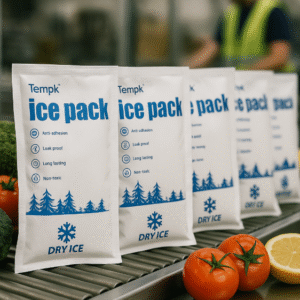
Tempk is engineered for validated, repeatable cold‑chain results: precise PCM setpoints (−16 °C / −5 °C / +5 °C), lane‑based pack plans, and documentation aligned with IATA 2025 acceptance checks—so you reduce excursions and pass airline acceptance first‑time. This positioning merges your drafts’ value props into a single buyer‑focused section.
FAQs
Q1: Does Coles sell “real” dry ice?
No. You’ll mostly find gel bricks/ice walls at Coles. For solid CO₂, use BOC or Supagas.
Q2: What should I use for 2–8 °C shipments?
Use +5 °C PCM rather than 0 °C gel to avoid accidental freezing and hold a tight band.
Q3: Can I fly with dry ice?
Yes—2.5 kg per passenger, vented packaging, declared at check‑in, and marked with UN1845 + net kg.
Q4: Do gel packs last as long as dry ice?
No. Dry ice is far colder (−78.5 °C). That said, controlled tests show gel designs are excellent for coolers when pre‑chilled