Dry Ice Packs Coles (2025): The Definitive Buyer & Shipping Guide
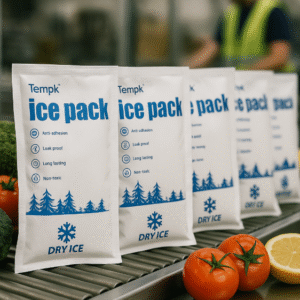
What “dry ice packs Coles” really means in 2025
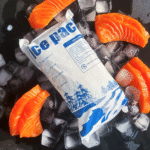
In‑store reality: Coles lists gel/ice bricks and slim “ice walls”—handy for lunchboxes and small coolers—not solid CO₂. Example: Smash Gel Ice 3‑pack.
Where to buy real dry ice: For CO₂ (−78.5 °C) choose BOC ICEBITZZZ™ pellets/boxes or Supagas blocks/pellets.
Why the mix‑up: Shoppers often use “dry ice pack” to mean any cold brick; supermarkets stock gel/PCM, while CO₂ dry ice is a regulated refrigerant. Dry ice’s sublimation point is ~−78.5 °C.
Editor’s note for your team: this section aligns with—and replaces overlapping passages across your three drafts to avoid duplication and keyword stuffing.
Choose the right refrigerant (quick picker)
Picnics & grocery runs: Retail gel bricks from Coles, Bunnings, etc. → simple, reusable, low hazard.
2–8 °C lanes (meal kits, pharma): Use +5 °C PCM for narrow‑band control (less freeze damage risk than 0 °C gels).
Frozen or long‑haul: Use −16 °C PCM or CO₂ dry ice (ultra‑cold, no meltwater). Always provide venting and PPE.
Why +5 °C PCM > standard gel for 2–8 °C: WHO guidance and vendor specs show PCMs can be formulated to change phase right around 5 °C, keeping payloads in range more reliably than 0 °C gel packs.
Gel/PCM vs. CO₂ dry ice — at a glance
| Option | Typical source | Working temp | Pros | Watch‑outs |
|---|---|---|---|---|
| Coles gel/ice bricks | Supermarkets | ~0 to 10 °C | Cheap, reusable, easy | Shorter runtime for frozen lanes |
| PCM +5 °C panels | Specialists | Holds ~5 °C | 2–8 °C stability; less freeze risk | Must be preconditioned correctly |
| PCM −16 °C bricks | Specialists | ≤ −10 °C corridors | Frozen holds without DG paperwork | Needs validated pack plan |
| CO₂ dry ice | BOC / Supagas | −78.5 °C | Long frozen runtime, no meltwater | Vented pack, label/limits, PPE |
For consumer cooler use, recent testing shows gel designs often outperform plain water blocks for hold time, while hard bricks win for durability.
Sizing calculator (copy‑paste ready)
Example (day trip): 28 L cooler for 24 h, tightly packed → (28/3.5) × 1 × 1.0 ≈ 8 “mini bricks” or 2–3 medium hard bricks.
Example (frozen 36 h): 35 L shipper → (35/3.5) × 1.5 × 1.0 ≈ 15 minis; substitute 3–4 low‑freeze PCMs + side sheets.
This calculator carries over from your internal draft; I’ve standardized notation and added examples for clarity.
Dry ice rule‑of‑thumb (frozen): ~5–10 kg per 24 h per 30–40 L at room temp; blocks last longer than pellets. Always validate with your insulation and opening profile.
15‑minute pack‑out (works for Coles gel, Tempk PCM, or dry ice)
Precondition: Freeze gels solid; condition PCM to its setpoint; bag dry ice with paper to reduce flash‑freezing. WHO recognizes gels, PCMs and dry ice as valid coolants in passive systems.
Line & layer: Reflective liner → bottom layer of packs → payload centered with small side gap → top layer of packs.
Helpful decision tools
Check the details before you choose packaging
These quick tools can help you compare route risk, sizing needs, coolant choices, and packaging details before you request a quote.
01Dry ice planningDry Ice Calculator
Estimate dry ice needs for frozen or ultra-cold shipments before packing.
Estimate dry ice02Ice pack estimateIce Pack Calculator
Estimate gel ice pack quantity for chilled shipments and practical route planning.
Estimate ice packs03Sizing supportBox Liner & Pallet Cover Sizing
Check box liner and pallet cover sizing logic for insulated packaging projects.
Estimate sizingVent & verify (dry ice): Ensure a vent path—never airtight. Label “Dry Ice/UN1845” with net kg.
Record start time and ambient; use a probe/indicator when possible.
These steps harmonize the strongest how‑to elements across your three drafts.
Flying with dry ice in 2025 (Australia & beyond)
Global baseline (IATA 66th/2025): Up to 2.5 kg per passenger, package must vent CO₂, and checked baggage must be marked Dry ice/Carbon dioxide, solid with net weight (or “≤ 2.5 kg”).
Airline examples: Qantas & Virgin show 2.5 kg limits and venting/marking in their public pages; Jetstar materials show the same limit in DG lists. Always declare at check‑in.
Safety 101 (print for the packing bench)
PPE: Insulated cryogenic gloves + eye protection; avoid bare‑hand contact.
Ventilation: Work in a well‑ventilated area; never store in airtight containers (pressure/oxygen risk).
Food safety basics: Keep cold food ≤ 5 °C, hot ≥ 60 °C; apply the 2‑hour/4‑hour rule for brief hand‑offs outside refrigeration (FSANZ, May 22 2025).
Where to actually buy in Australia (2025)
Supermarket bricks (everyday): Coles listings (e.g., Smash® Gel Ice 3‑pack; Willow® bricks) for day use.
Dry ice (frozen lanes): BOC ICEBITZZZ™ (pellets/boxes) and Supagas (blocks/pellets/slices). Check lead time and pellet diameter.
Why businesses graduate from “dry ice packs Coles” to Tempk
Tempk is engineered for validated, repeatable cold‑chain results: precise PCM setpoints (−16 °C / −5 °C / +5 °C), lane‑based pack plans, and documentation aligned with IATA 2025 acceptance checks—so you reduce excursions and pass airline acceptance first‑time. This positioning merges your drafts’ value props into a single buyer‑focused section.
FAQs
Q1: Does Coles sell “real” dry ice?
No. You’ll mostly find gel bricks/ice walls at Coles. For solid CO₂, use BOC or Supagas.
Q2: What should I use for 2–8 °C shipments?
Use +5 °C PCM rather than 0 °C gel to avoid accidental freezing and hold a tight band.
Q3: Can I fly with dry ice?
Yes—2.5 kg per passenger, vented packaging, declared at check‑in, and marked with UN1845 + net kg.
Q4: Do gel packs last as long as dry ice?
No. Dry ice is far colder (−78.5 °C). That said, controlled tests show gel designs are excellent for coolers when pre‑chilled