EPP container factory for aerospace: A Cleaner Procurement Framework
EPP container factory for aerospace should be treated as a procurement specification, not a product label. A good EPP solution protects the payload, fits the route, supports repeatable packing, and gives your quality or operations team enough evidence to approve the choice.
Start with the job the box must perform
Before comparing suppliers, write down the job of the EPP container. Is it mainly cushioning a precision payload, supporting a passive cold-chain packout, separating food items, reducing return-loop waste, or standardizing wholesale packaging? The answer changes almost every technical choice that follows.
A box that is excellent for one job can be wrong for another. A thick, large container may protect well but consume too much storage space. A compact box may be easy to carry but lose usable volume after dividers. A collapsible box may save return volume but create joints that need inspection. A food-grade claim may be irrelevant if the food is sealed, or critical if surfaces touch food directly.
The cleanest procurement framework is job first, specification second, supplier third, price fourth. This order keeps the discussion practical and prevents a low-price quote from hiding missing technical details.
Define the non-negotiables
Non-negotiables are the conditions that must be true for the EPP container to be acceptable. They may include payload fit, lid closure, route duration, cleaning method, sample match, documentation, export carton strength, divider layout, or compatibility with coolant and monitoring. Do not make every preference a non-negotiable. Too many strict requirements can push the project toward unnecessary cost.
For pharmaceutical use, non-negotiables may include labelled storage conditions, packout evidence, logger placement, and receiving inspection. For aerospace use, they may include drawing control, part identification, ESD coordination, and revision approval. For food use, they may include cleaning, odor control, direct-contact declarations, and route handling. For wholesale use, repeatability and defect handling may be more important than unusual customization.
Once non-negotiables are clear, supplier quotes become easier to compare. You are no longer asking who can sell an EPP container; you are asking who can support your operating conditions with an appropriate design and honest evidence.
| Procurement factor | What it affects | How to verify |
|---|---|---|
| Tooling ownership | Can influence price, lead time, and operational fit. | Turn it into a written supplier confirmation. |
| Density control | Changes strength, weight, cost, and sometimes thermal behavior. | Ask why this density or wall design fits the payload and route. |
| Quality inspection scope | Affects quality approval, supplier comparison, and repeat-order confidence. | Check scope, records, and whether evidence relates to this box. |
| Packaging for export | Can influence price, lead time, and operational fit. | Turn it into a written supplier confirmation. |
| Order volume | Changes unit cost, freight, storage, and buyer commitment. | Pilot before scaling and confirm bulk packing plan. |
| Custom lid or handle design | Improves fit or organization but can add tooling, cleaning, or replacement complexity. | Confirm sample approval and replacement options. |
This table helps prevent price from becoming the only comparison. A higher unit price may be justified by better fit, less repacking, clearer documentation, or more consistent production. A lower price may be acceptable when the route is simple and the evidence requirement is modest.
Ask for evidence, not promises
Supplier promises are easy to write. Evidence is more useful. For EPP container factory for aerospace, evidence can be simple or formal depending on risk: drawings, sample photos, dimensions, material notes, inspection records, cleaning guidance, carton packing details, or test summaries. The level of evidence should match the value and sensitivity of the payload.
If a claim involves temperature, ask for the conditions behind it. If a claim involves impact resistance, ask what handling risk or test method it refers to. If a claim involves ISO, confirm whether it is a management-system certificate and whether the manufacturing site is covered. If a claim involves food grade, ask what surface, resin, declaration, or market requirement is being discussed.
A good supplier will not turn every answer into a guarantee. They will tell you what has been tested, what must be verified by the buyer, and what depends on route or product conditions. That boundary protects both sides.
Build the sample-to-production bridge
Many packaging programs fail between sample approval and bulk delivery. The sample is handled carefully, photographed well, and approved quickly. Later, the production batch arrives with slightly different lid fit, surface finish, divider behavior, or packing cartons. The solution is a bridge: define what makes the sample approved and what cannot change without review.
For an EPP container, sample approval should cover dimensions, usable payload space, material feel, lid closure, divider layout, labels, color, packing method, and any evidence connected to thermal or impact claims. If the box is intended for a documented route, keep the approved sample or a clear record of it for comparison.
For repeat orders, ask whether the supplier uses the same mold and production conditions. If substitutes are possible, they should be disclosed before production. Quiet substitutions may be invisible in a quote but visible in a route failure.
When the EPP box is not the whole answer
EPP gives the buyer a strong platform, but some problems need other controls. Temperature-sensitive products may require gel packs, PCM, dry ice handling, data loggers, preconditioning, and route qualification. Electronic components may require ESD packaging. Food programs may require liners, cleaning procedures, and food-contact documentation. Aerospace or pharmaceutical teams may require supplier quality records and change control.
This is not a weakness of EPP. It is a reminder to avoid confusing the container with the full system. The EPP container can make the system easier to use, more robust, and more repeatable, but only when the missing controls are named and assigned.
The most practical procurement documents include a short limitations section. State what the box does, what it does not do, and which conditions must be verified separately. That makes internal approval easier and reduces misunderstandings with suppliers.
Practical ordering workflow
First, define the payload and route. Second, choose a size range and decide whether dividers, liners, coolant, labels, or handles are necessary. Third, request samples with the same features planned for production. Fourth, pack real payloads and document observations. Fifth, agree on production specifications and change-control rules. Sixth, place a bulk order only after the sample bridge is clear.
For export projects, add carton packing and shipping protection to the workflow. EPP boxes are lightweight, but that does not mean they cannot be crushed or deformed in transit before they ever reach your warehouse. A bulk order should arrive ready for use, not ready for sorting and repair.
For quality-sensitive products, add receiving inspection. Check whether boxes match the approved sample, whether lids close correctly, whether dividers fit, whether labels are correct, and whether any damage occurred during shipping. Simple checks at receiving prevent larger problems downstream.
A buyer scenario
For example, an aerospace buyer may need an EPP container for avionics modules. The container can help cushion and organize parts, but it should be specified together with component wrapping, ESD controls when needed, part identification, carton protection, and a record of approved drawings. The useful sample is the one packed as it will be used, not the one photographed empty.
Helpful decision tools
Check the details before you choose packaging
These quick tools can help you compare route risk, sizing needs, coolant choices, and packaging details before you request a quote.
Dry Ice Calculator
Estimate dry ice needs for frozen or ultra-cold shipments before packing.
Estimate dry iceInsulation Material Reference
Compare insulation material choices for different cold chain packaging needs.
Compare materialsCompliance Checklist Generator
Build a practical checklist for packaging review, shipping, and documentation.
Build checklistFAQ
What is the first question to ask about EPP container factory for aerospace?
Ask what job the EPP container must perform in your route. Payload protection, temperature moderation, return efficiency, food hygiene, and documentation all lead to different specifications. Once the job is clear, dimensions and supplier comparisons become more useful.
How do I keep suppliers from overpromising?
Ask for conditions behind every performance claim. Request drawings, sample details, test summaries, certificate scope, and written limits. A credible supplier can explain what is proven, what is assumed, and what must be verified under your own route or product conditions.
Should price be compared before samples?
Initial price screening is normal, but final comparison should happen after sample review. A cheap sample that does not fit the payload or cleaning process is not a low-cost solution. Use samples to reveal real operating costs before scaling.
Can Tempk help with custom or bulk discussions?
Tempk can discuss practical EPP insulated box options, custom packaging requirements, and related cold-chain materials. The most useful discussion starts with route, payload, temperature expectation, handling conditions, and whether the box will be reused or exported in bulk.
Controls that keep the purchase practical
The final procurement check should connect the EPP container to the problem it was selected to solve. If that problem cannot be stated in one clear sentence, the quote may be moving faster than the specification.
Use non-negotiables sparingly. Payload fit, lid closure, cleaning access, documentation, and route evidence may be essential; cosmetic preferences or unnecessary customization should not be allowed to distort the cost or lead time.
A supplier should be able to explain what is proven, what is assumed, and what still needs buyer confirmation. That distinction is more useful than a confident promise that covers every route and product category.
Keep sample-to-production control visible. The approved sample should define the features that cannot change without review: dimensions, material approach, divider layout, closure fit, labels, color coding, and carton packing.
Prepare a simple receiving inspection for the first bulk shipment. Check that the production boxes match the approved sample before they enter daily circulation, when corrections are still easier to manage.
For staff training, use physical instructions rather than long documents. Show where payloads go, how the lid should close, where labels belong, how damage is identified, and when a box should be removed from service.
If several teams will use the box, assign ownership for updates. Without a named owner, cleaning changes, route changes, replacement parts, and supplier revisions can drift without anyone noticing until a shipment problem appears.
For aerospace-related use, coordinate the EPP box with part protection requirements rather than treating it as the only package. ESD controls, desiccant, barrier bags, part identification, nonconformance rules, or customer-specific packaging instructions may still be required outside the EPP container.
Aerospace buyers should also ask how supplier revisions are approved. If a rib, divider slot, closure detail, or material grade changes without review, the container may no longer match the engineering or quality assumptions used during sample approval.
When custom or supplier-led work is involved, ask who owns the technical answer. The sales contact, factory engineer, quality manager, and production team should all understand the approved requirement. Otherwise, project knowledge can disappear between sample, quote, and bulk production.
Turn this supplier question into a written approval point: Does the factory control molds, tooling, and inspection in-house? The answer should be specific enough that purchasing, quality, and operations can all interpret it the same way after the order is placed.
Turn this supplier question into a written approval point: How are first samples approved before mass production? The answer should be specific enough that purchasing, quality, and operations can all interpret it the same way after the order is placed.
Turn this supplier question into a written approval point: Can the factory separate prototype feedback from production changes? The answer should be specific enough that purchasing, quality, and operations can all interpret it the same way after the order is placed.
Turn this supplier question into a written approval point: What packaging is used to prevent damage during export? The answer should be specific enough that purchasing, quality, and operations can all interpret it the same way after the order is placed.
Conclusion
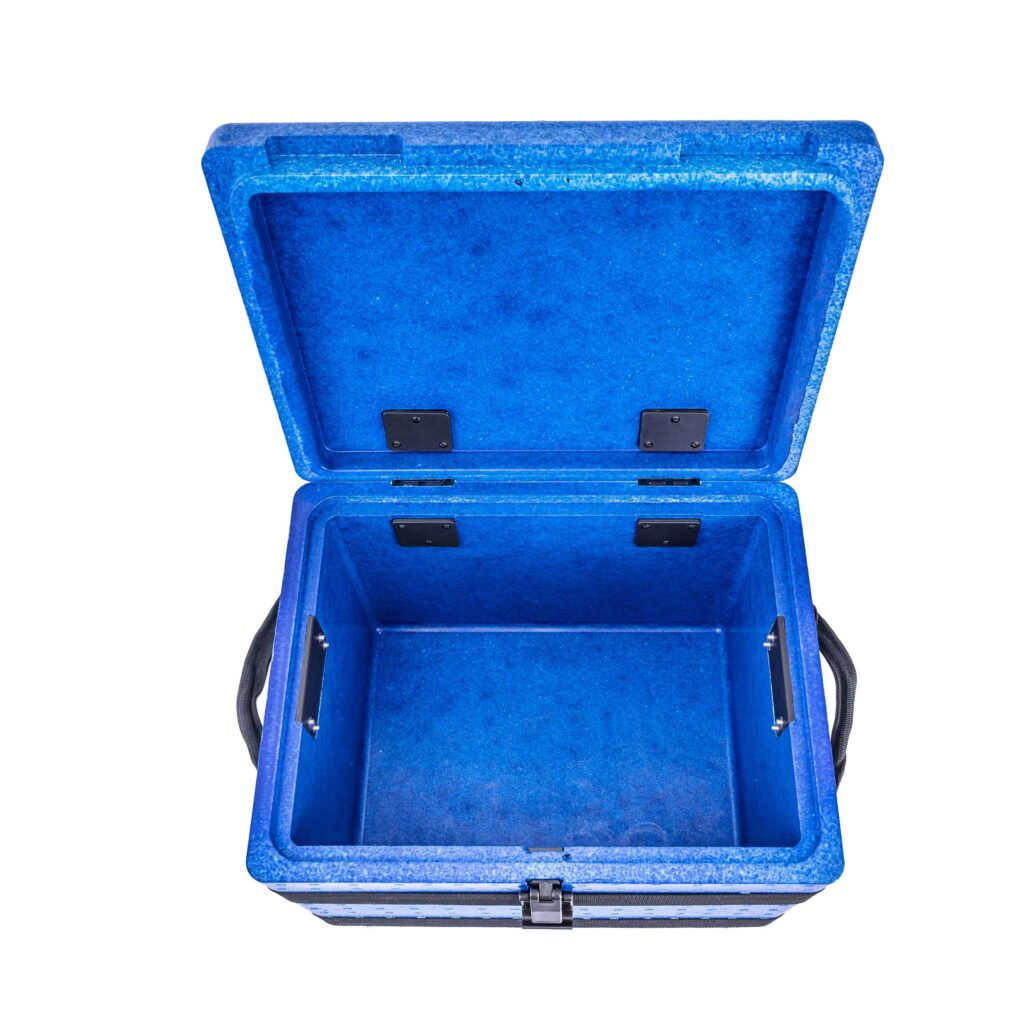
The strongest EPP container factory for aerospace specification begins with use conditions, not with a generic product photo. Define what the box must protect, how it will be packed, how it will be handled, and what evidence your team needs before approval.
Once those conditions are clear, the supplier discussion becomes more productive: dimensions, density, dividers, lids, cleaning, carton protection, documentation, and price can be compared against the same operating reality.
About Tempk
Tempk provides cold-chain packaging solutions that include EPP insulated boxes, cold shipping boxes, gel packs, insulated liners, thermal bags, and related materials. For EPP container sourcing, Tempk can help turn a broad requirement into a practical shortlist based on payload, route, temperature expectation, customization, and bulk purchasing needs. The best next step is to share the conditions of use so the packaging discussion starts with evidence and fit.
Send Tempk your route, payload, temperature expectation, and customization needs to build a practical EPP container factory for aerospace shortlist.