How to Choose an EPP cooler box for sale for Real Cold-Chain Work
The best way to choose an EPP cooler box for sale is to start with the shipment, not the box. Your product temperature range, payload shape, route length, handover points, cleaning method, and return loop all change what a suitable EPP container looks like. This optimized guide combines buyer decision logic, technical caution, and practical operations advice so you can shortlist options without relying on unsupported claims.
Buyer answer: shortlist the product by fit, not by label. A good EPP cooler box for sale should match the payload, route, handover process, supplier documentation, and scaling plan. Everything else is secondary.
Use-Case Fit Comes Before Product Name
An EPP cooler box for sale may be sold as insulated, durable, compact, stackable, moisture-resistant, or eco-friendly. Those words are helpful only after you define the use case. In shortlisting cooler boxes available for commercial food, grocery, and temperature-sensitive delivery, the correct container must fit the product, route, workers, cleaning process, and return model. A box that is excellent for one route may be awkward for another.
Start with the payload: fresh food, chilled products, packaged seafood, dairy, prepared meals, and coolant packs. Then describe the route: storage before shipment, packing speed, transport mode, ambient exposure, handover points, and receiving inspection. Finally, define what the box must do. Does it need to cushion impact, slow warming, resist condensation, stack under load, show a brand mark, or return through a controlled loop? This sequence prevents overbuying and under-specifying at the same time.
For temperature-sensitive goods, remember that EPP provides passive insulation. The box supports temperature management but does not create a verified temperature range by itself. Coolants, preconditioning, pack-out design, monitoring, and route testing remain part of the complete decision.
The Four Checks That Matter Most Before Ordering
First, check internal fit. The product, coolant, dividers, liners, and any monitor must fit without forcing the lid closed. Second, check closure quality. The lid should seat consistently after real packing, not only when the box is empty. Third, check handling durability. Corners, handles, rims, and stacking points should survive the way your staff will actually use the container.
Fourth, check documentation. If a supplier claims hold time, impact performance, food-contact suitability, or special material properties, ask what evidence supports the claim and whether it applies to your configuration. Unsupported numbers should be treated as marketing until reviewed. If your route is regulated or high value, involve quality, logistics, and procurement together.
These four checks are simple, but they filter out many poor choices. They also make supplier conversations more efficient because you are discussing real constraints rather than asking for a generic best box.
Feature-to-Decision Guide
| Feature | Useful decision meaning | What not to assume |
|---|---|---|
| Closed-cell EPP structure | Can support moisture resistance and cushioning | It does not automatically prove sanitation or hold time |
| Reusable design | Can reduce single-use packaging in managed loops | Reuse value disappears without return control |
| Insulated wall and lid | Slows temperature change when pack-out is correct | It is not active refrigeration |
| Stackable geometry | Improves van and warehouse organization | Stackability must be checked with loaded boxes |
| Custom options | May improve fit, branding, and workflow | Customization should not replace sample testing |
The table below translates common product features into practical buying decisions. It also shows what should not be assumed from the feature name alone.
Feature names are helpful labels, not final proof. The buyer still has to connect each feature to the route, product, and quality expectation. This is especially important before wholesale or custom orders.
When an EPP Box Is a Strong Choice
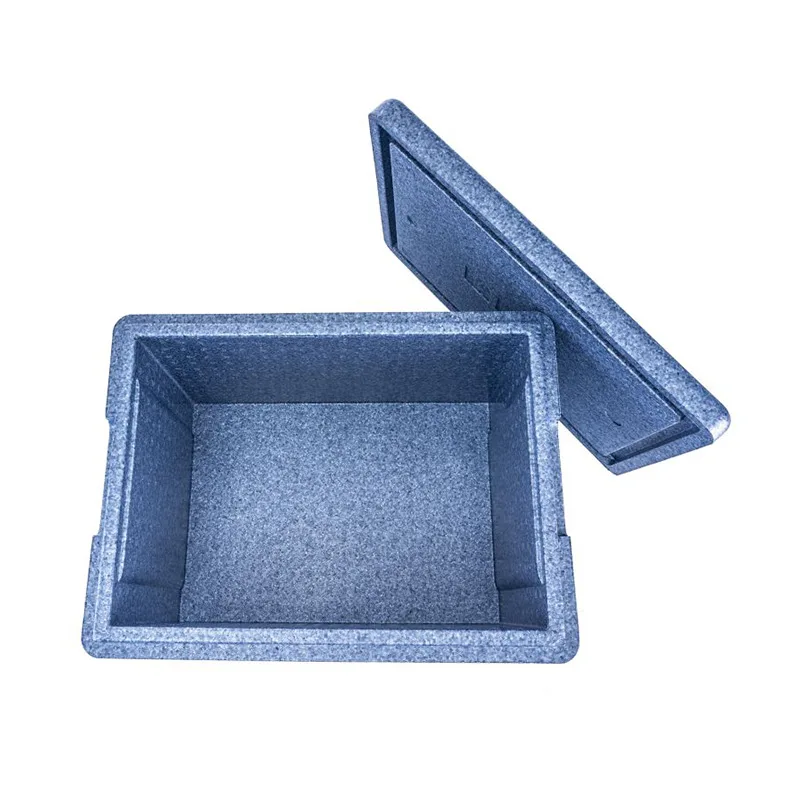
An EPP box is often a strong choice when a business needs a reusable insulated container that can handle repeated touches. This includes store-to-door delivery, grocery staging, regional food distribution, seafood handling, compact medical logistics, and custom returnable packaging programs. The material's resilience and low weight help when staff carry, stack, and clean boxes every day.
The box is also useful when the product needs some protection from impact and temperature change at the same time. For example, fresh food, chilled products, packaged seafood, dairy, prepared meals, and coolant packs may need a more structured container than a soft bag and a more reusable option than a fragile disposable foam shipper. EPP can bridge that gap when the size, lid, and pack-out are well matched.
Another strong-fit situation is a program with predictable routes. If route time, payload, ambient exposure, and handover are relatively consistent, it is easier to standardize the pack-out and train workers. The less predictable the route, the more testing and monitoring may be needed before scaling.
When the Box Alone Is Not Enough
An EPP cooler box for sale is not enough when the shipment requires a proven temperature range without pack-out testing. It is not enough when the product is highly temperature-sensitive and no coolant plan, monitor placement, or route qualification exists. It is also not enough when cleaning rules, return tracking, and retirement criteria are missing from a reuse program.
Food operators should check local food-safety rules and product handling requirements. Healthcare and pharmaceutical buyers should check product labels, quality procedures, carrier requirements, and relevant distribution expectations. In many cases, the EPP box may be suitable as an insulated component, but the complete system must still be reviewed.
This does not reduce the value of EPP. It makes the value more honest. The box protects better when it is part of a controlled workflow rather than expected to solve every cold-chain risk alone.
Sample-to-Production Review
Before scaling, run a sample review that resembles daily work. Pack actual goods, use the intended coolant, close the lid at normal speed, stack the boxes, move them through the route, clean them, and inspect them after return. Record practical observations: lid fit, product movement, condensation, carrying comfort, surface marks, and time required for cleaning.
For wholesale, custom, or export orders, compare the approved sample with production units. Check dimensions, color, logo placement, wall feel, lid engagement, carton packaging, and any accessories. If a change is made after sample approval, document it. Sample-to-production consistency is often more important than a beautiful first sample.
When performance matters, ask for the assumptions behind any test data. The same box may perform differently with another payload, coolant mass, route, or ambient profile. A careful buyer uses supplier data as a starting point, not as a substitute for internal verification.
Helpful decision tools
Check the details before you choose packaging
These quick tools can help you compare route risk, sizing needs, coolant choices, and packaging details before you request a quote.
Route Risk Checker
Review lane conditions before selecting packaging for real operating requirements.
Check route riskInsulation Material Reference
Compare insulation material choices for different cold chain packaging needs.
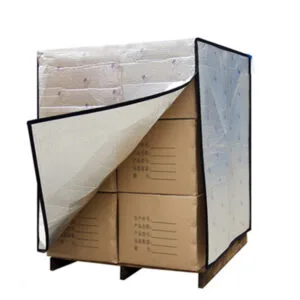
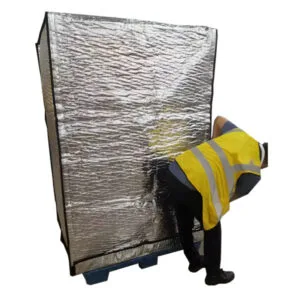
Compare materialsBox Liner & Pallet Cover Sizing
Check box liner and pallet cover sizing logic for insulated packaging projects.
Estimate sizingPractical Example
A buyer planning shortlisting cooler boxes available for commercial food, grocery, and temperature-sensitive delivery may begin with one compact box because it looks efficient. After testing, the team may discover that coolant and payload compete for the same space. Workers close the lid with pressure, product trays shift, and the lid seal is not consistent. The better solution may be a slightly taller box, a different internal divider, or two box sizes for different order families.
This kind of result is normal. A practical pilot should reveal trade-offs before a bulk order is placed. The aim is not to find a perfect box on the first attempt; it is to create a packaging setup that staff can repeat reliably under real operating pressure.
FAQ
What is the first thing to check before buying an EPP cooler box for sale?
Start with internal fit after the full pack-out is included. Product, coolant, liners, dividers, and monitoring devices all need space. If the lid only closes when staff force it, the box is not correctly sized for the route.
How should I treat supplier performance claims?
Ask for the conditions behind the claim. Performance depends on payload, ambient exposure, coolant, preconditioning, and test criteria. A claim can be useful, but it should not be treated as universal proof unless the conditions match your use case.
When is a custom EPP box worth considering?
Custom design is worth considering when standard boxes create repeated operational problems, such as poor fit, inefficient stacking, difficult cleaning, or branding requirements. Start with route and payload constraints before deciding on custom tooling or molded features.
What makes an EPP box suitable for bulk purchasing?
Bulk purchasing should follow sample approval, production consistency review, packaging checks, and clear acceptance criteria. The box should fit the route, not just the budget. Confirm dimensions, accessories, carton packaging, and replacement rules before scaling.
Conclusion
An EPP cooler box for sale can be a strong choice when the buyer treats it as a practical cold-chain component rather than a magic container. The most important points are straightforward: define the route, confirm the payload and coolant layout, test the lid and stacking under real handling, plan cleaning and return, and verify any performance claims before scaling. For shortlisting cooler boxes available for commercial food, grocery, and temperature-sensitive delivery, these checks reduce the risk of buying a box that looks right but does not fit daily operations.
The final decision should balance product protection, worker usability, documentation needs, and total operating cost. A well-chosen EPP box makes the workflow easier to repeat. A poorly chosen one creates exceptions that staff must solve every day.
About Tempk
Tempk is a cold-chain packaging supplier focused on practical temperature-control packaging for food, medicine, logistics, and delivery applications. Our product range includes gel ice packs, dry ice packs, insulated thermal bags, EPP cold shipping boxes, insulated box liners, pallet covers, and related cold-chain packaging materials. For EPP box projects, Tempk can help buyers think through product fit, payload layout, coolant compatibility, handling conditions, and custom or reusable packaging requirements without turning a material choice into an unsupported performance promise. The goal is to help buyers move from a product keyword to a packaging choice that can be reviewed, tested, and repeated.
Discuss your route, payload family, and order volume with Tempk before selecting an EPP cooler box for sale.
Another practical point is worker behavior. An EPP cooler box for sale is handled by people under time pressure. If the box is awkward to open, difficult to close, or confusing to identify, workers may bypass the intended process. Good packaging design reduces the number of decisions staff must make during packing and handoff.
Route mapping should include the quiet moments, not only the vehicle journey. Packed boxes may wait near a dock, sit in a staging rack, or remain open while workers check orders. These exposure periods can matter for shortlisting cooler boxes available for commercial food, grocery, and temperature-sensitive delivery, especially when the product has already left controlled storage.
For buyers, an EPP box specification should be linked to an SOP. The SOP should explain how boxes are conditioned if needed, how products and coolant are arranged, how returned boxes are cleaned, and how damaged units are removed. Without that operational layer, product performance will vary by shift and location.
Quality teams often ask different questions than procurement teams. Procurement may focus on price and lead time, while quality wants proof, consistency, traceability, and change control. Bringing both viewpoints into the sample stage prevents late-stage disagreement after the box has already been selected.
If the box will carry fresh food, chilled products, packaged seafood, dairy, prepared meals, and coolant packs, check whether odors, condensation, or residue can remain after use. A reusable container should not only survive the route; it should return to a condition that staff are comfortable using again. The cleaning process should be realistic for the number of boxes in circulation.
Inventory planning matters as well. Reusable boxes move more slowly than disposable packaging because some units are always in use, in return transit, in cleaning, or awaiting inspection. The purchase quantity should reflect that cycle, not just the number of daily shipments. Buyers should model the circulation before committing to a large program.
Labels and traceability deserve attention. A smooth label area, molded ID zone, or color-coded system can help workers identify boxes quickly. For returnable programs, simple identification can reduce loss and make it easier to track cleaning, maintenance, and retirement. These features should be planned before tooling or bulk ordering when possible.
Do not overlook storage. A box that performs well on the road may be inconvenient if it consumes too much warehouse space or does not stack safely when empty. Consider nesting, stacking, pallet fit, and shelf height alongside thermal and cushioning needs. Operational fit begins before the shipment leaves the building.
The strongest buying process is iterative. Select likely sizes, request samples, test them with real pack-outs, collect worker feedback, adjust the specification, and then scale. This approach takes more effort than ordering from a listing, but it reduces the chance of buying a large quantity of boxes that do not fit daily use.