EPP insulation box small custom: A Controlled Sample-to-Production Path
Custom development fails quietly when every team approves a different object. Operations approves a payload mock-up, engineering approves a drawing, procurement buys a mold, and quality receives a box whose tested packout is no longer current. An EPP insulation box small custom project needs one connected release path. Each gate should name the revision, evidence, owner, and unresolved risk before money or claims move forward. The path below begins with real payload and route limits, screens existing formats, tests mold feasibility, separates sample types, and ends with production and change controls that preserve what was actually approved.
Gate Zero: Define What the EPP insulation box small custom Project Must Change
Do not begin with dimensions. Begin with the failure or constraint that the new box is expected to change. The current format may waste vehicle shelf space, allow a coolant pack to move, require an awkward lift, fail to protect a fragile secondary carton, or create excessive empty-return volume. It may also work adequately, with the real problem caused by inconsistent packing or the wrong insert. Naming the problem prevents a custom mold from becoming an expensive substitute for process discipline.
Write a short project charter with four elements:
Current condition: the container, packout, route, and work method in use now
Required improvement: a measurable fit, handling, organization, cleaning, return, or protection outcome
Non-negotiable limits: payload, product conditions, external envelope, route, equipment, regulatory boundary, and evidence requirement
Decision deadline: the point at which the product, coolant, artwork, or route must be stable enough for design freeze
Separate essential functions from preferences. A fixed rack opening is a constraint. A protected coolant position may be a function. A molded logo is usually a preference unless identification cannot be achieved another way. “As small as possible” is not an acceptance criterion. Replace it with the maximum exterior envelope and minimum usable payload space after all packout components are present.
The thermal claim also needs a boundary at Gate Zero. EPP is a passive insulating material; it does not refrigerate the payload. If the program needs a defined product-temperature result, the project scope must include coolant, conditioning, payload, arrangement, closure, exposure, handling, sensor plan, and acceptance criteria. If the EPP box is only a protective enclosure used inside a temperature-controlled process, describe that narrower role. The level of proof should follow the intended claim.
At this stage, the team should also decide whether direct contact occurs. Sealed food packages, unwrapped food, diagnostic material, secondary cartons, and service components create different documentation and cleaning questions. The design brief must tell the supplier which surface contacts what, under which temperatures and duration, and in which market. A generic “food use” or “medical use” label is not enough.
Gate One: Issue a Payload-and-Route Data Packet
A supplier cannot solve missing inputs with better molding expertise. The request package should allow a converter to reconstruct the intended load and operating environment without guessing. Use controlled drawings or physical dummies for the payload and coolant, including the minimum and maximum load. Flexible packs should be represented in their conditioned or filled state, not as flat artwork.
Build the internal arrangement in layers. Start with the base protection or coolant, place the payload, add side or top components, include any divider or restraint, and check the volume occupied by the lid. Capture the actual three-dimensional clearance. Nominal cavity liters can support initial screening, but a capacity label does not show rounded corners, tapers, ribs, handles, closure tongues, or the way a cold pack changes shape.
The data packet should include:
Payload dimensions, mass range, packaging condition, orientation, and fragility limits
Coolant type, physical envelope, conditioning method, permitted contact, and intended placement
Minimum and maximum approved packout diagrams
Product starting conditions and any required temperature limits
Route sequence, staging, ambient challenge, openings, handovers, and receipt action
Maximum external envelope plus rack, vehicle, conveyor, door, and stacking interfaces
Loaded handling, gloves, carry distance, and opening method
Cleaning, sanitation, drying, storage, contamination, and return conditions
Identification, label, scanning, color, and branding needs
Documents, samples, test reports, and regulatory review needed for release
Use a cross-functional packet owner. Operations knows the bench and vehicle; product or quality owns the payload requirements; thermal specialists define a suitable performance study; engineering controls the geometry; procurement controls commercial and tooling terms. When those functions send separate files, revision errors are likely. One index should show which input is current and who approved it.
This gate ends with a load demonstration. The team should be able to assemble the proposed spatial stack using dummies and explain where every item goes. If the coolant or payload specification is still changing, freeze only what is stable and postpone irreversible tooling features. A modular insert can preserve flexibility; a molded pocket cannot be moved without a tool or part change.
Gate Two: Screen Standard Formats Before Authorizing a Mold
Custom should win a comparison, not receive automatic preference. Ask the supplier to screen available EPP formats against the same data packet. A standard body may fit the route with a removable insert, spacer, strap, label, or revised packing instruction. That route can be especially strong when demand, artwork, coolant, or payload assortment may change.
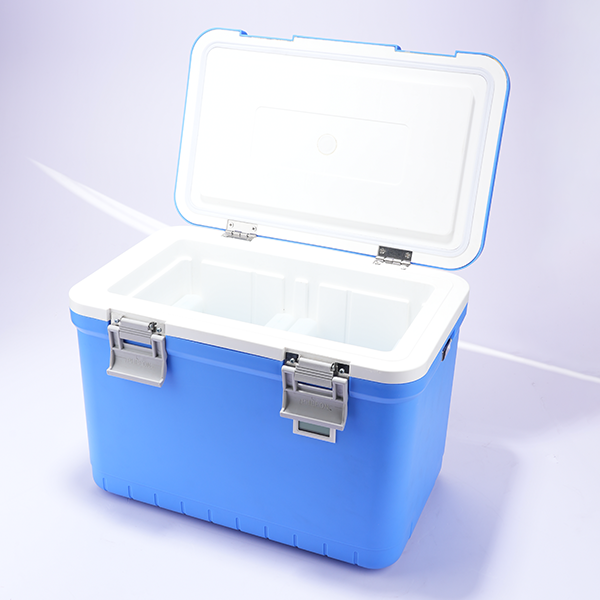
Evaluate candidates using functional fit rather than catalog names. “Small cooler,” “food box,” or “medical box” does not establish internal geometry, direct-contact status, or qualified performance. Request the specific body and lid drawing, current availability, material information, and a sample if appropriate. Tempk lists a custom EPP food-delivery family from 5 to 150 liters, but that range describes one catalog family only. It does not define small, show usable payload capacity, or supply a temperature result.
A standard format should move forward when its compromises are understood and acceptable. It may leave some void space but still give better assortment flexibility. It may have a larger exterior but fit all operational interfaces and avoid a new tool. It may require an insert that adds cleaning work; that trade-off should be observed in a trial rather than dismissed on paper.
Helpful decision tools
Check the details before you choose packaging
These quick tools can help you compare route risk, sizing needs, coolant choices, and packaging details before you request a quote.
Packaging Selector
Compare insulated packaging options by product, route, and temperature need.
Find packagingCoolant & PCM Reference
Compare coolant and PCM options when a route needs added temperature support.
Compare optionsCompliance Checklist Generator
Build a practical checklist for packaging review, shipping, and documentation.
Build checklistAuthorize custom development when the remaining gap is stable, functional, and measurable. Examples include an unavoidable equipment envelope, a fixed unusual payload, a closure interaction, or an internal layout that prevents a recurring pack error. The business case should state how the improvement will be measured and what happens if the payload changes.
Use the following gate record to keep the decision chain intact.
| Gate | Required deliverable | Primary approval question | Stop condition |
|---|---|---|---|
| Project charter | Current problem, target outcome, boundaries | Is a container change solving the right problem? | Outcome is vague or process causes have not been checked |
| Data packet | Controlled payload, coolant, route, equipment, cleaning, evidence inputs | Can another team reproduce the intended use? | Key payload or route input is missing or unstable |
| Standard-format screen | Fit matrix, sample observations, remaining gaps | Can available tooling meet the stable requirements? | Standard options were rejected by appearance or label alone |
| Custom feasibility | Controlled concept, risks, tool and process feedback | Can the part be molded and inspected without losing function? | Closure, filling, release, wall, or ownership questions remain open |
| Production-intent pilot | Units, reports, pack-line and route evidence | Does variation remain acceptable in real work? | Only a one-off sample has passed or failure rules are undefined |
| Production release | Approved specification, control plan, work instructions, change agreement | Can supplier and operator reproduce the approved result? | Part, packout, inspection, or change responsibilities are unclear |
The table is intentionally decision-based. A gate can send the project backward when new evidence changes an input. That is less costly than allowing an unresolved problem to pass into tooling or production inventory.
Gate Three: Convert the Winning Concept Into a Moldable Specification
Once custom geometry is justified, the converter should lead a formal feasibility review that treats the part and its mold as one development problem. ARPRO's official production-support material groups the relevant questions around part geometry and walls, tolerances and undercuts, bead filling and venting, ejection and movable tool features, and the management of steaming, shrinkage, and warpage. That published checklist does not set universal dimensions or rules. It provides prompts for a project-specific discussion about the proposed material, machine, tool, and part.
Focus first on the interfaces that carry function. The body-to-lid relationship affects closure, upper clearance, and heat-transfer paths. Internal seats control inserts or coolant. Exterior bosses or feet influence stacking. Hand wells affect lifting and may intrude into the cavity. Label recesses must remain readable and cleanable. A geometric change in any of these locations can alter both tooling and the operating trial.
The converter may recommend simplifying a deep rib, removing an undercut, changing a wall transition, moving artwork, or adjusting the closure. Record the reason and route the change back to the requirement owner. “Supplier recommendation accepted” is not enough if the change reduces payload space or invalidates a previously planned thermal arrangement.
Set tolerances by function. Tight control may be justified where the body and lid engage, where the box enters fixed equipment, or where the minimum payload/coolant stack must fit. Broad molded surfaces may not need the same limits. Agree on datums, measurement conditions, fixture pressure, gauges, and the difference between a visual reference and a measurable requirement. EPP surfaces and compliance can make an undefined measurement method a source of disputes.
Tooling commercial terms belong in the same gate. Confirm who owns the controlled design, who owns or may use the tool, where it will be stored, how it is identified, what maintenance and repairs are included, who approves a modification, and what happens if production moves. Ask which samples and corrections are included in the quoted development route. Do not infer minimum order, lead time, tool life, or ownership from industry habits; obtain current written terms for the project.
Brand and identification choices should survive future change. A molded mark can remain legible through handling but is embedded in tooling. A label can change more easily but must withstand condensation, abrasion, cleaning, cold application, and scanning. Color can separate fleets or routes, yet the reference, material documentation, inspection, and retired-unit sorting need consideration. Choose the least irreversible method that still satisfies the operational purpose.
Design freeze occurs only when the controlled model, drawing, material proposal, critical characteristics, artwork, sample route, and open-risk register agree. Freeze does not mean that no change is possible. It means every later change receives a revision, reason, impact assessment, and approval.
Gate Four: Make Every Sample Answer a Named Question
“Approved sample” is dangerously imprecise. A machined or bonded prototype may accurately answer cavity, rack, and grip questions without representing series-molded fusion, surface, shrinkage, or closure variation. A first molded shot can reveal tool behavior but may not represent a stable production process. A pilot batch can expose variation and operating workload, while a controlled thermal study answers only the configuration and conditions it actually evaluates.
Label samples by purpose:
Space model: payload, coolant, insert, and lid-clearance evaluation
Ergonomic model: loaded lift, grip, opening, handover, and bench trial
Tool sample: initial molded geometry, surface, fusion, release, and dimensional review
Production-intent unit: agreed material, tool revision, process, marking, and inspection state
Packout test unit: exact box and components used in a documented performance protocol
Each report should list sample identity, drawing and tool revision, material description, manufacturing route, deviations, tests performed, results, photographs or measurements where useful, disposition, and retest requirement. This simple discipline prevents a space model from becoming the undocumented reference for a production claim.
Consider a hypothetical service that moves sealed chilled meal components among local kitchens. A standard box fails the vehicle-height limit, so a lower custom body is developed. The first space model fits the trays and coolant, but a tool review adds a deeper lid engagement. The first molded sample now touches the top coolant pack. Rather than forcing closure, the team reduces an unnecessary tray spacer and revises the coolant locator. A pilot then finds that operators install the locator backward, so the design receives an asymmetric key and a clear mark. The final thermal study and work instruction use that keyed revision. This example is hypothetical, but it shows why the sample trail must follow every change.
Operational pilots should include boundary conditions, not only the easiest load. Test the maximum payload, minimum payload, different approved assortments, conditioned coolant at its most space-demanding state, wet or gloved handling where relevant, loaded stacking, label scanning, lid storage, cleaning, drying, and empty return. Observe workarounds. If a packer must compress the contents, rotate an item, strike the lid, borrow a spacer, or ignore a label, the design or instruction is not ready.
Thermal evidence remains separate from physical fit. A screening comparison can help select a concept, but a product-protection claim requires a defined passive system. The protocol should identify payload and starting condition, coolant and conditioning, arrangement, box and lid revisions, ambient profile, duration, sensor positions, handling events, acceptance limits, deviations, and approval. ISTA Standard 20 and 7E may be relevant to a specific insulated parcel shipper, but the method must fit the distribution model. A multi-drop route with lid openings may need those openings represented explicitly.
Gate Five: Release a Reproducible System, Then Control Change
Production release should bundle the molded part and operating system. The supplier needs the approved part specification, material and revision requirements, visual boundaries, critical dimensions, functional gauges, traceability, packaging, and nonconformance process. The operator needs the approved payload and coolant diagrams, conditioning method, closure instruction, label placement, cleaning, drying, inspection, quarantine, and retirement rules. Quality needs the evidence index and change-assessment process.
Inspect characteristics that connect to risk. These may include material identity, body and lid revision, closure function, external equipment fit, minimum cavity clearance, insert location, stack features, visual/fusion boundaries, and label readability. Agree on the sampling plan using the project risk and process evidence; there is no universal inspection frequency suitable for every small EPP box.
Control body and lid compatibility. If multiple tools, cavities, colors, or revisions exist, decide whether every combination is acceptable. If not, mark and segregate them. If interchangeability is required, demonstrate it and maintain the evidence. A fleet can develop closure variation when replacement lids enter service, even if original matched pairs worked well.
The supplier-change agreement should identify events that require notice. Depending on the project, this can include EPP grade or bead source, molded-density target, color formulation, recycled-content change, tool repair or modification, cavity, process window, production site, subcontractor, insert, label, inspection method, or packaging. The buyer's change board then assesses dimensional, operational, thermal, cleaning, regulatory, and sustainability impacts.
Field feedback closes the loop. Track the failures that matter: closure damage, distortion, contamination that cannot be removed, lost lids, unreadable identifiers, insert loss, stuck nests, handling complaints, route excursions, or packout deviations. Do not promise a number of reuse cycles without evidence from the actual program. Use observed condition and defined retirement rules. ISO 18603 reinforces that reusable packaging is evaluated with its associated reuse system, while ISO/TS 22984 provides cleaning and sanitation guidance for reusable transport items. Neither substitutes for a product-specific procedure.
Environmental and compliance statements should remain controlled documents too. BASF describes Neopolen EPP as recyclable, but actual recovery depends on collection, sorting, contamination, and available processing. Reuse benefits require a comparison that includes manufacturing, circulation, return, washing, loss, and end of life. In the European Union, the packaging and packaging waste regulation generally applies from August 12, 2026; exact obligations depend on the packaging and the organization's role. A custom EPP box is not automatically compliant or environmentally preferable.
When a change occurs, ask one disciplined question: which approved evidence relied on the changed element? A new label adhesive may require cleaning and scan checks but not a complete tool review. A revised lid geometry may affect fit, packing, thermal behavior, and interchangeability. A coolant substitution can change internal clearance, conditioning, and thermal performance even if the molded box is untouched. Record the rationale for the chosen reassessment scope.
Conclusion: Release Decisions, Not Assumptions
Moving from sample to production requires a visible chain: define the operating problem, issue a controlled payload-and-route packet, screen standard formats, justify any custom mold, review EPP feasibility, label every sample by purpose, pilot boundary conditions, and release both the part and the work process. Change control then keeps the evidence connected to what is supplied and packed. For an EPP insulation box small custom program, the strongest result is not maximum customization. It is a reproducible configuration whose fit, handling, cleaning, manufacturing, and thermal claims are each supported at the correct level.
About Tempk
Tempk's official product range includes EPP cooler boxes and coolant components for food, grocery, healthcare, and route-distribution applications. A listed custom food-delivery EPP family covers 5 to 150 liters, which describes that family rather than a universal small-box capacity or performance range. We can review payload, coolant, route, and exterior constraints against available formats and discuss project-specific customization or samples. Current dimensions, tooling feasibility, documents, cleaning compatibility, and complete-packout performance should be confirmed before production approval.
Send Tempk one controlled brief for your EPP insulation box small custom project, including the payload, coolant, route, equipment limit, and required proof. Ask for a standard-format screen and feasibility response before authorizing tooling.