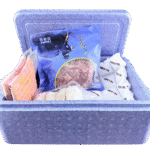
FedEx dry ice packaging must be assessed as a complete package: product containment, insulation, dry ice, closure and outer protection. Use the current requirements for the selected service and actual contents. A foam liner or a carrier logo alone does not establish that the package is accepted.
Check construction against the carrier instructions
FedEx US: shipping with dry ice gives US dry-ice packing guidance, including gas release and restrictions on certain packaging. It also describes specific exceptions. Read those conditions rather than turning an exception into permission for every foam container or FedEx-branded box.
Confirm the exact outer package and service before ordering materials. Carrier acceptance and a successful temperature study answer different questions; retain evidence for both.
Inspect the assembled package
| Component | What to verify |
|---|---|
| Primary container | Protect contents against the actual leakage and damage risks. |
| Insulation | Use the model and arrangement supported for the shipment. |
| Dry ice location | Protect the product and preserve the assessed placement. |
| Closure | Maintain required gas release without defeating physical protection. |
| Outer package | Match carrier conditions and intended handling. |
| Labeling surface | Keep required marks legible and correctly associated with the package. |
Do not seal solid CO₂ inside an airtight plastic bag or airtight container. Product leak containment and gas-release features must be designed together through an appropriate packaging method.
Avoid unassessed substitutions
A different lid, liner, tape pattern or carton can change gas release, fit and thermal behavior. Record the accepted assembly and investigate proposed substitutions before routine packing. Do not assume a sturdier-looking carton preserves the same ventilation method.
- Check usable space with product and coolant installed.
- Avoid forcing the lid over an overfilled arrangement.
- Protect the insulation from crushing or puncture.
- Keep labels accessible after assembly.
- Retain the packing instruction and exact component identity.
Distinguish the contents and the coolant
Dry ice has its own applicable transport requirements. The contents may introduce other classifications or documentation needs. An exception described for a dry-ice-only dangerous-goods shipment must not be extended to an infectious substance or another dangerous good.
Helpful decision tools
Check the details before you choose packaging
These quick tools can help you compare route risk, sizing needs, coolant choices, and packaging details before you request a quote.
Ice Pack Calculator
Estimate gel ice pack quantity for chilled shipments and practical route planning.
Estimate ice packsInsulation Material Reference
Compare insulation material choices for different cold chain packaging needs.
Compare materialsInsulation Material Drop Resistance
Review drop resistance and handling factors before choosing insulation materials.
Check resistance49 CFR 173.217: carbon dioxide, solid addresses applicable US dry-ice transport requirements. Confirm current carrier conditions and competent classification for the actual shipment. This guide does not replace dangerous-goods training or a service-specific acceptance decision.
Do not drill improvised holes or copy a universal vent size. Use packaging whose gas-release design and complete construction are suitable for the intended shipment.
Frequently asked questions
Can every EPS cooler travel without an outer carton?
No. Verify the applicable carrier requirements and specific exceptions.
Does a FedEx-branded box automatically permit dry ice?
No. Check the relevant restrictions and exceptions.
Does a compliant label qualify thermal performance?
No. Evaluate the actual packout and exposure separately.
Complete the booking checks
Use the FedEx dry ice booking workflow for acceptance and dispatch arrangements, and the air cargo marking guide for marking distinctions.