Milk transport packaging must match the product’s processing, primary package and storage instructions. Refrigerated milk and an unopened commercially sterile shelf-stable product do not have identical distribution requirements. Start with the actual label and specification rather than treating every milk carton as the same cold-chain load.
Identify processing and package status
Record the milk product, processing description, primary container, seal condition and opening status. Confirm required storage before and after opening. Do not assume an “ultra-pasteurized” label by itself means the product may be distributed without refrigeration.
FDA: NCIMS milk model documents provides FDA’s current and earlier milk model documents. The FDA:2025 Pasteurized Milk Ordinance distinguishes commercially sterile products in unopened hermetically sealed containers from ultra-pasteurized products with extended refrigerated shelf life. Confirm applicable local adoption and the exact product requirements.
Separate primary packaging from transport protection
| Packaging role | What to assess |
|---|---|
| Primary container | Permitted product contact and maintained seal integrity. |
| Secondary protection | Leaks and damage under the intended handling. |
| Load restraint | Cartons or bottles do not shift into damaging contact. |
| Thermal system | Product conditions through the relevant exposure. |
| Receiving | Checks and suitable storage for the actual product. |
| Identity | Lot and order information remain linked to the load. |
An insulated outer package does not compensate for a failed primary seal. Likewise, a suitable carton does not establish that refrigerated product will stay acceptable through an unassessed route.
Test the intended transport configuration
- Use representative container sizes and load quantities.
- Start in the specified product condition.
- Include dispatch and receiving waits.
- Assess handling that can damage closures or carton edges.
- Monitor justified product locations when temperature control is required.
- Record seal condition, leakage and temperature evidence separately.
Avoid unwanted freezing where it conflicts with the product specification. Dry ice is not the default coolant for liquid milk merely because it is colder. Select coolant and separation using evidence for the actual product and containers.
Manage receiving and uncertain loads
Specify who checks identity, container condition and required exposure records. Define how damaged or uncertain product is controlled and assessed. Do not rely solely on touch, smell or an intact outer box to establish acceptance.
Helpful decision tools
Check the details before you choose packaging
These quick tools can help you compare route risk, sizing needs, coolant choices, and packaging details before you request a quote.
Box Liner & Pallet Cover Sizing
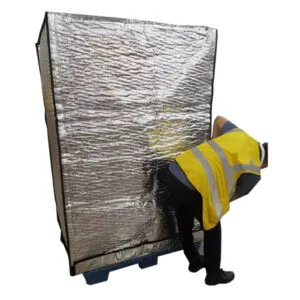
Check box liner and pallet cover sizing logic for insulated packaging projects.
Estimate sizingRoute Risk Checker
Review lane conditions before selecting packaging for real operating requirements.
Check route riskCompliance Checklist Generator
Build a practical checklist for packaging review, shipping, and documentation.
Build checklistFor US food transport operations within its coverage, consult FDA: sanitary transportation of food. Milk processing and product requirements may add other obligations; identify them for the actual business and location.
Environmental comparisons also need a defined basis. Evaluate actual materials, losses, recovery routes and reuse operation before claiming that one package is universally sustainable. Do not attach an invented dairy-waste percentage to a packaging proposal.
Frequently asked questions
Is every UHT or ultra-pasteurized product shelf-stable?
Do not assume so from a broad processing term. Check the exact process, package and label instructions.
Can an opened shelf-stable carton use the same transport rules as an unopened one?
Opening changes the situation. Follow the product’s instructions and applicable controls.
Does better insulation make leaking milk acceptable?
No. Primary-package integrity and product controls are separate requirements.
Prepare a delivery plan for the actual milk
Use the receiving and failed-delivery guide for handoff planning, adapting it to the milk product’s own conditions.