How to Choose a Foldable EPP Storage Container
A strong purchasing decision treats the box as a small operating system: material, closure, payload, temperature plan, reuse flow, and documentation. A foldable EPP storage container should be evaluated by how it protects temperature-sensitive or damage-sensitive goods that need reusable handling, insulation support, and protective packaging, how easily teams can use it, and what evidence supports the claims made on a supplier page. For cold-chain buyers, warehouse operators, logistics managers, and B2B procurement teams, the useful question is not whether EPP sounds strong or sustainable. The useful question is whether the box fits the payload, route, handover process, cleaning routine, and purchasing plan without creating hidden work.
Quick answer: A foldable EPP storage container is worth considering when you need a light, protective, reusable packaging format for temperature-sensitive or damage-sensitive goods that need reusable handling, insulation support, and protective packaging. Before ordering, confirm usable internal space, payload fit, closure reliability, cleaning expectations, and whether stated performance is backed by relevant test or supplier documentation.
A clear definition for buyers
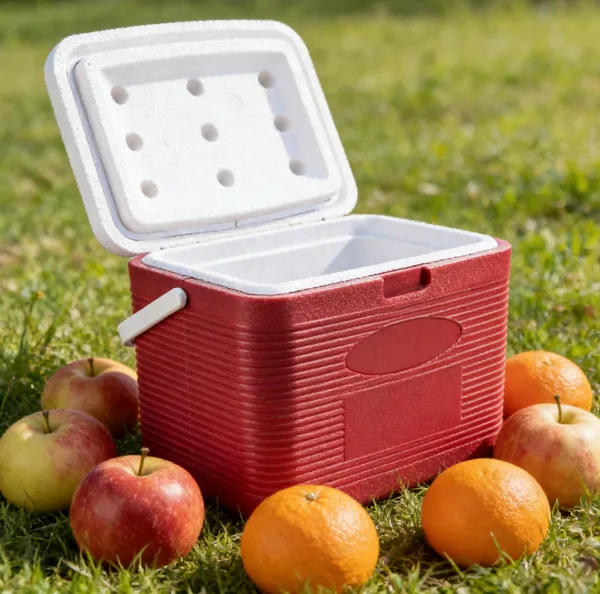
EPP means expanded polypropylene, a molded polypropylene foam used when buyers want low weight, impact absorption, shape recovery, and insulation support. Those properties make the material relevant to temperature-sensitive or damage-sensitive goods that need reusable handling, insulation support, and protective packaging, but material identity alone does not prove that a container is right for a shipment. Shape, wall structure, lid contact, hinges, drain or cleaning details, and payload fit all affect what the box can do in service.
In a general cold-chain or protective packaging program, the box should be matched to the product's sensitivity, the route's handling pattern, and the buyer's ability to inspect and reuse it. A practical purchase is usually based on a sample trial, a documented specification, and a clear decision about what the box is responsible for and what other parts of the packout must do.
A foldable format can improve storage and return logistics, but hinges, locking points, folded hygiene, and setup speed need closer review.
Fit the box to the route
A route review should describe where the storage container is packed, how long it waits before dispatch, whether it is exposed during loading, how many handovers occur, and who checks the box at receipt. If temperature control matters, the required range should come from the product owner or quality team, and any coolant, liner, data logger, or qualification step should be specified separately. A box can support the system, but it does not replace a validated packout.
Handling is where many packaging decisions succeed or fail. A box that looks strong in a sample room may be awkward when staff load it under time pressure, stack it in a van, or clean it between shifts. Grip areas, lid security, corner protection, label zones, and stacking behavior should be reviewed with the people who will touch the container every day.
The main limit is that the storage container is not a universal answer. It cannot automatically prove food safety, pharmaceutical compliance, route qualification, or temperature stability. Those outcomes depend on product requirements, distribution lane, cleaning process, packaging accessories, monitoring method, and the documents that show how the system was tested.
What to verify before placing a bulk order
For procurement, the safest specification separates confirmed facts from assumptions. Ask for internal and external dimensions, usable payload space, closure details, material description, cleaning guidance, sample approval process, and the evidence behind any stated performance. If a supplier cannot explain the test condition behind a claim, treat that claim as a starting point for discussion rather than a purchasing guarantee.
A useful supplier conversation is specific. Instead of asking whether the box is durable, ask how durability is checked, what happens if the lid deforms, whether production units match the sample, and what documentation is available for material, dimensions, and performance claims. This gives the buyer a record that can be reviewed by operations and quality teams later.
In a general cold-chain or protective packaging program, the box should be matched to the product's sensitivity, the route's handling pattern, and the buyer's ability to inspect and reuse it. A practical purchase is usually based on a sample trial, a documented specification, and a clear decision about what the box is responsible for and what other parts of the packout must do.
Decision table for specification review
For procurement, the safest specification separates confirmed facts from assumptions. Ask for internal and external dimensions, usable payload space, closure details, material description, cleaning guidance, sample approval process, and the evidence behind any stated performance. If a supplier cannot explain the test condition behind a claim, treat that claim as a starting point for discussion rather than a purchasing guarantee.
A route review should describe where the storage container is packed, how long it waits before dispatch, whether it is exposed during loading, how many handovers occur, and who checks the box at receipt. If temperature control matters, the required range should come from the product owner or quality team, and any coolant, liner, data logger, or qualification step should be specified separately. A box can support the system, but it does not replace a validated packout.
Handling is where many packaging decisions succeed or fail. A box that looks strong in a sample room may be awkward when staff load it under time pressure, stack it in a van, or clean it between shifts. Grip areas, lid security, corner protection, label zones, and stacking behavior should be reviewed with the people who will touch the container every day.
| Buyer question | What to check | Reason it matters |
|---|---|---|
| Will the payload actually fit? | Internal dimensions, usable space, dividers, coolant, and lid clearance. | A box that fits on paper may fail when real goods and accessories are packed. |
| Can staff handle it easily? | Grip points, lid security, stack behavior, folded size if relevant, and loaded weight. | Daily workflow determines whether the container remains practical. |
| Is the performance claim supported? | Datasheet, test report, packout condition, or supplier explanation. | Claims without conditions are hard to use in procurement or quality review. |
| Can it be reused cleanly? | Cleaning method, label removal, inspection routine, and storage after return. | Reuse depends on process control, not material alone. |
| What happens at end of life? | Local recycling route, contamination risk, take-back option, and material separation. | Recyclability only matters when recovery is possible in the buyer's system. |
The table is not a substitute for a supplier review. It is a practical way to turn vague packaging claims into questions that a buyer, quality manager, or logistics operator can verify before a purchase order is placed.
Operational risks to control
The main limit is that the storage container is not a universal answer. It cannot automatically prove food safety, pharmaceutical compliance, route qualification, or temperature stability. Those outcomes depend on product requirements, distribution lane, cleaning process, packaging accessories, monitoring method, and the documents that show how the system was tested.
Common errors include treating gross internal volume as usable payload space, accepting a hold-time claim without the test profile, ignoring staff handling, and assuming that a clean-looking surface is enough for repeated use. Another frequent mistake is buying a foldable or portable format without checking whether the closure stays secure after repeated setup and collapse.
Helpful decision tools
Check the details before you choose packaging
These quick tools can help you compare route risk, sizing needs, coolant choices, and packaging details before you request a quote.
Insulation Material Drop Resistance
Review drop resistance and handling factors before choosing insulation materials.
Check resistanceCompliance Checklist Generator
Build a practical checklist for packaging review, shipping, and documentation.
Build checklistRoute Risk Checker
Review lane conditions before selecting packaging for real operating requirements.
Check route riskA route review should describe where the storage container is packed, how long it waits before dispatch, whether it is exposed during loading, how many handovers occur, and who checks the box at receipt. If temperature control matters, the required range should come from the product owner or quality team, and any coolant, liner, data logger, or qualification step should be specified separately. A box can support the system, but it does not replace a validated packout.
When additional temperature control is needed
A route review should describe where the storage container is packed, how long it waits before dispatch, whether it is exposed during loading, how many handovers occur, and who checks the box at receipt. If temperature control matters, the required range should come from the product owner or quality team, and any coolant, liner, data logger, or qualification step should be specified separately. A box can support the system, but it does not replace a validated packout.
Handling is where many packaging decisions succeed or fail. A box that looks strong in a sample room may be awkward when staff load it under time pressure, stack it in a van, or clean it between shifts. Grip areas, lid security, corner protection, label zones, and stacking behavior should be reviewed with the people who will touch the container every day.
The main limit is that the storage container is not a universal answer. It cannot automatically prove food safety, pharmaceutical compliance, route qualification, or temperature stability. Those outcomes depend on product requirements, distribution lane, cleaning process, packaging accessories, monitoring method, and the documents that show how the system was tested.
Practical example
For example, a buyer may need a reusable insulated box for a repeated local delivery route. A sample looks suitable, but the real test is whether staff can pack it quickly, whether the payload leaves enough space for any coolant or divider, whether the lid stays closed after loading, and whether the box can be cleaned and returned without confusion.
From trial order to repeat use
For procurement, the safest specification separates confirmed facts from assumptions. Ask for internal and external dimensions, usable payload space, closure details, material description, cleaning guidance, sample approval process, and the evidence behind any stated performance. If a supplier cannot explain the test condition behind a claim, treat that claim as a starting point for discussion rather than a purchasing guarantee.
A route review should describe where the storage container is packed, how long it waits before dispatch, whether it is exposed during loading, how many handovers occur, and who checks the box at receipt. If temperature control matters, the required range should come from the product owner or quality team, and any coolant, liner, data logger, or qualification step should be specified separately. A box can support the system, but it does not replace a validated packout.
Handling is where many packaging decisions succeed or fail. A box that looks strong in a sample room may be awkward when staff load it under time pressure, stack it in a van, or clean it between shifts. Grip areas, lid security, corner protection, label zones, and stacking behavior should be reviewed with the people who will touch the container every day.
Another practical check is ownership. If the storage container is reusable, someone must own inspection, cleaning, return storage, and removal of damaged units. Without that ownership, even a strong container can become inconsistent because different teams make different decisions at different handover points.
FAQ
Is a foldable EPP storage container automatically temperature controlled?
No. It can provide insulation support, but temperature control depends on the full packout, the required product range, coolant or refrigerant choices, route exposure, closure fit, and any monitoring plan. Buyers should verify the full system instead of treating the EPP box as a standalone qualified shipper.
What should I ask a supplier before buying a foldable EPP storage container?
Ask for internal and external dimensions, usable payload space, material description, closure details, cleaning guidance, sample-to-production controls, and evidence behind any stated performance. If temperature claims are made, ask for the test profile and whether it matches your product, payload, and lane.
Can EPP packaging be reused?
EPP packaging is commonly selected for reusable handling because it is light and resilient, but reuse depends on the design and the operating process. A buyer should define cleaning, inspection, return storage, label removal, and rejection rules so damaged or contaminated units do not stay in circulation.
How should I compare EPP with disposable foam packaging?
Compare more than unit price. Consider return logistics, storage space, cleaning work, damage risk, customer presentation, waste handling, and whether the material can be recovered locally. Disposable packaging may look cheaper at first, while reusable packaging needs process discipline to create value.
When is this type of container not enough?
It is not enough when the product requires validated temperature control, regulated labeling, strict hygiene evidence, or mechanical protection that has not been tested with the real payload. In those cases, the container should be part of a broader qualified packaging and handling plan.
Conclusion
A foldable EPP storage container can be a strong choice when the material, design, and workflow all match the job. The safest decision starts with the product's sensitivity, the route, the payload, and the handling process, then moves to supplier evidence and sample review. Do not rely on broad words such as reusable, recyclable, heavy-duty, insulated, or shock resistant without asking what they mean under your conditions. If temperature protection, food safety, lab sample handling, or regulated cargo is involved, treat the storage container as one part of a wider packaging and documentation system.
About Tempk
Tempk helps buyers discuss EPP packaging in terms that operations teams can actually use. When you evaluate a foldable EPP storage container, we can help structure the conversation around payload, route, temperature intent, handling, reuse, and supplier documentation. The goal is not to oversell a box, but to make the specification clear enough for procurement, logistics, and quality teams to review before they commit to repeat orders.
Share your payload, route, handling process, and temperature requirement with Tempk before choosing a foldable EPP storage container. A short specification review can prevent the wrong box from becoming a repeated logistics problem.