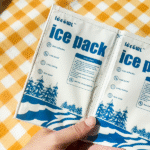
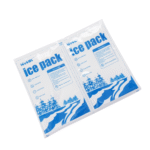
Choosing Drain Friendly Gel Pack Chemical Supplier for Real Cold-Chain and Handling Conditions
Most buyers get better results with drain friendly gel pack chemical supplier when they first define the temperature window, transit profile, and pack geometry the product has to support.
For formulation sourcing for cold-chain refrigerants, meal-kit programs, and disposal-sensitive DTC shipments, the most reliable answer is usually the same: choose the pack only after you know the target temperature band, the route duration or handling window, the geometry of the payload, and the level of documentation your team needs. That keeps sourcing tied to performance rather than to marketing language.
A drain-friendly gel pack is not just a normal gel pack with friendlier marketing. The chemistry has to be engineered so the contents can be disposed of according to the supplier’s instructions without creating the same clogging behavior as a typical highly viscous superabsorbent gel.
That distinction matters because many conventional cold packs use polymer systems that are non-toxic but still thick enough to create drain problems. In other words, non-toxic is not the same as drain-friendly. Buyers should treat those as separate technical claims.
What it is – and what it is not
A drain-friendly gel pack is not just a regular refrigerant with a more convenient label. If a buyer specifically wants disposal through running water or easier cleanup, the formulation and disposal instructions need to be designed and documented for that purpose.
It is also important to distinguish between non-toxic, water-based, food-contact-adjacent, and drain-friendly claims. Those ideas overlap in conversation, but they are not interchangeable in procurement. Chemical review, safety data, and operational instructions should be checked against the exact formulation being purchased.
Disposal-sensitive products deserve chemical review early in the project. Buyers should ask for safety data, disposal language, and any evidence supporting the disposal route promoted on the packaging or by the sales team.
What drives performance in real use
Drain-friendly performance is fundamentally a rheology problem. Standard gel packs often rely on thick, water-holding polymer networks that are excellent for keeping the fill in place but poor for household drainability. A drain-friendly system needs a different balance: stable enough inside the pack, but capable of dispersing or breaking down when disposed of as directed.
Thermal performance comes from more than the inner fill. The shell or film must stay flexible enough for the intended conditioning state, resist puncture or seam fatigue, and preserve a repeatable geometry around the payload. Even a good refrigerant chemistry can disappoint if the filled shape changes too much after freezing, if the cells distribute mass unevenly, or if the exterior becomes difficult to handle in the real workflow.
Geometry is especially important because heat does not enter a shipper or handling setup uniformly. Flat formats create broader contact and can reduce dead space. Thicker bricks or denser packs may store cooling energy longer, but they also occupy more volume and may create colder local contact points. The correct balance depends on whether you need even coverage, longer hold time, easier packing, cleaner handling, or a more controlled temperature window.
That balance affects everything from pumping and filling to freeze-thaw stability. A formulation that drains well but separates badly after freezing may not be practical. A formulation that performs thermally but requires unrealistic disposal steps may fail in consumer use. Good suppliers understand both sides of that trade-off.
Matching the format to the use case
The best-fit use case depends on the trade-off you care about most: coverage, duration, handling, repeatability, condensation control, receiver experience, or tighter temperature buffering. The common patterns below help buyers compare those trade-offs quickly.
| Format | Best fit | Main strength | Main limitation | What buyers should verify |
| Typical SAP-based gel | Low-cost standard refrigerant | Strong viscosity and common availability | May clog drains if emptied | Exact disposal instructions and trash/reuse guidance |
| Drain-dispersible formulation | Consumer disposal-sensitive programs | Easier end-user emptying when used as directed | Needs formulation-specific validation | SDS, wastewater guidance, and pack instructions |
| Biodegradable or drain-safe branded system | Brand sustainability messaging | Can support consumer-friendly claims | Not all ‘green’ claims mean drain compatibility | What exactly is certified or tested |
| No-sweat outer with standard gel | Moisture control focus | Better receiver experience for wet packs | Does not solve drainability by itself | Separate outer-material and inner-gel claims |
Consumer meal-kit and DTC food shipments
Drain-friendly formulations are most attractive when the receiver is a household customer who is unlikely to return the pack and frustrated by bulky waste. In these programs, disposal convenience directly affects customer complaints and sustainability perception.
The challenge is that a consumer-friendly disposal message only works when it is accurate, easy to follow, and supported by the exact formulation used in the pack.
Finished-pack converters sourcing gel chemistry
Some buyers are not purchasing finished refrigerants at all. They are sourcing the inner chemistry for conversion into custom packs. In that case, viscosity profile, fillability, freeze-thaw behavior, compatibility with films, and microbial control become central procurement points.
A good chemical supplier should be able to discuss how the formulation behaves during filling, sealing, frozen storage, thawing, and end-user disposal—not only in a lab beaker.
Corporate sustainability programs under scrutiny
Drain-friendly chemistry often appears in sustainability conversations because it can reduce landfill volume and improve end-user disposal. But buyers should remain practical. A disposal claim that is poorly substantiated can create wastewater concerns, customer confusion, or brand risk.
Helpful decision tools
Check the details before you choose packaging
These quick tools can help you compare route risk, sizing needs, coolant choices, and packaging details before you request a quote.
Coolant & PCM Reference
Compare coolant and PCM options when a route needs added temperature support.
Compare optionsPackaging Selector
Compare insulated packaging options by product, route, and temperature need.
Find packagingInsulation Material Drop Resistance
Review drop resistance and handling factors before choosing insulation materials.
Check resistanceThe right supplier therefore needs a stronger documentation package than a standard gel supplier, especially if the claim will appear on consumer packaging.
A practical supplier checklist before scale-up
When packaging developers, chemical sourcing teams, and gel-pack converters buy in volume, the best supplier conversation is detailed and specific. It should cover dimensions in conditioned use, material choice, closure or seam quality, handling stress, lot traceability, and the practical instructions needed for the people who will freeze, pack, move, clean, or receive the product. A short list built on those points is usually more reliable than a long list built only on price and MOQ.
Most buying errors happen when teams compare packs before they have written down the real operating requirement. For formulation sourcing for cold-chain refrigerants, meal-kit programs, and disposal-sensitive DTC shipments, the decision should start with how the formulation disperses under running water versus how it behaves in bulk or low-flow conditions, then move through whether the drain-friendly claim applies to the exact concentrate, dilution, and pack design you will use, compatibility with your filling equipment, seal temperatures, and target film materials, and the handling realities behind freeze-thaw stability, syneresis risk, and how viscosity changes over repeated cycles. If the shipment or use case has a visible end user, the evaluation should also include the quality of SDS, toxicology, and disposal instructions available to downstream customers. That sequence keeps the discussion tied to route outcome rather than to catalog language.
- Request the SDS and ask for a plain-language explanation of what makes the formula drain-friendly.
- Ask whether the formulation is based on a superabsorbent polymer, a different thickening system, or a dispersing chemistry that changes drain behavior.
- Verify that the disposal instructions are designed for household use, not only industrial handling.
- Check how the gel behaves after freezing and thawing: separation, clumping, settling, and pumping performance all matter.
- Confirm compatibility with the films you intend to seal, including any paper or nonwoven outer structures.
- Ask what evidence supports wastewater safety or reduced clogging risk for the marketed claim.
- If the claim will appear on-pack, review labeling language with legal and environmental teams before launch.
For long-term procurement, change control matters almost as much as first-pass performance. Buyers should know what happens if the supplier changes film structure, resin grade, fill formulation, seal pattern, artwork, or production site. If those changes are not communicated and re-evaluated, a successful pilot can drift into a less reliable production result without anyone noticing until the field complaints begin.
Documentation, testing, and route qualification
Publicly available wastewater guidance has noted that typical gel packs are often better disposed of in the trash because of clogging risk, while certain supplier-specific drain-safe systems appear less problematic when used exactly as directed. That is why formulation-specific evidence matters so much.
From a procurement standpoint, the minimum documentation package should include an SDS, disposal instructions, toxicology or safety support appropriate to the claim, and a clear statement of what the claim does and does not cover. If the supplier cannot define the claim boundary, the buyer is taking unnecessary risk.
For food or pharma-adjacent use, remember that disposal friendliness does not replace the need for suitable thermal performance, packaging integrity, and quality control in manufacturing.
A useful supplier data pack normally includes conditioned dimensions, nominal fill weight or range, material description, conditioning instructions, recommended use window, storage guidance, and any relevant test information on leakage, durability, or route performance. For regulated or quality-sensitive programs, buyers often also want lot traceability, revision control on specifications and artwork, and a clear statement of what the supplier has validated versus what still needs route-specific qualification by the shipper.
Qualification should mirror the lane you actually plan to run. That means defining the payload temperature at packout, the number and location of refrigerants, the insulation configuration, the expected transit duration, and the most credible exposure profile. Temperature loggers or other monitoring tools help confirm whether the packout protects the target range at the warmest and most vulnerable locations, not only at the geometric center of the shipper.
A practical evaluation program should cover both thermal performance and disposal behavior. Thermal testing confirms whether the pack protects the target temperature window. Disposal review confirms how the fill behaves during cleanup, whether it disperses as expected, and whether the packaging language is clear enough for the users who will handle it.
In industrial or lab-adjacent environments, spill management matters as much as nominal cooling duration. A pack that protects product well but creates difficult cleanup or clogged drains can still be the wrong operational choice.
Frequently asked questions
Is a drain-friendly gel always safe to pour down the sink?
Only if the supplier’s exact product instructions say so. Generic gel chemistry can still clog drains even when it is non-toxic.
What should a converter ask a chemical supplier first?
Ask what mechanism makes the formulation drain-friendly, what documents support that claim, and how the chemistry behaves on your filling and sealing line.
Does drain-friendly mean better thermal performance?
Not necessarily. Disposal behavior and cooling performance are related but separate design questions.
Bottom line
A drain-friendly gel pack chemical supplier should be able to explain the formulation in operational terms, not just marketing terms. The right chemistry is the one that balances thermal performance, fill-line practicality, and disposal instructions that are actually credible.
The strongest procurement outcome usually comes from matching the refrigerant to the exact route or use case, then testing the result under realistic conditions, and finally choosing the supplier that can reproduce that result consistently. That approach is slower than buying by catalog description, but it is usually much cheaper than troubleshooting failures after launch.
About Tempk
At Tempk, we focus on cold-chain packaging products such as gel packs, PCM solutions, cooler boxes, and custom temperature-control packaging. Our public materials also show custom-pack development and laboratory support. For buyers exploring specialized fills or disposal-sensitive formats, that kind of development capability matters because the refrigerant has to work thermally and operationally at the same time.
Next step
If you are evaluating suppliers, ask for a recommendation built around your target temperature, handling conditions, and bulk-order requirements rather than a generic stock suggestion.