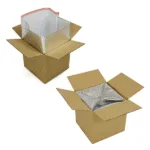
Insulated Shipping Box Factory Temperature Sensitive Shipping: Practical Sourcing Guide
A practical sourcing guide for insulated shipping box factory temperature sensitive shipping, helping buyers match box design, supplier claims, route risk, and cold-chain duties.
insulated shipping box factory temperature sensitive shipping: Practical Sourcing Guide for Real Cold-Chain Shipments
The best answer to insulated shipping box factory temperature sensitive shipping starts with the shipment profile. What product is inside, what temperature does it require, how long is the route, where are the handover points, and who will decide whether the shipment can be accepted? Once those questions are clear, the box becomes easier to evaluate. The right insulated shipping box supports the required packout, protects usable payload space, fits the lane, and gives your team a practical way to document what happened during transport.
The most useful sourcing decision connects three groups that often work separately. Procurement needs a supplier and a fair quote. Operations needs a package that can be packed quickly and handled without confusion. Quality needs evidence that the product's required conditions were considered and that deviations can be reviewed. The insulated box is where these needs meet.
Start With the Acceptance Decision at Destination
A good sourcing process starts at the end of the route. Ask what the receiver will do when the package arrives. Will they check a logger? Will they inspect gel packs? Will they record box condition? Will they move the product immediately into controlled storage? Will they reject the shipment if the outer carton is wet, crushed, warm, or undocumented? These questions define the standard the package must support.
For materials, samples, foods, pharmaceuticals, cosmetics, chemicals, and specialty products that can be damaged by heat or freezing, acceptance is rarely based on the box alone. The receiving decision may depend on product label requirements, quality agreements, food safety rules, customer specifications, or internal SOPs. When buyers define acceptance first, they avoid buying a package that looks good at dispatch but fails to provide the information needed at arrival.
Define the Product Requirement Before You Define the Box
The shipment requirement begins with the product, not the packaging catalog. Temperature-sensitive shipping is defined by the product, not by the box. Some shipments require chilled conditions, some require controlled ambient conditions, and some require protection from freezing or overheating. A box that works for one product may be wrong for another even if the route distance looks similar. Fresh produce may need cooling without chilling injury. A pharmaceutical sample may require documented control rather than just a cool interior. A vaccine shipment may need protection from both heat and accidental freezing. The same outer size can therefore support several very different packouts, each with its own risk profile.
A useful specification sheet should state the product category, target temperature range, planned shipment duration, expected ambient exposure, payload weight, usable payload volume, and any monitoring or documentation requirement. These facts let a supplier recommend a realistic configuration. Without them, buyers often receive a generic quotation that cannot be judged fairly. The result is usually a box that appears inexpensive but creates hidden costs through packing labor, wasted coolant, failed deliveries, and quality review time.
For temperature-sensitive shipping shipments, it is especially important to distinguish between a protective insulated box and a qualified thermal shipping system. A protective box can reduce exposure. A qualified system has been evaluated with a defined payload, coolant, packout, and test profile. When suppliers state performance, ask what conditions were used. If the test profile, payload, or coolant configuration differs from your lane, treat the claim as a starting point rather than a guarantee.
How Insulation, Coolant, and Air Space Work Together
Insulation is often described as if it creates cold, but it does not. It slows heat transfer between the outside environment and the payload area. Heat can enter through walls, lid seams, corners, air gaps, and during every opening event. Coolant absorbs or releases heat inside the shipper. The payload, coolant, and insulation form one system. If any part is changed, the performance can change as well.
Different materials offer different handling and performance trade-offs. EPS foam is common and economical but can be fragile and may shed particles. EPP can be more durable and reusable in many applications, making it attractive for repeated handling and food operations. Polyurethane panels, vacuum insulation panels, reflective liners, and hybrid designs may be used where higher thermal resistance or space efficiency is needed. These materials should be evaluated against route risk, cleaning requirements, cost, sustainability goals, and whether the supplier can provide evidence for the specific configuration.
Coolant choice is equally important. Water-based ice packs can create freezing risk for products that cannot tolerate contact with frozen packs. Conditioned gel packs or phase change materials may help manage that risk, but they still require correct conditioning and placement. Dry ice can support frozen or deep-frozen shipments, yet it introduces ventilation, labeling, carrier, and product compatibility issues. For many buyers, the safest question is not 'which coolant is strongest?' but 'which coolant was tested with this box, this payload, and this route assumption?'
What to Confirm Before Scaling the Order
| What to check | Why it matters | How to verify before ordering |
|---|---|---|
| Required product temperature | The same box may need different coolant or packout for chilled, frozen, controlled ambient, or freeze-protection needs. | Confirm the product label, customer specification, or quality instruction before requesting a quote. |
| Usable payload space | Gross internal volume can be misleading when coolant packs, dividers, and protective layers take space. | Ask for internal dimensions and a sample packout drawing or photo. |
| Route duration and handovers | Risk often appears at loading docks, hubs, customs holds, weekend storage, and final-mile delivery. | Map the longest credible route, not only the planned transit time. |
| Coolant compatibility | Gel packs, water packs, PCM, and dry ice are not interchangeable and may create freeze or safety risks. | Ask which coolant was used in testing and how it must be conditioned. |
| Monitoring and records | For regulated or high-value cargo, acceptance may depend on evidence, not only package appearance. | Confirm data logger placement, alarm settings, calibration documentation, and retrieval method when needed. |
| Sample-to-production consistency | A good sample does not help if production material, lid fit, or accessories change later. | Ask how changes are controlled and whether production units match the approved sample. |
This table is not meant to make the buying process slower. It prevents the common mistake of comparing suppliers on box price while ignoring the variables that decide shipment acceptance. When two quotes look similar, the supplier that can explain these points clearly is usually easier for a quality or operations team to work with.
Factory Sourcing: What Should Stay Consistent After the Sample
A factory buyer should compare sample quality with production quality, request packout instructions, confirm material options, and ask how changes in box size, insulation, liner, coolant, and accessories are controlled.
Factory sourcing is useful when the buyer needs repeatability, private-label packaging, modified dimensions, accessory matching, or a clearer route from sample to production. The key is not to ask only whether the factory can make an insulated box. Ask how it controls material selection, mold changes, lid tolerances, liner selection, coolant fit, labeling, packing instructions, and inspection. For cold-chain packaging, a small change in wall geometry, lid contact, or internal layout can change the way heat enters the payload area.
A practical sample review should include a filled packout, not only an empty container. Place the intended product or a representative dummy payload into the box with the planned coolant and protective materials. Check whether staff can pack it consistently without forcing the lid, whether the logger location is protected but meaningful, whether the box can be sealed, and whether the outer carton survives expected handling. Only then does the sample tell you something useful about production use.
Monitoring and Standards: Evidence Without Overclaiming
The practical control points are product instructions, route risk, packaging configuration, monitoring, and receiving decisions. Regulations and customer requirements vary by market and product category. Standards and guidance documents are useful because they give teams a shared language, but they do not turn an ordinary shipper into a universal solution. ISTA 7E thermal profiles, for example, can support thermal transport package testing for parcel environments, yet a laboratory profile is not the same as every lane your shipment may travel. IATA temperature-control guidance helps healthcare air cargo teams think about packaging, documentation, labels, handling, and responsibilities, but each shipment still needs correct booking and carrier instructions.
Helpful decision tools
Check the details before you choose packaging
These quick tools can help you compare route risk, sizing needs, coolant choices, and packaging details before you request a quote.
Insulation Material Reference
Compare insulation material choices for different cold chain packaging needs.
Compare materialsDry Ice Calculator
Estimate dry ice needs for frozen or ultra-cold shipments before packing.
Estimate dry iceCompliance Checklist Generator
Build a practical checklist for packaging review, shipping, and documentation.
Build checklistA temperature data logger records evidence; it does not protect the product by itself. It should be placed where the reading is meaningful for the payload and protected from direct contact with coolant unless that is the intended measurement point. For vaccine storage, CDC guidance highlights digital data loggers, calibration documentation, and defined recording intervals. In shipping, the same logic applies: the reading must be interpretable, the alarm thresholds must match the product, and the receiving team must know what to do if an excursion appears.
Buyers should avoid broad claims such as 'GDP compliant box' or 'approved for all pharmaceutical shipments' unless the supplier can explain exactly what is meant. Compliance usually depends on a controlled process, a suitable package, documented qualification or verification, trained handlers, and deviation management. The box is one component in that process. It may be a very important component, but it is not the entire compliance program.
When the Cheapest or Strongest Box Is the Wrong Choice
The cheapest box can be wrong when it pushes risk into labor, waste, product loss, or customer complaints. The strongest box can also be wrong when it is too large, too heavy, too expensive to return, or too difficult for staff to pack consistently. The best choice is the box that fits the shipment profile with an acceptable level of evidence and operational effort.
This is why the supplier conversation should include limits. Ask where the box should not be used. Ask which routes require a different coolant or additional qualification. Ask whether the design is meant for personal cooling, commercial food delivery, pharmaceutical distribution, emergency transfer, or general temperature-sensitive shipping. Clear limits are not a weakness. They help buyers avoid using a good product in the wrong situation.
A Typical Scenario That Shows the Trade-Off
Imagine a company shipping temperature-sensitive samples from a production site to a testing laboratory. The shipment is small, but the value of the decision is high because delayed or compromised samples can disrupt release testing. The buyer considers a standard foam shipper, a reusable EPP container, and a higher-performance passive system. The correct choice depends on the sample temperature limit, courier route, expected waiting time, and whether the lab needs a temperature record before accepting the samples.
In this type of shipment, overbuying and underbuying are both possible. A premium system may be unnecessary for a short controlled route with low risk and rapid receiving. A cheap cooler may be inappropriate if the route includes weekend holds, hot docks, or formal acceptance criteria. The packaging decision becomes clearer when the team writes down the actual route assumptions.
How to Shortlist a Supplier Without Overcomplicating the Project
A simple three-step shortlist works for most cold-chain packaging projects. First, remove any supplier that cannot discuss the required temperature range, payload, coolant, dimensions, and route assumptions. Second, compare the remaining options using the same packout assumptions so the quotes are fair. Third, test or review samples with the people who will actually pack, ship, receive, and approve the product. This process is faster than debating specifications in isolation.
The strongest suppliers do not need to promise that one box fits every route. They should be able to explain where a product fits, where it does not fit, and what information is still needed. This honesty matters because cold-chain packaging is full of conditional performance claims. A stated hold time, if offered, should be tied to test profile, payload, coolant quantity, ambient exposure, and acceptance criteria. If those details are missing, ask for clarification before relying on the claim.
For repeat orders, keep a packaging record that includes approved sample photos, specifications, packout instructions, supplier contact, change history, and receiving requirements. This document helps train new staff, reduces packing drift, and gives procurement a reference when reordering. It also makes supplier changes easier to evaluate because the new option can be compared against the actual system, not against memory.
FAQ
Is an insulated shipping box enough for temperature-sensitive shipping shipments?
Not by itself. An insulated shipping box slows heat transfer, but temperature control depends on the product requirement, coolant type, packout layout, route duration, ambient exposure, and handling process. For regulated or high-value shipments, buyers may also need monitoring, documented instructions, and quality review. Treat the box as one component of the cold-chain system.
What should I ask a supplier before ordering?
Ask for internal and external dimensions, usable payload space, material description, coolant compatibility, packout instructions, test basis, sample availability, carton packing method, and change-control process. If the shipment is sensitive, also ask how monitoring can be placed and what documentation supports any stated performance claim.
Can one box be used for chilled, frozen, and controlled ambient shipments?
Sometimes the same outer box can support more than one application, but only with the right coolant and packout. A configuration for chilled goods may be wrong for frozen goods or for products that must avoid freezing. Confirm the product temperature requirement and do not assume that changing the coolant automatically qualifies the box for a new lane.
How do I reduce risk when buying in quantity?
Approve a sample packout before placing a large order, then confirm that production units will match the approved sample. Keep records of dimensions, material, lid fit, accessories, and packing instructions. If the supplier changes material, tooling, coolant, or carton configuration, review the change before using the boxes for critical shipments.
When should I use a data logger?
Use a data logger when the product value, regulatory expectation, customer requirement, or route risk makes temperature evidence important. The logger should be configured for the product range and placed where readings are meaningful. It records what happened; it does not correct the temperature inside the package.
Conclusion
The right choice for insulated shipping box factory temperature sensitive shipping depends on product temperature, payload fit, route duration, coolant configuration, handling behavior, and documentation needs. A strong insulated shipping box is not just a container; it is the physical center of a packout that must be repeatable. Before ordering, confirm the product requirement, compare complete systems, review supplier evidence, and test the sample in the way your team will actually use it.
About Tempk
At Tempk, we approach insulated packaging as part of a working cold-chain process rather than a standalone product. Our product range includes temperature-control packaging formats such as insulated boxes, cooler boxes, ice packs, and related cold-chain accessories. For buyers comparing suppliers, we can help turn route, product, and payload information into a more practical packaging discussion.
CTA
Share your product type, route, target temperature range, and expected order volume with Tempk to compare practical insulated shipping box options before scaling the purchase.