Lightweight EPP Transport Box Distributor Checklist
A lightweight EPP transport box distributor can stabilize your cold chain—or quietly create chaos. In the first 30 days, you’ll usually see the truth: lid fit drift, batch inconsistency, stock surprises, and slow replacements. This guide merges your three drafts into one practical buyer playbook, built to help you pick a lightweight EPP transport box distributor based on repeatability, proof, and process.
You’ll also get ready-to-use tools: a lane brief worksheet, a 0–20 distributor score, a pilot checklist, and a cost-per-successful-trip calculator.
This article will help you answer:
How to choose a lightweight EPP transport box distributor without guesswork
Which distributor model fits your lanes (stocked, warehouse, or factory-direct)
What to verify in specs, QC, and documentation before scaling
How to run a tough-lane pilot and score results in plain language
How to compare price using cost per successful trip, not unit price
What does a lightweight EPP transport box distributor really do?
A lightweight EPP transport box distributor is not just a “box seller.” The best ones connect your operation to a repeatable packaging system: stable SKUs, predictable replenishment, and clear quality signals.
A reliable lightweight EPP transport box distributor helps you:
Match box size and structure to your lane risks
Standardize 2–3 sizes so packing stays fast
Keep supply stable with lead-time rules and safety stock options
Control batch variation with simple incoming checks
Support pilots, pack-out guidance, and scaling decisions
Think of it like a kitchen supplier: if ingredients vary every week, your output fails—even with a perfect recipe.
Distributor vs manufacturer vs integrator (why this matters)
| Role | What they provide | What you should expect | What it means for you |
|---|---|---|---|
| Manufacturer | Makes molded parts | Stable geometry and specs | Consistency starts here |
| Distributor | Selects, stocks, supports | Lane fit + accountability | Fewer wrong buys |
| Integrator (sometimes) | Inserts + tracking + SOPs | Program-level rollout | Faster scaling |
Practical tip: If your goal is smooth daily operations, your “best price” is useless without distributor-level support.
Which distributor model fits your lightweight EPP transport box distributor needs?
Most lightweight EPP transport box distributor options fall into three models. Your choice should match how fast you need boxes and how stable your lanes are.
| Model | Strength | Typical risk | Best for you when |
|---|---|---|---|
| Local stock distributor | Fastest availability | Limited SKUs | Urgent pilots, quick scaling |
| Regional warehouse distributor | Balanced stock + options | Needs forecasting | Weekly volume, multi-lane ops |
| Factory-direct supply model | Best customization | Longer lead time, higher MOQs | High volume, stable lanes |
How to choose the right model without overpaying
If you need boxes next week, local stock usually wins.
If you need stable supply across lanes, regional warehouses win.
If you need custom size or inserts, factory-direct can win—if you can plan.
Quick rule: If your demand is unpredictable, avoid locking yourself into high MOQ + long lead time too early.
What specs should you confirm with a lightweight EPP transport box distributor?
A lightweight EPP transport box distributor should speak in operational specs, not vague marketing terms. You don’t need complex engineering language. You need a short spec sheet that prevents “mystery substitutions.”
Ask your lightweight EPP transport box distributor to confirm:
Usable internal dimensions (not just outer size)
Wall thickness (and tolerance)
Foam density option or durability target (how “lightweight” is defined)
Lid design and closure behavior (seal is a common failure point)
Stacking stability (realistic stack height for your workflow)
Cleaning compatibility (what your team can realistically do daily)
The “three specs” that predict success
If you only confirm three things with a lightweight EPP transport box distributor, confirm these:
Usable internal size (fits your common order without wasted space)
Lid seal behavior (stays tight after repeated cycles)
Durability expectation (how many trips before deformation breaks function)
| Spec area | What to request | Why it matters | Your practical benefit |
|---|---|---|---|
| Internal size | Usable L×W×H | Packing efficiency | Less “shipping air” |
| Wall thickness | Range + tolerance | Insulation + strength | Fewer failures |
| Lid design | Fit + closure type | Leak control | More stable temps |
| Stack rating | Guidance by load | Warehouse safety | Less damage |
| Surface finish | Cleaning behavior | Reuse speed | Lower labor cost |
Practical tips you can apply this week
If costs are rising: your box may be oversized for typical orders.
If temp control drifts: lid seal + wall thickness matter most.
If reuse is your plan: cleaning speed becomes a hidden cost driver.
How to choose a lightweight EPP transport box distributor for your lanes?
The fastest way to choose a lightweight EPP transport box distributor is to start with lanes, not catalogs. Lanes define heat exposure, dwell time, stacking, and handling risk.
Interactive tool: 7-point lane brief worksheet (copy and fill)
Payload type: food / meal kits / dairy / pharma / lab / other
Payload size & weight: L×W×H, kg
Temperature band: chilled / controlled / frozen
Lane duration (door-to-door): ______ hours
Handling profile: courier / pallet / mixed handoffs
Reuse plan: one-way / closed loop / pooled returns
Failure cost per shipment: $______ (refunds + remake + brand risk)
If a lightweight EPP transport box distributor can’t recommend a clear setup after this brief, they’re selling boxes—not solutions.
Interactive decision tool: Distributor Fit Score (0–20)
Score each statement 0–2 (0 = no, 2 = yes):
The lightweight EPP transport box distributor provides clear spec sheets per SKU.
They ask about payload size and lane risk early.
They support modular inserts/dividers (if needed).
They have clear MOQ and lead time rules.
They can provide samples quickly for a pilot.
They explain cleaning and reuse limits in plain language.
They offer spare parts (lids/closures).
They support labeling zones or simple tracking options.
They can validate a “worst-case delay” scenario.
They discuss return flow and replacement planning.
Score meaning:
0–8: High risk distributor
9–14: Pilot-ready for simple lanes
15–20: Strong lightweight EPP transport box distributor for scale
How can you test a lightweight EPP transport box distributor before committing?
You don’t need a huge trial. You need a smart pilot that tests what usually fails: lid fit over cycles, stacking deformation, and toughest-lane outcomes.
A strong lightweight EPP transport box distributor will welcome this, because good pilots prevent bad rollouts.
The 30-day pilot plan (simple and realistic)
Week 1: Sample inspection + short bench tests
Weeks 2–3: Route test on your toughest lane
Week 4: Review exceptions, lock specs, define reorder rules
Interactive: 10-point pilot checklist (Pass/Fail)
Dimensions match the promised spec
Lid closes easily and consistently
Lid stays tight after 10 open/close cycles
Box stacks cleanly without wobble
No visible cracking after normal handling
Surface cleans quickly using your real process
Labels adhere without peeling in condensation
Pack-out time stays stable across staff
Delivery arrives in acceptable condition
Boxes return without deformation breaking lid fit
How to interpret results:
8–10 Pass: Strong candidate to scale
5–7 Pass: Usable with constraints/spec changes
0–4 Pass: High risk—do not scale
Helpful decision tools
Check the details before you choose packaging
These quick tools can help you compare route risk, sizing needs, coolant choices, and packaging details before you request a quote.
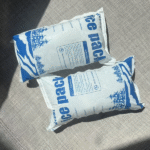
01Ice pack estimateIce Pack Calculator
Estimate gel ice pack quantity for chilled shipments and practical route planning.
Estimate ice packs02Checklist supportCompliance Checklist Generator
Build a practical checklist for packaging review, shipping, and documentation.
Build checklist03Material guideInsulation Material Reference
Compare insulation material choices for different cold chain packaging needs.
Compare materials
| Pilot focus | What you learn | What to change if it fails | Your benefit |
|---|---|---|---|
| Lid fit | Temp stability | Tolerance/lid design | Fewer excursions |
| Deformation | Reuse reality | Density/thickness | Longer lifespan |
| Cleaning | Labor cost | Surface/shape | Faster turnaround |
Real-world pattern: The lowest quote often fails at lid-fit consistency. Your pilot catches that before rollout.
What quality signals should a lightweight EPP transport box distributor provide?
A scalable lightweight EPP transport box distributor can show simple proof that batch variation is controlled. You don’t need a 60-page report. You need clear “yes/no” evidence.
Look for:
Stable SKU naming (no surprise substitutions)
Basic tolerance awareness (dimensions + lid fit)
Batch traceability (so problems don’t repeat)
Documented incoming inspection (even simple checks)
Red flags that often lead to cold chain failures
“We changed the foam, but it’s basically the same.”
“We don’t track batches.”
“Lid fit varies, that’s normal.”
“We can’t commit to lead times.”
| Red flag | What it usually means | Why it matters | What you should do |
|---|---|---|---|
| No batch tracking | No accountability | Defects repeat | Avoid scaling |
| Substitutions | Inconsistent material | Performance drift | Require fixed SKUs |
| Unclear lead time | Weak planning | Stockouts | Choose stocked model |
| Lid fit “normal” | Poor tolerance control | Temp leakage | Demand a pilot |
What proof and documentation should you demand in 2025?
In 2025, buyers expect a proof pack—not just “we’ve shipped this before.” A capable lightweight EPP transport box distributor should provide a simple documentation set you can store in your SOPs.
Proof pack checklist (what to request)
Spec sheet per SKU: usable internal dimensions, wall thickness, closure design
Material/density statement: how “lightweight” is defined for that SKU
Thermal validation approach: lane-relevant hold-time evidence (especially for parcel lanes)
Drop/handling test approach: simple protocol that matches your handoffs
Cleaning + drying guidance: written steps your team can execute
Change control: what triggers a revision and how you’ll be notified
Plain-English rule: If they can’t show how they control changes, you’ll be re-testing forever.
How do MOQ and lead time shape your lightweight EPP transport box distributor choice?
MOQ and lead time are where many lightweight EPP transport box distributor relationships fail operationally. Samples arrive fast, then scaling stalls.
Key terms you should lock early:
Lead time: order to delivery
MOQ: minimum order quantity
Safety stock: inventory buffer to prevent stockouts
The “stockout cost” reality check
When boxes run out, teams improvise with weaker packaging. That usually raises damage, claims, and rework.
Ask your lightweight EPP transport box distributor:
Lead time by SKU (stock vs production)
MOQ by SKU and by customization option
Can they hold safety stock or stage deliveries?
Do they reserve production slots for repeat customers?
| Supply factor | Good outcome | Bad outcome | What it means for you |
|---|---|---|---|
| Lead time | Predictable | Sudden delays | Ops disruption |
| MOQ | Manageable | Forced overbuy | Storage cost rises |
| Safety stock | Available | None | Peak-season risk |
Practical tip: If storage is tight, negotiate staged deliveries before you negotiate unit price.
How do you compare quotes using cost per successful trip?
Unit price comparisons fail because they ignore replacement, loss, labor, and failure cost. You should compare cost per successful trip.
Your real cost includes:
Box + lid cost
Insert/accessory cost
Cleaning and handling labor
Loss rate (not returned)
Replacement rate (damage/deformation)
Failure cost (claims, reships, reputation)
Interactive calculator: Cost per successful trip
Fill your numbers:
Box + lid cost: $______
Inserts/accessories: $______
Expected successful trips: ______
Cleaning + labor per trip: $______
Return logistics per trip: $______
Loss allowance: ______%
Cost per trip = (Box + Inserts) ÷ Trips + Cleaning + Return + Loss allowance
| Comparison factor | Why it matters | What to measure | Your benefit |
|---|---|---|---|
| Cycles achieved | Durability | Avg trips/box | Lower replacement spend |
| Return rate | System health | % returned | Stable inventory |
| Pack time | Labor cost | Minutes/order | Higher throughput |
| Failure rate | Brand risk | Claims/refunds | Higher trust |
Practical tip: A higher-priced box can be cheaper if it doubles reuse cycles or cuts packing time daily.
When should you use lightweight EPP transport box distributor customization options?
Customization should improve outcomes, not just appearance. The best lightweight EPP transport box distributor customization options reduce damage, speed packing, and stabilize temperature.
Think in three layers:
Geometry: right-size the box to reduce empty space
Accessories: inserts/dividers/coolant pockets (often the biggest win)
Identity: label zones, color coding, simple tracking for returns
Interactive tool: “Should you customize now?” (Yes/No)
Answer Yes/No:
Are you losing money from damage or temperature claims today?
Do you ship the same SKU mix every week?
Are your lanes stable and predictable?
Will you reuse boxes at least 10 cycles?
Results:
Yes to 3–4: Customize inserts + label zones now
Yes to 0–2: Start standard, learn lanes, then customize
| Custom option | Best for | Risk to watch | Practical meaning |
|---|---|---|---|
| Divider grid | Multi-SKU kits | Slower packing | Fewer collisions |
| Coolant pockets | Chilled shipments | Freezing risk | More stable temps |
| Cradle insert | Fragile goods | Fit mismatch | Less breakage |
| Label panel | Scan accuracy | Poor adhesion area | Fewer mix-ups |
How do you build a reuse and cleaning program that works?
Reuse only works if the loop works. A lightweight EPP transport box distributor is “good” when they support the full lifecycle: deliver → return → clean → inspect → replenish.
Simple reuse program blueprint
Assign ownership: who ensures return
Define return timing: daily/weekly/per route
Define cleaning: quick clean vs deep clean
Inspect and grade: pass / repair / retire
Replenish spares: keep a buffer pool and spare lids
| Reuse step | What can break | Simple control | Why it helps you |
|---|---|---|---|
| Return | Boxes don’t come back | Deposit or accountability rule | Higher return rate |
| Clean | Odor builds | Dry fully with airflow | Longer life |
| Inspect | Damaged boxes circulate | Pass/fail tagging | Fewer failures |
| Track | Inventory becomes unknown | Simple scan/label | Fewer missing assets |
| Replenish | No spares | Reorder triggers | Stable operations |
Practical tip: Drying is often the true hygiene bottleneck. Design your workflow for drying, not just washing.
2025 trends affecting lightweight EPP transport box distributor decisions
In 2025, the “best” lightweight EPP transport box distributor is judged on operational support, not just product supply.
Latest developments you can use immediately
Standardization is winning: fewer SKUs, clearer pack-out layouts
Return systems matter more: reverse logistics is a core KPI
Proof beats promises: pilots and documentation are expected
Lane-based packaging is growing: short/medium/high-risk lane families
Data expectations are rising: buyers want measurable reuse outcomes
Market insight: You scale faster when your distributor reduces operational friction, not when they add options.
Common questions (FAQ)
1) What should I ask a lightweight EPP transport box distributor first?
Ask about stock availability, lead time, and SKU stability. Then confirm lid fit and usable internal dimensions.
2) Is factory-direct always cheaper than a distributor?
Not always. Longer lead times and higher MOQs can raise total cost if demand fluctuates.
3) How do I know if “lightweight” is too light?
Pilot your toughest lane. If lids loosen, walls deform, or stacking wobbles, it’s too light for your handling.
4) How many sizes should I standardize?
Most operations do best with 2–3 sizes. It reduces packing errors and simplifies inventory.
5) What is the biggest hidden cost in reusable EPP programs?
Return rate and cleaning time. A great box becomes expensive if it doesn’t come back quickly.
6) What spare parts matter most?
Lids and closures. Stock spares so you don’t retire boxes early.
7) What’s the fastest way to choose between two distributors?
Use the Distributor Fit Score, then run the 30-day pilot on your toughest lane.
Summary and recommendations
A lightweight EPP transport box distributor should help you buy repeatability, not surprises. Focus on lid fit, usable internal size, wall thickness, and durability expectation first. Then validate supply reliability: lead time, MOQ, and safety stock options. Finally, compare quotes using cost per successful trip and lock a standard 2–3 size plan.
Your next step (CTA): Shortlist two distributors, request a proof pack, run a 30-day toughest-lane pilot, and standardize one box shell with modular inserts before expanding SKUs.
About Tempk
At Tempk, we support cold chain teams with practical reusable packaging selection frameworks that prioritize repeatability. We focus on what actually drives outcomes: lid fit, durability, cleaning workflow, lane alignment, and proof-based pilots. We help you standardize a small, scalable packaging set so your operation grows without exceptions.
Call to action: If you want a distributor scorecard template and a lane-based 30-day pilot SOP for a lightweight EPP transport box distributor, contact us for a practical framework your team can run immediately.