Manufacturer Dry Ice Pack for Biologic Packaging: Approval Gates
A manufacturer dry ice pack for biologic packaging is ready for purchase only after six approval gates are closed. The gates begin with product labeling and stability, not a coolant sample. They distinguish solid carbon dioxide from a water-activated hydration sheet, connect the component to a complete insulated shipping system, verify dangerous-goods and containment duties, qualify minimum and maximum payloads under warm and cold profiles, and control production changes. The final gate proves that operators can pack, monitor, receive, and investigate excursions consistently. This approach prevents commercial scale from getting ahead of scientific and quality evidence.
Gate 1: Establish Product Truth
Create a controlled product profile before contacting manufacturers.
FDA defines biologics broadly, including vaccines, blood products, recombinant proteins, cells, tissues, and gene therapies. That list explains why one cold-chain template cannot represent the whole class. The approved label or authorization, stability program, clinical protocol where relevant, and quality procedures identify the actual storage and transport requirements.
The profile should state the required condition, supported transport exposure, excursion basis, freeze sensitivity, freeze-thaw limit, humidity or light protection, orientation, agitation constraints, primary container, secondary assembly, and disposition authority. Use exact product language. If a proposed shipping condition is not supported, route the gap to product stability and regulatory experts rather than asking a packaging supplier to decide it.
Define the payload as a bracket, not a nominal number. Include minimum and maximum units, mass, dimensions, presentation, dunnage, and allowed void strategy. State dispatch condition and receiving condition. A minimum load may be the cold-side worst case; a maximum load may create warm regions or reduce coolant space.
Finish the profile with route facts: origin, destination, handovers, modes, planned duration, delay allowance, seasons, customs, replenishment, and receiving hours. Record whether contents are a finished biologic, an intermediate, a noninfectious material, or a specimen requiring dangerous-goods classification.
Gate 1 closes when product and route owners approve a testable user requirement.
Gate 2: Define the System Architecture
Identify every function and assign it to a component.
The primary container-closure system holds and protects the biologic. A secondary package adds containment, orientation, or physical protection. Coolant or refrigerant provides thermal capacity. Insulation controls heat flow. A structural outer protects the assembly and carries marks. Supports and separators prevent movement and direct cold contact. A temperature monitor records conditions. The qualified shipping system is the complete controlled configuration and operating process.
The term “dry ice pack” must be resolved at this gate.
Solid dry ice is carbon dioxide, solid. It sublimates, creates an extremely cold environment, can injure handlers, and requires a gas-release path. It may support a frozen biologic when stability, materials, qualification, and transport allow.
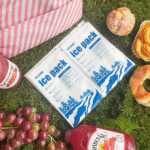
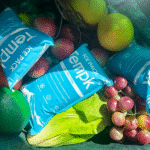
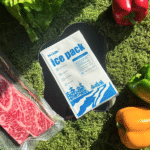
A hydrate dry ice pack is a supplier product term for a water-activated sheet. Tempk’s official instruction identifies its sheet as not being dry ice, directs hydration, and calls for freezing before use. It is therefore assessed as a frozen aqueous coolant. It does not produce carbon dioxide gas or inherit UN 1845 status.
Gel packs and purpose-formulated PCM packs have their own conditioning and phase behavior. A PCM can help shape a temperature profile, but no pack creates a controlled range without the insulation, payload, placement, and evidence.
Approval Evidence by Component
| System element | Approval evidence | Stop condition |
|---|---|---|
| Biologic and primary package | Label and stability requirements, container-closure and material compatibility | Unresolved storage, freezing, excursion, or closure requirement |
| Coolant or refrigerant | Identity, formulation or material reference, conditioning, dimensions, lot control, safety information | Ambiguous “dry ice pack” identity or unsupported universal performance claim |
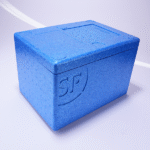
| Insulation and outer | Controlled drawing, materials, dimensions, closure, physical performance, vent design where needed | Unknown construction, blocked gas path, or inadequate structural evidence |
| Payload bracket | Minimum and maximum configurations, starting state, separators, void control | Only nominal load tested or uncontrolled product contact |
| Thermal evidence | Justified hot and cold profiles, mapped sensors, raw data, criteria, instrument status | Duration claim lacks payload, profile, or pass context |
| Monitor | Intended decision, mapped position, range, accuracy evidence, interval, calibration status, data workflow | Device selected without placement or disposition process |
| Operations | Packout SOP, conditioning capacity, training, staging, receiving, damaged-package response | Laboratory configuration cannot be reproduced |
| Manufacturer control | Approved specification, production samples, lot traceability, inspection, change notification | Sales sample cannot be linked to routine production |
An evidence gap can remain open during development, but it cannot be hidden behind a certificate title or marketing adjective. Assign each gap an owner and acceptance criterion.
Gate 3: Resolve Safety, Classification, and Transport
Classify the contents and refrigerant separately.
Solid dry ice is UN 1845, Class 9 for relevant air transport. United States requirements for aircraft and vessel movements require packaging that releases carbon dioxide gas and prevents pressure rupture. Air shipment provisions include operator arrangements, net-mass marking, and specified information. The 2026 IATA dry-ice checklist adds an operational acceptance check under the current edition, and airlines can impose variations.
Warehouses and pack stations also need controls. Carbon dioxide can accumulate in confined or poorly ventilated spaces, and cold contact can cause injury. Use a site-specific ventilation and occupational safety assessment, appropriate protective equipment and tools, safe storage, and trained procedures. Never seal solid dry ice in an airtight volume.
Next classify the biologic contents. A finished therapeutic biologic is not automatically an infectious substance. If a specimen meets the definition of Biological Substance, Category B, then UN 3373 requirements apply.
United States Category B rules require triple packaging with primary receptacle, secondary packaging, and rigid outer packaging, plus leakproof, siftproof, absorbent, cushioning, and marking provisions as applicable to the contents. Under 2026 IATA Packing Instruction 650, dry ice used for refrigerated or frozen specimens is outside the secondary packaging or in the outer or overpack; supports keep secondary packages in position after dry ice dissipates; the dry-ice package vents; and primary and secondary integrity must be maintained at the refrigerant temperature.
These specimen provisions should be applied when classification requires them, not copied onto every biologic. Carrier, origin, transit, destination, mode, quantity, package, documents, and employee training all need current review.
Gate 3 closes with a documented classification and lane acceptance assessment.
Gate 4: Qualify Warm, Cold, and Physical Performance
Write and approve the protocol before formal testing. The protocol identifies the exact configuration, production-equivalent components, payload brackets, starting conditions, profiles, sensors, instruments, duration, physical challenges, and pass criteria.
Select justified ambient challenges
Use route data, recognized standards, or documented risk analysis. ISTA 7E provides thermal profiles for parcel delivery systems, and Standard 20 provides a design and qualification process for insulated shipping containers. WHO guidance includes shipping-container qualification and route profiling for time- and temperature-sensitive pharmaceutical products. USP General Chapter 1079 contributes a risk-based finished-product storage and transport framework. Select the method that fits the distribution system; a standard profile is not automatically a lane profile.
Challenge both hot and cold conditions when relevant. Warm profiles assess heat entry and coolant exhaustion. Cold profiles examine unwanted freezing or excessive cooling. Seasonal controls may differ.
Map sensors to risk
Place calibrated sensors at credible warm and cold positions identified through development. Include product-adjacent locations where coolant contact may matter, wall or lid interfaces, and internal areas that could warm. State whether each sensor represents air, a product simulant, a primary package surface, or another measurement.
Helpful decision tools
Check the details before you choose packaging
These quick tools can help you compare route risk, sizing needs, coolant choices, and packaging details before you request a quote.
Box Liner & Pallet Cover Sizing
Check box liner and pallet cover sizing logic for insulated packaging projects.
Estimate sizingRoute Risk Checker
Review lane conditions before selecting packaging for real operating requirements.
Check route riskIce Pack Calculator
Estimate gel ice pack quantity for chilled shipments and practical route planning.
Estimate ice packsThe monitor used in routine shipping does not need to duplicate every qualification sensor, but its location should be justified by the map. Instrument range, accuracy, interval, response, and calibration evidence must fit the decision.
Challenge minimum and maximum payloads
Test justified brackets. Minimum payload can have less thermal mass and a high coolant-to-product ratio. Maximum payload can change geometry, reduce coolant room, or create warm zones. If a family strategy is used, explain why the chosen products and loads represent the extremes.
Inspect materials after distribution stress
Combine or sequence thermal and physical testing as the risk assessment justifies. Examine primary container protection, secondary containment, coolant seals, low-temperature brittleness, label adhesion, condensation, insulation, outer compression, venting, and component movement. Passing a temperature graph does not excuse a cracked pack or compromised label.
Confirm operational margin
Deliberately evaluate credible variation in conditioning, packout time, staging, operator technique, and component tolerance. Do not introduce arbitrary abuse; challenge the actual process limits. Establish which deviations require rework or rejection.
Gate 4 closes with approved reports, resolved deviations, raw data, and a defined operating envelope.
Gate 5: Approve the Manufacturer and Production Baseline
Manufacturer approval should connect the qualified sample to routine supply.
Create a component specification that controls attributes capable of affecting safety, fit, thermal behavior, or compliance. For a hydration sheet, this may include cell geometry, dry and conditioned dimensions, absorbent construction, film or fabric, seal pattern, hydration instructions, visual defects, and lot identification. For gel or PCM packs, control formulation reference, fill, container, seal, dimensions, conditioning, and identification. For insulation, control materials, density or construction where relevant, internal geometry, lid interface, and outer.
Review production-equivalent or pre-production samples. Incoming inspection can include identity, dimensions, mass when meaningful, seals, leakage, print, conditioned fit, and documentation. Sampling and acceptance criteria should follow risk and quality procedures.
Traceability should link supplier lot to receipt, conditioning, packout, shipment, and excursion investigation. If one lot is later found defective, the organization must identify affected systems without relying on memory.
Change control covers raw material, formulation, film, seal equipment or settings, dimensions, printing, manufacturing location, subcontractor, and supplied packaging when those changes can affect the baseline. The manufacturer provides advance notice; the buyer assesses documentation, inspection, comparison testing, or requalification.
Commercial terms belong after technical definition. Confirm minimum order, lead time, storage, supplied-unit packaging, palletization, custom identification, and continuity as questions. Do not invent them or assume that a custom print means a custom thermal solution.
Gate 5 closes when supplier approval, specification, quality terms, incoming controls, and change process are active.
Gate 6: Prove Deployment and Excursion Control
Run a pilot with actual roles and systems. Operators condition components, assemble minimum and maximum packouts, activate monitors, apply marks, tender packages, receive them, retrieve data, and follow disposition procedures. Observe whether instructions remain clear under routine time pressure.
Verify conditioning capacity. A protocol based on fully conditioned packs fails when an overloaded freezer cannot reproduce that state. Hydration operations need controlled water uptake and handling. Solid dry ice needs safe receipt, ventilated staging, protected weighing, and accurate net quantity at tender.
Verify data integrity. Link monitor ID and data to the shipment and component lots. Control clocks and time zones, original files, access, review, and retention. Define who responds to a real-time alert and what intervention is actually available.
Hypothetical Approval-Gate Deviation
Imagine a frozen biologic intermediate whose supported shipping condition permits a qualified solid-dry-ice system. Gate 4 testing passes, but the operational pilot shows that the secondary trays shift downward as dry ice dissipates. The movement does not yet break containers, but it changes sensor location and could increase mechanical risk.
The project does not waive the observation because temperatures passed. Engineers add a low-temperature-compatible support that maintains tray position after refrigerant loss. They confirm that the support does not block venting or create a new thermal bridge, repeat relevant physical and thermal challenges, update the drawing, and retrain operators.
During a later pilot, a logger alarm occurs. The shipment is quarantined. Quality reviews mapped sensor location, exposure, stability, packout record, component lot, and device status. Disposition follows approved product evidence. The packaging deviation and product decision are documented separately but connected.
This hypothetical example shows the purpose of Gate 6: discover system and workflow failures before broad release.
Gate 6 closes when operations, monitoring, receiving, and excursion procedures are demonstrated and approved.
Frequently Asked Questions
Can approval gates be shortened for an off-the-shelf box?
The depth can be risk based, but an off-the-shelf product does not remove product-specific responsibilities. You still need approved conditions, payload fit, thermal relevance, material compatibility, transport classification, operating instructions, monitoring, and supplier control. Existing qualification data may support the review when its configuration and criteria are comparable.
Which group owns the final packaging approval?
Ownership varies by organization, but approval normally involves product stability or technical experts, packaging engineering, quality, logistics, safety, regulatory or dangerous-goods specialists, procurement, and operations. Define one accountable final release authority for routine use. A supplier recommendation should not replace the product owner’s quality decision.
Is a water-activated sheet safer than solid dry ice?
It avoids carbon dioxide sublimation and the associated gas-release hazard because it is not solid dry ice. It can still leak, create cold spots, damage a freeze-sensitive product, or fail if underconditioned. Safety and suitability depend on material documentation, controlled handling, packout, qualification, and evidence.
When should the system be requalified?
Use documented risk assessment after changes to product, payload, component, manufacturer, process, route, service, profile, facility, conditioning equipment, or acceptance criteria. Significant deviations or adverse trends can also trigger review. Not every change requires the same testing, but every relevant change requires formal documented assessment.
Who decides whether an excursion affects the biologic?
The authorized product quality function decides using approved stability information and procedures, with input from relevant experts. Packaging staff supply configuration and thermal evidence; logistics supplies route records; the monitor supplies data. The carrier, coolant manufacturer, or logger alone cannot release or reject the product.
Close Every Gate Before Commercial Scale
The approval path keeps the product requirement ahead of the purchase order. Confirm label and stability conditions, define the complete system, classify contents and dry ice, qualify warm and cold profiles with payload brackets, control the manufacturer, and prove operational reproducibility. Solid dry ice may support a compatible frozen biologic but can harm freeze-sensitive products and must vent. A hydration sheet is a frozen water-based coolant, not carbon dioxide. Monitoring, insulation, coolant, containment, and qualification remain separate functions that work only as a controlled system.
About Tempk
Tempk describes water-activated hydrate sheets, gel packs, and insulated packaging. Evaluate the exact component through current specifications, instructions, production-equivalent samples, and relevant documents. The biologic owner still defines product conditions and qualifies the finished packout; no range, payload, duration, certification, or compliance follows from the coolant name. Send the controlled user requirement and evidence matrix to request the information needed for manufacturer approval.