How to Size a Pack of 24 Dry Ice Pack Sheet in 2025
You need frozen deliveries that arrive intact without costly re-shipments. A pack of 24 dry ice pack sheet gives you repeatable placement, faster bench work, and cleaner handling—when it is sized and vented correctly. This guide shows you how to translate heat load into sheet counts, choose films that flex at −78.5 °C, and standardize layouts for 24–120 hours.
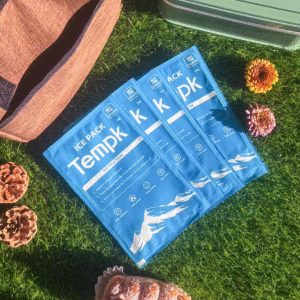
Which specifications define a reliable pack of 24 dry ice pack sheet for food, pharma, and labs
How to size your dry-ice mass with quick math for 24–120 hours
Which film thickness and venting prevent cracks and bursts at −78.5 °C
What layouts reduce hot spots and cut total ice spend
What 2025 innovations help you ship longer with less ice
What is a pack of 24 dry ice pack sheet—and when should you use it?
Short answer: a pack of 24 dry ice pack sheet is a flexible sheet with twenty-four equal cells prefilled with pellets or nuggets that you fold or layer around the payload. Use it when you want uniform cold, tidy dosing, and easy counting across repetitive pack-outs.
The geometry spreads cold surface area and speeds packing. In e-commerce frozen food, diagnostics, and seafood export, crews pack faster and with fewer overfills because the cells serve as a built-in measuring cup. The pack of 24 dry ice pack sheet also reduces dust and cleanup, boosting bench safety and consistency.
Pellet size and cell volume—what should you target?
For tight cavities, ~3 mm “rice” pellets flow evenly into small cells. For slower loss, ~16 mm pellets hold mass longer. Specify grams per cell with a ±5–7% tolerance so receiving teams can audit quickly.
| Cell spec | Typical value | Pass/Fail check | What it means for you |
|---|---|---|---|
| Cells per sheet | 24 | Count and seam integrity | Repeatable dosing & coverage |
| Grams per cell | 15–25 g | Weigh 10 cells; ±5–7% | Predictable total mass per sheet |
| Venting | Micro-perfs or laser pinholes | Fog test for gas escape | Lower burst risk and steadier loss |
| Film thickness | 110–150 μm (≈3–4 mil) | Cold-flex bend test | Fewer cracks at −78.5 °C |
Practical tips for your bench team
Use standoffs or trays so film never rubs on sharp corners during transit.
Split mass top/bottom on tall cartons to flatten gradients.
Leave 10–15 mm headspace under the lid so CO₂ can vent safely.
Real-world case: A diagnostics shipper switched from loose pellets to a pack of 24 dry ice pack sheet. Packing time dropped by about one quarter, while arrival-temperature variation narrowed, reducing frozen claims across a 72-hour lane.
How do you size a pack of 24 dry ice pack sheet for 24–120 hours?
Use a fast formula, then convert mass to sheet counts and place by zones.
Insulation Factor: VIP 0.7, PUR 0.8, EPS 1.0, Corrugated 1.5. Add +10% for warm (20–30 °C) and +20% for hot (>30 °C) lanes. Convert to sheets by dividing by the mass of one pack of 24 dry ice pack sheet (cells × grams per cell). Place 40–50% bottom, 35–40% sides, and 10–20% top.
Example: 20 L EPS, 72 h → 0.10 × 20 × 3 × 1.0 = 6.0 kg. If one pack of 24 dry ice pack sheet weighs 0.48 kg, you need 13 sheets (round up). Split: 6 bottom, 5 sides, 2 top.
Quick reference table—target mass and per-cell loading
| Hours | EPS target (lb) | VIP target (lb) | Per-cell if 24 filled | Why it helps |
|---|---|---|---|---|
| 24 | 5–10 | 3–8 | 0.21–0.42 lb | Add a 24-hour buffer in hot season |
| 48 | 10–20 | 6–14 | 0.42–0.83 lb | Balance top/bottom to flatten gradient |
| 72 | 15–30 | 9–20 | 0.63–1.25 lb | Consider a block underlay |
| 96 | 20–40 | 12–26 | 0.83–1.67 lb | Plan re-icing or higher-R insulation |
Bench-ready “Lane Calculator” (engagement booster)
Which films and vents keep a pack of 24 dry ice pack sheet from cracking or bursting?
Choose LLDPE/EVA at 3–4 mil or nylon/PE co-ex where abuse is high, and always provide a leak path for CO₂. Thicker film improves durability but not hold time. Hold time comes from insulation quality and total mass.
At −78.5 °C, commodity LDPE becomes notch-sensitive. Rounded seams ≥6 mm with anti-burst patterns survive hub handling. A pack of 24 dry ice pack sheet should include documented venting area so gas escapes; airtight packaging is the real risk because 1 kg of dry ice makes roughly 541 L of CO₂ gas.
Self-check: spec & safety
Film: LLDPE/EVA 3–4 mil, or nylon/PE where puncture risk is high.
Vented inner and outer: micro-perfs or fold-and-clamp; never airtight.
Labels: UN 1845, proper shipping name, and net dry-ice mass (kg).
Layout: 40–50% bottom, 35–40% sides, 10–20% top; headspace 10–15 mm.
Monitor CO₂ on docks; train to the 5,000 ppm workplace limit.
Helpful decision tools
Check the details before you choose packaging
These quick tools can help you compare route risk, sizing needs, coolant choices, and packaging details before you request a quote.
01Material guideInsulation Material Reference
Compare insulation material choices for different cold chain packaging needs.
Compare materials02Handling riskInsulation Material Drop Resistance
Review drop resistance and handling factors before choosing insulation materials.
Check resistance03Ice pack estimateIce Pack Calculator
Estimate gel ice pack quantity for chilled shipments and practical route planning.
Estimate ice packs
Good-Better-Best film picks
| Use case | Good | Better | Best | What it changes for you |
|---|---|---|---|---|
| Pellets, parcel | 3 mil LLDPE | 3 mil LLDPE/EVA | 3 mil nylon/PE | Better cold-flex and puncture resistance |
| Blocks/rough hubs | 4 mil LLDPE/EVA | 4 mil nylon/PE | 4 mil nylon/PE + inner liner | Fewer tears around shards |
| Protected liner | 2 mil LLDPE | 2 mil EVA | 3 mil LLDPE/EVA | Only if fully tray-protected |
How do you place a pack of 24 dry ice pack sheet for even results?
Standardize three patterns and train to them.
| Pattern | When to use | Steps | What it does for you |
|---|---|---|---|
| Top + Bottom sheets | 24–72 h | 12 cells top, 12 bottom; standoffs | Flattens vertical gradients |
| Block + Sheet | 72–120 h | Block base + 24-cell sheet on top | Stabilizes hold; smooths cold |
| Sheet wrap | Odd shapes | Pre-fold around trays | Conformal cooling and tidy bench work |
Actionable tips for specific scenarios
Peak-season air lanes: Add a full-day buffer for delay protection.
High-abuse hubs: Use nylon/PE co-ex and wider seams (≥6 mm).
Tight regulatory checks: Mark UN 1845, proper shipping name, and net mass.
Field example: A seafood exporter added a block plus a pack of 24 dry ice pack sheet on top. Long-haul hold extended by about a day with similar total mass due to better surface contact.
2025 trends for the pack of 24 dry ice pack sheet
The 2025 playbook favors right-sizing and vented design. A pack of 24 dry ice pack sheet paired with VIP walls often cuts mass by roughly one quarter while keeping hold. Converters now provide documented micro-perf areas and pocket tolerances, making audits faster and pack-outs more consistent.
What’s new this year
Vented outers by default – reduces burst risk
Documented cell tolerances – faster QA
Pre-folded kits – lower training time
Market signals show shippers shifting long lanes to VIP or PUR to reduce dry-ice mass and claims. Teams also deploy CO₂ monitors set below 8-hour limits to improve safety on docks.
FAQ
What is a pack of 24 dry ice pack sheet?
A flexible, vented sheet with twenty-four cells prefilled with pellets or nuggets for uniform coverage and easy dosing.
How much dry ice should I load per day?
Plan 5–10 lb per 24 h for EPS (less for VIP), then add one extra day as a buffer.
Does thicker film extend hold time?
No. Thicker film reduces cracks; hold time depends on insulation and total dry-ice mass.
Can I seal the package airtight?
No. Dry ice creates CO₂ gas; airtight packages can bulge or fail inspection.
Which pellet size works best?
3 mm pellets flow into small cells; 16 mm pellets sublimate slower and are easier to handle.
Summary and next steps
A pack of 24 dry ice pack sheet makes frozen shipping faster, cleaner, and more repeatable when you size correctly, use tough vented film, and standardize placement.
Next steps:
Run the sizing calculator.
Pick film gauge and venting.
Train one standard layout per lane.
Validate with a data logger.
About Tempk
We design and supply cold-chain solutions for frozen, refrigerated, and controlled-room-temperature shipments, centered on the pack of 24 dry ice pack sheet. Our testing labs and field pilots help clients cut re-ships and dry-ice spend while maintaining compliance and quality.
Talk to an expert: Get a lane review, a mass recommendation, and a pack-out template for your next frozen route.