Pharmaceutical Ice Box Clinical Trials Manufacturer: An Evidence-Based Supplier Selection Framework
The right answer to pharmaceutical ice box clinical trials manufacturer begins with a controlled use case, not a catalog model. Define the payload, required condition, route, ambient exposure, packout, handling, cleaning, evidence, and commercial volume before choosing the box. The final product should be judged on usable capacity, construction, operational fit, production consistency, and total delivered cost.
The practical objective is whether the manufacturer can support a controlled packaging system and documented operating process matched to the protocol, product label, route, and site workflow. The following decision framework brings together the most useful product, technical, compliance, operational, and purchasing considerations while keeping all performance statements tied to the conditions that actually support them.
Write the Operating Requirement in Plain Language
The first specification should describe the operating job: move investigational medicinal products, comparators, samples, or ancillary temperature-sensitive supplies while preserving product condition, accountability, labeling, and chain of custody. It should identify the users, the loading location, the receiving location, the expected handovers, and the moment at which temperature responsibility changes. This prevents the supplier from filling unknowns with assumptions. It also allows operations, quality, and procurement teams to review the same requirement rather than maintaining separate informal versions.
Payload definition needs more detail than a weight or nominal volume. The planned load may include site kits, treatment packs, blinded cartons, biological samples, return materials, or small-batch supplies whose dimensions and handling rules may change by trial arm. Record the primary-pack dimensions, orientation limits, number of units, thermal condition at packing, headspace, fragile areas, and whether the load must remain separated from coolant. A cavity that appears large enough can become unusable if the opening is narrow, corners are heavily radiused, or a basket and divider consume the critical dimensions. In the final decision, check the point for the clinical-supply lane against the actual payload.
Route mapping is equally important. For central depot to regional depot, depot to research site, direct-to-patient delivery, sample return, and rescue shipment with different handovers and exposure risks, note planned transit time, likely delay, staging temperature, direct sun, vehicle air circulation, repeated opening, transfer between carriers, and receiving inspection. These inputs do not produce a guaranteed hold time on their own, but they define the conditions that a supplier or test laboratory must reproduce. Without them, a quotation can only cover a generic box, not a reliable distribution process. Before final release, review this point for the clinical-supply lane with operations and quality.
Material Selection Should Follow the Failure Mode
A typical insulated box can combine insulated structures and coolant components selected for thermal performance, cleanability, reuse strategy, payload protection, and compatibility with labels or security devices. The insulation slows conduction and convection. The outer structure protects against impact and provides attachment points. The lid joint, drain, handle bosses, fasteners, and panel edges can create thermal bridges or leakage paths. For that reason, a material name alone does not predict performance. Two boxes made with the same nominal polymer may behave differently because of wall thickness, foam quality, geometry, and assembly.
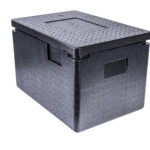
Common options carry different tradeoffs. Hard polymer shells can be cleanable and durable, but they add weight and require controlled molding. EPP can provide a lightweight, resilient structure for repeated handling, while exposed foam surfaces may need careful hygiene and damage review. EPS can be cost effective for protected one-way use but may chip under repeated rough handling. PU foam can provide rigid insulation inside a shell. Vacuum-insulated panels can reduce heat transfer through broad surfaces, but edge effects, puncture protection, and manufacturing control become critical. In the final decision, resolve this point for the clinical-supply lane before thermal qualification.
The material specification should identify the intended risks: configuration control, approved bill of materials, packout instructions, thermal evidence, serialized components, deviation handling, and documented manufacturing changes. It should control base resin or foam grade, pigments, additives, gasket material, adhesives, hardware, and any internal coating or label. When substitutions are allowed, define the approval evidence. Otherwise, a production change that looks minor commercially can alter food-contact status, odor, flexibility, thermal conductivity, fit, or long-term durability. For supplier approval, assign an owner and acceptance method for the clinical-supply lane.
Where the Product Ends and the Thermal System Begins
The pharmaceutical ice box for clinical-trial logistics provides a barrier to heat flow and a protective enclosure. It does not generate a controlled temperature by itself. Passive performance depends on insulation, coolant type and conditioning, coolant mass, payload mass, product starting temperature, internal arrangement, ambient profile, opening behavior, and acceptance criteria. A change to any one of these can alter results even when the outer box is unchanged.
That boundary is especially important for food, pharmaceutical, vaccine, and clinical-trial uses. A material declaration may show that a component is suitable for an intended contact condition. A structural test may show that a handle or slot survives a defined load. A thermal report may show how one packout behaved under one profile. A route qualification may then assess the operating lane. These documents answer different questions and should not be substituted for one another. In the final decision, connect this item for the clinical-supply lane to a measurable acceptance criterion.
Ask the factory to state every performance claim with its configuration. The statement should identify box size and revision, payload, coolant, conditioning, loading diagram, monitor position, ambient profile, duration, and acceptance range. If the supplier cannot provide that context, treat the claim as a screening indication only. The decision objective is not to demand a laboratory report for every early conversation, but to prevent an unsupported headline from becoming a purchase specification. At production launch, confirm that production controls preserve this point for the clinical-supply lane.
Design Around the Protocol, Product, and Site Workflow
Clinical-trial packaging must protect more than temperature. The correct storage condition comes from the product and trial documentation. The sponsor and site may need to maintain investigational-product accountability, label integrity, blinding, chain of custody, controlled returns, and documentation of any excursion. It should not be inferred from the word pharmaceutical or from a generic 2°C to 8°C assumption. At production launch, check the point for the clinical-supply lane against the actual payload.
The route can include a central depot, regional depot, courier, customs point, site pharmacy, patient home, and return location. Direct-to-patient and decentralized models add appointment timing, failed delivery, identity verification, home storage, and collection of unused product. Each event should appear in the lane map and operating instructions. A packout that passes a planned first delivery may be insufficient for a second attempt or an extended return journey. At production launch, test this assumption for the clinical-supply lane against the intended route.
Configuration control matters over the entire study. Coolant suppliers, box materials, labels, monitors, packout drawings, and courier instructions can change. ICH GCP principles and applicable GMP or GDP systems support documented, risk-proportionate control, but the exact responsibilities are study specific. Manufacturers should therefore support approved bills of materials, pilot lots, change notification, reproducible assembly, and evidence that links every shipment configuration to the correct instruction set. In the final decision, verify this point on representative units used for the clinical-supply lane.
The Final Decision Framework
| Gate | Question | Release evidence |
|---|---|---|
| Use-case gate | Is the payload, route, condition, and handling process defined? | Approved user requirement |
| Fit gate | Does the final packout fit with safe lifting and closure? | Packout drawing and measured sample |
| Evidence gate | Are claims tied to the right material, box, packout, or lane? | Evidence map and test reports |
| Quality gate | Can production reproduce the approved configuration? | Pilot-lot review and inspection plan |
| Cost gate | Are quotes normalized to the same scope and delivery basis? | Landed and lifecycle cost model |
| Operations gate | Can users pack, receive, clean, inspect, and return it correctly? | Controlled instructions and training plan |
| Change gate | Will substitutions require review? | Bill of materials and change-control agreement |
| Application gate | Whether the manufacturer can support a controlled packaging system and documented operating process matched to the protocol, product label, route, and site workflow | Signed requirement and unresolved-assumption list |
Treat the table as a cross-functional review for procurement, operations, engineering, and quality. It turns general preferences into reviewable evidence and exposes missing assumptions before price negotiation. Not every project needs the same depth, but every critical claim should have an owner and a defined way to verify it. At production launch, confirm the evidence scope for the clinical-supply lane before purchase.
From Catalog Sample to Controlled Production
The central supplier question is whether the manufacturer can support a controlled packaging system and documented operating process matched to the protocol, product label, route, and site workflow. A credible manufacturer should be able to translate that requirement into drawings, material definitions, inspection points, and a test plan. The conversation should move from broad claims to controlled details. Ask who owns the mold, which operations are performed internally, how critical component suppliers are approved, and how the bill of materials is maintained. A broad catalog can be useful, but it is not evidence of process control. In the final decision, verify this point on representative units used for the clinical-supply lane.
Separate concept, engineering, and pilot samples. The first sample confirms basic dimensions and ergonomics. A revised engineering sample confirms materials, fittings, labels, and packout fit. A pilot lot checks production tools, assembly, inspection, packaging, and variation across multiple units. The approved golden sample is best connected to drawings and measurable acceptance criteria. Approving one specially prepared sample without this bridge is a common source of mass-production surprises. In the final decision, protect the decision for the clinical-supply lane through change control.
Quality review should focus on configuration control, approved bill of materials, packout instructions, thermal evidence, serialized components, deviation handling, and documented manufacturing changes. Ask how nonconforming units are identified, whether measurements are recorded, how complaints are investigated, and how engineering changes are communicated. For high-control programs, require prior approval before substitutions. For lower-risk consumer use, the system can be simpler, but critical dimensions, materials, and safety features still need objective acceptance criteria. Before final release, check the point for the clinical-supply lane against the actual payload.
Where Cooler Box Cost Actually Comes From
The cost structure includes small-volume customization, controlled artwork, serialization, depot handling, qualification, route variability, return logistics, monitoring, and change control over a long study. Suppliers can quote very different prices while all appear to offer the same size. Differences may come from insulation thickness, material grade, process, hardware, inspection, packaging, or simply from excluded items. A fair comparison requires one configuration sheet and one commercial comparison table. In the final decision, assign an owner and acceptance method for the clinical-supply lane.
Separate one-time costs from recurring costs. Tooling, molds, artwork, engineering, and some tests may be one-time or amortized. Unit construction, accessories, inspection, cartons, and freight recur. Then separate acquisition cost from operating cost: conditioning coolant, washing, drying, storage, asset tracking, return transport, damage, repair, and replacement. The best metric may be cost per successful route rather than purchase price per box. For supplier approval, check the point for the clinical-supply lane against the actual payload.
Freight deserves early attention because insulated boxes can be bulky. External dimensions, nesting, collapsibility, carton quantity, pallet pattern, and container loading may change landed cost more than a small factory-price difference. Ask suppliers to quote the same delivery term and packing configuration. When reusable boxes return empty, the reverse cube and handling labor should also enter the model. For supplier approval, confirm that production controls preserve this point for the clinical-supply lane.
Design the Daily Process Alongside the Box
A box moves through people and places, not only through a thermal chamber. The operating plan should cover preconditioning, packing, closure, labeling, monitor activation, handover, receiving, unloading, cleaning, drying, inspection, storage, and return. For central depot to regional depot, depot to research site, direct-to-patient delivery, sample return, and rescue shipment with different handovers and exposure risks, the highest risk may be a loading dock or failed delivery rather than the planned vehicle time. At production launch, verify this point on representative units used for the clinical-supply lane.
Helpful decision tools
Check the details before you choose packaging
These quick tools can help you compare route risk, sizing needs, coolant choices, and packaging details before you request a quote.
Insulation Material Drop Resistance
Review drop resistance and handling factors before choosing insulation materials.
Check resistancePackaging Selector
Compare insulated packaging options by product, route, and temperature need.
Find packagingBox Liner & Pallet Cover Sizing
Check box liner and pallet cover sizing logic for insulated packaging projects.
Estimate sizingInstructions should be visual and configuration specific. Show coolant position, product orientation, divider placement, monitor location, closure sequence, and rejection criteria. Use labels that survive the cleaning and route environment. If the box has drains, straps, wheels, replaceable gaskets, or rope handles, include inspection points for those components. Complexity should be reduced wherever possible because occasional users do not remember long procedures. Before final release, assign an owner and acceptance method for the clinical-supply lane.
Receiving teams need a decision path. They should know how to inspect the seal, read the monitor, identify damage, record an excursion, quarantine the payload, and contact the responsible quality person. Returned boxes should not automatically go back into the clean fleet. A simple quarantine and inspection step prevents cracked shells, missing plugs, contaminated handles, or changed coolant from silently weakening the system. In the final decision, assign an owner and acceptance method for the clinical-supply lane.
Reuse Only Works When the Box Comes Back
The relevant sustainability question is right-sized reusable systems where returns are reliable, or carefully minimized single-use systems where global site dispersion makes reverse logistics impractical. A reusable box can reduce packaging consumption on a stable closed loop, but it also requires more material, cleaning, storage, and return transport. A one-way lightweight system may be preferable on a dispersed lane where return rates are low. The choice should be made from the operating network rather than from a single marketing attribute. For supplier approval, document the limitation for the clinical-supply lane rather than implying universal suitability.
Right-sizing is often the fastest improvement. Excess volume increases insulation area, coolant demand, freight cube, and warehouse space. Overbuilt hardware adds mass. Underbuilt products fail early and create replacement waste. A good design uses enough material in the right places, protects replaceable wear parts, and allows inspection before a damaged unit re-enters service. For supplier approval, link this decision for the clinical-supply lane to the approved drawing and packout.
Track a small set of practical indicators: return rate, trips per asset, damage reason, wash time, drying time, lost components, empty return cube, and retirement route. These data show whether the system is improving. Sustainability claims should be updated when the route changes. A box used for fifty controlled local trips has a different footprint from the same box shipped once across an international lane and never returned. Before final release, include this limit in the operating instruction for the clinical-supply lane.
A Typical Route Review
Consider this typical situation: a decentralized study ships patient kits to homes, but delivery appointments vary and a failed first attempt can add hours of uncontrolled exposure and complicate accountability. The first response should not be to select a catalog size. The team should measure the payload, build the proposed packout, map the route, and observe how users lift, secure, open, clean, and return the box. This creates a shared record of the real constraints.
Next, the buyer should request two or three controlled alternatives in place of a long catalog. Each option should list what is included, what evidence exists, what still needs testing, and which operating changes it requires. One option may prioritize lower weight, another repeated durability, and another higher thermal resistance or more usable volume. The team can then compare tradeoffs instead of arguing over isolated features.
Complete the sequence through an engineering sample, packout trial, pilot production, and formal release. Record dimensional measurements and handling observations, not just photographs. For temperature-sensitive uses, confirm the complete packout under an appropriate profile and define how excursions will be handled. The result is a procurement decision tied to evidence and workflow, not to a promise that cannot be reproduced later. At production launch, confirm the evidence scope for the clinical-supply lane before purchase.
Five Errors That Create Expensive Rework
The points below are worth checking before tooling or mass production. Each one can create avoidable rework when it remains unresolved during supplier selection. Before final release, link this decision for the clinical-supply lane to the approved drawing and packout.
- Release blocker: treating all clinical supplies as 2°C to 8°C products.
- Release blocker: qualifying only the outbound route and ignoring returns or failed delivery.
- Release blocker: changing coolant or labels without formal assessment.
- Release blocker: making site instructions too complex for occasional users.
- Release blocker: allowing the box design to reveal blinded treatment allocation.
A procurement concern becomes manageable when the supplier can document the answer. It should trigger a specific clarification, sample check, or evidence request. The goal is to resolve uncertainty while changes are still inexpensive. A supplier that responds with drawings, conditions, and corrective actions is more useful than one that repeats a broad claim. At production launch, state the applicable conditions for the clinical-supply lane in the supplier response.
What a Useful Supplier Answer Should Cover
For this pharmaceutical ice box for clinical-trial logistics, the following questions create more value than asking whether the supplier is reliable. They force the discussion toward the intended use, measurable specifications, and evidence. At production launch, state the applicable conditions for the clinical-supply lane in the supplier response.
- Release question: What storage and transport conditions are stated for the specific investigational product?
- Release question: How will randomization, blinding, labeling, and accountability be protected during packing and delivery?
- Release question: Which routes, seasons, failed-delivery scenarios, and return steps must the packout address?
- Release question: Where will the temperature monitor be placed, read, and reconciled?
- Release question: How are configuration changes approved across the study?
- Release question: Can the manufacturer support pilot lots and consistent repeat production over the trial duration?
A complete answer may be a drawing, table, sample, test plan, or documented limitation. A prospective vendor does not need to have every final report before early development, but it should be able to state what is known, what is assumed, what can be customized, and what must be tested. That transparency is a better risk signal than a long list of unsupported certifications. In the final decision, record this point for the clinical-supply lane as a controlled requirement.
Maintenance and Spare-Part Planning
Batch release should begin with objective checks rather than appearance alone. Confirm critical internal dimensions, lid closure, hardware, labels, accessories, and packaging against the approved specification. Select multiple units from different cartons. Record results so later complaints can be compared with the original batch rather than with memory or a single sample. For supplier approval, assign an owner and acceptance method for the clinical-supply lane.
Agree on damage criteria before boxes enter operation. Cracks, deformed seals, missing plugs, frayed handles, loose anchors, contaminated surfaces, punctured panels, or unapproved coolant should trigger quarantine. Some items can be repaired with controlled parts; others should be retired. A clear rule prevents users from keeping a visibly damaged box in service simply because it still closes. In the final decision, link this decision for the clinical-supply lane to the approved drawing and packout.
Record approved changes to material, supplier, mold, process, dimensions, labels, packaging, and packout. Review whether each change affects contact status, thermal evidence, structural tests, freight, cleaning, or user instructions. This discipline is not limited to regulated programs. It protects any buyer from gradual configuration drift across repeated orders. At production launch, include this limit in the operating instruction for the clinical-supply lane.
Frequently Asked Questions
Is a pharmaceutical ice box for clinical-trial logistics enough to control temperature?
No. The box slows heat transfer, but the complete result depends on coolant, payload, starting temperature, loading pattern, ambient exposure, handling, and monitoring. Any stated duration should identify the tested configuration and acceptance criteria. For regulated or high-value products, additional packout or lane qualification may be required. At production launch, confirm that production controls preserve this point for the clinical-supply lane.
Do all clinical-trial shipments use 2°C to 8°C?
No. The required condition comes from the investigational product, comparator, protocol, labeling, and sponsor procedures. Some supplies may be frozen, controlled at room temperature, or have special excursion allowances. The packout should be designed and qualified for the actual product requirements. In the final decision, resolve this point for the clinical-supply lane before thermal qualification.
Can one laboratory hold-time result be used for every route?
Not without a condition-by-condition review. A laboratory result applies to the tested ambient profile, payload, coolant, monitor positions, and acceptance range. It can support route planning, but significant differences in delay, direct sun, opening frequency, vehicle conditions, or payload may require further assessment or qualification. Before final release, place this requirement for the clinical-supply lane in the receiving checklist.
What is the best first sample test?
The earliest practical check is a full dimensional packout. Load the actual payload, coolant, divider, monitor, labels, and accessories. Check closure, lifting, access, cleaning, and packing time. Once the physical configuration is stable, thermal and structural testing becomes more meaningful and less likely to be repeated after a design change. At production launch, confirm the evidence scope for the clinical-supply lane before purchase.
Conclusion
The final selection for pharmaceutical ice box clinical trials manufacturer should pass six tests: use-case fit, usable capacity, evidence, production consistency, operating simplicity, and total cost. A shortlisted manufacturer that states assumptions, documents limitations, and supports pilot verification is more valuable than one offering universal claims. Release the order only when the configuration and responsibilities are clear enough to repeat.
About Tempk
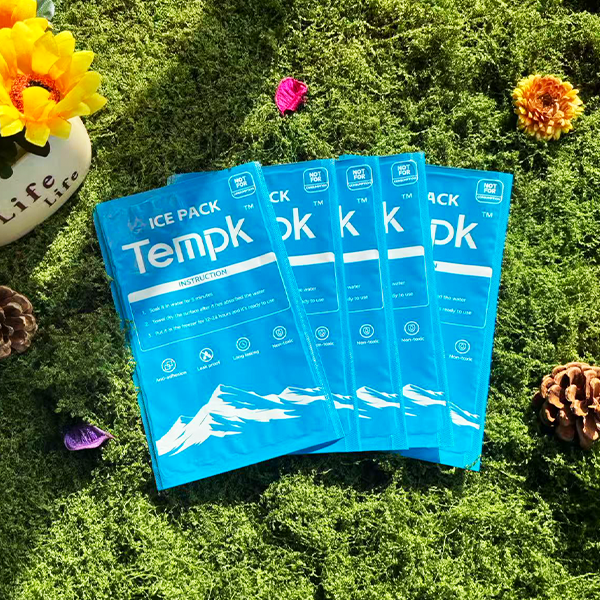
Tempk is the cold-chain packaging brand of Shanghai Tempk Industrial Co., Ltd. The company develops and supplies products including gel packs, rigid ice bricks, insulated bags, EPP boxes, medical cooler boxes, insulated liners, and pallet covers. For projects involving insulated boxes, Tempk can discuss capacity, insulation structure, coolant compatibility, custom features, and packout requirements. Product suitability and performance should be confirmed against the specific payload, route, temperature condition, and evidence required by the buyer. Before final release, document the limitation for the clinical-supply lane rather than implying universal suitability.
Next Step
Before final supplier selection, share the protocol-defined temperature condition, kit dimensions, lane map, monitoring plan, and trial duration so Tempk can discuss a controlled packaging approach.