VIP cooler container for temperature controlled shipping: Practical Selection Guide
The best use of a VIP cooler container for temperature controlled shipping is to connect thermal protection with a clear operating plan. Start with the product requirement, then define the route, payload, coolant, monitoring evidence, and receiving decision. VIP insulation can be valuable for difficult or high-value cold-chain shipments, but it should be selected through evidence, not assumption. This publication-ready guide brings the buyer, technical, and operational questions into one practical framework.
Quick answer: use VIP cooler container for temperature controlled shipping when the shipment needs stronger passive insulation, defined packout control, and practical evidence for the receiver. Do not use it as a substitute for route qualification, correct coolant conditioning, or quality review. The container should be judged as one component of a complete cold-chain system.
For most buyers, the practical question is: what evidence do we need before we trust this package at scale? That evidence may be a qualification summary, a supplier data sheet, a packout instruction, a sample review, a logger placement recommendation, or an internal quality approval. The goal is not to collect documents for their own sake. The goal is to reduce uncertainty before real product is placed at risk.
A practical decision path for the right VIP solution
The best decision path is neither purely technical nor purely commercial. A VIP cooler container for temperature controlled shipping should be judged by how well it connects product requirements, lane exposure, packout repeatability, monitoring evidence, and supplier support. A premium material can still disappoint if the payload does not fit, the coolant is conditioned incorrectly, or the receiver cannot interpret the logger report. A simpler design can work well if the lane is short, stable, and documented.
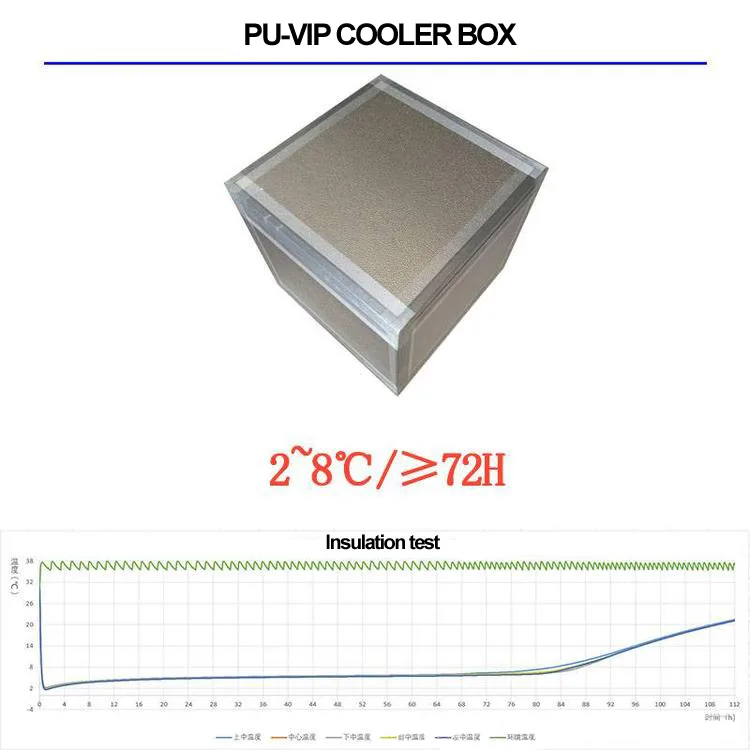
VIP means vacuum insulated panel, a high-performance insulation component built around an evacuated core sealed inside a barrier envelope. In cold-chain packaging, VIP panels are usually protected by inner and outer structural layers because the panel itself is not meant to take abuse directly. The practical value is not that the panel is magical; it is that reduced heat transfer can give the packout more thermal margin or preserve more internal payload space than a thicker conventional foam wall. Buyers still need to confirm the complete packout, because insulation alone does not define the required temperature range, coolant conditioning, or receiving criteria.
The specific use case here is commercial temperature-controlled parcel or regional shipments where passive packaging must perform without power. That means the buyer should define the payload condition first, then decide how much passive insulation, coolant control, monitoring, and documentation are needed. A VIP container may be the right answer, but only after those conditions are stated clearly.
Separate temperature protection, monitoring, and compliance proof
A VIP shipper is normally a passive temperature-controlled packaging component unless it is paired with powered refrigeration. Passive means the system relies on insulation, preconditioned coolant, phase change material, dry ice where appropriate, and a repeatable loading method. It does not actively cool itself after departure. This distinction matters in RFQs because some buyers use words such as refrigerated, smart, and temperature controlled in the same sentence. A supplier needs to know whether you expect passive protection, active refrigeration, temperature monitoring, or a hybrid logistics workflow.
Temperature monitoring should be treated as evidence, not as thermal protection. A logger can show whether a shipment stayed inside the required range and may help the team investigate a deviation, but it cannot correct a weak packout. Logger placement also matters. A sensor placed against a frozen coolant pack, near a warm wall, or in an air pocket may not represent the payload condition. For important shipments, the monitoring plan should be reviewed with the same care as the coolant map.
This separation prevents two common errors. The first is believing that a data logger protects the product. The second is believing that insulation alone proves a controlled shipment. Thermal protection, monitoring evidence, and compliance documentation are connected, but each has a different job. A strong packout should make these jobs visible.
The practical value of this approach is that it keeps the buying discussion specific. Instead of comparing containers by appearance or category name, the team can compare the evidence behind each option. That evidence may include packout instructions, material descriptions, test summaries, logger guidance, and procedures for inspection or reuse.
Match the container to payload, lane, and receiving decision
For refrigerated, frozen, or controlled-temperature products that need additional protection inside the lane, the container must match the payload and the lane at the same time. Payload review includes dimensions, mass, sensitivity, secondary packaging, and whether the product is damaged by freezing, warming, vibration, or contact with coolant. Lane review includes planned duration, handovers, ambient exposure, customs or hub dwell, and receiving readiness. If either side is vague, the packaging recommendation will be vague.
The specific use case here is commercial temperature-controlled parcel or regional shipments where passive packaging must perform without power. That means the buyer should define the payload condition first, then decide how much passive insulation, coolant control, monitoring, and documentation are needed. A VIP container may be the right answer, but only after those conditions are stated clearly.
RFQ evidence table
| RFQ item | Minimum useful detail | Decision value |
|---|---|---|
| Payload description | Product type, mass, dimensions, and sensitivity | Helps size the container and prevent poor fit |
| Temperature requirement | Required range and excursion handling rule | Defines the acceptance target |
| Transport lane | Origin, destination, mode, season, and handovers | Links package choice to real exposure |
| Packout design | Coolant type, conditioning, placement, dividers, and closure | Makes the result repeatable |
| Monitoring workflow | Logger position, start/stop process, report format, and review owner | Turns temperature data into usable evidence |
| Scale-up controls | Sample equivalence, production consistency, and change notification | Reduces surprises after approval |
This table is useful because it turns a general product inquiry into verifiable questions. It also keeps buyers from treating a VIP container as a single specification when the real decision depends on the full route, payload, coolant, monitoring, and documentation workflow.
Evidence to request before scaling from sample to production
Qualification is the bridge between a product claim and a real shipment decision. It asks a simple question: under a defined profile, with a defined payload and a defined packout, did the system maintain the required conditions? If one of those inputs changes, the evidence may no longer be directly transferable. That is why buyers should ask whether the stated performance reflects their payload mass, internal layout, coolant quantity, route duration, and expected ambient conditions.
Before scaling, ask for evidence that reflects the approved configuration. The sample stage should test more than visual appearance. Confirm that the construction, closure, VIP panel protection, coolant plan, internal layout, and instructions can be repeated in production. If a supplier changes a material, wall structure, or component after approval, the buyer should know how that change is communicated and evaluated.
Operating discipline after the box leaves your facility
The box leaves your facility, but the process continues. Preconditioning, product staging, label placement, logger activation, lid closure, carrier pickup, in-transit handling, and receiving inspection all affect the result. A VIP container can slow heat transfer, yet it cannot correct a warm payload loaded late, a missed pickup, or a receiver that forgets to download the logger. Operating discipline turns packaging design into shipment control.
Helpful decision tools
Check the details before you choose packaging
These quick tools can help you compare route risk, sizing needs, coolant choices, and packaging details before you request a quote.
Insulation Material Drop Resistance
Review drop resistance and handling factors before choosing insulation materials.
Check resistanceBox Liner & Pallet Cover Sizing
Check box liner and pallet cover sizing logic for insulated packaging projects.
Estimate sizingCoolant & PCM Reference
Compare coolant and PCM options when a route needs added temperature support.
Compare optionsA good instruction set should be short enough to use and specific enough to prevent improvisation. It should show the order of packing, coolant placement, logger location, closure method, label position, and receiving checks. For reusable units, it should also show inspection and cleaning steps before the next shipment.
Final buyer notes for a safer RFQ
A safer RFQ states the conditions instead of asking for a generic premium box. Include the required range, payload, dimensions, route, duration, season, transport mode, monitoring needs, reuse expectations, and documentation needs. Ask suppliers to state the assumptions behind any performance claim. If they cannot state the assumptions, treat the claim as a starting point rather than a decision basis.
Finally, decide what would make the option unacceptable. It may be too little usable volume, unclear logger placement, weak panel protection, no packout instruction, no change-control conversation, or poor fit with the return loop. Rejection criteria make the evaluation more objective and prevent teams from approving a container simply because the material sounds advanced.
From Sample Approval to Repeatable Shipping
Sample approval for VIP cooler container for temperature controlled shipping should not stop at appearance. The team should confirm that the sample can be packed by normal staff, that the payload fits after coolant and logger placement, that closure is repeatable, and that the receiver can inspect and document arrival without confusion. A strong sample that cannot be repeated in production is not a stable cold-chain solution.
When moving to repeat shipments, define change-control expectations. If the supplier changes panel material, shell design, lid structure, divider, or recommended packout, the buyer should be notified before the change affects real shipments. This is especially important for pharmaceutical, clinical, biological, and high-value products where small packaging changes may change the risk profile.
FAQ
What is the simplest way to start selecting a VIP container?
Start with the required product temperature range and the real lane. Then define payload mass, usable volume, duration, ambient exposure, coolant strategy, monitoring needs, and receiving acceptance rules. Only after those points are clear should you compare container style, dimensions, and price.
What evidence should a supplier provide?
Ask for evidence that matches your decision. This may include material information, packout instructions, test or qualification summaries, logger placement guidance, cleaning and reuse instructions, and sample-to-production controls. If a claim affects quality or compliance, ask what document supports it.
Is VIP packaging enough for clinical or pharmaceutical shipments?
VIP packaging may be one part of the answer, but the full system matters. Quality teams usually care about product temperature limits, qualification evidence, calibrated monitoring, route risk, SOP fit, and deviation handling. Packaging should be selected to support those controls, not replace them.
How should I compare two VIP box options?
Compare usable payload space, packout repeatability, coolant compatibility, panel protection, closure reliability, handling durability, monitoring layout, documentation support, and total operating cost. A lower unit price can be misleading if the box creates packing errors, extra freight, or weak receiving evidence.
Conclusion: Make the VIP Choice Evidence-Based
A VIP cooler container for temperature controlled shipping is most valuable when the buyer links the container to product limits, route exposure, packout repeatability, monitoring evidence, and receiving decisions. VIP insulation is one strong component, but it is not the whole cold-chain process.
For a safer RFQ, ask for the evidence behind each claim and confirm how the sample will scale into repeat shipments. The final choice should be practical for the people who pack, transport, receive, inspect, and approve the product.
Additional Notes for Internal Review
Another point worth checking for VIP cooler container for temperature controlled shipping is receiving behavior. A shipment is not complete when it reaches the address; it is complete when the receiver can inspect it, interpret the temperature evidence, and make the correct acceptance decision. If the package design makes logger retrieval difficult or hides the payload condition, the receiver may create a deviation even when the thermal design was adequate. Simple receiving instructions reduce this risk.
Storage before shipment is also part of the cold-chain process. Coolant conditioning, product staging, empty box storage, and packing room temperature can influence the starting condition. If one site packs in a controlled room and another packs beside a loading dock, the same box may begin the lane with different thermal conditions. Buyers should standardize the preparation steps before judging container performance.
Finally, consider how changes will be handled after approval. Substituting a divider, changing a lid component, using a different coolant source, or altering the logger location may seem minor, but each change can affect the way heat moves through the packout or how evidence is interpreted. A clear change conversation between buyer and supplier is especially important when shipments are regulated, high value, or repeated across multiple locations.
About Tempk
Tempk offers cold-chain packaging solutions that include VIP cooler boxes and removable vacuum insulation panel cooler box options for medical, pharmaceutical, food, and other temperature-sensitive logistics needs. The relevant value for buyers is not only the insulated shell, but also the practical conversation around payload fit, coolant use, reusable handling, and documentation expectations. For VIP projects, Tempk can help buyers translate a route, product type, and temperature requirement into a packaging discussion that is more specific than a general cooler inquiry.
Ask Tempk to compare suitable cooler container options for your product, route, and handling conditions.