Supplier dry ice pack for dairy logistics: A Route-Ready Sourcing Framework
The right supplier dry ice pack for dairy logistics is not the sheet with the boldest duration claim. It is the component that fits a defined payload, insulated package, route, operating process, and acceptance decision, with evidence that remains valid at production scale. Buyers should separate hydration sheets from solid carbon dioxide, protect against both warming and overcooling, and approve the complete system rather than the coolant in isolation.
This framework is designed for a dairy manufacturer, distributor, third-party logistics provider, quality manager, or sourcing team that needs to move from search term to controlled purchase. It combines product fit, thermal design, material quality, supplier governance, qualification, operations, and total delivered cost. The outcome is a specification and packout that can be defended, taught, repeated, and improved.
Map Products, Packages, and Routes
A sound sourcing decision separates three questions that are often mixed together: what condition the payload requires, what cooling medium can support that condition, and what evidence proves the assembled packout on the intended route. Starting with a product name reverses that logic. Starting with the payload and decision criteria makes the supplier comparison useful.
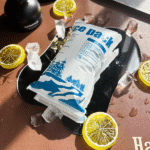
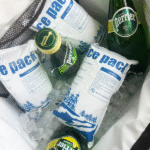
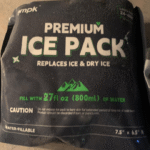
A hydration dry ice pack is a water-activated cell sheet that is frozen before use. It can provide broad, flexible cooling around dairy logistics, but it remains one component of the shipping system. It should not be treated as solid carbon dioxide, as a qualified shipper by itself, or as evidence of a universal duration. The goal is to support different dairy products and routes without treating milk, yogurt, cream, cultured products, butter, cheese, and frozen dairy as one thermal category.
The final selection must connect composition, thermal behavior, material integrity, insulation, payload geometry, conditioning, route exposure, monitoring, and operating control. When actual solid carbon dioxide is proposed, its separate safety and transport requirements enter the plan. When a water-based sheet is proposed, classify and approve that product from its own documentation.
Dairy logistics spans products with very different recipes, structures, package formats, and approved conditions. A tub of cultured product, a bottle of cream, a block of cheese, and a frozen dessert can share a brand but not necessarily a packout. A useful supplier starts by mapping product families and route families. The dry ice pack is then specified as a coolant component inside an insulated and tested system, not as a shortcut around product knowledge.
Write a one-page shipment requirement before contacting suppliers. Include product identity and condition, primary package, payload dimensions and mass, dispatch temperature, upper and lower acceptance limits, route and handovers, seasonal exposure, insulation, receiving process, monitoring decision, planned volume, and applicable quality or market requirements. Mark unknowns for the pilot.
Separate product-safety limits from quality preferences and packaging-damage limits. They may lead to different sensor positions and actions. The receiver should know which observation or data set triggers acceptance, hold, investigation, or disposition. A thermal design cannot be optimized until the decision rule is clear.
Assign the Right Cooling Technology to Each Family
Compare technologies against the requirement. Hydration sheets offer flat pre-activation storage, broad surface coverage, and flexible cell geometry. Gel packs can be easier to deploy in some chilled parcels. PCM can be selected around a narrower phase-change condition. Solid carbon dioxide supports appropriate deep-frozen uses but has distinct handling and transport controls. Active equipment may be justified on high-risk complex lanes.
Within dairy logistics, product and route cases still need segmentation. The table shows why a single catalog SKU cannot be assumed to serve every case.
| Product or route case | Main exposure or failure | Useful design response | Assumption to avoid |
|---|---|---|---|
| Fluid milk and cream | Warming, local freezing, leakage, and cap stress | Use buffered cooling and product-specific distribution limits | High water content does not remove contact risk |
| Yogurt and cultured dairy | Temperature abuse, cup damage, whey separation, and seal defects | Protect cups from pressure and monitor the approved condition | Product quality can change without obvious package damage |
| Cheese and butter | Wide variation by style, moisture, fat, and packaging | Use SKU-specific quality limits and route needs | Do not inherit a fluid-milk packout |
| Frozen dairy | Thawing, texture damage, and long dwell | Evaluate a frozen system and compliant carrier options | Water-based sheets and solid carbon dioxide are not interchangeable |
Choose the simplest technology that creates an adequate, demonstrated margin without introducing a larger cold-side, moisture, handling, or compliance risk. If two options appear viable, compare them through the same payload, profile, acceptance rule, and total-cost boundary.
Write a Supplier Specification With Clear Boundaries
Build the architecture from outside to inside: outer carton or reusable container, insulation, liner or vapor control where needed, coolant location, buffer, payload holder, product packages, headspace management, sensor positions, closure, and labels. Every layer should have a job. Removing or moving a layer after qualification is a design change, not a harmless packing preference.
Route analysis should explicitly challenge standardizing on one dairy packout before segmenting SKUs, accepting a broad food-grade statement without intended-use documentation, allowing substitutions in film or absorbent media without change review, mapping only a full load and ignoring partial distribution cases, and treating temperature evidence as proof that hygiene and package integrity were controlled. Use alternatives such as refrigerated distribution for pallet and dense route movement, gel packs for freeze-sensitive chilled parcels, PCM plates for reusable dairy totes, and solid carbon dioxide or active systems for approved frozen applications where they solve the exposure more directly. For example, better vehicle control may be more effective on a dense route, while a parcel network may need stronger passive protection at walls and handovers.
Application-specific technical considerations include Dairy products vary in water, fat, protein, salt, fermentation, structure, and package headspace, all of which affect thermal and quality response., A flexible cell sheet can conform to cases and totes, while buffers and dividers protect fragile cups and bottles., Payload thermal mass, dispatch condition, insulation, route openings, and return handling determine the useful cooling demand., The required sensor map changes between a bottle case, a yogurt tray, a cheese carton, and a frozen dessert shipper., and Material cleanliness, odor, leakage, and traceability matter because a coolant defect can contaminate secondary packaging and disrupt receiving. Convert each material consideration into a drawing feature, supplier control, operating step, inspection, or protocol variable. Otherwise it remains an observation that cannot protect routine shipments.
Qualify Representative and Worst-Case Packouts
Use decision gates to compare manufacturers. This keeps procurement from awarding on unit price before composition, evidence, production control, and scale have been reviewed.
| Decision gate | Pass condition | Warning sign |
|---|---|---|
| Application fit | The supplier asks about dairy logistics, payload, route, insulation, and acceptance limits | A pack count is offered from keyword or carton size alone |
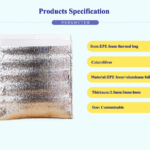
| Specification | Dimensions, materials, activation, tolerances, and intended use are written | The sample is treated as the entire specification |
| Evidence | Test conditions and system boundaries are disclosed | Component claims are presented as universal packout performance |
| Quality control | Lot traceability, inspection, nonconformance, and change notification are defined | Substitution is allowed without buyer review |
| Scale | Capacity, carton packing, lead-time assumptions, and peak planning are discussed | Only nominal monthly output is discussed |
| Support | Production-representative samples and a route trial plan are available | The buyer is urged to skip the pilot |
After the initial screen, request production-representative samples and a written specification. Review the manufacturer's proposed tolerances, test methods, lot identification, nonconformance handling, retained samples, complaint response, and notice period for change. Define who owns tooling, artwork, and approval of custom cell patterns or packaging.
Commercial terms should make assumptions visible. Confirm quotation unit, dry or activated condition, carton quantity, palletization, minimum order, lead-time basis, sample status, freight term, documentation, and peak capacity without turning any unverified figure into a performance promise. Compare landed and operating cost under the same scope.
Deploy With Traceability and Site Discipline
Qualification starts with an approved protocol and ends with a controlled report, drawing, specification, and work instruction. Test the intended payload or a justified surrogate, real insulation and coolant, defined conditioning, assembly variation, a representative or risk-based ambient profile, appropriate duration, and pre-agreed acceptance criteria. Include physical inspection and receiving behavior.
Helpful decision tools
Check the details before you choose packaging
These quick tools can help you compare route risk, sizing needs, coolant choices, and packaging details before you request a quote.
Ice Pack Calculator
Estimate gel ice pack quantity for chilled shipments and practical route planning.
Estimate ice packsCompliance Checklist Generator
Build a practical checklist for packaging review, shipping, and documentation.
Build checklistDry Ice Calculator
Estimate dry ice needs for frozen or ultra-cold shipments before packing.
Estimate dry icePlace loggers at expected warm and cold risk locations. A center-only map can miss wall heat and frozen contact. Define accuracy, calibration status, interval, synchronization, start and stop logic, data ownership, and treatment of anomalies. Repeat the test sufficiently to understand system variation rather than selecting one favorable run.
Operationalize these controls: Create approved packout families by dairy SKU, package, route, and season., Control hydration, draining, freezing, staging, and release at each distribution site., Protect cups, seals, caps, and labels from direct contact and free water., Train operators to recognize wrong sheet count, partial freezing, damage, and route mismatch., and Use receiving data and deviation review to maintain the system after launch. Training should include wrong-component prevention, freeze-status checks, damaged-sheet rejection, route-variant selection, and deviation escalation. Observe actual operators during launch; ambiguity often appears only at production speed.
Apply the relevant claim boundaries as well. Applicable dairy and sanitary-transport requirements depend on the product and market, while the product specification remains the central shipping condition., U.S. Grade A pasteurized milk references use 7 degrees Celsius or 45 degrees Fahrenheit or below, but this figure should not be generalized to all dairy categories or countries., and Actual solid carbon dioxide has distinct handling and transport requirements. A water-activated coolant should be described and classified from its composition. When product, payload, coolant, insulation, conditioning, route, carrier, season, site, logger, or supplier material changes, let the quality team determine whether document review, confirmation testing, or requalification is needed.
Optimize the Portfolio on Delivered Outcomes
Calculate cost per successful shipment, not price per dry sheet. Include inbound freight and cube, storage, hydration water, labor, drainage, freezer energy and capacity, racks, buffers, insulation, assembly time, monitoring, rejects, leakage, product damage, customer service, disposal, returns, and the cost of a failed or delayed delivery. State which items are measured and which are assumptions.
A portfolio approach can reduce overpacking by matching protection to product families instead of using the most conservative configuration everywhere.
Flat storage can reduce inbound cube, while local freezer energy, water, labor, film, returns, and dairy loss determine the wider result.
Reusable assets need sanitation and performance controls that suit dairy operations.
Optimize in controlled steps. Remove excess headspace, improve insulation fit, adjust coolant placement, create qualified seasonal variants, simplify operator motions, or improve receiving timing before reducing thermal margin without evidence. Track product acceptance, excursions, damage, complaints, pack loss, labor, and energy by route family.
A stable program does not mean a frozen design. It means changes are proposed with a reason, evaluated against the system boundary, tested when necessary, approved, documented, trained, and traced. That discipline allows cost and sustainability improvement without turning the live distribution network into an uncontrolled experiment.
Frequently Asked Questions
Can one dry ice pack serve all dairy products?
It may serve several compatible packouts, but it should not be assumed. Fluid milk, yogurt, cheese, butter, cream, and frozen dairy differ in product condition, package strength, thermal mass, and freeze sensitivity. Segment first, then test representative systems.
What is the supplier's role in qualification?
A supplier can provide component information, samples, production controls, and packout input. The shipper and its quality team remain responsible for approving the complete system against the product, route, insulation, conditioning, monitoring, and applicable requirements.
Why test partial loads?
As cases are removed or orders vary, air space, coolant-to-product ratio, and the location of warm zones can change. A full load may not represent a small order or the end of a delivery route.
Which documents should be requested?
Depending on the intended use, request product description, composition or safety information, material declarations, activation instructions, specification, quality controls, traceability, change-control process, and relevant test support. Ask your quality team to define the exact list.
How can a dairy program avoid overpacking?
Create controlled packout families using product requirements, seasonal route data, package geometry, and qualification results. Review performance and deviations before reducing coolant. Do not optimize from one successful delivery or from component claims alone.
Approve a Controlled System, Not an Isolated Claim
The best sourcing outcome links six decisions: the payload requirement, cooling technology, pack architecture, manufacturer controls, qualification evidence, and operating process. If any link is missing, the buyer is relying on an assumption that may fail at scale or on a different route.
For dairy logistics, the practical next step is to document the product, route, payload, insulation, dispatch and receiving conditions, seasonal exposure, and evidence needs. Use that brief to compare production samples and design a trial. Only then freeze the commercial specification and rollout plan.
About Tempk
Tempk provides water-activated cell sheets and related cold-chain packaging support for food, seafood, medical samples, and other temperature-sensitive shipments. For dairy logistics, Tempk can review payload and route inputs, propose sheet and cell formats, discuss material and print options, and prepare samples for packout trials. The final shipping configuration should be approved from the customer's product requirements and evidence on the complete insulated system, with production and change controls aligned before scale-up.
Send Tempk your dairy logistics shipment brief and expected order scale to discuss coolant-sheet options, custom cell geometry, production samples, and a route-based packout review.