Selecting Thermal Pallet Blankets For Agriculture by Cargo, Lane, and Evidence
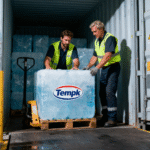
The right thermal pallet blankets for agriculture are specified from the shipment backward. Begin with the condition that fresh produce, cut flowers, nursery products, seeds, and other palletized agricultural goods must maintain, identify the uncontrolled segment that threatens it, and decide whether a passive cover can reduce that risk without interfering with active equipment, handling, safety, or compliance. A blanket can slow heat gain or loss during temporary exposure, but it cannot remove field heat, create forced-air cooling, or correct a reefer set point that is wrong for the commodity. A sound purchasing process therefore combines route mapping, pallet fit, material and closure review, representative evidence, and a clear operating procedure.
Use passive insulation only where it solves a bounded problem
The strongest use case is a defined exposure between controlled steps. In agricultural and horticultural freight, that exposure may involve field heat, solar exposure, cold-room-to-dock transitions, mixed commodity requirements, and delays at consolidation points. A cover can slow the pallet’s response while the team completes loading, transfer, inspection, or receiving. It is less convincing when the route lacks suitable temperature control for a long period or when the product starts outside its required condition.
This distinction supports a simple decision. Use passive insulation to manage a bounded thermal challenge that remains after good process controls are in place. Use active refrigeration, heating, conditioned storage, or a different service when the environment must be controlled rather than merely buffered. Use monitoring when evidence of exposure is needed. These tools can complement one another, but they do not perform the same function.
The cargo requirement must be specific. Living plant products continue to respire after harvest. Their heat load, moisture behavior, sensitivity to chilling, and tolerance for restricted airflow differ by commodity and maturity. The shipper should define the acceptable starting condition, excursion policy, quality or safety concern, and receiving decision. Without that information, the supplier can offer only a generic cover, and the buyer cannot determine whether the result is suitable.
Map environments, custody, and the next controlled step
Draw the route as a sequence of environments rather than a line between cities. Mark product conditioning, pallet build, controlled storage, dock staging, loading, terminal dwell, customs or security inspection, line haul, transfer, destination staging, and receiving. For each step, record the likely ambient challenge, normal duration, credible delay, custody, and whether the cover is closed, opened, or removed.
The critical exposure may be short and intense or long and moderate. Direct sun on the top of a pallet can create a different design problem from a cold floor, wind at an airport, humidity inside a container, or a weekend delay at an LTL terminal. A single average ambient temperature hides these differences. Specification should focus on the worst plausible segment that the cover is intended to address.
Also identify the next environment. If the pallet enters active refrigeration, the cover may need to open or come off to allow airflow. If a cold pallet enters warm humid air, removal may need to be delayed or managed to limit condensation. If inspectors require access, the cover needs a repeatable opening and reclosure method. The downstream process is part of the cover design.
A purchase framework built around verifiable information
| Specification area | Information to provide | Evidence or decision needed |
|---|---|---|
| Cargo requirement | Product, package, starting condition, acceptable exposure, and consequence of deviation | Owner-approved shipping and receiving criteria |
| Loaded pallet | Finished footprint, height range, overhang, weight distribution, corners, wrap, and restraint | Physical fit check on a representative pallet |
| Route exposure | Ambient profile, solar or wind exposure, dwell, delay, floor contact, and mode changes | Normal and worst-plausible lane map |
| Cover design | Layers, finished dimensions, closure, overlap, access, windows, base and top protection | Approved sample and production tolerances |
| Performance evidence | Payload, start condition, ambient test, sensors, openings, and acceptance rule | Representative comparison, chamber study, or pilot |
| Operation and reuse | Application, removal, inspection, cleaning, drying, repair, storage, return, and retirement | SOP, training, and ownership |
This framework helps prevent purchasing by a single number. Thermal conductivity, thickness, or a stated duration can inform the decision, but none is sufficient without the test and assembly context. Procurement should be able to trace each important claim to a product drawing, material declaration, test condition, or operating rule.
Most field failures begin at fit, access, or closure
Measure the finished loaded pallet. Standard base dimensions do not capture load overhang, uneven stacking, corner boards, top caps, or height changes. The cover needs enough overlap to close consistently without dragging excessively or blocking forklift access. If multiple pallet builds are expected, decide whether one adjustable design or several dedicated sizes produces better control.
Examine the cover as a finished article. Look at seams, corners, windows, handles, flaps, zipper ends, hook-and-loop areas, and the bottom perimeter. These locations concentrate mechanical stress and can become heat-flow paths. Apply the cover with the planned straps, stretch wrap, nets, or container securing so that compression and snagging are visible before approval.
Access is another trade-off. A window can preserve barcode scanning, but it may need reinforcement and can differ thermally from the surrounding panel. A flap can support inspection, but only if handlers know how to close it. A sealed one-way cover may be simpler, while a reusable design may justify repairable closures. Select features that solve known tasks rather than adding complexity for hypothetical convenience.
Translate material claims into finished-cover behavior
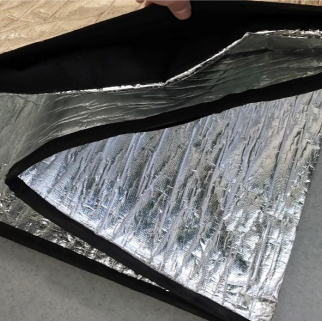
A reflective surface, foam layer, bubble structure, or heavy textile does not independently establish shipment performance. Reflective layers mainly address radiant heat under appropriate orientation and condition. Insulating layers reduce conductive heat flow but may lose effectiveness when compressed or wet. Reinforcement improves durability but can add stiffness, seams, and weight. The finished cover must balance thermal resistance with application, access, cleaning, and route safety.
Request a clear layer description and ask what may change between sample and production. Adhesives, films, foams, coatings, thread, closures, and panel dimensions can affect behavior. A change-control agreement is especially important for repeat orders or qualified applications. Incoming inspection can include dimensions, seam condition, closure function, cleanliness, odor, visible defects, and any critical material declarations.
Food shippers should align the cover with sanitation, temperature-control, traceability, and receiving procedures. Commodity requirements vary, and a cover should not block the airflow pattern of a refrigerated vehicle without an evaluated loading plan. Product-specific limits and current transport requirements should be verified by the responsible quality, regulatory, food-safety, EHS, or dangerous-goods team. The safest supplier language describes the cover’s construction and test conditions without implying universal approval.
Use evidence that matches the decision and risk
Use testing that matches the decision. A side-by-side screening study can show which cover slows temperature change more effectively under one controlled exposure. A chamber study can reproduce a defined ambient profile and delay. A monitored pilot can show whether employees apply the cover correctly and whether the route includes unplanned openings. High-risk shipments may require a more formal, documented qualification under the owner’s quality system.
Helpful decision tools
Check the details before you choose packaging
These quick tools can help you compare route risk, sizing needs, coolant choices, and packaging details before you request a quote.
Packaging Selector
Compare insulated packaging options by product, route, and temperature need.
Find packagingInsulation Material Reference
Compare insulation material choices for different cold chain packaging needs.
Compare materialsCompliance Checklist Generator
Build a practical checklist for packaging review, shipping, and documentation.
Build checklistAny test should document the payload, starting condition, pallet dimensions, cover sample, ambient challenge, floor contact, sensor locations, opening events, and acceptance criteria. Temperature curves without this context are hard to interpret. A stated protection time should never be separated from the conditions that produced it.
Monitoring is not a substitute for protection, and protection is not evidence of condition. Decide what the sensors are intended to show. An ambient sensor supports route analysis; a surface sensor shows the exposed edge; a center sensor may respond slowly; a product simulator can approximate thermal behavior. The disposition process should state who reviews the data and how it relates to product acceptance.
Make the approved design repeatable in daily handling
At origin, verify the product and pallet are ready for closure. Check cover identity and condition, apply it in the defined orientation, close all overlaps, keep labels and required marks visible, place monitoring devices as approved, and inspect the base and corners. Record the application when traceability or quality procedures require it.
During transport, specify whether handlers may open the cover and what they must do afterward. Provide an escalation rule for tears, wetting, contamination, leaks, missed connections, extended dwell, active-equipment failure, or a load found outside the planned environment. The instruction should direct the shipment to suitable control rather than relying on the cover beyond its evaluated use.
At destination, inspect before opening, follow any acclimation or airflow procedure, evaluate temperature or condition records, and segregate damaged or contaminated reusable covers. Clean and dry covers under an approved method, inspect closures and insulation, record repairs if needed, and retire units that cannot provide consistent fit or hygiene.
Common mistakes to remove from the purchase order
- Asking for a fixed number of protection hours without defining the payload and ambient profile.
- Specifying only the pallet base while ignoring loaded height, overhang, closure overlap, and access.
- Treating reflective appearance, thickness, or “reusable” language as proof of finished performance.
- Leaving labels, restraint, airflow, inspection, sanitation, or dangerous-goods interaction for operations to discover later.
- Approving a sample without controlling production materials, dimensions, seams, and closures.
- Running a temperature test but not recording handling events or visible condition.
- Using the cover to justify longer exposure instead of escalating the shipment when conditions exceed the plan.
A realistic application
A grower consolidates precooled berries and leafy vegetables for an export load. The pallets wait at a warm dock while documents are checked, then move into a refrigerated trailer. A well-fitted blanket may reduce the short exposure, but only if each commodity was cooled correctly and the cover is removed or configured so the reefer airflow can do its job.
This application succeeds only if the cover remains one defined control within the broader lane. The starting condition, active transport, handover timing, inspection, and escalation process continue to carry responsibility for product protection.
Buyer questions before approval
- Which commodities, varieties, maturity stages, and pack formats will be covered?
- Is the load precooled, and how is pulp temperature checked before palletizing?
- Where will pallets sit outside controlled storage, and for how long under a normal and delayed route?
- Will the cover remain on inside a reefer, or is it intended only for staging and handovers?
- How will covers be cleaned, dried, inspected, and separated from food-contact surfaces?
Frequently asked questions
Can a thermal pallet blanket replace produce precooling?
No. Precooling removes field heat from the commodity. A pallet blanket is a passive barrier that can slow later heat transfer, so it works best after the product has already reached the required shipping condition.
Should an agricultural pallet stay covered inside a refrigerated trailer?
Not automatically. A closed cover can interfere with designed airflow. The decision depends on the trailer airflow pattern, vented packaging, commodity, pallet placement, and the purpose of the cover. Evaluate the complete loading plan.
Are reflective blankets suitable for every fruit and vegetable?
No single cover solves every commodity requirement. Produce differs in chilling sensitivity, respiration, moisture release, and ventilation needs. The blanket should be selected around the actual commodity and route rather than a broad “fresh produce” label.
What evidence should an agricultural buyer request?
Ask for material construction, finished dimensions, closure details, durability information, and any relevant thermal test method. Then confirm performance through a shipment or chamber study that represents your pallet, product condition, exposure, and acceptance limits.
Conclusion
Choose thermal pallet blankets for agriculture by connecting five things: the cargo requirement, the exposed route segment, the finished pallet geometry, the operating process, and evidence that represents the intended use. A cover is most defensible when it has a narrow, explicit role and when its limitations are written into the shipment plan.
The next step is not a bulk order. It is a representative sample on the actual pallet, followed by fit and handling review and an appropriate thermal comparison or pilot. Once the team understands how the cover performs and how employees use it, procurement can scale a controlled specification rather than a marketing claim.
About Tempk
Tempk supplies cold-chain packaging and thermal pallet cover options for B2B shipping applications. For agricultural pallet protection during staging, export consolidation, and multimodal handovers, we can help organize a discussion around pallet size, material construction, closures, access, one-way or reusable use, and sample evaluation. We do not treat a passive cover as a replacement for the customer’s required transport controls or product-specific qualification.
Share your pallet build, cargo requirement, route exposure, and handling process with Tempk to compare a practical sample and define the checks needed before production.