Vacuum Panel Container for Wine Shipping in 2025?
Wine can survive “not cold,” but it struggles with swings. A vacuum panel container for wine shipping helps you hold a steadier internal temperature when docks run hot, vans idle, and customers are not home. For most bottles, the practical goal tracks cellar-like stability around 50–60°F (10–16°C), while avoiding long warm exposure above ~75–80°F and winter freeze risk near -7°C to -10°C. This guide shows lane-based pack-outs you can repeat, not theories.
Last updated: 2025-12-22
This article will help you answer:
-
How a vacuum panel container for wine shipping reduces heat spikes and last-mile losses
-
How to set the ideal wine shipping temperature range 50–60°F (10–16°C) without overcooling
-
How to prevent wine heat damage above 75°F and 80°F risk during handoff minutes
-
How to manage wine freezing risk -7°C to -10°C cork push in winter lanes
-
How to validate with ISTA STD-7E thermal testing for wine shippers and stop guessing
-
How to plan reusable vacuum panel container for wine shipping ROI with simple return KPIs
Vacuum panel container for wine shipping: why do bottles fail in transit?
Most failures come from “messy minutes,” not the drive. Your box sits on a warm dock. It waits in a parked van. It bakes on a porch. A vacuum panel container for wine shipping buys time, but you still need a process that controls the worst moments.
The three hotspots you should design for:
-
Dock time: staged pallets and small parcels in warm air
-
Vehicle time: stops, traffic, and sun exposure through windows
-
Handoff time: doorsteps, concierge desks, and missed deliveries
The stability rule: “steady beats colder”
For wine, stability usually matters more than “deep cold.” A vacuum panel container for wine shipping is a stability tool first. If your system avoids sharp swings, you reduce cork stress, flavor drift, and complaint risk.
| Where risk happens | What increases it | What lowers it | What it means for you |
|---|---|---|---|
| Warm staging | sun + hot docks | shaded staging + fast pickup | fewer “cooked” complaints |
| Long dwell time | missed delivery + wide windows | narrow windows + pickup options | fewer refunds |
| Route complexity | many stops + traffic | clustered routes + early dispatch | less insulation needed |
What is a vacuum panel container for wine shipping?
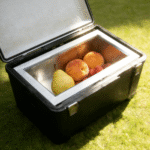
A vacuum panel container for wine shipping uses VIP walls (vacuum insulated panels) to slow heat flow in a thin profile. Think “thermos wall.” You get strong insulation without the bulky outer box that drives dimensional weight.
Why this matters operationally:
-
Thin walls can mean smaller cartons and less filler
-
Smaller cartons can mean lower dimensional charges
-
Longer hold time means fewer reships when handoff goes wrong
VIP vs foam: what you gain (without the jargon)
VIP is powerful, but not magical. Panels need protection from puncture and crushing. A vacuum panel container for wine shipping should include a protective structure, stable inserts, and “no force close” rules.
| Insulation type | Typical thickness feel | Thermal performance feel | Your practical meaning |
|---|---|---|---|
| EPS foam | thick | “okay” | fine for mild, short lanes |
| PU foam | medium-thick | better | still bulky for long lanes |
| VIP (vacuum panels) | thin | high hold time | smaller box, steadier temperature |
Vacuum panel container for wine shipping: what temperature target should you use?
A vacuum panel container for wine shipping works best when you aim for a band, not a single number. The practical target aligns with cellar-like conditions: 50–60°F (10–16°C) when feasible. Your real mission is to avoid the long warm hours and the deep cold events.
Use this simple target logic:
-
Keep wine cool and steady when you can
-
Avoid prolonged warm exposure (especially above ~75–80°F)
-
Avoid freeze-range exposure (winter events can push corks and crack glass)
Heat + cold risk in one table (for your SOP)
| Risk type | Trigger pattern | What you might see | What you change |
|---|---|---|---|
| Heat damage | sustained warm exposure | flat, “cooked” profile | upgrade lane kit + reduce dwell |
| Cork movement / seepage | repeated warm/cool swings | leakage, stained labels | stabilize with VIP + buffer |
| Freezing | very low temps (-7°C to -10°C range) | cork push, cracked bottles | winter kit + “hold” rules |
How do you pick PCM setpoints without freezing wine?
If you add thermal buffers, don’t use “frozen food logic.” For most lanes, a controlled-ambient approach is safer. Many teams use PCM setpoints around 15–20°C as a stability buffer, not a deep-cold source.
Practical rule: your PCM should buffer spikes, not drive the bottle cold.
| Season | Recommended approach in a vacuum panel container for wine shipping | Common mistake | What it means for you |
|---|---|---|---|
| Summer | VIP + heat-buffering PCM + fast handoff | underestimating porch time | more heat complaints |
| Winter | VIP + “anti-freeze” buffering + strict routing | using frozen gel packs | cork push / break risk |
| Shoulder | VIP only or mild buffering | overbuilding every order | unnecessary cost |
Vacuum panel container for wine shipping: what pack-out prevents breakage and label damage?
Your insulation is only as good as your pack-out. A vacuum panel container for wine shipping slows heat transfer, but it cannot stop glass-to-glass contact. You need one repeatable build that new packers can learn fast.
A reliable pack-out has four layers:
-
Bottle protection: rigid inserts, dividers, neck support
-
Thermal control: VIP walls + consistent liners
-
Void control: no movement, no rattling
-
Seal discipline: clean closure to avoid “heat leaks”
The No-Clink Rule (fast training that works)
After packing, gently rock the box.
-
If you hear glass clinking, you have a breakage risk.
-
If you feel movement, you have a shock risk.
| Pack-out checkpoint | Fast test | Common failure | What it means for you |
|---|---|---|---|
| No-Clink Rule | gentle rock | cracked bottles | fewer claims |
| No-rattle | light shake | insert collapse | fewer replacements |
| Seal check | lid pressure | “heat leak” gaps | better stability |
Temperature logger placement for bottle shippers
If you measure, you improve. Place a logger where the bottle “feels” the hottest or coldest zone. In many parcel boxes, that is near the lid seam or outer edge, not next to a coolant pack.
Quick placement rules:
-
Keep sensors near the bottle, not touching PCM
-
Use the same placement every test for comparison
-
Record pack time and handoff time on the label
Decision tool: which vacuum panel container for wine shipping setup fits your lane?
Use this to stop overbuying premium packaging for low-risk orders. A vacuum panel container for wine shipping pays back fastest where failure is expensive.
Step 1: score your lane (1–5 each)
-
Transit duration: same-day (1) / 1–2 days (3) / 3+ days (5)
-
Dwell risk: low (1) / medium (3) / high (5)
-
Ambient risk: mild (1) / hot or cold (3) / extreme (5)
-
Delivery uncertainty: low (1) / medium (3) / high (5)
Total score guidance:
-
4–8: standard insulation may be enough
-
9–14: use a mixed fleet (VIP on worst lanes)
-
15–20: vacuum panel container for wine shipping + buffering + monitoring
| Score band | Recommended setup | Why it works | Your practical meaning |
|---|---|---|---|
| 4–8 | standard shipper + strong inserts | lane is forgiving | lowest cost |
| 9–14 | VIP on hot/cold lanes | targeted protection | best ROI |
| 15–20 | VIP + PCM + logger + rules | high stability | fewer claims |
Step 2: pick your “lane recipe” (summer vs winter)
A vacuum panel container for wine shipping should have two photo-recipes you can print. One for heat spikes. One for freeze risk. One box, one “guess,” equals inconsistent outcomes.
How do you validate a vacuum panel container for wine shipping in 2025?
Testing turns “premium packaging” into a program. If you ship via parcel networks, ISTA STD-7E is built around parcel-style thermal exposures. You can use that mindset (or formal testing) to compare pack-outs and stop guessing.
A simple validation plan you can run (fast and repeatable)
-
Define pass/fail: peak temp, time out of band, and “no leak / no break”
-
Choose worst lanes: hottest week lane + coldest week lane
-
Pack normally: normal staff, normal speed, normal materials
-
Place sensors consistently: same bottle position every time
-
Run thermal profiles: parcel-realistic exposures (STD-7E style)
-
Change one variable: PCM mass, placement, or insert fit
-
Retest and lock: publish one-page lane recipes
| Test metric | Why it matters | Pass signal | What it means for you |
|---|---|---|---|
| Peak temperature | predicts heat complaints | no high spikes | fewer “cooked” disputes |
| Time out of band | predicts cumulative drift | low duration | better consistency |
| Minimum temperature | predicts freeze events | stays above freeze-risk | fewer cork push events |
| Break/leak rate | predicts real failures | near zero | fewer refunds |
Vacuum panel container for wine shipping: how do you reduce “Doorstep Minutes”?
Handoff minutes are where wine loses the battle. A vacuum panel container for wine shipping helps, but the best savings often come from reducing porch time.
Three tactics that cut heat exposure fast:
-
Narrow delivery windows: give a 2-hour window, not “all day”
-
Hold-at-location: route to pickup points when customers are often away
-
Proactive alerts: “arriving today” + “delivered now” notifications
A single KPI that predicts complaints: Doorstep Minutes
Track minutes from delivery to retrieval. Use doorbell camera feedback, customer surveys, or support notes.
| KPI | Good | Risky | What it means for you |
|---|---|---|---|
| Doorstep minutes | under 30 | over 90 | higher heat complaints |
| Missed delivery rate | low | high | more depot exposure |
| Replacement rate | low | high | higher total cost |
Reusable vacuum panel container for wine shipping ROI: when does reuse win?
Reuse is great when assets return. Your real KPI is return rate, not purchase price. A reusable vacuum panel container for wine shipping program works when your reverse logistics are reliable and simple.
Quick ROI calculator (use real numbers, not hope)
| Input | What to estimate | Why it matters | Your practical meaning |
|---|---|---|---|
| Return rate | % that come back | drives lifecycle cost | low return kills ROI |
| Cycles per container | expected uses | spreads fixed cost | higher cycles win |
| Reverse cost | pickup + handling | adds OPEX | must be controlled |
| Damage rate | panels/lids harmed | affects uptime | reduces availability |
Simple rule: If return rate is below ~80% on a lane, pilot first. Add deposits or scheduled pickups before you scale.
2025–2026 trends: what’s changing for wine packaging programs?
In 2025, the shift is from “ship it and hope” to “engineer the lane.” That means lane recipes, proof-driven testing, and less wasted space. Packaging pressure is also rising, including the EU Packaging and Packaging Waste Regulation (PPWR) entering into force on 11 February 2025 with broad application after an 18-month window, and compliance timelines that many teams plan around in 2026.
What you should prepare for now:
-
Right-sizing becomes a default expectation (less empty space shipped)
-
Reuse and circular planning accelerates where returns are possible
-
Documentation and labeling discipline increases in e-commerce flows
A vacuum panel container for wine shipping can support these goals if you design for fewer failures, smaller cartons, and recoverable components.
Common questions (FAQ)
Q1: What is a vacuum panel container for wine shipping?
It is a wine shipper that uses VIP insulation to slow heat transfer. It helps stabilize temperature during docks, vans, and handoff.
Q2: What is the ideal wine shipping temperature range 50–60°F (10–16°C)?
It’s a practical cellar-like target band. You aim for stable conditions, not “ice cold,” and you avoid long warm exposure.
Q3: When does wine heat damage above 75°F and 80°F risk become serious?
Risk rises with time and repeated spikes. Focus on preventing porch time and warm staging during the hottest hours.
Q4: Can wine freeze in transit and cause cork push?
Yes. In very cold exposure, wine can approach freeze-range conditions and push corks or damage bottles. Winter pack-outs matter.
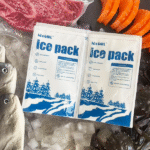
Q5: Should I add ice packs inside a vacuum panel container for wine shipping?
Not by default. Deep-cold packs can create overcooling and condensation. Controlled-ambient buffering is usually safer for wine lanes.
Q6: How do I validate a vacuum panel container for wine shipping?
Set pass/fail limits, place sensors consistently, and test worst hot and cold lanes. ISTA STD-7E style profiles help mimic parcel realities.
Q7: Are reusable VIP shippers worth it?
They can be, if your return rate stays high and damage stays low. Start with a pilot lane and track returns weekly.
Summary and recommendations
A vacuum panel container for wine shipping helps you protect wine by slowing temperature rise during the exact moments that cause complaints: warm staging, long dwell, and doorstep delays. Aim for cellar-like stability around the 50–60°F (10–16°C) band when feasible, and plan for both heat spikes and winter freeze risk. Pair VIP insulation with rigid inserts, consistent sealing, and lane-based pack-outs that your team can repeat.
Action plan (CTA)
-
Split shipments into same-day, next-day, and 2-day lanes.
-
Publish two lane recipes per lane (summer + winter) with photos.
-
Add loggers to 10 shipments per high-risk lane to get real curves.
-
Validate using parcel-realistic thermal thinking (ISTA STD-7E style).
-
Track Doorstep Minutes, replacements, and breakage every week.
About Tempk
At Tempk, we design temperature-protective packaging that works on real shipping days. For vacuum panel container for wine shipping programs, we focus on VIP-based insulation structures, bottle-protection inserts that reduce breakage, and lane recipes your team can pack consistently. We also support validation planning and reusable workflows where returns make sense, so you reduce heat complaints, cork issues, and reship waste.
Next step: Share your lane type (local, next-day, 2-day), bottle count, and your hottest/coldest shipping months. We’ll map a lane-based pack-out you can implement immediately.