How to Specify a VIP Cold Chain Box for Meat Shipping
The right VIP cold chain box for meat shipping is a complete, repeatable packout that protects the specified chilled or frozen condition, fits the product safely, and supports clear receiving decisions. Select it by defining the meat and route first, then checking containment, coolant preparation, thermal and handling evidence, and production consistency. Vacuum insulation can help where space or exposure creates a real constraint, but it does not replace hygienic packaging, suitable transport, or food-safety review. Compare total cost per accepted delivery, and treat reuse as a managed return process rather than an automatic environmental advantage.
Write the receiving decision before writing the purchase order
Ask what the customer must be able to accept at delivery. The answer should identify the product, its required condition, packaging integrity, and any evidence needed to make that decision. A promise to deliver meat cold is too vague for a business that distinguishes fresh chilled product from frozen stock. It also leaves customer service without a clear basis for handling exceptions.
Confirm the applicable product and market requirements with the responsible food-safety team. A product's processing method or vacuum packaging does not by itself establish that it is shelf-stable. Nor does a common refrigerated range used in another industry establish the appropriate condition for this shipment. Use the actual product specification and labeling.
For relevant U.S. consumer mail-order deliveries, USDA advises checking for frozen or refrigerator-cold arrival and not consuming suspect warm perishables. Commercial buyers still need product-specific acceptance criteria and an agreed handling process. Keep this consumer guidance separate from any claim that a particular shipping box satisfies all transport rules.
Define how the arrival condition will be checked without creating an inappropriate or unhygienic measurement process. The method may involve specified product checks, packaging inspection, and temperature records, depending on the application. A reading from empty air near the lid is not automatically a measurement of every meat pack. The responsible team should establish what the evidence represents.
Also decide who has authority when the result is uncertain. Delivery staff may confirm receipt without having authority to accept the product for use. Customer service may arrange a replacement without determining food safety. Separate these responsibilities in the procedure so a delayed or questionable shipment does not force someone into an unsupported judgment.
Working backward from acceptance clarifies the purchase. The package must support the product condition, the evidence must support the receiving decision, and the route must make both achievable. Once these relationships are written down, supplier proposals become easier to compare and broad promises become easier to challenge.
Design around the actual meat packs and the actual journey
Provide suppliers with production-equivalent product packaging. A drawing is useful, but a physical trial can reveal flexible bags, tray corners, seal areas, and frozen shapes that affect loading. Include the full intended order range. The largest order and the smallest replacement shipment may require different arrangements even when they use the same outer enclosure.
Separate the functions of the packaging layers. The primary pack contains and protects the food. Secondary containment can limit the consequences of leakage. Restraint or inserts can prevent movement and point loading. The insulation and coolant manage thermal exchange. None of these functions should be assumed to replace another.
VIP panels contain an evacuated core protected by a sealed barrier. They can reduce heat transfer, but the barrier must remain intact. Keep sharp or rigid payload features away from vulnerable panel surfaces. Do not cut panels, add fasteners through them, or force a lid over an oversized order. A custom chamber or protective insert should be designed and evaluated rather than improvised at dispatch.
Measure usable chamber dimensions after coolant and protective components are installed. This is the capacity that matters to the order, not the empty internal volume printed on a brochure. Check the finished package's dimensions and mass for freight planning. Any claimed capacity or shipping-cost advantage should be demonstrated with the complete assembly.
Then describe the journey from product release into the packout to appropriate storage at the destination. Include waiting before collection, transfer points, possible delivery attempts, and the customer's receiving arrangements. A staffed restaurant dock and an unattended residential entrance are different operating environments. The same nominal courier transit time does not make them equivalent.
A hypothetical seller may discover that a compact VIP design solves the space problem for a difficult parcel route but adds unnecessary complexity to a local refrigerated delivery. That is a useful result, not a contradiction. Different routes can justify different solutions when the acceptance requirement is held constant.
The comparison should remain open to alternatives. Conventional insulated packaging may be sufficient for some lanes, while a controlled transport service may be necessary for others. Select vacuum insulation because it solves a demonstrated constraint, not because the word VIP appears more technically advanced on the purchase specification.
Make the thermal claim conditional and reproducible
A passive box does not actively refrigerate the meat. Its insulation slows thermal exchange, while the product's initial condition and the prepared coolant determine the internal starting point. Loading warm product and expecting the box to complete cooling changes the task. Unless that task has been specifically evaluated and approved, prepare the meat to its required condition before packing.
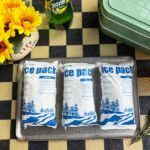
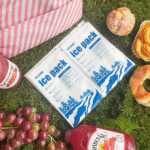
Coolant should be specified by identity and preparation, not by appearance. Gel packs, other phase change materials, and dry ice have different operating implications. A very cold pack can be inappropriate for chilled meat that must not freeze. A coolant suitable for one frozen product arrangement may not support another order or route without additional evidence.
Ask for the configuration associated with the performance claim. The report should identify the box, payload, coolant, initial conditions, ambient exposure, sensor locations, and acceptance criteria. Review what was actually measured. A duration without a setup description does not tell you whether the package protects your meat or whether the warehouse can reproduce the result.
| Supplier statement | Evidence that makes it useful | Remaining buyer decision |
|---|---|---|
| High-performance insulation | Assembled-packout results and construction details | Does it solve this route's constraint? |
| Suitable for chilled or frozen products | Separate supported conditions and configurations | Which version matches this product? |
| Supports different order sizes | Defined load range and relevant evaluation | Are the actual orders covered? |
| Reusable construction | Inspection, preparation, and retirement procedure | Can the return operation sustain it? |
| Custom dimensions available | Revised drawing and assessment of performance effects | What additional evaluation is required? |
Use the table to move from marketing language to an approval decision. A useful answer can acknowledge a limit or identify further work; it does not need to promise universal suitability. What matters is that the buyer can see which claims are supported and which assumptions remain unresolved.
Evaluate local temperature behavior as well as overall duration. A central location can remain acceptable while a peripheral pack warms or a chilled product overcools next to coolant. Product mass and empty space can change that pattern. Ask how the proposed measurement plan and loading assessment address the intended range rather than relying on one average temperature.
Helpful decision tools
Check the details before you choose packaging
These quick tools can help you compare route risk, sizing needs, coolant choices, and packaging details before you request a quote.
Coolant & PCM Reference
Compare coolant and PCM options when a route needs added temperature support.
Compare optionsIce Pack Calculator
Estimate gel ice pack quantity for chilled shipments and practical route planning.
Estimate ice packsRoute Risk Checker
Review lane conditions before selecting packaging for real operating requirements.
Check route riskHandling evidence belongs in the same review. Dense meat loads can challenge the closure, restraint, and protective structure. Thermal testing and mechanical distribution testing answer different questions, so one should not be used as a substitute for the other. Determine whether the assembly retains its required function through the handling environment it is expected to encounter.
Where dry ice is used, confirm product compatibility, containment, handling, and transport requirements. The shipping package must provide the appropriate gas-release path; it must not be made airtight to improve insulation. Keep this path separate from the sealed vacuum panel and from the product's leak containment. Any replenishment during transit should follow a defined, authorized process.
Test the warehouse process before scaling the order
A package can be technically suitable and still be impractical at dispatch. Confirm the equipment and space needed to prepare coolant, the time and handling required to assemble the packout, and the method for distinguishing ready components from unprepared stock. Evaluate these steps under realistic workload rather than only during a carefully supervised sample demonstration.
Have operators pack representative orders from the written instruction. Observe whether they can identify the correct coolant, position dividers, protect product seals, and close the lid without assistance. A hesitation or workaround is useful information. Improve the design or instruction before that workaround becomes an unofficial standard across the warehouse.
Use a defined method for partial orders. Do not allow staff to add extra coolant or substitute arbitrary void fill because the chamber looks empty. These changes can affect contact, movement, and thermal behavior. A simple, supported alternative configuration is better than a universal instruction that depends on individual judgment.
Tie the production purchase to the accepted sample. Control panel and chamber dimensions, closure design, coolant identity, and protective components that influence performance. Agree on supplier change notification and the process for evaluating substitutions. A production box that looks similar should not automatically be treated as identical to the evaluated version.
The route also needs operational controls. Confirm receiving hours and dispatch restrictions where relevant. Establish who manages a delay and which actions are available. A longer nominal hold time is not a complete plan when there is no way to respond after the supported protection window is exceeded.
For the customer, provide a clear arrival procedure consistent with the product requirements. Explain prompt transfer to suitable storage and the response to damaged or questionable deliveries. Do not suggest that refreezing or recooling a suspect shipment erases its previous exposure. Product disposition should follow the agreed food-safety process.
Compare lifecycle value only after the protection requirement is met
Once candidate systems satisfy the same acceptance requirement, compare their total operating cost. Include the complete packout, preparation, packing labor, freight, and the work needed to handle exceptions. Use actual quotations and business records. An unsupported assumption about fewer complaints can distort the comparison as much as ignoring a real operational saving.
Reusable systems need additional inputs: collection, customer storage, cleaning, drying, inspection, replacement parts, loss, and retirement. Count completed usable trips rather than dividing the purchase price by the maximum possible life of a shell. A box awaiting return is not available for the next dispatch, so fleet availability also affects the cost.
Hygiene must remain central to reuse. Define the response to leakage and identify which components can be cleaned or replaced. Protect the VIP barrier from unsuitable cleaning and handling. A clean exterior does not independently establish that the thermal assembly remains fit for service, so inspection should follow an approved method.
Environmental comparisons should use an equivalent accepted delivery and a clear boundary. Consider outbound and return movement, preparation resources, replacement, and end-of-life handling where relevant. A thinner wall or a recyclable component does not establish the impact of the complete service. Any published claim should be supported by the comparison actually performed.
The buying decision is ready when the receiving criteria, physical fit, supported thermal conditions, and operating process agree. At that point, VIP insulation can be judged on its real contribution: useful protection or capacity within a system the business can maintain. That is a stronger basis for purchase than a generic promise of freshness for an unspecified number of days.
Final questions before approving the supplier
What is the most important information to send with an inquiry?
Send the meat product and primary-pack format, required chilled or frozen condition, smallest and largest orders, route description, receiving arrangement, and any reuse plan. Ask the supplier to define the complete proposed packout and the scope of supporting evidence. Actual product samples and dimensions are more useful than asking for a box of a nominal volume alone.
Can one test justify all meat products shipped by the business?
Only when there is a documented basis for grouping them within the supported conditions. Different product masses, shapes, packaging layers, initial states, and contact arrangements can change behavior. The business should identify which products and order configurations are covered, and which require another assessment. A common outer shell is not proof of a common thermal response.
Should a damaged reusable box always be discarded?
Follow the supplier-supported inspection and retirement procedure. Some damage may be cosmetic, while other damage can affect the closure, protective structure, or insulation. Do not assume that appearance alone establishes continued performance. Replacement or repair should preserve the approved configuration and be completed through a process that supports release for another shipment.
What makes a customization worthwhile?
A useful customization resolves a specific constraint, such as product fit, coolant separation, seal protection, or access during receiving. It should be linked to a revised drawing and an assessment of any effect on performance. Cosmetic changes may be appropriate, but they should not distract from the features that determine whether the meat can be packed and delivered correctly.
About Tempk
At Tempk, we offer VIP-based insulated packaging and coolant components that can be discussed around your actual meat packs and order patterns. Custom payload layouts and coordinated coolant options are practical advantages when standard chambers create poor fit or difficult handling. We can review those requirements with your team and develop a proposal for sample evaluation. The final choice should be supported by the agreed product specification, test evidence, and operating procedure, with performance claims limited to the configuration and conditions that have been established.
Share your acceptance criteria and representative order dimensions with Tempk to specify a VIP cold chain box for meat shipping before committing to production quantities.