VIP Cold Shipping Box for Fresh Produce Shipping: From Crop Brief to Approved Packout
A VIP cold shipping box for fresh produce shipping is the right choice only when three conclusions hold together: the crop has a defined and compatible condition, the route needs more thermal buffering or payload space than a simpler package can provide, and the complete packout performs under representative handling and ambient exposure. The insulation must be paired with correctly conditioned coolant, physical separation, gas and moisture management, monitoring, and repeatable instructions. VIP cannot precool field-warm produce, make a mixed load compatible, or prove compliance on its own. Its value is highest on demanding parcel lanes; its value disappears when premium materials protect the wrong temperature or an untested process.
Set an approval rule before looking at boxes
Procurement teams often begin with catalog dimensions and promised duration. Reverse that order. Decide what evidence would justify paying for VIP before a supplier proposes a configuration. A useful approval rule requires a documented crop need, a route challenge, and a measurable improvement over a conventional alternative.
The crop need explains what failure means. Warm exposure may accelerate respiration, water loss, ripening, or decay. Excessive cold may cause chilling injury in sensitive commodities, even when the product never freezes. A humidity problem may produce shrivel or condensation. A gas-compatibility problem may develop in a sealed headspace. These outcomes need different controls, and stronger insulation addresses only part of them.
The route challenge identifies why ordinary packaging is insufficient. Possible reasons include a hot sort center, winter delivery vehicle, long customs hold, fixed aircraft parcel dimensions, or repeated transfers outside refrigeration. If a stable route already passes in conventional foam, VIP may add complexity without useful protection. Pallet or truckload flows may suit continuous refrigeration better than many passive boxes.
The measurable improvement should be stated in operational terms: more usable produce within the same outer cube, lower risk at a known handover, acceptable performance through a credible delay, or a repairable closed-loop asset. “Higher performance” is too vague. Compare complete packed systems at the same payload, external profile, and acceptance criteria.
Freeze the biological brief first
Fresh produce is not an inert thermal mass. It consumes oxygen and releases carbon dioxide, water, and respiratory heat after harvest. The rate varies by crop, maturity, and temperature. The package must therefore preserve a product condition, not an abstract air setpoint.
Write the crop, relevant variety, maturity stage, and intended arrival condition at the top of the brief. A tomato meant to ripen later has a different need from ready-to-eat fruit. Herbs, berries, and tropical fruit should not inherit one temperature merely because all are “fresh.”
UC Davis postharvest guidance makes the scale of this difference visible. Strawberries are commonly held close to 0°C, while mature-green tomatoes are generally handled much warmer. Mature-green avocado recommendations vary with cultivar and duration. These reference values should prompt a commodity review, not be copied blindly into a purchase order. The exporter’s product data, prior temperature history, market time, and quality program remain decisive.
Include both the desired condition and the limits. A low limit is essential for chilling-sensitive produce or whenever frozen coolant is used. State whether an excursion is judged by peak temperature, time outside range, product-core response, or another quality rule. If no qualified person can explain how the receiver will interpret an excursion, a logger cannot resolve the ambiguity later.
Relative humidity, condensation, and gas exchange belong in this same brief. High humidity can reduce water loss, while free water can support decay or damage paper packs. A sealed liner can retain moisture but also restrict oxygen movement. Ethylene-producing fruit may be incompatible with sensitive vegetables in the same chamber. If a controlled atmosphere is intended, package permeability and produce respiration require their own design; an airtight VIP shell does not create a safe modified atmosphere by chance.
Convert the journey into a thermal and handling challenge
Start the clock before carrier collection and stop it after the receiver has transferred the product to appropriate storage. Packing-room staging, security, consolidation, cross-docking, customs, missed delivery, and weekend holds can matter more than scheduled drive or flight time. Map ordinary and delayed flows separately.
Record product and ambient temperatures where control changes hands. Lane data shows duration and sequence, while credible seasonal cases define hot and cold challenges. Insulation slows heat entering in summer and leaving in winter, so test both risks.
The USDA transport handbook explains why produce should be at or near its carrying temperature before loading. Vehicle refrigeration is commonly sized to maintain product condition, not remove a large field-heat load quickly. A passive box has even less ability to act as a precooler. Define the precooling process, endpoint, and maximum staging time. Choose forced-air cooling, hydrocooling, vacuum cooling, or another method only if it suits the crop and primary packaging.
Also note drops, vibration, compression, moisture, orientation, stacking, and inspection openings. VIP envelopes are sensitive to puncture and hard bending, while impact can move coolant toward the payload. A stationary chamber test cannot reveal every distribution risk.
Standardized profiles can support development. ISTA 7E provides external heat and cold profiles for thermal parcel testing. It helps teams use a common challenge, but it is not a substitute for the crop specification or lane review. State why the chosen profile represents the shipment and add route-specific events where necessary.
Engineer the package as interacting layers
The finished shipper has four functional layers. The outer shell takes handling and carries labels. The VIP layer restricts heat transfer. The coolant absorbs or releases energy. The payload assembly controls contact, air space, moisture, and movement. A monitoring device observes selected conditions. No layer can stand in for the others.
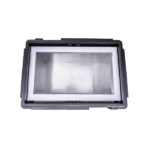
A vacuum insulation panel contains an evacuated porous core inside a barrier envelope. Low gas pressure reduces gaseous heat conduction, enabling strong insulation in a thin panel. Seams, edges, lid joints, and closures create thermal bridges. ASTM C1667 measures center-of-panel thermal transmission with a heat-flow meter; it does not qualify an assembled produce shipper.
Ask for a drawing of every panel and joint. Look for exposed edges, gaps, lid overlap, and the way the panels are protected. Removable panels can support replacement and inspection, while integrated panels may simplify assembly and shield the envelope. Neither is universally superior. The best format depends on damage risk, cleaning, field inspection, and who owns the box after delivery.
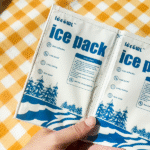
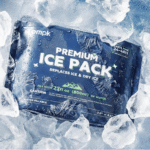
Coolant selection determines the temperature region. Frozen water packs, gel packs, ice bricks, and phase change materials have different thermal behavior and handling. For any proposed component, define formulation or part number, mass, conditioning temperature and time, loading order, and separation from produce. A PCM’s transition range and latent-heat data are useful only if the component begins in the required state and the full packout has enough capacity for the route.
Protect the payload from direct coolant contact when low-temperature damage is possible. Dividers and spacers also influence convection and usable space, so they are controlled components, not optional packing aids. The same applies to absorbent pads, liners, tape, and trays. A substitution can alter heat flow, moisture, headspace, or package geometry.
Build an evidence dossier that leads to a decision
The evidence should match the claim being made. Use one compact review table so each function knows what it is approving.
| Decision | Minimum useful evidence | Owner’s question |
|---|---|---|
| Crop condition | Commodity, maturity, precooling, humidity, gas, and excursion limits | Will this condition protect intended arrival quality? |
| VIP construction | Panel specification, joint drawing, protection, and inspection method | Does the assembled wall preserve the material advantage? |
| Coolant packout | Component ID, conditioning, quantity, position, and divider layout | Can operators reproduce the tested thermal capacity? |
| Route performance | Representative payload, ambient profile, sensor map, results, and acceptance criteria | Does the complete system pass both hot and cold risks? |
| Scale and change control | Production sample, bill of materials, revision process, and receiving checks | Will delivered units remain equivalent to the approved sample? |
| End-of-use plan | Disposal outlets or return, cleaning, inspection, loss, and replacement process | What happens to every component after delivery? |
This dossier prevents a panel datasheet from being used as proof of route duration. It also prevents a successful route trial from masking uncontrolled production changes. Missing evidence becomes a defined action rather than an argument between supplier, engineering, and quality teams.
Helpful decision tools
Check the details before you choose packaging
These quick tools can help you compare route risk, sizing needs, coolant choices, and packaging details before you request a quote.
Insulation Material Drop Resistance
Review drop resistance and handling factors before choosing insulation materials.
Check resistanceIce Pack Calculator
Estimate gel ice pack quantity for chilled shipments and practical route planning.
Estimate ice packsDry Ice Calculator
Estimate dry ice needs for frozen or ultra-cold shipments before packing.
Estimate dry iceTest with representative product and primary packaging where feasible. A water-based simulator may reproduce heat capacity but not respiration, ethylene, or gas exchange, so document its rationale. Fill the chamber as intended because partial loads change air volume, coolant coverage, and movement.
Instrument the expected warm and cold locations. Include panel seams, lid zones, and product near coolant, along with a representative center position. Use calibrated devices suited to the uncertainty and decision. Define sampling interval, start and stop time, and handling of missing data before the test. A sensor map gives context that a single temperature trace cannot.
After chamber and physical testing, conduct a controlled route trial. The trial checks events the laboratory may miss, such as assembly delay, carrier handling, opening, and receiver response. It does not prove every future lane, but it can confirm that the written process works under selected operating conditions.
Reject the shortcuts that create false confidence
A duration claim without its test conditions is the first red flag. “Keeps cold for days” says nothing about payload, starting temperature, ambient profile, coolant, sensor position, or allowable range. Request the report or restate the claim as unverified.
Nominal capacity is another trap. Ask for usable internal dimensions after VIP, coolant, spacers, and dividers are installed. Confirm the number and orientation of trays. Thin walls can improve the ratio of payload to outer cube, but poor coolant geometry can give the space back.
Generic language about food grade, compliance, reuse, or recycling should trigger specific questions. Which component is intended for food contact? Which jurisdiction and rule does the statement address? What cleaning method was evaluated? Which local facility accepts each separated material? A box can support a sanitary transport program without being a universal compliance certificate.
The FDA sanitary transportation rule illustrates the distinction. For covered U.S. motor and rail operations, it assigns sanitary-practice responsibilities across shippers, loaders, carriers, and receivers and addresses equipment, operations, training, and records. The parties may agree on temperature monitoring for food requiring temperature control for safety. Applicability and specific duties vary. The VIP box is equipment within a process; it does not satisfy the process alone.
Supplier change control is often overlooked. Ask how changes to core, barrier film, panel size, shell, coolant, liner, closure, or assembly site are reviewed and communicated. Match the production sample to the tested bill of materials. Without this step, a procurement team may approve one system and receive another that looks similar.
Make dispatch and receipt one controlled process
At dispatch, verify produce temperature, coolant conditioning, component count, correct seasonal configuration, logger identity, and closure. Use a concise illustrated instruction rather than relying on memory. Limit time that coolant waits in the packing area. Record exceptions instead of silently adding packs or tape.
At receipt, inspect external damage before opening, then note coolant leakage, displaced components, condensation, and visible produce condition. Retrieve monitoring data according to the written decision rule. Temperature is one input: physical injury, odor, decay, and atmosphere-related symptoms can also matter. Move accepted produce promptly to its next controlled environment.
Reusable systems add a loop. Clean and dry the shell with a method compatible with its materials. Inspect protective features and panels, replace failed parts under defined criteria, and track completed uses. A box that returns is not automatically ready to ship. Missing dividers or an undetected damaged panel can invalidate the packout.
Training should explain critical steps. Packers should understand that a partly conditioned PCM lacks the tested energy state, while receivers need to know why sensor position matters. Use short, role-specific instructions.
Judge cost and sustainability at equal performance
Compare VIP with conventional insulation and active refrigeration at the same product-delivery objective. Include box and coolant cost, conditioning energy, labor, freight weight and cube, product loss, delays, return transport, cleaning, damage, and replacement. VIP is economical when its insulation or thin-wall payload advantage controls a costly risk. It is wasteful when a simpler system passes with adequate margin.
Environmental comparison needs the same discipline. The UNEP and FAO report Sustainable Food Cold Chains shows that ineffective refrigeration contributes to food loss while cold-chain activity also carries emissions. Count both protected produce and packaging resources. A one-way composite panel may have limited local recovery. A reusable box spreads production impacts only across successful trips, after returns, cleaning, loss, and repair are included.
Current packaging policy reinforces this scrutiny. The European Union’s Packaging and Packaging Waste Regulation generally applies from August 2026 and introduces measures concerning recyclability, waste prevention, recycled content, and reuse. Requirements depend on the finished configuration and supply-chain role. Buyers should review the official rules for their market and avoid broad claims that every VIP format is recyclable or reusable by default.
Frequently asked questions
What is the strongest reason to choose VIP for produce parcels?
Choose it when a verified route needs stronger thermal buffering in limited outer dimensions, and testing shows a meaningful improvement over a simpler shipper. Typical drivers include exposed handovers, delay risk, valuable payload, or dimensional constraints. Premium insulation alone is not a reason if the crop brief or operating process remains undefined.
Can one shell use different coolant packouts for different crops?
It may, but each configuration needs its own controlled bill of materials, conditioning method, commodity scope, and evidence. Changing coolant can alter low-temperature risk, payload space, gas volume, and duration. Label configurations clearly so packers cannot mix seasonal or commodity-specific parts.
How much ventilation should a VIP produce box have?
There is no universal opening area. Ventilation depends on crop, mass, respiration, temperature, journey length, liners, and any intended atmosphere. Openings also affect thermal performance. Use postharvest and packaging expertise to design gas exchange, then include the final vent and liner arrangement in testing.
Is an empty-box thermal test useful?
It can compare construction or reveal gross heat-transfer differences, but it cannot predict a loaded shipment by itself. Payload changes thermal mass, airflow, respiration, and coolant contact. Use representative produce or a justified simulator for the approval study and state what the surrogate does not reproduce.
What should be checked when a reusable VIP box returns?
Check the shell, lid, closures, protected panel areas, coolant containers, dividers, labels, cleanliness, dryness, and component count. Follow the supplier’s method for identifying vacuum loss or panel failure. Track repair and completed uses so operational and environmental claims reflect actual cycles.
Approve the system, then protect the approved state
The decision is defensible when commodity requirements, route exposure, package design, operational instructions, and evidence agree. VIP can create valuable thermal margin and usable space, but coolant and packout geometry determine how that margin reaches the crop. Precooling, ventilation, humidity, monitoring, sanitation, and change control remain separate responsibilities. Approve the complete configuration, compare it with simpler options, and keep the bill of materials and process under control after scale-up.
About Tempk
Tempk provides VIP insulated-box formats with removable or integrated panels and hybrid constructions using options such as plastic shells, EPP boxes, or liners. We can combine the insulation with PCM packs, gel packs, or ice bricks and plan panel layout, payload chamber, coolant placement, and trial assemblies for a stated route. For produce shipping, our useful starting point is a precise crop and lane brief, followed by representative testing rather than a universal temperature or duration promise.
Send Tempk your commodity, maturity, precooling condition, payload layout, route exposure, and return or disposal plan. Request a VIP proposal alongside a simpler reference packout so your team can approve the option that earns its cost and complexity.