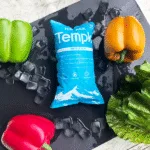
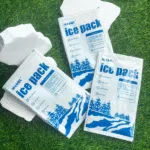
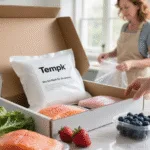
The gel inside most reusable ice packs is a water-based mixture made thick enough to stay evenly distributed inside a sealed pouch. Depending on the product, the formula may include a water-absorbing polymer or cellulose-based thickener, a freezing-point or texture modifier, a preservative and a colorant. There is no single recipe for every freezer pack, so the label and the product-specific safety data sheet are more reliable than the color or feel of the gel.
Reusable gel packs should also not be confused with instant cold packs. A reusable pack is cooled in a freezer or controlled conditioning process before use. An instant pack is stored at room temperature and becomes cold when an internal water pouch mixes with a chemical reactor. Those two products can look similar from the outside but have different contents and different exposure risks.
What are gel ice packs made of?
A reusable gel pack commonly combines a thermal liquid with ingredients that control movement, texture and freezing behavior. The exact combination is product-specific.
| Possible component | Why it may be used | Important limitation |
|---|---|---|
| Water | Provides much of the thermal mass in many reusable packs and absorbs heat as the frozen or chilled contents warm. | The water percentage and starting condition vary. Water alone does not define hold time. |
| Gelling or thickening agent | Reduces sloshing and helps the filling stay distributed. Examples in commercial formulations include sodium polyacrylate and cellulose derivatives. | The word “gel” does not identify one chemical, one concentration or one safety classification. |
| Freezing-point or texture modifier | May change how hard the pack freezes or how the filling behaves while cold. Some products use propylene glycol, glycerol, salts or another formulation aid. | Not every pack uses these ingredients. Never assume a pack contains automotive antifreeze. |
| Preservative or colorant | May control microbial growth during storage or make leakage easier to see. | Blue gel is not a standardized formula, and color does not prove that a product is non-toxic or food-contact suitable. |
| Flexible film and seals | Keep the filling contained and create the usable pouch. | The pouch is part of the component but not part of the gel. Film type alone does not prove local recyclability. |
A real formulation example—and why it is not a universal recipe
One Uline safety data sheet for a hydrogel shipping cold pack lists more than 99% water and less than 1% sodium polyacrylate. Another product can use a different thickener, a freezing-point modifier or a proprietary mixture. This example is useful because it shows how little polymer may be needed to turn a mostly water-based filling into a gel; it does not establish the formula for every ice pack.
The same caution applies to glycol claims. The current Poison Control overview of ice-pack contents explains that reusable products vary and that some may use propylene glycol, while older recalled products included more hazardous glycols. It is therefore inaccurate to say that all reusable packs contain ethylene glycol—or that all products are harmless because they are sold as gel packs.
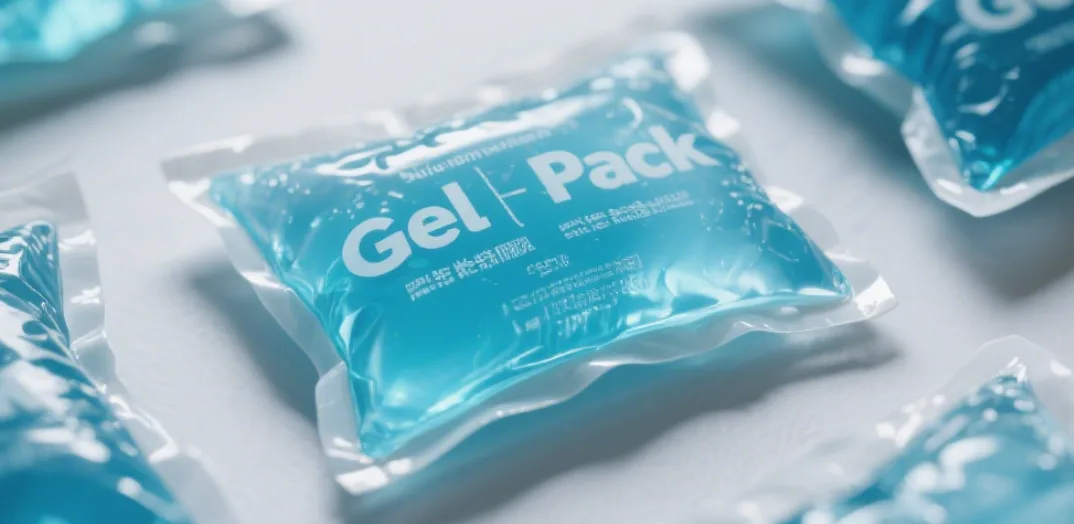
Gel packs, water packs, PCM packs and instant cold packs are different
| Product type | What is normally inside | How it becomes cold | Main identification clue |
|---|---|---|---|
| Reusable gel freezer pack | A water-based gel with product-specific thickeners and possible modifiers | Pre-cooled or frozen before use | Sealed flexible pouch that can be conditioned repeatedly if the manufacturer allows reuse |
| Sealed water pack or reusable ice cube | Water or a product-specific water solution | Frozen before use | May freeze more rigidly and may not have a gel texture |
| Water-injection or hydratable pack | A dry absorbent layer or material that takes up water after activation | Hydrated first, then conditioned | Usually supplied flat or light before water is added; compare the operating differences in the water-injection pack versus gel-pack guide |
| PCM pack | An engineered phase-change formulation selected around a target transition behavior | Conditioned according to its specified process | Defined formulation and conditioning instructions; use the gel pack versus PCM comparison for selection |
| Instant cold pack | Separate water and chemical-reactor compartments; products may use urea, ammonium nitrate or calcium ammonium nitrate | Squeezing breaks the inner barrier and starts an endothermic reaction | Stored at room temperature and intended for one activation, not repeated freezer conditioning |
How does the gel help an ice pack stay cold?
The gel does not create unlimited cooling. In many reusable packs, water or a water-rich solution stores thermal energy while it is cooled and then absorbs heat from its surroundings as it warms or changes phase. The thickener mainly controls the liquid so it does not move like loose water. Other ingredients may adjust flexibility, freeze behavior or storage stability.
Composition alone cannot tell you how long a pack will keep a shipment cold. Pack mass, initial temperature, insulation, payload temperature and mass, air space, coolant placement, ambient exposure and opening events all change the result. For shipping, the gel pack is one component of a packout—not a complete qualified system. Buyers choosing a component can continue with the gel-pack format selection guide or review the available ice-pack product formats.
Is the gel in ice packs toxic?
You cannot determine safety from the words “ice pack,” from the blue color or from a soft texture. Poison Control notes that a small accidental taste of many modern reusable-pack contents often causes only minor irritation, but the effect depends on the ingredient and the amount. Instant cold packs can present different and potentially more serious risks because their chemical reactors may include nitrate salts or urea.
“Non-toxic” also does not mean edible, suitable for direct food contact or safe in every exposure. For a commercial program, ask for the exact product label, formulation category, intended-use statement and current SDS. OSHA’s SDS content framework shows where to look for identification, composition, hazards, first-aid measures, handling and disposal information. The regulatory duty to provide an SDS depends on the product and workplace context, but the document remains a useful buyer check when it is available.
Helpful decision tools
Check the details before you choose packaging
These quick tools can help you compare route risk, sizing needs, coolant choices, and packaging details before you request a quote.
Compliance Checklist Generator
Build a practical checklist for packaging review, shipping, and documentation.
Build checklistInsulation Material Drop Resistance
Review drop resistance and handling factors before choosing insulation materials.
Check resistancePackaging Selector
Compare insulated packaging options by product, route, and temperature need.
Find packagingWhat should you do if an ice pack leaks?
- Stop using the pack. Isolate it from the payload, food, medicine, children and animals.
- Identify the product. Keep the label or packaging and check the manufacturer’s instructions or SDS. Do not guess the formulation from its color.
- Clean exposed skin or eyes as directed. Poison Control advises washing skin with soap and water and rinsing exposed eyes with room-temperature water for 15 minutes. Seek product-specific medical or poison-center advice for ingestion, persistent irritation or other symptoms.
- Remove affected packaging. Do not return a punctured or leaking pouch to service. Follow the receiving organization’s contamination and product-disposition procedure.
- Use the stated disposal route. Do not pour gel into a sink, garden or waste stream unless the manufacturer specifically permits it and local rules allow it.
Do not assume that an empty flexible pouch belongs in a household recycling bin. The U.S. EPA’s recycling guidance says plastic bags, wraps and films generally should not go into curbside household recycling and that local acceptance varies. Other countries and municipalities have their own systems, so the local program and the manufacturer’s disposal instructions control.
What should a cold-chain buyer verify?
For B2B use, a useful specification does more than repeat “non-toxic gel.” Request information that can be checked and used by quality and operations teams:
- product name, intended use and formulation category;
- current SDS or equivalent safety and composition documentation, where applicable;
- pouch-film structure, seal construction and leak-test method;
- conditioning instructions and allowable reuse criteria;
- storage, spill-response and disposal instructions;
- any product-specific food-contact or market declaration required for the intended use; and
- change-control expectations if the filling, film, supplier or manufacturing process changes.
Those records do not prove that a complete shipment will hold a target temperature. The final packout still needs to be assessed with its actual payload, insulation, coolant quantity and layout, route exposure, handling process and acceptance criteria.
Frequently asked questions
What is inside freezer packs?
Many reusable freezer packs contain a water-rich gel, but the thickener and other additives differ by product. Some packs are plain water systems, some use a polymer gel, some are engineered PCMs, and instant cold packs use a separate chemical reaction. Check the label or SDS for the exact pack.
Are gel ice packs made with antifreeze?
Some reusable products use a freezing-point modifier such as propylene glycol, but not all do. It is misleading to assume every pack contains automotive ethylene glycol. Verify the named ingredient on the product documentation.
Is blue ice-pack gel safe to touch?
Blue color is not a safety standard. Avoid unnecessary contact, wash exposed skin with soap and water, and follow the product instructions. If irritation persists or gel enters the eyes or mouth, obtain product-specific poison-center or medical advice.
Can ice-pack gel go down the drain?
Only when the manufacturer’s instructions specifically allow it and local wastewater rules do not prohibit it. Different gels and additives need different disposal routes, so “water-based” is not enough information.
Does a gel pack prove a shipment will stay cold?
No. The pack provides thermal capacity, but duration and payload temperature depend on the complete system and operating conditions. Treat component documentation and packout performance evidence as two separate checks.