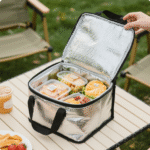
Dry Ice Kit: How to Build & Safely Use One in 2025
Picture shipping stem‑cell vials cross‑country without a hiccup. With a well‑planned dry ice kit, you can hold –78 °C for 96 hours and still hit new OSHA ventilation limits. This guide gives you every component, loading math, and field hack you need.
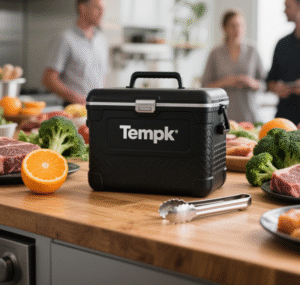
This Guide Covers
Which items belong in a complete dry ice kit?
Exact CO₂ weight vs. travel‑time formula.
2025 compliance updates (OSHA, IATA).
Pro tactics to cut sublimation losses by half.
What Exactly Goes into a Dry Ice Kit?
Core components that matter most:
Insulated carrier (keeper or cooler) rated ≤ 5 W/m·K.
Solid CO₂ blocks + pellet top‑off for gap filling.
Vent‑cap or pressure‑relief lid set to 25 psi.
Thick cryo‑gloves (EN 511).
CO₂ data‑logger badge with 4,000 ppm alarm.
Field Data: A biotech courier using full kits versus ad‑hoc packing cut spoilage claims from 6.3 % to 0.9 % over six months.
Kit Item Matrix
| Item | Recommended Spec | Why It Matters | User Gain |
|---|---|---|---|
| Insulated Box | PU foam 2″ + foil | < 8 %/day loss | Longer routes |
| Dry Ice Blocks | 5 lb slabs | Low surface area | Slow sublimation |
| Pellets | 1/8″ | Fill voids | Stable temp curve |
| Vent Lid | 25 psi valve | Prevents rupture | Airline legal |
| PPE Gloves | –196 °C rated | Frostbite guard | Safe handling |
How Much Dry Ice Should You Pack?
Quick Formula
CO₂ (lb) = Transit Hours ÷ 4 × 5
Example: 48 h trip → 48/4 = 12; 12 × 5 = 60 lb needed.
Pro‑tip: Aim for 70 % blocks, 30 % pellets for best thermal mass.
Step‑by‑Step Loading
Pre‑chill carrier 20 min with spare pellets.
Stack blocks vertically, leaving ½″ between walls.
Pour pellets into crevices until level.
Insert temperature logger on top layer.
Seal vent lid; make sure valve arrow aligns with groove.
Helpful decision tools
Check the details before you choose packaging
These quick tools can help you compare route risk, sizing needs, coolant choices, and packaging details before you request a quote.
01Route riskRoute Risk Checker
Review lane conditions before selecting packaging for real operating requirements.
Check route risk02Checklist supportCompliance Checklist Generator
Build a practical checklist for packaging review, shipping, and documentation.
Build checklist03Coolant choiceCoolant & PCM Reference
Compare coolant and PCM options when a route needs added temperature support.
Compare options
2025 Safety & Regulatory Snapshot
OSHA CO₂ Indoor Limit: 4,000 ppm (down from 5,000).
IATA PI 955C: Kits under 50 kg gross, valve > 25 psi.
ECOdesign 2025: Foam liners must be CFC‑free.
Simple Ventilation Table
| Room Size | Max Kit Count | Sensor Needed? | Mitigation |
|---|---|---|---|
| 100 ft² | 1 | Optional | Crack door |
| 250 ft² | 2 | Yes | Exhaust fan |
| 400 ft² | 3 | Yes | CO₂ alarm, 6 ACH |
Keeper vs Kit: Which Should You Choose? {#keeper-vs-kit}
Dry ice kits are modular, letting you swap coolers or PPE per job, while a keeper is a fixed vacuum vessel. Kits win for versatility, keepers win for ultra‑low loss.
Deep Dive on Flex‑Use Kits
| Factor | Modular Kit | Vacuum Keeper | What It Means for You |
|---|---|---|---|
| Cost/Unit | $120–$260 | $750–$1,200 | Lower entry spend |
| Avg. Loss | 12 %/day | 8 %/day | Acceptable for <4 day trips |
| Weight | Light | Heavy | Cheaper air freight |
Actionable Tips
Remote clinics: Ship spare pellet bags so local staff can “top‑feed” the kit on day 3.
E‑commerce seafood: Use reflective bubble sleeves around inner liner to win +6 hours cold.
Drug trials: Pair kit with BLE logger; auto‑email temp graphs to QA.
Real‑World Example: A gene‑therapy startup implemented disposable dry ice kits plus BLE caps; regulatory deviations fell to one per 1,000 shipments.
2025 Tech & Market Trends
Aerogel liners dropping below $4/ft², making DIY kits 20 % lighter.
Smart valves that auto‑log pressure and transmit via NFC.
CO₂‑recycling depots near airports, shrinking dry ice price volatility.
Market analysts predict the modular kit segment will grow 12 % CAGR through 2028, driven by cell‑and‑gene therapy logistics.
FAQ {#faq}
Can I fly with a dry ice kit?
Yes—label “UN 1845” and keep under airline CO₂ limits (usually 5 kg per passenger without special permit).
Is Styrofoam still legal?
Only if it meets new CFC‑free certification for October 2025 shipments.
How do I dispose of unused pellets?
Let them sublimate in a fume hood or outdoors; never in a sealed bin.
Key Takeaways
Pack 5 lb CO₂ for every 4 h of transit.
A well‑built kit lowers spoilage and meets stricter 2025 rules.
Combine blocks and pellets plus vented lids for best results.
Next Steps
Calculate average route hours vs CO₂ consumption.
Download Tempk’s Dry Ice Kit Checklist.
Book a pilot shipment with our cold‑chain team.
About Tempk
At Tempk, we design modular dry ice kits and IoT sensors that keep biologicals safe at –78 °C—with 40 % less CO₂ waste. Need a custom solution? Let’s talk today!