Ice packs have no universal cold-life rating. Useful hold time is the period during which the product stays within its specified temperature range in a particular insulated packout. Pack size, conditioning, payload, insulation, ambient exposure and opening frequency all affect that period. A pack that still feels cold does not prove that the shipment stayed in range.
Define the temperature requirement first
Start with the product’s storage and transport specification. Chilled food, freeze-sensitive medicines and frozen goods need different acceptance limits. Do not substitute the melting point of a coolant for the product’s required temperature. Also define the longest credible transport duration, including dispatch, transfer, delivery and receiving delays.
A packout is the complete packing arrangement: container, coolant, product load, separators and their positions. Conditioning means bringing the coolant and payload to the specified starting state before packing. Both belong in the instructions used by operators.
What changes ice pack hold time?
| Variable | What to record | Why it matters |
|---|---|---|
| Coolant | Material, mass, number, starting temperature | Different coolants store and release heat differently. |
| Insulation | Container model, wall construction, lid closure | Heat enters through the complete container, including closures. |
| Payload | Product mass, starting temperature, arrangement | A warm load uses cooling capacity before transport begins. |
| Route | Season, ambient profile, dwell time, openings | A constant room-temperature test may miss demanding exposure. |
| Placement | Coolant positions and separators | Cold spots can freeze sensitive products while other locations warm. |
Compare supplier claims only when the test conditions match your intended use. Ask for the tested temperature range and duration, ambient profile, payload, coolant preparation and probe locations. A statement such as “24 hours cold” without those details is insufficient for shipment planning.
Check performance in the product space
- Choose representative minimum and maximum payload configurations.
- Position calibrated temperature sensors at locations justified by the layout and risk, including expected warm and cold spots.
- Run the defined ambient exposure and record the whole temperature trace.
- Assess every relevant sensor against the product limits, including overcooling.
- Document the accepted configuration and repeat testing when significant inputs change.
For regulated products, qualification needs a defined protocol, acceptance criteria and a documented result. WHO: qualification of shipping containers describes shipping-container qualification; a casual cooler test should not be presented as equivalent evidence.
Improve the packout without guessing
Precondition components according to the approved instructions, use the specified insulated container, minimize unnecessary openings and avoid leaving the assembled shipment in a warm dispatch area. Adding more frozen packs can increase freezing risk, so verify placement and separation as well as quantity.
Helpful decision tools
Check the details before you choose packaging
These quick tools can help you compare route risk, sizing needs, coolant choices, and packaging details before you request a quote.
Box Liner & Pallet Cover Sizing
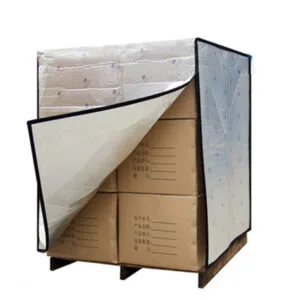
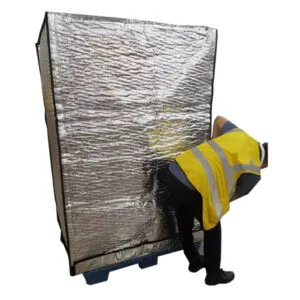
Check box liner and pallet cover sizing logic for insulated packaging projects.
Estimate sizingCoolant & PCM Reference
Compare coolant and PCM options when a route needs added temperature support.
Compare optionsCompliance Checklist Generator
Build a practical checklist for packaging review, shipping, and documentation.
Build checklistIf you do not have shipment data, start with a trial configuration and a monitored test. Keep the product on hold until the responsible person can establish whether the transport conditions were acceptable.
Frequently asked questions
Can I use a melted ice pack again?
Only if the pack is intended for reuse, remains intact and can be cleaned and conditioned according to its supplier instructions. Reuse does not establish a new hold-time guarantee.
Are gel packs always better than water ice?
No. Suitability depends on the product temperature, formulation, packaging and complete packout. Compare evidence for the intended use.
Does a larger cooler stay cold longer?
Size alone does not determine performance. Insulation, empty space, coolant, load and exposure must be considered together.
Plan the next test
Record your product limits, payload dimensions, transit window and seasonal exposure before comparing packaging. For broader study design, see our cold-chain transport validation guide.